DL Holdings займётся майнингом биткоинов

cryptonews.ruPublished on 2025-03-15Last updated on 2025-09-16

DL Holdings Group Limited заключила партнёрское соглашение с Fortune Peak Limited для выхода на рынок майнинга биткоинов. Это первый значительный шаг компании в сфере инфраструктуры цифровых активов.

Для финансирования приобретения высокопроизводительного оборудования гонконгская компания планирует выпустить конвертируемые облигации. Цель DL Holdings — достичь производственных мощностей около 200 BTC в год и сформировать резервы свыше 4000 BTC в течение двух лет.

Стратегия выхода на рынок майнинга

DL Holdings Group Limited объявила о сотрудничестве с Fortune Peak Limited для входа в сектор майнинга биткоинов. Компания намерена приобрести современное оборудование за счёт выпуска конвертируемых облигаций, стремясь стать первой публичной гонконгской компанией, занимающейся майнингом биткоинов.

Контрольный пакет акций Fortune Peak принадлежит бывшему директору по инвестициям Antalpha Capital, что предоставляет DL Holdings доступ к новейшему оборудованию и экспертизе в области цифровых активов.

Финансирование через конвертируемые облигации

DL Holdings приобретёт 2200 майнеров S21XP HYD с расчётной производительностью 1 040 600 TH/s. Сделка на сумму $21,85 млн будет финансироваться за счёт выпуска бескупонных конвертируемых облигаций с начальной ценой конвертации HK$3,17 ($0,41) за акцию — на 8,65% ниже пятидневной средней цены закрытия. Облигации и конвертированные акции будут заблокированы на два года.

Дополнительно компания выпустит 40 млн варрантов с ценой исполнения HK$3,80 ($0,49) за акцию, что на 9,51% выше пятидневного среднего показателя. Половина варрантов будет иметь шестимесячный период блокировки. При выполнении целевых показателей может быть выпущено до 13,44 млн выкупаемых акций.

Рыночный контекст и институциональный интерес

Биткоин занимает 55-58% общей капитализации крипторынка с оценочной стоимостью около $2,29 трлн по состоянию на сентябрь 2025 года. Институциональный интерес продолжает расти: правительства США и Великобритании сообщают о значительных вложениях, а такие управляющие активами компании как BlackRock и Fidelity предлагают биткоин-ETF.

В DL Holdings считают, что прямой майнинг биткоинов позволит диверсифицировать баланс и обеспечить регулярный доход. По оценкам компании, новое оборудование может генерировать около 200 BTC в год, что при текущих ценах принесёт примерно $20 млн дохода. В августе 2025 года компания уже привлекла $83,5 млн для финансирования инициатив в области цифровых финансов, включая токенизированные активы и услуги торговли виртуальными активами.


Related Reads

EIP-8363 Quantitative Review: Cutting Staking 'Subsidies' – What Does Ethereum Hope to Gain?

**EIP-8363 Quantitative Review: Reducing Staking "Subsidies" – What Does Ethereum Want in Return?** EIP-8363 proposes burning an increasing portion of validator rewards as the staking rate rises, reaching 100% burn when 50% of ETH is staked. This analysis models its impact on issuance, yield, and staking equilibrium, examines whether ETH's yield explains its price, quantifies the chain economy's reliance on this yield, and presents conclusions. Key findings: 1. **EIP-1559 Burns Are Ineffective:** Post-merge, burning (via base fees) has collapsed by 98% and now offsets only 2.4% of new ETH issuance, making issuance policy Ethereum's sole remaining supply lever. 2. **EIP-8363's Real Impact:** At the current ~42.2M ETH staked, the proposal would cut issuance by ~58.6% and staking APR by ~56.4%, removing ~633k ETH ($1.55B) in annual dilution (0.53% of market cap). It's not zero issuance; that would require 43% more ETH staked. 3. **Self-Limiting Mechanism:** The design has a built-in equilibrium. At reasonable required returns (e.g., 2%), the system stabilizes at ~26% staking rate and ~0.48% annual inflation. 4. **Yield vs. Price:** No detectable statistical relationship exists between changes in staking yield and ETH price returns over 43 months. The natural 37% yield decline since 2023 did not drive price action. 5. **Chain Economy Dependence:** While LSTs like wstETH form ~34% of collateral in major lending markets, their utility as collateral remains if yield is positive. The direct revenue hit to protocols like Lido is significant (~50% of fee income) but not systemic. Staking-focused ETFs represent only 0.19% of ETH supply. 6. **Core Conflict:** The debate masks a zero-sum redistribution: cutting ~$1.55B in annual issuance transfers value from concentrated staking intermediaries (LST/LRT protocols, leverage players) to the dispersed majority of non-staking ETH holders. 7. **Outlook:** The proposal is economically sound for ETH's scarcity but politically difficult due to concentrated opposition. It is unlikely to pass in its current form.

marsbit10m ago

EIP-8363 Quantitative Review: Cutting Staking 'Subsidies' – What Does Ethereum Hope to Gain?

marsbit10m ago

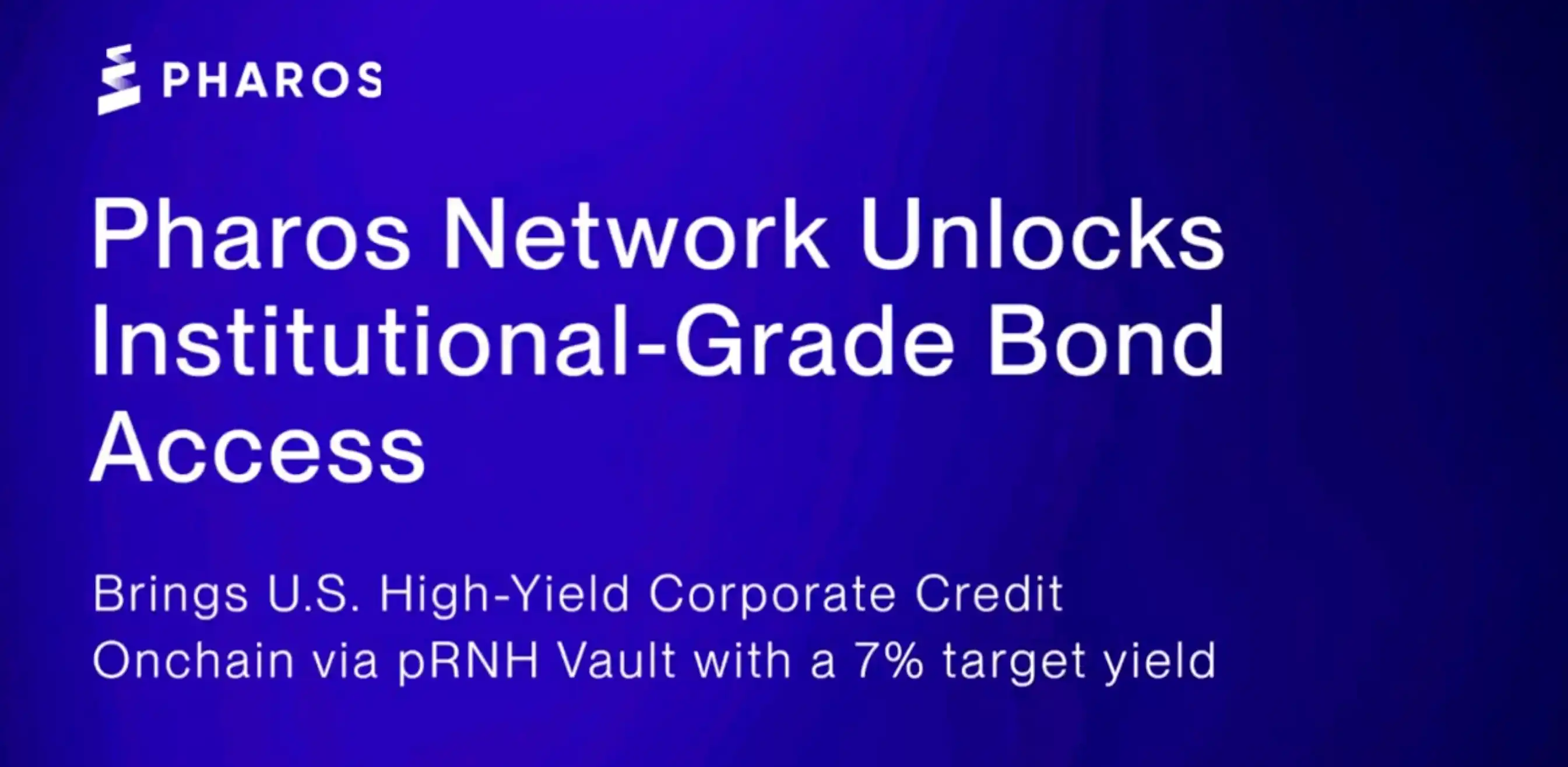
Pharos Introduces On-Chain Institutional-Grade U.S. Corporate Bond Credit, Expanding Its RealFi Asset Portfolio

Pharos Network has launched the pRNH Vault, introducing institutional-grade US corporate high-yield bond exposure to its on-chain RealFi (Real World Finance) ecosystem. Developed by the R25 protocol, the vault provides qualified users access to a tokenized portfolio of high-yield corporate debt, broadening Pharos's asset offerings beyond stablecoins and cash-equivalents. The vault's underlying asset is the NYLIM Anemoy US High Yield Corporate Bond separate account (HYB), managed by New York Life Investment Management (NYLIM) and tokenized in collaboration with Anemoy and Centrifuge. Users can deposit USDC into the vault to receive pRNH tokens, representing indirect ownership of the HYB portfolio, which targets an annualized yield of approximately 7%. The structure offers programmability and composability for on-chain financial applications. Pharos views this move as a key evolution from basic asset tokenization towards building a dynamic marketplace where institutional assets can be actively discovered, evaluated, and utilized programmatically. The pRNH Vault architecture incorporates agent-assisted functionalities for credit screening, liquidity monitoring, and on-chain operations, signaling tighter integration between real-world finance and intelligent on-chain systems. To support this vision, Pharos employs a technical stack including the SALI engine for parallel execution, modular SPNs, protocol-level compliance, ZK-KYC/AML, and native AI agent support. The network positions itself as the "value discovery layer" for the agent economy, aiming to make real-world value, smart agents, and institutional assets widely accessible. The pRNH launch adds a core credit asset to this ecosystem and serves as a practical test case for its infrastructure.

marsbit26m ago

Pharos Introduces On-Chain Institutional-Grade U.S. Corporate Bond Credit, Expanding Its RealFi Asset Portfolio

marsbit26m ago

Trading

Spot
活动图片