Биткоинеры, гонящиеся за быстрым обогащением, обречены на провал

cryptonews.ruPublished on 2025-04-14Last updated on 2025-09-15

Соучредитель BitMEX Артур Хейс говорит, что держателям биткоинов нужно быть терпеливее и перестать беспокоиться о рекордных максимумах акций и золота, потому что спрашивать, почему биткоин не растет, - значит упускать суть.

«Если вы думали, что купите биткоин, а на следующий день приобретете Lamborghini, вас, вероятно, ликвидируют, потому что это неправильный подход к вещам, - сказал Хейс Кайлу Чэссу в интервью, опубликованном на YouTube в пятницу. - Мне жаль, что вы купили биткоин шесть месяцев назад, но все, кто купил его два, три, пять или десять лет назад, смеются», - сказал Хейс, разделяя разочарование недавних покупателей биткоинов, которые спрашивают, почему цена биткоина до сих пор не достигла 150 000 долларов.

Рисунок 1. Кайл Чэсс (слева) взял интервью у Артура Хейса (справа) для своего канала на YouTube. Источник: Кайл Чэсс.

«Людям нужно пересмотреть свой взгляд на это», - сказал он. Данные Curvo показывают, что за последние 10 лет средняя годовая доходность биткоина составила 82,4%.

Хейс опровергает идею об отставании биткоина

Это происходит на фоне того, что биткоин продолжает торговаться ниже своего исторического максимума в 124 100 долларов, достигнутого 14 августа, и, по данным CoinMarketCap, на момент публикации составляет 115 890 долларов.

Тем временем, на этой неделе золото достигло нового исторического максимума в 3674 доллара, а индекс S&P 500 установил рекордный максимум закрытия на отметке 6587 долларов.
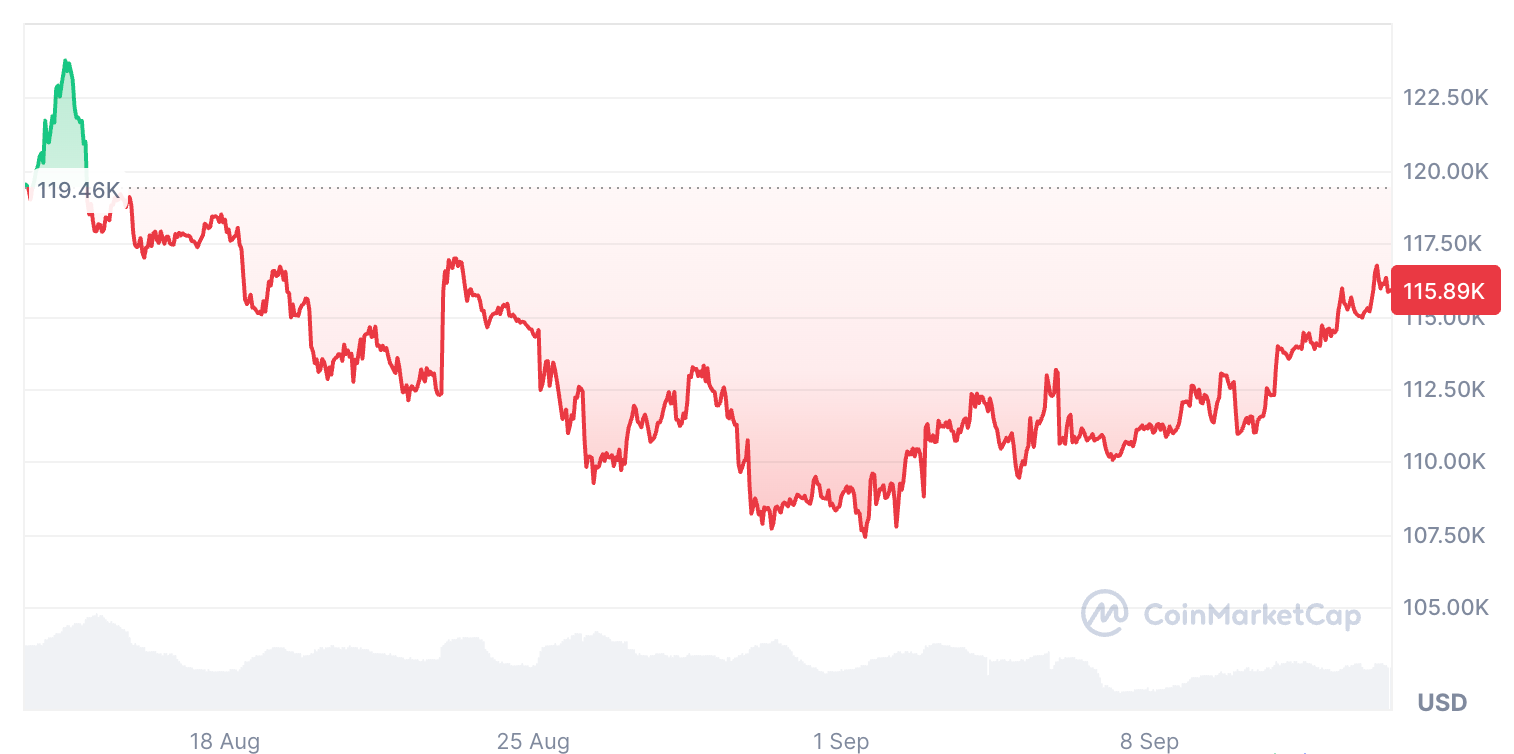
Рисунок 2. За последние 30 дней биткоин упал на 6,09%. Источник: CoinMarketCap.

Артур Хейс отверг значение этих максимумов по сравнению с биткоином и отклонил вопрос Кайла Чэсса о том, когда биткоин и более широкий рынок криптовалют могут начать привлекать больше средств из глобальной денежной массы М2, учитывая, что акции и золото достигли новых исторических максимумов.

«Я думаю, что сама предпосылка этого вопроса ошибочна, - сказал Артур Хейс. - Биткоин является самым доходным активом, если учитывать обесценивание валюты за всю историю».

Хейс говорит, что биткоин «показал себя очень хорошо»

Хейс отметил, что, хотя индекс S&P 500 «вырос в долларовом выражении», он по-прежнему не восстановился с 2008 года по сравнению с ценой на золото:

«Снова дефляция рынка жилья за счет золота, и это далеко не так, как было раньше. Крупные американские технологические компании, пожалуй, одни из немногих, чьи показатели были значительно ниже, чем у золота. Если вы будете снижать цены на биткоины, вы даже не увидите их на графике; просто смешно, насколько хорошо показал себя биткоин».

В апреле 2025 года Артур Хейс прогнозировал, что к концу 2025 года биткоин достигнет 250 000 долларов, а всего месяц спустя, в мае, директор по маркетинговым исследованиям Unchained Джо Бернетт сделал тот же прогноз.

Related Reads

Dialogue with Bitwise CIO: Bitcoin May Be Near Bottom, Who Will Drive the Next Rally?

In a recent podcast, Bitwise CIO Matt Hougan analyzed Bitcoin's current market cycle, suggesting it is near a bottom characterized by low volatility and investor indifference. He believes the next major price surge will be driven primarily by wealth management platforms, financial advisors, and family offices, who control trillions in assets and are now gaining access to Bitcoin ETFs. Hougan views Bitcoin as a long-dated, out-of-the-money call option on it becoming a global reserve asset. Its value increases with global monetary system volatility, making it a natural hedge against currency disorder. He outlined Bitcoin's adoption path: first as a global digital store of value (competing with gold), and potentially later as a check against fiat currency abuse by sovereign states. Addressing the muted price action despite institutional ETF inflows, Hougan explained that significant selling by long-term retail holders has offset buying pressure. However, he is optimistic as data shows retail selling has subsided, which, combined with continued institutional inflows, could propel prices higher. Hougan downplayed the future impact of Federal Reserve interest rates and MicroStrategy's actions on Bitcoin's price, arguing they are becoming less relevant. Instead, he pointed to runaway U.S. fiscal deficits and debt as the core long-term drivers. Finally, he discussed the transformative potential of asset tokenization, predicting all traditional assets will eventually trade 24/7 on blockchains. This will merge traditional and crypto markets, increasing efficiency but also introducing crypto-like features such as overnight volatility and easier access to leverage into traditional finance.

marsbit15m ago

Dialogue with Bitwise CIO: Bitcoin May Be Near Bottom, Who Will Drive the Next Rally?

marsbit15m ago

Dalio Warns of U.S. Bond Supply-Demand Imbalance: Gold and Bitcoin Could Become Hedge Assets in Debt Crisis

Ray Dalio warns of an unsustainable imbalance in US Treasury supply and demand, drawing parallels to the mechanisms of a "big debt cycle" described in his book. Key recent developments include Japan selling US bonds to support the yen, rising US long-term yields amid weak demand, and limited Treasury buybacks. Dalio explains that when debt service burdens become too large relative to income, and bond supply outstrips market demand, a crisis point approaches. Typically, central banks then print money to buy bonds, leading to currency devaluation and inflation. He simplifies the US government's position: with ~$5.5T in revenue, ~$7.5T in spending, a $2T deficit, and $32T in debt, annual debt service is roughly $1T in interest plus ~$10T in maturing principal needing refinancing. Without change, he estimates a potential debt crisis in roughly three years, give or take two. Dalio proposes a "3% three-part solution" to reduce the deficit to 3% of GDP through balanced spending cuts, tax increases, and naturally lower interest rates. He warns that Japan's high debt, often cited as sustainable, has led to poor bond returns and significant currency losses versus gold and the dollar. In response to questions, Dalio states that all reserve currencies eventually decline via this debt cycle mechanism. He advises investors to diversify globally, favor countries with strong finances and stable politics, underweight bonds, overweight gold, and allocate a small portion (e.g., 10-15%) to Bitcoin as hedges against government-created currency devaluation.

marsbit15m ago

Dalio Warns of U.S. Bond Supply-Demand Imbalance: Gold and Bitcoin Could Become Hedge Assets in Debt Crisis

marsbit15m ago

Trading

Spot
活动图片