稳定币行业初代鲇鱼 Do Kwon,正为了追讨购房款「维权」

深潮Published on 2025-09-07Last updated on 2025-09-08

2022年UST崩盘之前,Do Kwon曾预付了一套700平米顶层公寓的半数房款,但最终未能完成购买。

撰文:Business Times

编译:Azuma,Odaily 星球日报

编者按:曾经搅动稳定币世界的男人,如今正在了一场关于追讨购房款的法律纠纷中。

作为上一轮牛市中最响亮的名字之一,Do Kwon 所推出的算法稳定币 UST 的发行量一度曾高达上百亿美元,其本人在 LUNA 巅峰之时身价也曾以「十亿」(billion)作为单位,但一切已都如泡影般幻灭,如今的 Do Kwon 正在美国、新加坡等多地面临着欺诈等多项指控,最近更是被媒体曝出其正在向某地产开发商追讨在 UST 崩盘之前曾支付、但最终未能完成购买的一半房款。

以下为 Business Times 援引新加坡当地媒体《联合早报》所发布的该故事细节,由 Odaily 星球日报编译。
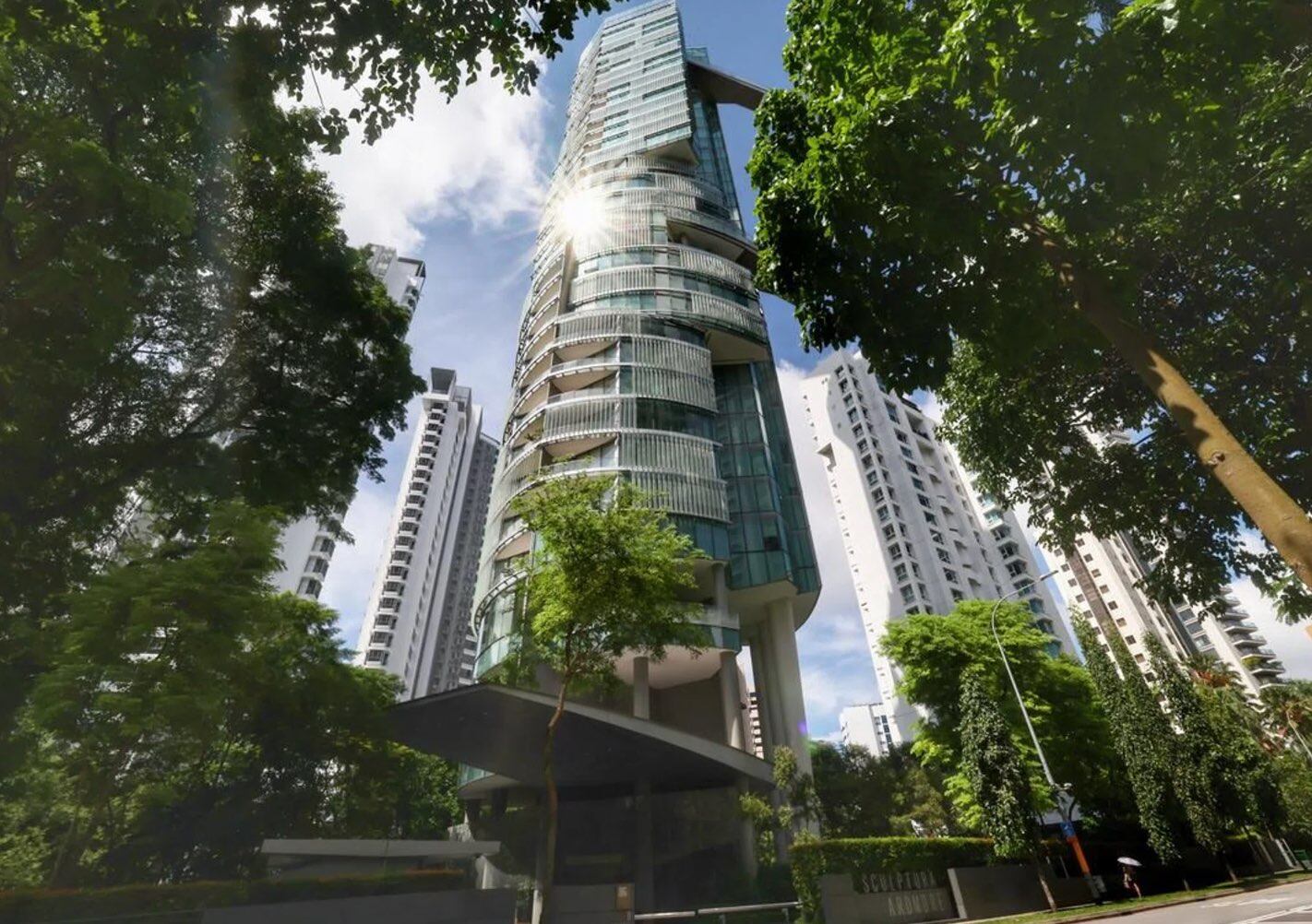
Business Times 援引《联合早报》消息,新加坡高等法院已驳回了由已倒闭的区块链公司 Terraform Labs 联合创始人 Do Kwon 所发起的一项索赔申请,在该申请中,Do Kwon 要求地产开发商 SC Global 退回其已支付的位于新加坡乌节路一处豪华顶层公寓的购房款。

高院文件显示,在 2022 年加密货币 UST 和 LUNA 崩盘的五个月前,Do Kwon 曾看中了 Sculptura Ardmore 19 层的一套复式四居室顶层公寓,该公寓面积约 7600 平方英尺(约 706 平米),是该项目仅有的三套顶层公寓之一,估值 3880 万新元。

据悉,Do Kwon 合计共支付了约 1940 万新元(包括期权费及后续款项),金额几乎相当于总价的一半,然而交易并未完成,该公寓最终以 3450 万新元被转售。

Sculptura Ardmore 系由地产开发商 SC Global 开发,该公寓于 2012 年推出,2014 年完工。2017 年,Meta 联合创始人 Eduardo Saverin 也曾斥资 6000 万新元买入了该项目的一套顶层公寓。

据称,SC Global 没收了 Do Kwon 已支付的款项,但 Do Kwon 坚持认为该没收无效,并通过其妻子向新加坡高院提起诉讼,但相关申请已于 7 月 26 日被新加坡高等法院驳回。

此外,Do Kwon 和其妻子还曾与该地产商签订了一份 16 个月的租约(自 2022 年 2 月至 2023 年 6 月),月租 4 万新元,共预付租金 64 万新元,并对公寓进行了大规模装修。

2023 年 5 月 17 日,Do Kwon 授权其妻支付 1000 新元行使购房期权,但交易未能在 2023 年 5 月 31 日之前完成,购房期权及租约均于 2023 年 6 月 22 日到期,交易终止,已付金额均由开发商保留。

不过,Do Kwon 的妻子一直在该公寓居住到了 2023 年 7 月 25 日,并额外支付了一个月的租金。SC Global 方面则指控其违约,要求 Do Kwon 及其妻子再支付一个月租金,并索赔 9 万新元的维修费用,高院法官 Philip Jeyaretnam 驳回了 SC Global 的维修索赔,但判决 Do Kwon 及其妻子需再支付一个月 4 万新元的租金及相关法律费用。


Related Reads

13F Reveals New Signal: AI Has Not Faded, Wall Street Is Just Getting 'Pickier'

Title: 13F New Signal: AI Is Not Receding, Wall Street Just Became "Selective" Analysis of 13F filings from the second quarter of 2026, which disclose institutional holdings, reveals a key trend: the AI investment theme persists, but Wall Street is now scrutinizing opportunities more selectively rather than chasing the sector broadly. While nearly 44% of the 6,371 institutions analyzed reduced holdings in the "Magnificent Seven" tech giants, semiconductors saw net buying from 48% of institutions. This indicates the core AI infrastructure thesis remains intact. However, significant internal shifts are occurring as major funds prioritize "risk-reward" or "betting odds" over simple sector exposure. Four prominent investors exemplify this new selectivity: 1. **Berkshire Hathaway** made a major new bet on Alphabet, valuing its strong cash flow and core businesses despite AI-related uncertainties. 2. **Tiger Global** reduced crowded mega-cap tech positions (e.g., Alphabet, NVIDIA) but increased exposure to other AI-related names like AMD and semiconductor manufacturing, rebalancing within the theme. 3. **Third Point** fully exited several first-wave AI winners (NVIDIA, Broadcom) to lock in gains, reallocating to names like Alphabet and Taiwan Semiconductor, and diversifying into media and industrials. 4. **Duquesne Family Office** (Stanley Druckenmiller) also sold some semiconductor holdings while buying others (e.g., Taiwan Semiconductor), focusing on individual companies' valuation and expectation gaps rather than the sector beta. Key conclusions from the filings: * **Alphabet is becoming a "divisive asset"** with significant institutional disagreement, representing a potential source of alpha. * The **"buy any chip stock" phase is over**. Semiconductor investing is now an alpha game, requiring stock-specific analysis over blanket sector bets. * **Non-AI assets are reappearing** in portfolios (e.g., airlines, homebuilders, media) as diversification and correlation-management tools. In summary, the AI investment cycle has not ended, but the phase of easy, broad-based gains is concluding. The next phase will be defined by selective stock-picking and precise calculation of risk versus reward within the AI ecosystem.

marsbit14m ago

13F Reveals New Signal: AI Has Not Faded, Wall Street Is Just Getting 'Pickier'

marsbit14m ago

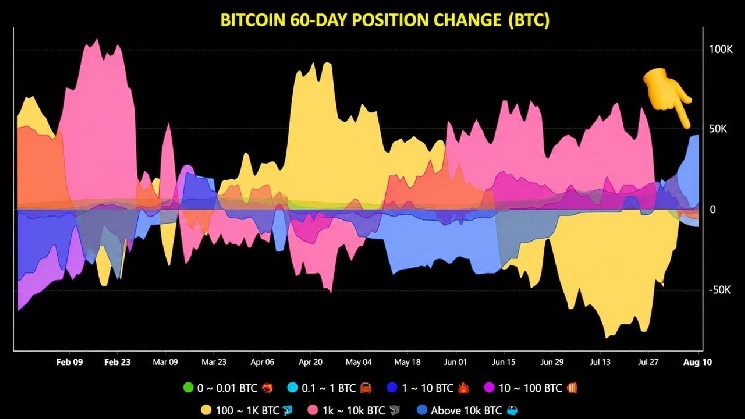
Bitcoin 'Whale Investors' Increase Their Holdings by 43,000 BTC, Ending a Months-Long Selling Wave

Large Bitcoin holders, defined as non-exchange and non-mining pool wallets, have accumulated approximately 43,000 BTC (worth around $2.9 billion) over the past 60 days. This marks a significant reversal from a several-month period where this same group were net sellers, contributing to downward pressure on Bitcoin's price following its October 2025 all-time high. The accumulation began when Bitcoin fell to around $60,000, a level that seemingly attracted large holders who had stayed on the sidelines during the sharper phase of the decline. Bitcoin has since recovered to trade in a narrower range between $62,000 and $65,000. This renewed demand is not limited to the largest "whale" wallets. Balances of so-called "dolphin" holders also increased in the same period, indicating a broader accumulation trend beyond just a handful of mega-wallets. This activity occurs against a backdrop of declining overall market activity, with August spot trading volumes hitting their lowest monthly level since August 2021, meaning the whale purchases represent a disproportionately large share of total market activity. This buying shift contrasts with the dominant selling trend seen for much of 2026 from other major entities. Looking ahead, a key factor to watch is whether this large-investor activity persists as Bitcoin approaches the upper bound of its recent $62k-$65k trading range.

cryptonews.ru20m ago

Bitcoin 'Whale Investors' Increase Their Holdings by 43,000 BTC, Ending a Months-Long Selling Wave

cryptonews.ru20m ago

Bitcoin (BTC) Enters a Bear Market, BlackRock Remains Optimistic! Here's Why and the Latest Statements

Bitcoin (BTC) has entered a bear market since October 2025, dropping over 50% from its all-time high of $126,000 to test support at $57,000. It is currently trading sideways around $63,000. In its latest analysis, asset management giant BlackRock stated that this severe correction does not invalidate the long-term investment case for the leading cryptocurrency. BlackRock attributes the decline primarily to market deleveraging, position shifts, capital rotation from Bitcoin into AI investments, weakening capital inflows, and a slowdown in digital asset purchases. It highlighted that open cryptocurrency futures positions exceeding $90 billion, with about 80% being perpetual futures outside the CME, were a significant contributor to the downturn. Additional selling pressure came from digital asset management firms and large Bitcoin holders, alongside net outflows from spot Bitcoin ETFs. Despite these challenges, BlackRock maintains its long-term bullish stance on Bitcoin. The firm reiterates that Bitcoin's limited supply and its potential to behave differently from traditional financial assets make it a viable tool for portfolio diversification and a potential hedge against fiat currency depreciation. BlackRock concludes that the sharp correction signals a market rebalancing of leverage and capital flows rather than a breakdown of Bitcoin's fundamental investment thesis.

cryptonews.ru31m ago

Bitcoin (BTC) Enters a Bear Market, BlackRock Remains Optimistic! Here's Why and the Latest Statements

cryptonews.ru31m ago

Trading

Spot
活动图片