TAO 首次减半:你应该知道的事

金色财经Published on 2025-07-31Last updated on 2025-07-31

作者:Lucas 来源:X,@OnchainLu 翻译:善欧巴,金色财经

加密世界即将迎来又一次“减半”,但这一次主角不是比特币,而是 Bittensor —— 一个被称为“智能的比特币”的去中心化 AI 网络。它的首个减半事件预计将在 2025 年 12 月至 2026 年 2 月之间发生。

与比特币类似,TAO 的总供应量为 2100 万枚,通过定期减半控制通胀;但不同的是,Bittensor 的激励结构横跨多个子网,每个子网都有其自己的原生代币 Alpha(记作 ‘α’)和独立的流动性机制。

这种结构的复杂性,使得这次减半带来的“连锁反应”更难预测。

问题不仅在于 TAO 的价格是否会上涨,而在于整个多子网生态是否能承受:减半后更少的流动性注入,Alpha 相对 TAO 的稀释加剧,以及跨子网 Alpha 可能出现的持续抛压

本篇文章的目的是讲清楚 TAO 减半的运作机制,并预测生态中不同参与者可能受到的影响。

已知事实

让我们先看看已知的信息。
DBK3oF6foZseg9vmtv7DfvfPzjXYLPTkELsEG8tC.png

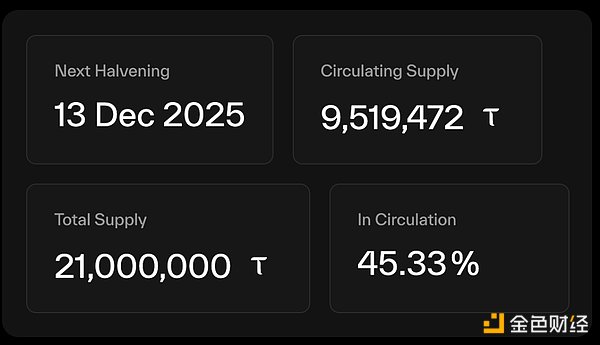
当流通供应量超过 10.5M TAO(恰好是 21M 总上限的 50%)时,就会发生减半。在撰写本文时,网络目前流通的 TAO 约为 9.4M,Taostats 的直播时间表预计该门槛将于2025年12月13日达到。

由于减半是基于“流通量”而非区块高度,因此其确切时间会受到 TAO 的回收速率影响。矿工/验证者注销、子网注册费用、冷钥更换等行为会将 TAO 回收至未发行池中,从而延后减半时间。若这些活动减少,TAO 回收变少,则减半将提前到来

与你可能认为的相反,TAO 减半并非参与者奖励的减半。

当减半发生时,会发生以下情况:

区块奖励和发行量减半。

  • 每个区块将铸造 0.5 TAO,而不是 1 TAO。 鉴于区块大约每 12 秒产生一次,这意味着每天将发行约 3,600 TAO(减半后),而不是每天铸造约 7,200 TAO(减半前)。

网络通胀下降。

  • TAO 通胀将从每年约 25% 降至每年约 12.5%(基于 1050 万的基础供应量,尽管实际供应量增加会更低,因为有些代币会被销毁)。

Alpha_in(注入每个子网交易池的 Alpha)减半。

  • 这是因为 Alpha_in 是通过将 TAO 发行量除以 Alpha 价格计算得出的,而 TAO 发行量减半了。 由于 Alpha_in 负责平衡流动性,其减半会使池子变浅,这意味着任何交易——无论是买入还是卖出——都会产生更大的价格波动。这种影响在减半前流动性较低的子网中会更加明显。

Alpha_out(奖励给矿工/验证者/所有者的 Alpha)保持不变。

  • 这意味着发行量将保持不变。 Alpha_out 仅在每个子网的单独减半时才会减半,这遵循一个独立的日程。

子网 Alpha 的下行价格压力增加。

  • 在 Alpha_in 减半(至少最初是这样)而 Alpha_out 不变的情况下,将会有更强的抛售压力,尤其是在流动性较浅的子网交易池中。 澄清一下,“更强的抛售压力”并不一定意味着更多的人在抛售——我指的是由于子网交易池中 Alpha 流动性较低,相同数量的 Alpha 抛售将对价格产生更大的影响和滑点。

Root APY 适度下降。

  • 由于 Root 奖励以 TAO 分发,从 Alpha 兑换时(尤其是在低流动性池中)感受到的滑点增加将逐步降低分发给 Root 质押者的奖励的美元价值。这不考虑更广泛的市场动态。

除非通过治理单独升级,否则区块时间、销毁/回收和子网奖励分配保持不变。

那意味着什么?

现在我们来谈谈这些结构性变化将如何影响 Bittensor 生态中的各类参与者。如果你还不熟悉子网拥有者、矿工或验证者的角色,可以参考这份说明文档。

子网所有者

在流动性注入减半的背景下,构建一个成功的子网将变得指数级地更困难

所有子网都会在一段时间后受到影响,但新子网的影响最为直接,因为它们的交易池还未积累足够的流动性。例如,一个六个月前上线的子网,可能已经有 $100,000 的 TAO 作为交易池支撑;而减半后上线的新子网,在相同时间内可能连 $50,000 都难以达到

由于可用于交易的 TAO 减半,每一笔买卖订单都会对 Alpha 价格产生更大冲击。此前提到的下行价格压力会对 Alpha 造成级联影响,尤其对那些没有池中储备金的新子网来说,将非常难以承受。

为了尽早缓解这种压力,我认为新子网拥有者需要:

  • 在数周内找到产品市场契合点(PMF),而不是几个月,否则矿工和投资者将被迫迁移到更具流动性的替代方案。时间窗口将变得更加紧迫

  • 更重视外部收入的创造,例如:

    • 对客户推理服务收费(例如 Targon),

    • 销售和授权数据(例如 Data Universe、Masa),

    • 或其他形式的应用收费。

目前,确实已有少部分子网拥有者像初创公司 CEO 一样运营,拥有真实客户与收入来源,而不是靠收益耕作。减半的到来将加速所有人转向这种模式的紧迫性。

矿工与验证者

对矿工和验证者的影响更为复杂 ——他们的 Alpha 奖励(Alpha_out)和运营成本(如电费、硬件成本、维护费用)不会改变,但由于每个子网的交易池支撑流动性下降,他们的收益风险大幅增加。在利润空间压缩的情况下,Alpha 的价格表现将决定矿工和验证者是否能盈利。如果 Alpha 保持价格稳定,他们仍能在子网中盈利;但如果 Alpha 因波动加剧或卖压而暴跌,运营成本可能会吞噬所有回报,导致亏损。我预计,大多数矿工和验证者将退出那些波动剧烈、流动性不足的子网,转而集中在那些拥有 深厚 TAO 支撑和清晰商业模型的子网上。

我们将看到从“数量优先”向“质量优先”的转变 —— 在那些流动性充足、经过验证的子网上,UID(子网身份)将变得稀缺。随着 UID 竞争加剧,矿工将无法再“广撒网”、在多个子网上投入少量精力就获得可观收益。他们将被迫专注于 1~2 个高质量子网,并交付真正有价值的计算工作,才能获得持续的收益。减半之后,成功的关键将是专业化和稳定高质量的贡献,以争夺有限的 Alpha 奖励。

与之相比,验证者的适应难度较低,因为大多数验证者运行的是由子网提供的验证脚本,不需要太多专业技能或操作变更,他们面临的主要挑战是:如何选择合适的子网。验证者的主要奖励仍由质押权重决定(他们的 Alpha 持仓,加上自持或被委托的 TAO 的 18%),他们仍然可以在多个子网之间保持多元化策略,并将质押资金重新分配到最稳健的机会上。

最终,矿工与验证者都将面临“强者恒强”的局面:参与者会将算力和质押集中到那些流动性最强、表现最好的子网上。这可能会使得这些热门子网的奖励被更多人瓜分,即使是在“赢家”子网中,每个参与者的单位收益也可能下降

那对投资者意味着什么?

现在,我们终于来到你可能最期待的部分。

质押动态:资金“逃向安全地带”

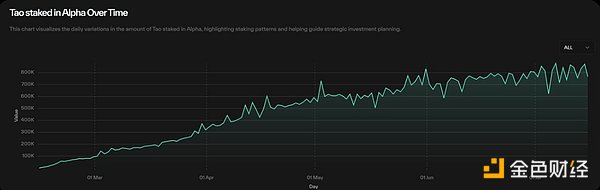
减半将引发资本的大规模再配置,因为质押者将在整个生态中面对不均衡的收益压缩。我们已经可以看到这种转变的早期信号。
NeDlHhj3QDxbpnuRl71vrbisFmxBXyT4CfgjIzBW.png

从上图来看,质押在 Alpha 上的 TAO 数量一直在稳步增长,但这种增长的速度开始放缓。过去一个月的上升趋缓,并不意味着更多人倾向于质押 Alpha 而非 Root —— 它只是意味着有新的 TAO 进入了流通,其中一部分被分配到了 dTAO(子网)上。
5TQ7ytHT2JBe8IQDa8AyfsN5ThQtKXIdEcrJv4or.png

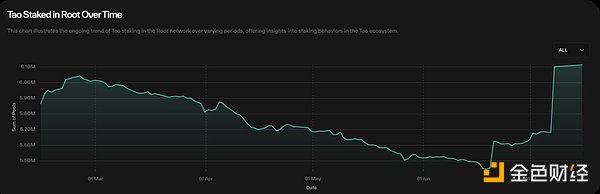
而质押在 Root 上的 TAO(如图所示)则展现出一个有趣的趋势。

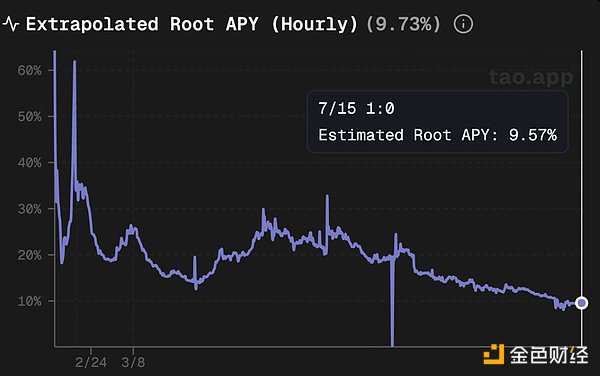
随着投资者对 dTAO 质押逐渐熟悉,同时受到下降的 Root 年化收益率(如下图,目前大约为 8–10%)的压力,Root 质押者逐渐减少了持仓。尽管自 6 月底以来 Root 质押量出现了明显回升,从约 570 万枚涨至 610 万枚,但这次跳涨主要来自一次技术修正 —— 链上原有约 40 万枚 TAO 存在于钱包中,但未被正确计入质押总量。
wp2MQxx9yUk2M9cZcQY8AbX1vZboN5MHj2G24F52.png

关键问题是:这种 Root 质押的回升趋势,在减半后是否还会持续?

我认为会,而且是显著持续。

正如我们已经讨论的,大多数 Alpha 代币在减半后将变得更具波动性,持有风险更高。我不认为有太多理性投资者会在面临更大下行风险的前提下,仍愿接受与此前相同的 Alpha 收益率。

尽管 Root 的年化收益率会因滑点增加而受到一定影响,但它提供的是稳定性与 TAO 敞口,不会像流动性稀薄的 Alpha 池那样波动剧烈。我认为,通过 Root 质押直接持有 TAO,将成为更具风险调整优势的选择。而对于那些仍选择继续质押子网而非 Root 的投资者,我预计他们将集中在那些已建立流动性、拥有清晰收入模型和真实使用场景的子网上。

结语

这次 TAO 减半将形成一个筛选机制,从长期看,可能对 TAO 本身构成利好。流动性注入被减半,将削弱那些仅靠排放“续命”的弱子网赖以生存的安全缓冲,迫使它们从“依赖排放”转向“真实创收”。

这场压力测试很可能会淘汰掉低效子网,同时也会迫使幸存者将优势进一步放大那些能成功创造外部收入的强子网,将成为矿工、验证者与质押者的唯一可持续去处。

Related Reads

Morning Post | Bitmine Plans to Raise $300 Million Through Preferred Stock Issuance; Polymarket Accuses Kalshi of Commercial Espionage

ChainCatcher's Daily Crypto Brief: Key developments from the past 24 hours include significant funding moves, regulatory actions, and market predictions. Bitmine announced a $300 million preferred stock fundraising. Polymarket accused rival prediction platform Kalshi of corporate espionage, citing numerous suspicious coincidences in product launches, a claim Kalshi strongly denied. The U.S. Department of Justice, in a joint "Disruption Week" anti-fraud operation with companies like Coinbase and Meta, froze over $3.8 million in cryptocurrency linked to scams. In infrastructure news, Macau completed its integration with the multi-central bank digital currency bridge, mBridge, aiming to build efficient cross-border payment channels. Cosmos Labs acquired the block explorer Mintscan. Market-wise, Geoffrey Kendrick, Standard Chartered's Head of Digital Assets Research, stated Bitcoin is nearing a bottom around $63,000, maintaining a year-end target of $100,000. He noted stability in U.S. spot Bitcoin ETF holdings. Ahead of SpaceX's anticipated IPO, internal insiders at Rocket Lab (RKLB) sold over $18.41 million in stock. In tokenization, Goldman Sachs partnered with Apex and Archax to launch a tokenized real estate fund. The meme token tracker GMGN reported the top trending tokens: on Ethereum, HEX, SHIB, LINK, PEPE, mUSD; on Solana, TROLL, swarms, WORLDCUP, neet, Buttcoin; and on Base, PEPE, toby, ODDS, ELSA, SKI.

链捕手6m ago

Morning Post | Bitmine Plans to Raise $300 Million Through Preferred Stock Issuance; Polymarket Accuses Kalshi of Commercial Espionage

链捕手6m ago

55TB to 28TB? The Rumor and Panic Behind Rubin's Memory Being Halved

Title: 55TB to 28TB? The Rumor and Panic Behind the Potential Halving of Rubin's Memory. On June 4th, a report from SemiAnalysis suggested NVIDIA's next-gen Vera Rubin NVL72 AI rack may ship with roughly 28TB of SOCAMM DRAM per rack instead of the anticipated 55TB, primarily using 96GB modules. This sparked a market panic, causing Micron's stock to drop over 10% on fears of halved memory demand. However, the article argues this panic is misguided for several key reasons. First, SOCAMM modules are socketed and upgradeable, not soldered. Lower initial configuration doesn't mean permanent demand loss. Second, the primary driver is a severe 2026 LPDDR5X supply shortage, not diminished need. NVIDIA is likely prioritizing rack shipments with available components. Third, with fixed total LPDDR5X supply, using less per rack could allow NVIDIA to ship *more* racks, not necessarily reducing overall memory orders. Micron's sharp drop was also attributed to a broader semiconductor sell-off triggered by Broadcom's earnings, with the SemiAnalysis report providing a convenient narrative for profit-taking after Micron's massive rally. In summary: the report on lower default configurations is likely accurate, but interpreting it as a demand collapse is wrong. The real risk for Micron lies in its reportedly minimal HBM4 share for Rubin, not in potentially flexible SOCAMM demand. The sell-off appears more like a correction amplified by coinciding negative catalysts.

marsbit23m ago

55TB to 28TB? The Rumor and Panic Behind Rubin's Memory Being Halved

marsbit23m ago

Exclusive from Yingke | Tang Wenbin's 'Yuanli Lingji' Merges with Logistics Robotics Company, and Secures Investment from Zhipu, SenseTime, Jieyue, and Others

Exclusive report: Embodied AI company "Yuanli Lingji" recently completed a new round of financing from major AI model firms including Zhipu AI, Stepfun, and SenseTime, alongside continued investments from industrial backers like Huaqin and SAIC Hengxu. Founded in March 2025 by Tang Wenbin, former co-founder and CTO of Megvii, Yuanli Lingji is a general-purpose embodied AI model company. In a notable move, the company has merged with logistics robotics firm "Atomix" (formerly known as Yuanli Juhe) through a share acquisition. Atomix, which originated from Megvii's logistics robotics business led by Tang in 2016 and was spun off in July 2024, has grown to become the world's second-largest supplier of pallet shuttle robots, with annual revenue nearing 1 billion RMB and over 500 projects globally for clients like Uniqlo and CATL. This merger aims to break the industry's "data deadlock" by combining Atomix's extensive real-world operational data from more than 20 countries with Yuanli Lingji's model training capabilities. The company's embodied AI model "DM0" utilizes a cross-domain training approach, integrating internet semantics, autonomous driving rules, and robotics data to achieve hardware-agnostic, precise manipulation even with a compact 2.4B parameter size. The collective investment from key AI players and the strategic merger signal a shift in the competitive landscape, as major model companies pivot from language tokens to physical actions ("from Token to Action"). The industry is entering a consolidation phase where hardware, AI models, data, and application scenarios converge to scale embodied intelligence, a trend mirrored by recent moves from giants like ByteDance and Skild AI.

marsbit30m ago

Exclusive from Yingke | Tang Wenbin's 'Yuanli Lingji' Merges with Logistics Robotics Company, and Secures Investment from Zhipu, SenseTime, Jieyue, and Others

marsbit30m ago

U.S. Stock Market Trends: Dow Hits New High, Nasdaq Falls, Whom Did Broadcom's Slap Wake Up?

U.S. Stocks Split: Dow Hits Record High as Nasdaq Slips; Broadcom's Plunge Sparks Rotation On June 4, the U.S. stock market saw a sharp divergence. The Dow Jones surged 875 points (+1.73%) to a record high of 51,561.93, while the Nasdaq Composite edged down 0.09%. The S&P 500 rose 0.41%. The primary catalyst was a sharp sell-off in AI-related chip stocks, led by Broadcom (AVGO). Despite reporting a 143% year-over-year jump in AI semiconductor revenue to $10.8 billion, the company's shares plunged about 14%. This was triggered by its maintained long-term AI revenue target, which failed to meet heightened expectations for a stock that had gained 55% this quarter and traded at a high P/E ratio. The slide dragged down the broader semiconductor sector and the technology板块. Conversely, money rotated into sectors like Healthcare (+3.14%), Financials (+2.67%), and Real Estate (+1.87%). UnitedHealth and Goldman Sachs were major contributors to the Dow's gains. The rotation was attributed to a search for value outside overheated tech names and a slight dip in Treasury yields. In other major news, SpaceX confirmed its IPO for June 12, targeting a record $75 billion raise at a ~$1.75 trillion valuation. Additionally, initial jobless claims rose to a four-month high, adding nuance to the labor market narrative ahead of the key May non-farm payrolls report. The day's action signaled that while the AI growth story remains intact, excessive valuations are prompting a market reassessment. Funds are moving, at least temporarily, from high-flying tech to more defensive and value-oriented sectors. The sustainability of this rotation hinges on upcoming economic data, particularly the jobs report, and the market's absorption of the massive SpaceX IPO.

marsbit33m ago

U.S. Stock Market Trends: Dow Hits New High, Nasdaq Falls, Whom Did Broadcom's Slap Wake Up?

marsbit33m ago

From 'Old Dogs' to 'New Darlings': How AI is Revaluing Old Infrastructure, from Dell to Nokia

"Old Dogs" Become AI's New Darlings: Revaluing Legacy Infrastructure The AI investment narrative is shifting. Beyond the spotlight on core chipmakers like Nvidia, a new wave of interest is rising for legacy tech companies—Dell, HPE, Nokia, Cisco, Corning, Western Digital—once labeled as slow-growth, outdated stories. This resurgence stems from AI's evolution from model development to real-world deployment, creating massive demand for physical infrastructure. As AI moves into data center construction and enterprise adoption, the focus turns to who can actually build and deliver complex systems. These established players hold decades of experience in supply chains, integration, networking, and enterprise delivery—assets now critical for scaling AI. The revaluation can be grouped into three key infrastructure areas: 1. **Servers & Integration (e.g., Dell, HPE):** They are becoming essential system integrators, transforming GPUs into full-scale AI servers with networking, power, and cooling, then delivering them to clients. Strong recent earnings and AI-specific revenue/order growth for Dell and HPE underscore this shift. 2. **Networking & Connectivity (e.g., Corning, Nokia, Cisco):** As AI clusters grow, high-speed data transfer becomes paramount. Corning benefits from fiber demand for data center links, Nokia is exploring AI-integrated wireless networks (AI-RAN), and Cisco sees surging orders for data center switches—all critical for efficient AI operations. 3. **Storage (e.g., Western Digital, Seagate):** The AI data explosion requires vast capacity. Beyond high-speed memory (HBM), there's growing need for high-capacity HDDs to store training data, logs, video, and cold/archival data cost-effectively. This revaluation, however, is not a blanket endorsement. True reassessment requires concrete proof: AI-driven orders and revenue growth, upward revisions to company guidance, and sustainable improvements in profit quality, not just top-line sales. In essence, AI is not turning all old tech firms into high-growth stocks; it is selectively re-pricing the "old assets" of companies that are mission-critical for building the new AI infrastructure, transforming their legacy capabilities into renewed growth engines.

marsbit42m ago

From 'Old Dogs' to 'New Darlings': How AI is Revaluing Old Infrastructure, from Dell to Nokia

marsbit42m ago

Trading

Spot
Futures

Hot Articles

What is $BITCOIN

DIGITAL GOLD ($BITCOIN): A Comprehensive Analysis Introduction to DIGITAL GOLD ($BITCOIN) DIGITAL GOLD ($BITCOIN) is a blockchain-based project operating on the Solana network, which aims to combine the characteristics of traditional precious metals with the innovation of decentralized technologies. While it shares a name with Bitcoin, often referred to as “digital gold” due to its perception as a store of value, DIGITAL GOLD is a separate token designed to create a unique ecosystem within the Web3 landscape. Its goal is to position itself as a viable alternative digital asset, although specifics regarding its applications and functionalities are still developing. What is DIGITAL GOLD ($BITCOIN)? DIGITAL GOLD ($BITCOIN) is a cryptocurrency token explicitly designed for use on the Solana blockchain. In contrast to Bitcoin, which provides a widely recognized value storage role, this token appears to focus on broader applications and characteristics. Notable aspects include: Blockchain Infrastructure: The token is built on the Solana blockchain, known for its capacity to handle high-speed and low-cost transactions. Supply Dynamics: DIGITAL GOLD has a maximum supply capped at 100 quadrillion tokens (100P $BITCOIN), although details regarding its circulating supply are currently undisclosed. Utility: While precise functionalities are not explicitly outlined, there are indications that the token could be utilized for various applications, potentially involving decentralized applications (dApps) or asset tokenization strategies. Who is the Creator of DIGITAL GOLD ($BITCOIN)? At present, the identity of the creators and development team behind DIGITAL GOLD ($BITCOIN) remains unknown. This situation is typical among many innovative projects within the blockchain space, particularly those aligning with decentralized finance and meme coin phenomena. While such anonymity may foster a community-driven culture, it intensifies concerns about governance and accountability. Who are the Investors of DIGITAL GOLD ($BITCOIN)? The available information indicates that DIGITAL GOLD ($BITCOIN) does not have any known institutional backers or prominent venture capital investments. The project seems to operate on a peer-to-peer model focused on community support and adoption rather than traditional funding routes. Its activity and liquidity are primarily situated on decentralized exchanges (DEXs), such as PumpSwap, rather than established centralized trading platforms, further highlighting its grassroots approach. How DIGITAL GOLD ($BITCOIN) Works The operational mechanics of DIGITAL GOLD ($BITCOIN) can be elaborated on based on its blockchain design and network attributes: Consensus Mechanism: By leveraging Solana’s unique proof-of-history (PoH) combined with a proof-of-stake (PoS) model, the project ensures efficient transaction validation contributing to the network's high performance. Tokenomics: While specific deflationary mechanisms have not been extensively detailed, the vast maximum token supply implies that it may cater to microtransactions or niche use cases that are still to be defined. Interoperability: There exists the potential for integration with Solana’s broader ecosystem, including various decentralized finance (DeFi) platforms. However, the details regarding specific integrations remain unspecified. Timeline of Key Events Here is a timeline that highlights significant milestones concerning DIGITAL GOLD ($BITCOIN): 2023: The initial deployment of the token occurs on the Solana blockchain, marked by its contract address. 2024: DIGITAL GOLD gains visibility as it becomes available for trading on decentralized exchanges like PumpSwap, allowing users to trade it against SOL. 2025: The project witnesses sporadic trading activity and potential interest in community-led engagements, although no noteworthy partnerships or technical advancements have been documented as of yet. Critical Analysis Strengths Scalability: The underlying Solana infrastructure supports high transaction volumes, which could enhance the utility of $BITCOIN in various transaction scenarios. Accessibility: The potential low trading price per token could attract retail investors, facilitating wider participation due to fractional ownership opportunities. Risks Lack of Transparency: The absence of publicly known backers, developers, or an audit process may yield skepticism regarding the project's sustainability and trustworthiness. Market Volatility: The trading activity is heavily reliant on speculative behavior, which can result in significant price volatility and uncertainty for investors. Conclusion DIGITAL GOLD ($BITCOIN) emerges as an intriguing yet ambiguous project within the rapidly evolving Solana ecosystem. While it attempts to leverage the “digital gold” narrative, its departure from Bitcoin's established role as a store of value underscores the need for a clearer differentiation of its intended utility and governance structure. Future acceptance and adoption will likely depend on addressing the current opacity and defining its operational and economic strategies more explicitly. Note: This report encompasses synthesised information available as of October 2023, and developments may have transpired beyond the research period.

363 Total ViewsPublished 2025.05.13Updated 2025.05.13

What is $BITCOIN

Discussions

Welcome to the HTX Community. Here, you can stay informed about the latest platform developments and gain access to professional market insights. Users' opinions on the price of BTC (BTC) are presented below.

活动图片