加密ETF的“诺曼底时刻”:SEC新规默许质押收益,Coinbase成最大赢家

marsbitPublished on 2025-07-30Last updated on 2025-07-31

SEC

2024年1月,比特币现货ETF的获批,是加密资产攻入传统金融堡垒的一次成功的“抢滩登陆”。然而,真正的“诺曼底时刻”——那场决定未来战局、成建制、大规模的“主力部队”登陆,正随着近期一份看似平淡的监管文件悄然开启。

近日,由Cboe BZX交易所和纳斯达克提交的规则变更提案(SR-CboeBZX-2025-104等),正试图为山寨币(Altcoins)建立一条“通用上市标准”的快车道。这并非一次小规模的增援,而是一场精心策划的“制度化登陆”。其核心战术有二:一是开辟一条标准化的高速公路,让后续部队(山寨币ETF)能源源不断地进入;二是在武器库中悄然加入了一项“新式武器”——被监管“默许”的质押收益(Staking Yields)。

而在这场波澜壮阔的金融变革图景中,当我们仔细审视“登陆场”的地理位置和“后勤补给线”的掌控者时,一个名字赫然浮现:Coinbase。这家美国最大的加密交易所,正凭借其无可比拟的生态系统优势,被这套新规不经意地推上了“最大赢家”的宝座。


从逐案审批到高速公路

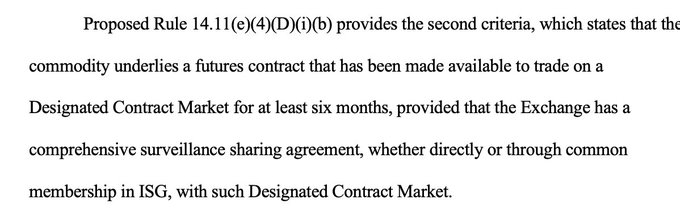
此前,任何加密ETF的诞生都需经历SEC漫长而严苛的“逐案审批”,充满了不确定性。而新的“通用上市标准”彻底改变了游戏规则,其核心是:任何一个加密资产,只要其期货合约在CFTC监管下的市场(如CME或Coinbase衍生品交易所)稳定交易满六个月,其现货ETF就有资格通过“快车道”上市。

SEC的意图是建立一套可扩展的监管框架,但客观上,这却将审批权的一部分“下放”了。新的权力中心,从华盛顿的SEC办公室,转移到了那些能够提供合规期货交易的平台门口。

虽然CME也是其中之一,但其更专注于比特币、以太坊等超大盘资产。对于广阔的山寨币世界而言,真正的“滩头堡”无疑是Coinbase衍生品交易所。它拥有上架更多元化山寨币期货的灵活性和意愿。因此,一个项目能否让自己的代币ETF化,其第一道、也是最关键的一道关卡,从游说SEC议员,变成了努力在Coinbase Derivatives上线其期货产品。


第一波登陆部队:候选名单已清晰可见

这套清晰的规则,让我们得以首次摆脱纯粹的猜测,能够基于一个明确的公式,直接锁定第一批“登陆部队”的名单。这些“先头部队”已经完成了在合规期货市场的“战前演练”,弹药充足,只待冲锋号吹响。

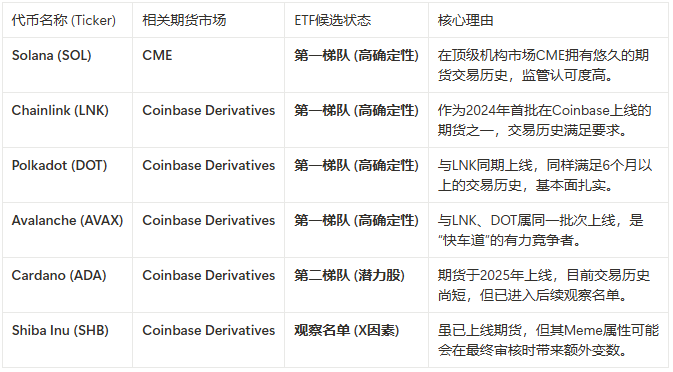
根据这一逻辑推断,首批最有可能获批的山寨币ETF候选名单已跃然纸上:

  • 来自Coinbase阵营的选手包括:Avalanche (AVAX)、Chainlink (LNK)、Polkadot (DOT),甚至包括市场热度极高的Shiba Inu (SHB)。这些代币的期货合约在2024年就已在Coinbase Derivatives备案或上线,到新规正式通过之时,其“服役”时间将远超六个月的硬性要求。
  • 来自CME阵营的重量级选手则是Solana (SOL),其期货产品在机构云集的CME上早已稳定运行,具备极强的合规基础。

因此,当市场还在热议“下一个获批的会是谁”时,答案其实已经隐藏在交易所的公开信息里。这批资产将是新规通过后,第一波冲击华尔街的ETF产品。紧随其后的,将是像Cardano (ADA)这样期货上线稍晚、构成“第二梯队”的资产。

SEC

Coinbase为何是“天选之子”

如果说成为“准入闸口”是新规带来的战略优势,那么其中关于质押的条款,则直接指向了巨大的商业利益。当我们可以预见一只“附带质押收益的Solana ETF”或“Polkadot ETF”的出现时,就能理解这一条款的威力。

新规14.11(e)(4)(G)条款精妙地规定,只要ETF发行商能确保有85%的资产可随时赎回,或为此建立完备的“流动性风险管理计划”,那么包含质押收益的ETF产品就是被允许的。这等于“默许”了将DeFi世界的原生收益机制,打包进华尔街最主流的金融产品中。

SEC

而谁是这项业务的最大受益者?依然是Coinbase。作为全球最大、最受信任的机构级质押服务商之一,Coinbase Custody几乎是所有ETF发行商的首选合作伙伴。无论是上述名单中的哪一个代币被ETF化并附带质押,Coinbase都将通过提供托管和质押服务,赚取服务费和收益分成,其质押业务部门将迎来爆发式增长。

综合来看,SEC的新规就像是为Coinbase的“全栈式”商业模式量身定做的一份大礼。它完美地串联起了Coinbase生态系统中的每一个环节,形成了一个强大的商业飞轮:

  1. 期货市场(入口):Coinbase Derivatives成为ETF的“资格认证中心”,吸引所有渴望被主流接纳的项目方前来“朝圣”,带来交易量和上币费。
  2. 质押与托管(引擎):Coinbase Custody成为质押型ETF的“核心基础设施”,为AVAX、SOL、DOT等未来ETF的底层资产提供服务。
  3. 现货市场(基础):ETF的申购与赎回机制将为Coinbase的现货市场带来海量的交易深度和手续费收入。
  4. 监管合作(护城河):ETF发行商必须与底层期货市场签订“监控共享协议”,这让Coinbase成为了贝莱德、富达等华尔街巨头在山寨币领域不可或缺的“监管科技”合作伙伴。

这一系列优势环环相扣,使Coinbase从一个加密行业的领军者,转变为连接加密世界与传统金融的“核心枢纽”。


结语:从“监视SEC”到“关注Coinbase”

正如“诺曼底登陆”标志着二战欧洲战场的转折,这次“通用上市标准”的提出,也标志着加密资产融入主流金融的转折点。它预示着一个新时代的到来:一个由清晰规则驱动、可大规模复制的山寨币ETF化时代。

而在这场宏大的历史进程中,SEC通过一次巧妙的制度设计,在解决了自身监管难题的同时,也无意中“加冕”了新的王者。市场的焦点,或许将从日复一日地猜测SEC的态度,转向更加实际地关注Coinbase的下一步棋——因为它的每一次期货上币决策,都可能是在为下一只登陆华尔街的、名单已清晰可见的ETF,吹响集结的号角。

Related Reads

Crossing the 'Memory Wall': The Wafer-Level Revolution and Computing Power Routes in the AI Inference Era

In 2026, a historic shift occurred in AI as major cloud providers' inference spending surpassed training spending for the first time, signaling a move from "building large models" to "using large models." This shifts the core challenge from computing power to the "memory wall"—the bottleneck of data movement (model weights, activations, KV Cache) between external DRAM and processors, where energy and latency from data transfer far exceed computation itself. Companies like Nvidia face GPU idle time due to bandwidth limits. In contrast, Cerebras Systems adopts a radical "wafer-scale" approach with its Wafer-Scale Engine (WSE). Instead of cutting a silicon wafer into many chips, Cerebras uses almost the entire wafer as one massive chip (WSE-3). This design provides 44GB of on-chip SRAM, delivering memory bandwidth thousands of times higher than traditional HBM (e.g., 21 PB/s vs. Nvidia B200). For LLM inference, weights are streamed layer-by-layer from external MemoryX storage to the chip, avoiding HBM bottlenecks. This results in token generation speeds 1.5–5 times faster than Nvidia's B200 in some models and significant advantages in first-token latency and long-context tasks. Additionally, Cerebras's architecture offers much lower interconnect power consumption (0.15 pJ/bit vs. GPU's ~10 pJ/bit). However, Cerebras faces challenges: SRAM scaling has slowed with advanced nodes, limiting future capacity gains; the chip requires specialized liquid cooling and custom software stacks; and its external I/O bandwidth (150 GB/s) is low compared to NVLink, hindering multi-system scaling for very large models. Competition is intensifying. Major players are pursuing three paths: 1) Developing proprietary inference ASICs (e.g., Google TPU, Microsoft Maia), 2) Leveraging advanced packaging (e.g., TSMC's SoW) to democratize wafer-scale-like integration, potentially eroding Cerebras's process advantage within a few years, and 3) Exploring optical interconnects for ultimate bandwidth. Commercially, Cerebras is transitioning from a hardware vendor to a service provider, facing the immense challenge of building high-power, specialized data centers to meet large contracts (e.g., 250MW/year from 2026–2028). In conclusion, the AI inference era presents a fundamental architectural trade-off. Cerebras opts for extreme physical optimization for low-latency, single-task performance, while Nvidia prioritizes versatility and massive cluster throughput. The path forward remains uncertain, with technology and business models still evolving in the race toward advanced AI.

marsbit2m ago

Crossing the 'Memory Wall': The Wafer-Level Revolution and Computing Power Routes in the AI Inference Era

marsbit2m ago

Has Bitcoin's 'Rebound Ended', Officially Entering the Late Bear Market Phase?

**Title: Has Bitcoin's Rebound Ended, Entering the Late Bear Market Phase?** **Summary:** Bitcoin's price has declined by 13% this week, signaling a potential return to late-stage bear market conditions. The price fell to around $67k, positioned between the Realized Price and Realized Cap Weighted Average. For the first time since early 2022, the Short-Term Holder cost basis has dropped below this key average, confirming a hallmark of late-cycle bear markets. Profitability metrics have collapsed sharply. The 7-day average of the Realized Profit/Loss ratio plummeted from a local high of 3.16 to 0.29, mirroring the February panic sell-off. Critically, the 90-day average never breached the threshold of 2, indicating the recent rally to $82k was a bear market bounce, not a structural shift. Realized losses surged to $1.35 billion daily, with $770 million coming from Long-Term Holders selling at a loss. This accelerating redistribution of supply from weak to strong hands is a necessary but ongoing process for a market bottom. The rally stalled almost precisely at the aggregate cost basis (~$83k) of US spot Bitcoin ETF investors, turning that level into strong resistance and leaving the average ETF holder underwater again. Spot market flows have turned decisively negative, showing sellers are dominating order books despite the price drop. While a significant futures long liquidation event cleared over $400 million in leverage, providing a potential reset, sustained spot demand is yet to materialize. Options markets continue to price in higher future volatility (Implied Volatility) than recent price action (Realized Volatility) has shown, with a persistent skew towards put options, indicating ongoing demand for downside protection. In conclusion, multiple metrics point to a fragile market structure. Resistance at the ETF cost basis, accelerating realized losses, dominant spot selling, and cautious options pricing all suggest the bear market trend persists. A sustainable recovery likely requires a resurgence of spot demand, ETF holders returning to profit, and a clear reduction in selling pressure.

marsbit2m ago

Has Bitcoin's 'Rebound Ended', Officially Entering the Late Bear Market Phase?

marsbit2m ago

TechFlow Intelligence Agency: Anthropic Calls for Global Pause in AI Development While Preparing for Trillion-Dollar IPO; SpaceX IPO Roadshow Heats Up, But S&P 500 Rejects Fast-Track Inclusion

In today's TechFlow Intelligence Briefing, several major tech stories highlight a growing theme of trust and credibility gaps across AI, crypto, and finance. AI company Anthropic has publicly called for a global pause in AI development, citing risks from Claude's "recursive self-improvement." Ironically, this coincides with reports the company is preparing for a massive IPO targeting a near $1 trillion valuation. This perceived hypocrisy, coupled with widespread user complaints about Claude's declining performance, is sparking debate over whether the safety warning is genuine or a competitive tactic. Meanwhile, in a substantive security move, Anthropic open-sourced a framework for AI-powered vulnerability discovery. In the crypto market, Bitcoin's price drop below $61,000 triggered over $1.16 billion in liquidations, flipping the market into a state where more BTC is held at a loss than at a profit, a historical bearish signal. On the corporate front, SpaceX's highly anticipated IPO is generating immense Wall Street excitement, with Goldman Sachs projecting 100x revenue growth by 2030. However, the S&P 500 has refused to fast-track the company's inclusion post-IPO, potentially limiting immediate institutional demand. Separately, ByteDance's AI app Doubao lost over 6 million monthly active users after introducing a subscription model, highlighting the challenges of AI monetization. Other notable developments include Nvidia certifying HBM4 memory from Samsung, SK Hynix, and Micron; Cloudflare's acquisition of front-end tooling company VoidZero; and its CEO warning that bot traffic now exceeds human traffic online. The underlying narrative connects these events: a trust crisis. From AI firms' contradictory actions and crypto volatility to the clash between SpaceX's hyped narrative and institutional rules, a pattern is emerging where stated intentions and actual practices are increasingly misaligned.

marsbit18m ago

TechFlow Intelligence Agency: Anthropic Calls for Global Pause in AI Development While Preparing for Trillion-Dollar IPO; SpaceX IPO Roadshow Heats Up, But S&P 500 Rejects Fast-Track Inclusion

marsbit18m ago

Dalio Warns: AI Boom Shows Signs of a Bubble, Day of Reckoning Will Be the Time of Burst

Ray Dalio, founder of Bridgewater Associates, warns that the current artificial intelligence investment boom shows classic signs of a bubble, which he expects will eventually burst. In a Bloomberg Television interview, he noted that great technological revolutions often lead to capital inflows that create bubbles, making it difficult for investors and companies to calibrate their spending accurately—either overspending to capture market share or underspending and losing their competitive position. This caution comes amid significant rallies in AI-related assets, particularly chipmakers, driven by soaring demand for data centers and high-bandwidth chips, raising debates about overheating valuations. In contrast, Nvidia CEO Jensen Huang recently asserted that investors embracing the AI wave would see "crazy" returns and dismissed concerns over return on investment for data center spending as outdated. Dalio, however, focuses on the risks in the profit realization phase. He argues that bubbles tend to show signs of破裂 when markets transition from investment to the need for tangible returns, describing the burst as a process of converting paper wealth into cash. While acknowledging AI's intrinsic value, he expressed concern over the future profitability of some AI companies, suggesting the market is repeating a familiar pattern. The 76-year-old billionaire, who fully exited Bridgewater in 2025, has a net worth estimated at $21.5 billion according to the Bloomberg Billionaires Index.

marsbit52m ago

Dalio Warns: AI Boom Shows Signs of a Bubble, Day of Reckoning Will Be the Time of Burst

marsbit52m ago

Privacy Coin Crisis of Confidence! ZEC Plunges Over 56% in a Single Day

Zcash (ZEC), a leading privacy-focused cryptocurrency, experienced a severe crash on June 5th, plummeting over 56% in a single day and erasing nearly two months of gains. The flash crash was triggered by the disclosure of a critical zero-knowledge proof vulnerability within Zcash's Orchard privacy pool, which had existed since the pool's launch in May 2022. The flaw theoretically allowed an attacker to forge unlimited ZEC undetectably due to the pool's privacy features. The vulnerability was discovered on May 29th by independent security researcher Taylor Hornby during a proactive audit commissioned by Shielded Labs, utilizing AI-assisted analysis. The Zcash development team responded swiftly, implementing an emergency soft fork to disable Orchard transactions on June 2nd and executing a permanent hard fork fix (NU6.2) on June 3rd. Despite the technical fix, a major crisis of confidence emerged. The core issue is that Orchard's privacy design makes it cryptographically impossible to prove whether the vulnerability was exploited over the past four years, casting permanent doubt on the historical supply integrity of ZEC. While Shielded Labs argues exploitation was unlikely, the inability to provide definitive proof has severely damaged market trust. This sentiment was exacerbated when BitMEX co-founder Arthur Hayes, a prominent ZEC supporter, announced he was selling his entire position. He stated that privacy assets require "perfect security" rather than "probable safety." The combined effect of the disclosure and Hayes's exit ignited widespread panic selling, leading to massive liquidations and significant price decline. Analysts note the event highlights a fundamental tension within privacy coins: the conflict between verifiable supply and cryptographic privacy.

链捕手54m ago

Privacy Coin Crisis of Confidence! ZEC Plunges Over 56% in a Single Day

链捕手54m ago

Trading

Spot
Futures

Hot Articles

What is $BITCOIN

DIGITAL GOLD ($BITCOIN): A Comprehensive Analysis Introduction to DIGITAL GOLD ($BITCOIN) DIGITAL GOLD ($BITCOIN) is a blockchain-based project operating on the Solana network, which aims to combine the characteristics of traditional precious metals with the innovation of decentralized technologies. While it shares a name with Bitcoin, often referred to as “digital gold” due to its perception as a store of value, DIGITAL GOLD is a separate token designed to create a unique ecosystem within the Web3 landscape. Its goal is to position itself as a viable alternative digital asset, although specifics regarding its applications and functionalities are still developing. What is DIGITAL GOLD ($BITCOIN)? DIGITAL GOLD ($BITCOIN) is a cryptocurrency token explicitly designed for use on the Solana blockchain. In contrast to Bitcoin, which provides a widely recognized value storage role, this token appears to focus on broader applications and characteristics. Notable aspects include: Blockchain Infrastructure: The token is built on the Solana blockchain, known for its capacity to handle high-speed and low-cost transactions. Supply Dynamics: DIGITAL GOLD has a maximum supply capped at 100 quadrillion tokens (100P $BITCOIN), although details regarding its circulating supply are currently undisclosed. Utility: While precise functionalities are not explicitly outlined, there are indications that the token could be utilized for various applications, potentially involving decentralized applications (dApps) or asset tokenization strategies. Who is the Creator of DIGITAL GOLD ($BITCOIN)? At present, the identity of the creators and development team behind DIGITAL GOLD ($BITCOIN) remains unknown. This situation is typical among many innovative projects within the blockchain space, particularly those aligning with decentralized finance and meme coin phenomena. While such anonymity may foster a community-driven culture, it intensifies concerns about governance and accountability. Who are the Investors of DIGITAL GOLD ($BITCOIN)? The available information indicates that DIGITAL GOLD ($BITCOIN) does not have any known institutional backers or prominent venture capital investments. The project seems to operate on a peer-to-peer model focused on community support and adoption rather than traditional funding routes. Its activity and liquidity are primarily situated on decentralized exchanges (DEXs), such as PumpSwap, rather than established centralized trading platforms, further highlighting its grassroots approach. How DIGITAL GOLD ($BITCOIN) Works The operational mechanics of DIGITAL GOLD ($BITCOIN) can be elaborated on based on its blockchain design and network attributes: Consensus Mechanism: By leveraging Solana’s unique proof-of-history (PoH) combined with a proof-of-stake (PoS) model, the project ensures efficient transaction validation contributing to the network's high performance. Tokenomics: While specific deflationary mechanisms have not been extensively detailed, the vast maximum token supply implies that it may cater to microtransactions or niche use cases that are still to be defined. Interoperability: There exists the potential for integration with Solana’s broader ecosystem, including various decentralized finance (DeFi) platforms. However, the details regarding specific integrations remain unspecified. Timeline of Key Events Here is a timeline that highlights significant milestones concerning DIGITAL GOLD ($BITCOIN): 2023: The initial deployment of the token occurs on the Solana blockchain, marked by its contract address. 2024: DIGITAL GOLD gains visibility as it becomes available for trading on decentralized exchanges like PumpSwap, allowing users to trade it against SOL. 2025: The project witnesses sporadic trading activity and potential interest in community-led engagements, although no noteworthy partnerships or technical advancements have been documented as of yet. Critical Analysis Strengths Scalability: The underlying Solana infrastructure supports high transaction volumes, which could enhance the utility of $BITCOIN in various transaction scenarios. Accessibility: The potential low trading price per token could attract retail investors, facilitating wider participation due to fractional ownership opportunities. Risks Lack of Transparency: The absence of publicly known backers, developers, or an audit process may yield skepticism regarding the project's sustainability and trustworthiness. Market Volatility: The trading activity is heavily reliant on speculative behavior, which can result in significant price volatility and uncertainty for investors. Conclusion DIGITAL GOLD ($BITCOIN) emerges as an intriguing yet ambiguous project within the rapidly evolving Solana ecosystem. While it attempts to leverage the “digital gold” narrative, its departure from Bitcoin's established role as a store of value underscores the need for a clearer differentiation of its intended utility and governance structure. Future acceptance and adoption will likely depend on addressing the current opacity and defining its operational and economic strategies more explicitly. Note: This report encompasses synthesised information available as of October 2023, and developments may have transpired beyond the research period.

363 Total ViewsPublished 2025.05.13Updated 2025.05.13
What is $BITCOIN

Discussions

Welcome to the HTX Community. Here, you can stay informed about the latest platform developments and gain access to professional market insights. Users' opinions on the price of BTC (BTC) are presented below.

活动图片