U.S. Senate has ‘different ideas’ about crypto bill – Why it’s delaying progress

ambcryptoPublished on 2025-07-23Last updated on 2025-07-25

Key Takeaways 

The crypto market structure bill could face a ‘long road ahead’ as the Senate diverges from the House-passed CLARITY Act. Will Congress pass it by September? 


The broader crypto market structure framework could take a little longer than expected, going by the recent updates at the U.S. Senate. 

According to Jake Chervinsky, legal chief of crypto-focused Variant Fund, the Senate has ‘different ideas’ on the market structure bill compared to the CLARITY Act passed by the House last week. 

“Not happening with CLARITY. The Senate has its own ideas about market structure, and so far, they are very different.”

CLARITY ActCLARITY Act

Source: X

He added that most people assumed that the CLARITY Act would pass smoothly in the Senate like the stablecoin bill, the GENIUS Act, did in the House.

According to him, this may not be the case, and a delay may be likely.

Senate diverges from House on key crypto bill

On the 22nd of July, the U.S. Senate Committee on Banking, Housing, and Urban Affairs released a draft proposal for a broader regulatory framework targeting digital assets.

While it draws from elements of the House-approved CLARITY Act, experts have highlighted significant differences between the two approaches.

Notably, the Senate draft introduces a new asset category—“ancillary” tokens—allowing issuers to self-certify.

The Senate’s draft proposal expands the SEC’s oversight and limits annual fundraising through Initial Coin Offerings (ICOs) to $75 million. 

This stands in contrast to the House’s CLARITY Act, which allows broader fundraising exemptions and places regulatory authority primarily with the CFTC, reducing the SEC’s role.

Jake Chervinsky, a policy expert, described the Senate’s approach as indicative of a “long road ahead” toward passing a unified crypto market structure bill.

Meanwhile, blockchain security firm TRM Labs pointed out two major differences: tougher anti-money laundering (AML) measures and a stronger focus on public-private partnerships. 

According to the firm, the next step will be for the Senate to collect stakeholder feedback before formally introducing the bill.

But TRM Labs noted that the hearings and mark-ups could happen this summer or extend to fall, adding that, 

“If the bill advances, lawmakers will need to conference with the House to reconcile differences between the Senate draft and the CLARITY Act.”

That said, Senate Committee on Agriculture is expected to release its discussion draft in September, noted reporter Eleanor Terret, quoting people familiar with the matter. 

Overall, the White House expects the market structure bill to be done and submitted to President Donald Trump by the end of September. It remains to be seen whether this deadline will be met. 

Share

Related Reads

Li Fei-Fei's Latest Long-Form Article: When Video Generation, Robotics, and NVIDIA All Call Themselves World Models, We Need a Taxonomy

In a new article, Dr. Fei-Fei Li addresses the widespread and often inconsistent use of the term "world model" in AI. She proposes a clear, functional taxonomy rooted in the classic Partially Observable Markov Decision Process (POMDP) loop (agent → action → state → observation → agent). According to this framework, current systems called "world models" are different projections of this loop, categorized by their primary output: 1. **Renderers**: Output observations (pixels). Their goal is visual fidelity for human consumption (e.g., video generation models like Sora). They are the most commercially mature but are limited by a focus on appearance over physical accuracy. 2. **Simulators**: Output states (geometric, physical, dynamic representations). They provide a structurally accurate world for both human professionals (e.g., architects) and computational agents (e.g., robots for training). Li argues simulators are the crucial, underappreciated bridge, as they can underpin both rendering and planning. 3. **Planners**: Output actions. Given an observation and a goal, they decide what an agent should do next (e.g., robotic action models). This area is highly promising but remains the least mature for real-world deployment. Li highlights a key trend: the boundaries between these three categories are beginning to blur, as they all rely on a shared underlying understanding of geometry, physics, and dynamics. The logical endpoint is a unified world foundation model capable of switching between rendering, simulation, and planning based on downstream needs. This convergence, she concludes, is central to advancing spatial intelligence—enabling machines not just to talk about the world, but to truly understand, imagine, and interact with it.

marsbit51m ago

Li Fei-Fei's Latest Long-Form Article: When Video Generation, Robotics, and NVIDIA All Call Themselves World Models, We Need a Taxonomy

marsbit51m ago

Forbes Feature: Stablecoin Cross-Border Payments Are Faster, But Not Yet Cheaper

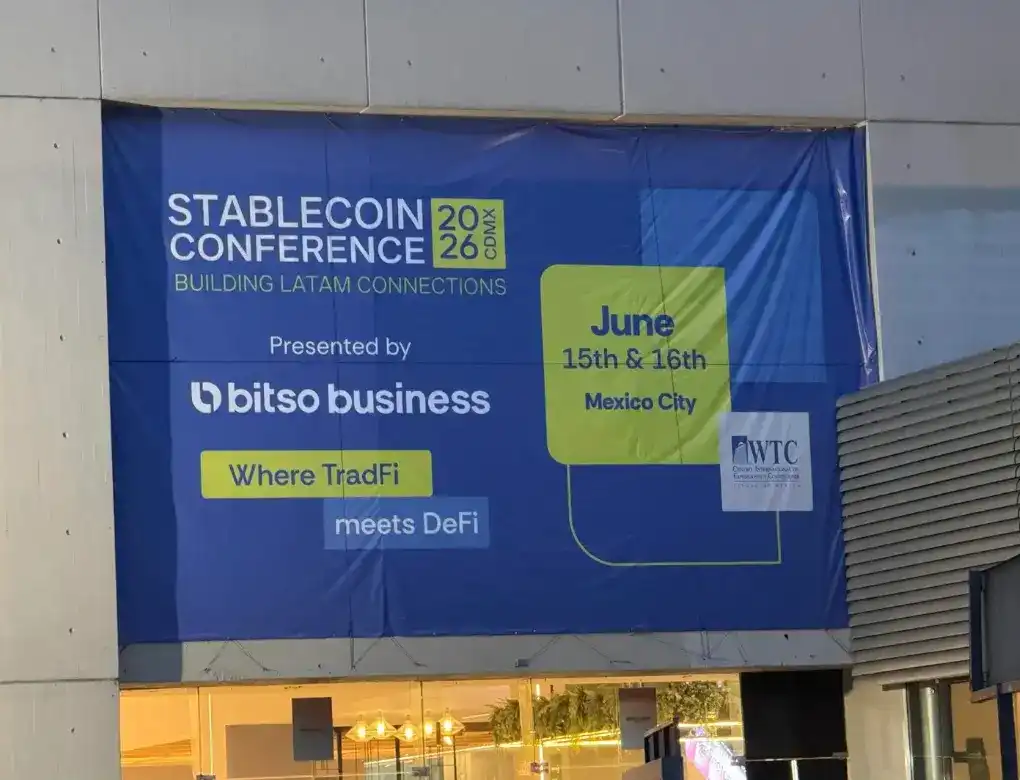
A Forbes feature delves into the state of stablecoin-based cross-border payments, noting rapid growth but a key shortfall: while faster and more accessible, they are not yet cheaper. At a recent industry conference in Mexico City, optimism about technology, regulation, and volume was tempered by discussions with practitioners. The core issue is liquidity. Traditional FX brokers charge 60-70 basis points, and stablecoins promise to slash this to 2-5 basis points. However, this theoretical cost advantage cannot be realized until deep liquidity pools are established at scale, requiring significant institutional capital inflow. A major adoption barrier is trust. Businesses often rely on long-standing relationships with traditional brokers, valuing reliability over marginal cost savings. This shift will be gradual. Furthermore, successful companies in the space are not positioning themselves as replacements for legacy systems like SWIFT, but as complements. They leverage stablecoins for speed while using traditional rails for their standardization and reliability in ensuring accurate payment details—a critical factor for supplier payments to avoid customs issues. Companies like Caliza, experiencing high monthly growth, exemplify this hybrid approach. The industry anticipates consolidation, as long-term viability will depend on securing the essential trifecta: proper licensing, robust fiat on/off-ramps, and deep liquidity. Without these, firms risk being mere intermediaries rather than building sustainable businesses.

marsbit52m ago

Forbes Feature: Stablecoin Cross-Border Payments Are Faster, But Not Yet Cheaper

marsbit52m ago

Li Feifei's Latest Article: When Video Generation, Robotics, and NVIDIA All Claim to Have 'World Models,' We Need a Taxonomy

"World Model" has become a widely used yet ambiguous term in AI. Drawing from the classic POMDP framework (agent → action → state → observation), this article proposes a functional taxonomy to clarify the concept. It identifies three distinct types, categorized by their output in the perception-action loop: 1. **Renderers**: Output visual observations (pixels). These models, like advanced video generators, prioritize visual fidelity but often lack underlying physical accuracy. 2. **Simulators**: Output the state of the world (geometry, physics, dynamics). They provide a structurally accurate representation for professionals (e.g., architects) and serve as training environments for robots and AI agents. 3. **Planners**: Output actions. Given an observation and a goal, they determine what an agent should do next, closing the perception-action loop (e.g., vision-language-action models). While renderers are currently the most commercially mature and planners are the most aspirational, the article argues that **simulators are the crucial, underappreciated hub**. By working at the level of geometry and physics, a simulator can project upwards to create visuals for humans and downwards to predict action consequences for agents. The future lies in the convergence of these three functions. Emerging research and products, like World Labs' Marble model which outputs both visual splats and physical collision meshes, are beginning to blur these boundaries. The logical endpoint is a unified world foundation model capable of rendering, simulating, and planning based on a shared understanding of spatial and temporal structures—ultimately enabling machines to understand, imagine, and interact with the physical world.

链捕手1h ago

Li Feifei's Latest Article: When Video Generation, Robotics, and NVIDIA All Claim to Have 'World Models,' We Need a Taxonomy

链捕手1h ago

Trading

Spot
活动图片