DeFi Development Stock Soars 34% This Week After Solana Buy

TheCryptoTimesPublished on 2025-07-04Last updated on 2025-07-04

DeFi Development Corp. (DFDV) surged 34% this week after revealing a fresh $2.7 million investment in Solana. On Thursday alone, the stock jumped 17% to $23.80, before gaining another 0.8% in after-hours trading to touch $24, according to Google Finance.

The company announced it had bought 17,760 Solana (SOL) tokens at an average price of $153.10, bringing its total SOL holdings to 640,585, now worth around $98 million. DeFi Dev said it plans to hold these tokens long-term and stake them to earn yield.

The new purchase is one of the components of the overall treasury strategy of the company. In April, DeFi Development Corp announced a $1 billion plan to invest in Solana. Though an earlier SEC filing was withdrawn in June after the firm missed a report deadline, the firm seems to be in full steam.

On Wednesday, the company announced plans to raise $112.5 million through private placements, with the deal expected to close Monday. It plans to use $75.6 million for a prepaid forward stock purchase and the rest for corporate purposes, including buying more SOL.

Investors seem optimistic despite weak Q1 numbers, where net revenue dropped 30% year-over-year. In a July 2 shareholder letter, the company said it’s focused on protecting investor capital and riding out market volatility.

From a low of $18.47 on Wednesday to $24 on Thursday night, DFDV stock is now up over 2,733% year-to-date, though still 33% below its May peak of $35.53.

Also Read: BitMine Stock Soars 3,000% in Week After ETH Treasury Plan


Related Reads

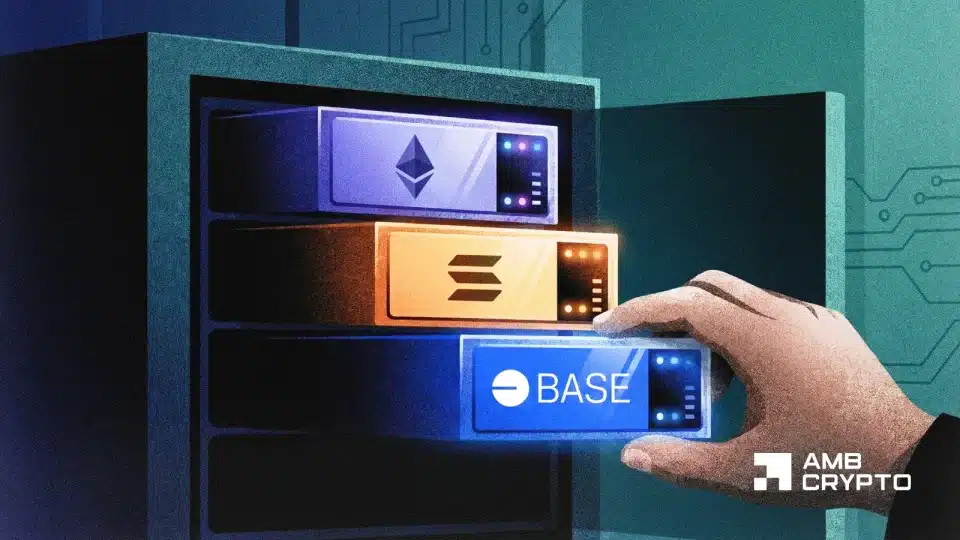
Why 2026 could redefine Ethereum, Solana, Base and Avalanche

Blockchain infrastructure is undergoing a major coordinated transformation, driven by institutional demand for reliability, compliance, and predictable settlement. Over $30 billion in Real-World Assets (RWA) on-chain has exposed network weaknesses. Major blockchains are responding with foundational upgrades, moving beyond incremental speed improvements. Ethereum's "Glamsterdam" upgrade, planned for H1 2026, will significantly increase gas limits and introduce features like PBS (pre-blocked state) for enhanced settlement and parallel execution. Solana's "Alpenglow," targeting a mainnet launch in H2 2026, focuses on reducing finality time dramatically and freeing network resources to improve reliability. Beyond speed, compliance is critical. Base's "Beryl" upgrade in Q3 2026 will introduce a standardized, regulatory-compliant token framework (B20). Avalanche's "Octane" upgrade aims to boost transaction processing and reduce costs for enterprise applications. Even Bitcoin is evolving with the potential activation of OP_CAT by late 2026/early 2027. The competition is shifting. While technical upgrades are widespread, institutions will ultimately allocate capital based on proven execution, operational resilience, and regulatory compatibility during market stress. Ethereum currently leads in tokenized assets, while networks like Base and Solana are strengthening their institutional offerings. The blockchain that best delivers reliable, compliant, and uninterrupted service is poised to attract the greatest share of future institutional capital.

ambcrypto18m ago

Why 2026 could redefine Ethereum, Solana, Base and Avalanche

ambcrypto18m ago

Tiger Research: Take RWA Tokenization Overseas First

This article discusses the strategic choices facing financial institutions in jurisdictions lacking mature regulatory frameworks for Real-World Asset (RWA) tokenization. With the market growing rapidly, institutions must choose between waiting for local legislation, using regulatory sandboxes, or—the recommended priority—expanding into overseas markets to gain early experience. Successfully launching cross-border RWA tokenization requires meticulous preparation across six key areas: establishing an overseas base (e.g., Hong Kong, Singapore, the U.S.), securing necessary licenses, defining the tokenized asset (with bonds being simpler than non-standard assets), defining the target investor scope, deciding on settlement currencies/payment flows, and designing operational requirements like custody and on-chain governance. The article outlines two primary strategic paths: a direct "onshore" path and a "native on-chain" path. The direct path involves setting up a legal entity and obtaining licenses in a mature jurisdiction like Hong Kong, Singapore, or the U.S., leveraging existing platforms (e.g., DigiFT, Securitize) for efficiency. The alternative native on-chain path involves partnering with compliant, decentralized platforms (e.g., Ondo, Plume Nest) that use structures like offshore SPVs to facilitate tokenization and access DeFi liquidity, offering speed and broader reach but with greater structural complexity. The core argument is that institutions should not wait for perfect domestic regulation. A detailed hypothetical case study illustrates the multi-step, 6-12 month process of launching an overseas tokenized bond. The key takeaway is that the essence of a tokenization business lies not in the technology but in successfully executing the entire sales and operational process. The market is moving forward, and the time to act is now.

marsbit29m ago

Tiger Research: Take RWA Tokenization Overseas First

marsbit29m ago

Trading

Spot
活动图片