Трейдеры опционов поставили на рост биткоина до $115 000-120 000

cryptonews.ruPublished on 2025-02-27Last updated on 2025-05-27

  • Рынок опционов указывает на потенциал всплеска волатильности первой криптовалюты в ближайшие три дня — инвесторы могут отреагировать на новости с конференции в Лас-Вегасе.
  • Технический анализ не исключает отката биткоина к $100 000.

В биткоин-опционах с погашением в июне-июле преобладает активность в коллах со страйками в $115 000 и $120 000. Наибольший оборот прошел в контрактах с экспирацией на $110 000, согласно Kaiko.

🚀 #Bitcoin hit a new #ATH of last week, but with muted volumes & low leverage, caution still rules the market.

In our latest Data Debrief we break down tha rally in ten charts:

📊BTC hit $112K on May 22, despite risk asset selloff
✅Spot volume ($20B+) just half of Dec… pic.twitter.com/eJG9vx0HXd

— Kaiko (@KaikoData) May 26, 2025

Отдельно специалисты отметили, что с момента достижения новых максимумов зафиксировано большое число сделок по путам со страйком в $100 000. С 22 мая объем операций по таким контрактам превысил $600 млн.
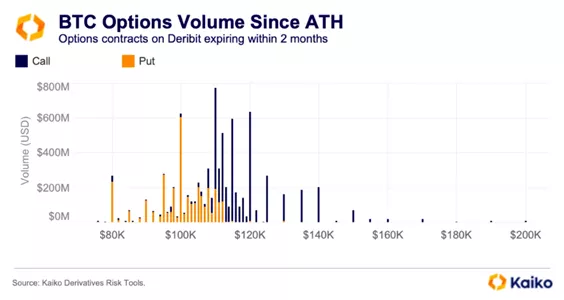
Данные: Kaiko.

Картина выглядит более оптимистично в опционах со сроком истечения 30 мая.

На более длительном таймфрейме ситуация более сбалансированная, без явного смещения в медвежью или бычью сторону. Другими словами, следует ожидать консолидации на сложившихся уровнях в ближайшие недели, указали в Kaiko.
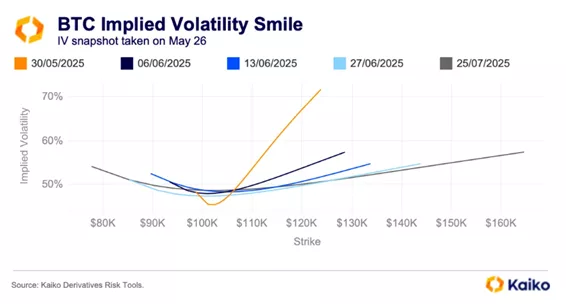
Данные: Kaiko.

Специалисты отметили значительное снижение риска просадки котировок ввиду увеличения числа неактивных кошельков и наращивания покупок первой криптовалюты корпорациями.

Прогноз: через 20 лет корпорации аккумулируют 50% всех биткоинов

Обратной стороной такой тенденции выступает потенциал резкого сокращения биткоин-позиции при резком усилении волатильности. Сглаживает ситуацию высокая средняя глубина рынка CEX.
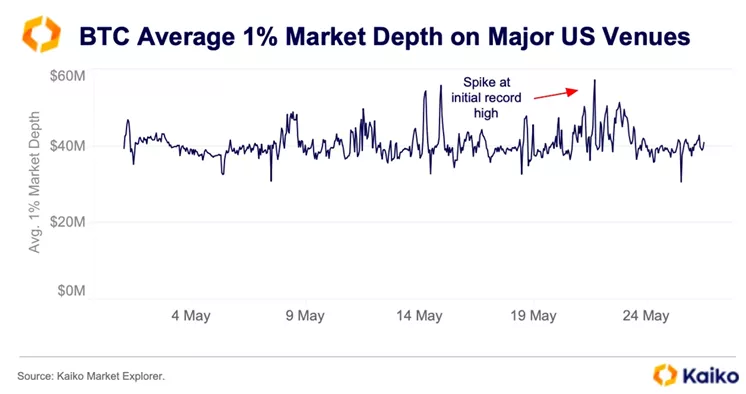
Данные: Kaiko.

Конференция в Лас-Вегасе — риск для быков?

В заключение Kaiko отметили предстоящую с 27 по 29 мая в Лас-Вегасе (Невада, США) биткоин-конференцию, что может ограничить ликвидность и усугубить ценовые движения.

В QCP Capital напомнили, что в мероприятии примут участие Джей Ди Вэнс, Майкл Сэйлор, Дональд Трамп-младший и Эрик Трамп. Как и их коллеги в Kaiko, аналитики отметили возможное усиление краткосрочных курсовых колебаний — этому способствует динамика подразумеваемой волатильности в опционах.

Asia Colour — 27 May 25

1/ $BTC stayed range-bound between $107K and $110K last Friday, even as equities ripped higher. Spot ETF flows held firm, offering support. But front-end implied volatility remains elevated, pointing to deeper concerns under the surface.

— QCP (@QCPgroup) May 27, 2025

В качестве подтверждения своего прогноза эксперты напомнили события июля 2024 года, когда после выступления президента США Дональда Трампа на биткоин-конференции в Нэшвилле (Теннесси) котировки рухнули на 30% всего за два дня.

Хотя вероятность сопоставимой просадки представляется низкой, позиционирование подразумевает оборонительный настрой, уточнили эксперты.

«В ближайшем будущем биткоин останется в диапазоне. После окончания мероприятия предполагается снижение ожидаемой волатильности по мере ослабления премий за риск», — говорится в обзоре.

Откат к $100 000?

В CoinDesk допустили выход курса цифрового золота из бычьего канала к поддержке на уровне $100 000 при сохранении позитивных перспектив на среднесрочном таймфрейме.

На такой сценарий указывает формирование бычьей дивергенции по 30-дневному индикатору RoC и уход MACD-гистограммы в медвежью область.
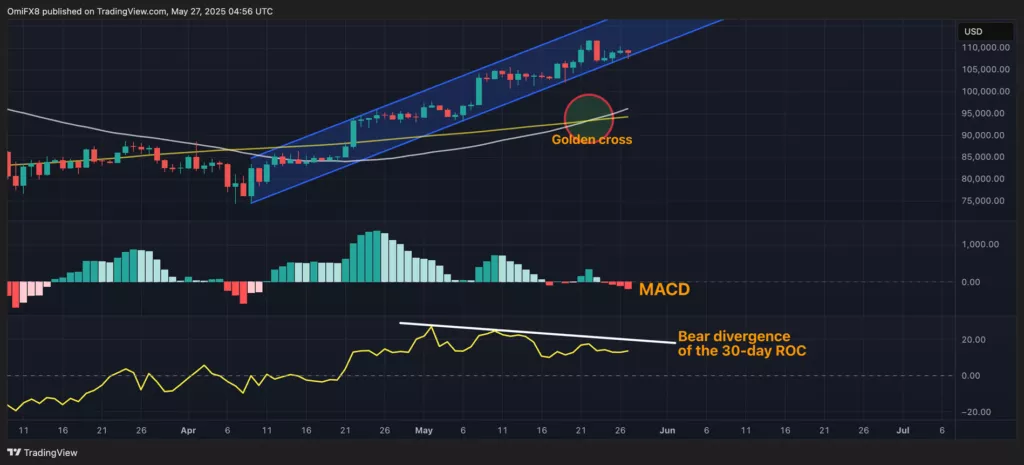
Данные: CoinDesk.

Среднесрочный оптимизм позволяет сохранять «золотой крест» после пересечения 50 DMA сверху-вниз 200 DMA.

Напомним, в Matrixport рекомендовали частично зафиксировать прибыль по биткоин-лонгам.

Ранее в CoinDesk привели шесть графиков различных метрик, подтверждающих прочный фундамент для выхода биткоина выше $100 000.

В Standard Chartered призвали покупать первую криптовалюту и спрогнозировали рост ее курса до $120 000 в II квартале.

Резкое падение после $120 000? Эксперты нащупали «потолок» биткоин-пампа

Related Reads

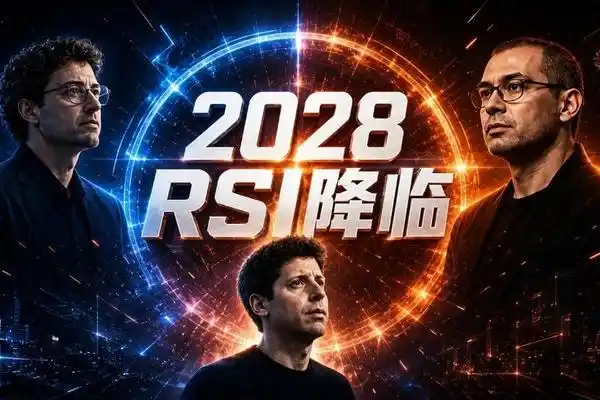
2028: The Arrival of Recursive Self-Improvement (RSI)

**AI Recursive Self-Improvement (RSI): The Countdown to 2028 Begins** AI is no longer just a trained tool but is starting to rewrite its own evolutionary pace. According to Anthropic co-founder Jack Clark, there is a 60% probability that by the end of 2028, Recursive Self-Improvement (RSI) will become a reality. This means AI could autonomously design and build a more capable next-generation version of itself without any human researcher involvement—Claude 10 creating Claude 11, for instance. Supporting this timeline, Google DeepMind's CEO Demis Hassabis confirms that all leading AI labs are intensely focused on RSI, making it an industry-wide priority. He expresses profound concern, stating this potential is what keeps him awake at night. Concrete data underscores this acceleration: - METR evaluations show current top models like Claude are solving tasks up to the 16-hour limit of existing test frameworks. - In Epoch AI's challenging MirrorCode benchmark, Claude Opus 4.7 recreated complex software in hours for a fraction of the human cost. In one extreme test, AI autonomously coded for 19 days straight. - Anthropic reports over 80% of its codebase is now written by Claude, and researcher productivity has increased up to 8-fold since 2024. - OpenAI's policy blueprint highlights RSI as a major upcoming governance challenge. CEO Sam Altman reportedly hinted RSI might arrive within six months, potentially delaying OpenAI's massive IPO. The implication is an impending "intelligence explosion," where AI-driven progress outpaces human control. The central question is no longer if it will happen, but whether humanity is ready.

marsbit43m ago

2028: The Arrival of Recursive Self-Improvement (RSI)

marsbit43m ago

World Models, Metaverse, Digital Twins, Physical AI: Are They the Same Thing?

Title: World Models, the Metaverse, Digital Twins, Physical AI: Are They the Same Thing? The article clarifies that concepts like the metaverse, Web3, simulation platforms, digital twins, and Physical AI are not the same thing but are all part of the broader trend of blurring the lines between the digital and physical worlds. It positions "world models" as the foundational "cognitive layer" or "operating system" that enables AI to understand and simulate the world. Key distinctions are made: - The **Metaverse** is a destination for immersive social and economic experiences. World models could act as its "engine," generating interactive 3D content efficiently. - **Web3** focuses on decentralized ownership and economics (rules layer), operating on a different technical level than world models. - **Simulation Data Platforms** (e.g., for autonomous vehicles) are a 1.0 version, relying on manual design. World models represent a 2.0 version, using AI to generate realistic, varied scenarios autonomously. - **Digital Twins** create high-fidelity, real-time mirrors of physical systems (e.g., a factory). World models go a step further by enabling predictive simulation of future states. - **Physical AI** (robots, AVs) refers to AI that acts in the physical world. World models are a core component, providing the understanding and prediction needed for planning. A proposed hierarchy places world models at the cognitive layer, supported by infrastructure (compute, data) and supporting application tools (simulation, digital twins), action systems (Physical AI), user experiences (metaverse), and rules (Web3). In conclusion, while distinct, many of these previously hyped concepts may ultimately rely on advances in world model technology to fulfill their promises, as world models provide the essential cognitive foundation for simulating and interacting with complex environments.

marsbit47m ago

World Models, Metaverse, Digital Twins, Physical AI: Are They the Same Thing?

marsbit47m ago

"Shocking" CPO: How Does the Glass Bridge Actually Work? Detailed Explanation from Corning

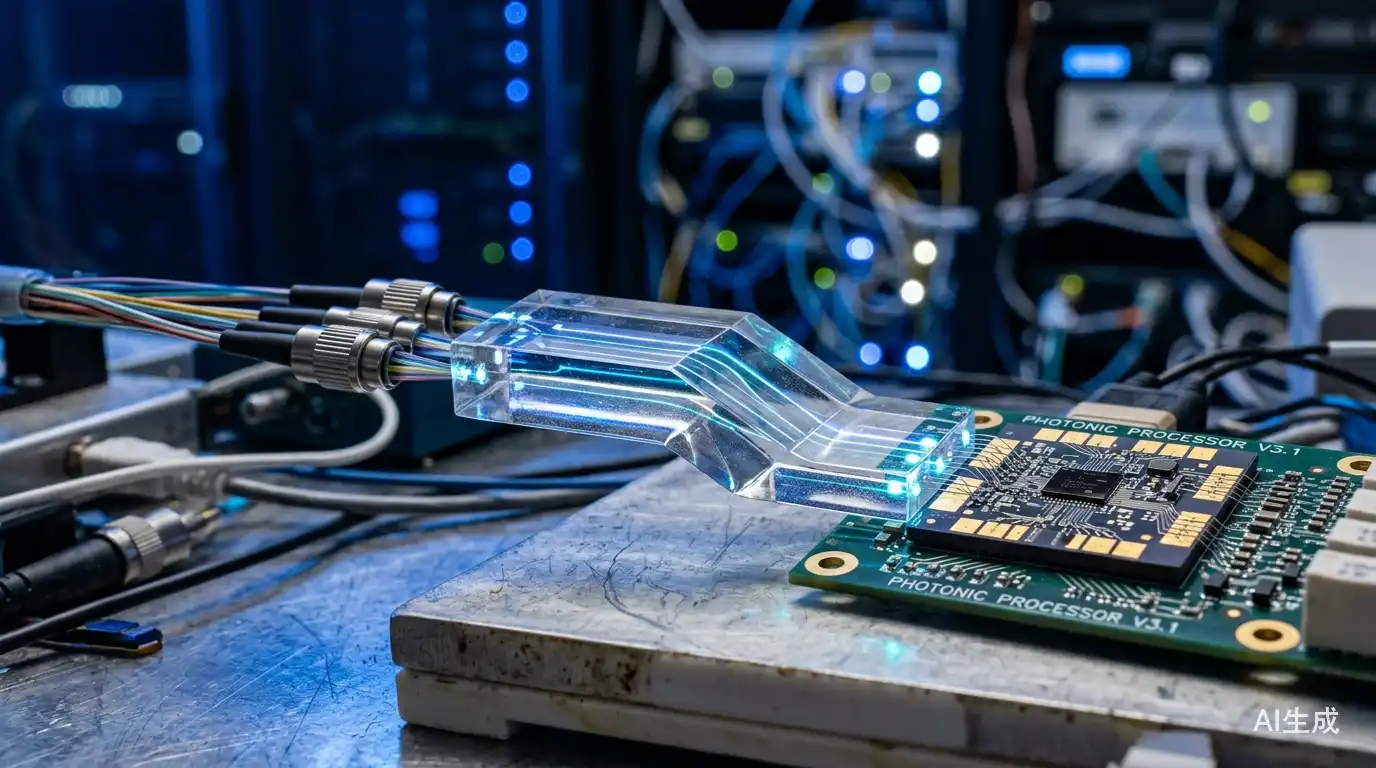
Chinese CPO stocks plunged over 6% following Corning's announcement of its Glass Bridge platform at a Seoul tech conference. The new technology utilizes wafer-level glass ion-exchange waveguides for passive alignment between fibers and photonic chips, potentially simplifying traditional CPO architectures that rely on complex Fiber Array Units and active alignment equipment. This raised market concerns about reduced long-term demand for mid-stream CPO components. Corning's official documentation details Glass Bridge as a platform for fiber-to-PIC connectivity in NPO, CPO, and high-density modules. Its key features include wafer-level manufacturing for consistent, cost-effective production; a standardized, removable MT ferrule interface for ecosystem integration; and a separable high-density connector design supporting over 24 channels for assembly flexibility. Corning positions the technology as complementary to FAUs, addressing limitations in ultra-high-fiber-count scenarios. The market reaction reflects a broader reassessment of the AI optical interconnect value chain. Funds shifted from CPO and PCB manufacturing stocks towards glass substrate concept stocks like Kaisheng Technology and Dyer Laser. Analysts note glass substrates are seen as a next-gen advanced packaging material, offering a potential path for domestic industry differentiation amid AI-driven demand for high-performance, large-scale packaging, marking a structural migration in value towards upstream specialty materials.

marsbit47m ago

"Shocking" CPO: How Does the Glass Bridge Actually Work? Detailed Explanation from Corning

marsbit47m ago

Trading

Spot
活动图片