Токен TRUMP подорожал на 60% после анонса ужина с Трампом. Кто приглашен

RBK-cryptoPublished on 2025-04-24Last updated on 2025-04-24

Официальный мемкоин президента США резко вырос в цене, после того как проект TRUMP объявил о приглашении крупнейших держателей этой криптовалюты на закрытое мероприятие

«РБК-Крипто» не дает инвестиционных советов, материал опубликован исключительно в ознакомительных целях. Криптовалюта — это волатильный актив, который может привести к финансовым убыткам.

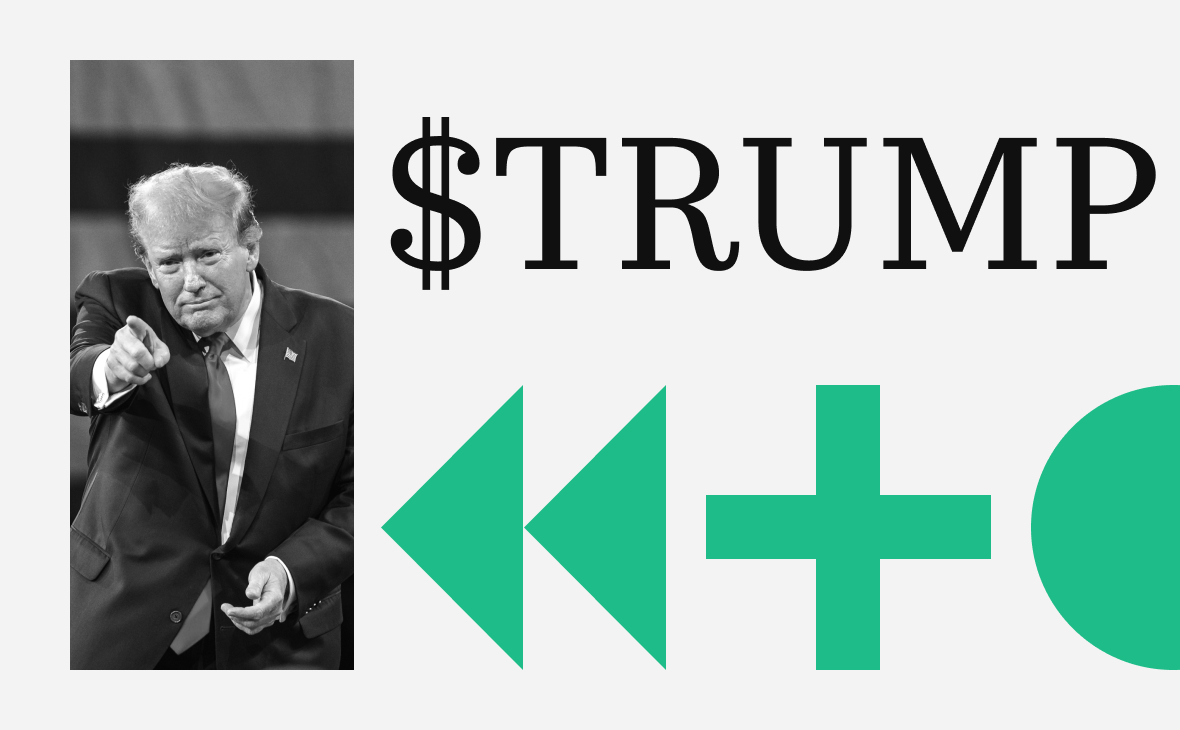
Официальный мемкоин президента США Дональда Трампа Official Trump (TRUMP) вырос почти на 60%, когда на сайте проекта появилось приглашение для держателей токенов на ужин с главой государства. После анонса цена токена резко выросла, с $9,3 до $14,7.

«Присоединяйтесь к ужину с президентом Трампом в его частном клубе в Вашингтоне. Только для 220 крупнейших держателей мемкоина TRUMP», — гласит сообщение на сайте проекта.

Анонс ужина с Дональдом Трампом. Источник: gettrumpmemes.com

Для участия в мероприятии необходимо подключить кошелек на специальном сайте, где также отображается динамический список крупнейших адресов. По данным сайта, топ-25 холдеров также ждет отдельная VIP-встреча с Трампом и специальный тур.

Подорожав после новости, токен опустился ниже $12. Рост курса мемкоина за сутки составляет 27%, по данным на 11:50 мск. Капитализация TRUMP — $2,37 млрд.

Телеграм-канал «РБК-Крипто» — подпишитесь и будьте в курсе самых главных и актуальных новостей о криптовалюте.

Присоединяйтесь к форуму «РБК-Крипто» в Telegram для обсуждения новостей и тенденций криптомира.

Примечательно, что ужин анонсировали после того, как 18 апреля в обращение были добавлены токены TRUMP на сумму $300 млн, согласно данным Tokenomist. Около 75% всех существующих токенов по-прежнему заблокировано, а следующая разблокировка состоится в июле и увеличит предложение более чем на $600 млн.

Токен TRUMP, выпущенный всего за несколько дней до инаугурации президента 20 января, вызвал негативную реакцию в отрасли, из-за того что создатели воспользовались вниманием общественности и служебным положением Трампа, а команда проекта заработала на нем $800 млн, в то время как розничные инвесторы по большей части остались в убытках.

Запуск также ознаменовал пик спекулятивной активности на криптовалютных рынках. В последующий месяц курс биткоина снизился почти на 30% по сравнению с рекордной ценой января. Общая капитализация крипторынка за это время сократилась с $3,9 трлн до $2,9 трлн.

Несмотря на ралли последних суток, мемкоин TRUMP по-прежнему торгуется более чем на 83% ниже своей рекордной цены в $73, зафиксированной 19 января.

Джастин Сан назвал российское сообщество важной частью криптоиндустрии

Слабый доллар и биткоин по $150 тыс. Эксперты об ожиданиях до конца года

Рост биткоина к $95 тыс. привел к рекордным убыткам шортистов с 2022 года
Related Reads

Beyond the Model Lies the Harness: Deepseek Enters the Arena, Why Has the Main Battlefield of China's AI Competition Shifted?

In mid-to-late May 2026, Deepseek internally established a new Harness team focused on code agent products, internally benchmarked against Anthropic's Claude Code. This move, marked by the formula "Model + Harness = Agent" in their job postings, signals a major shift in China's AI competition: the main battlefield is transitioning from developing large models to building toolchains and achieving workplace integration. Deepseek's direct involvement in Harness development aims to secure control over interface design and training data feedback loops, moving beyond open-sourcing powerful models. Harness, the runtime infrastructure for AI agents, handles everything beyond model reasoning—task orchestration, tool calling, context management, safety checks, and error recovery. It is crucial because agent products are not just outputs of model capability but also training grounds for it. Real-world task failures recorded by Harness can feed back into model training, creating a flywheel effect. Engineering Harness is more critical than optimizing prompts, as poor context management or error handling can drastically reduce agent success rates in multi-step, real-world scenarios. This shift is not isolated. Other major Chinese tech companies are also pursuing differentiated toolchain strategies. Tencent leverages its enterprise ecosystem (WeChat Work, Tencent Cloud) to build connectors for organizational-level AI collaboration and complex task delivery. Alibaba focuses on lowering automation barriers on the web with a front-end, browser-based GUI Agent framework, PageAgent. This diversification shows the industry recognizes that success lies not in a perfect general agent, but in vertically focused solutions built with robust engineering. The trend is validated by overseas success, such as Poland's Viktor, an AI coworker on Slack achieving $20M ARR by autonomously executing complex, multi-step tasks. This proves a shift in enterprise willingness to pay—from "AI-assisted generation" to "AI-autonomous execution." As Harness matures to provide safety guards and reliability, AI transitions from a human-supervised intern to an independent outsourcer. The competition now faces key engineering challenges: preventing "token explosion" through intelligent context compression, and building "thick frameworks" with features like sandbox isolation and checkpoint recovery for enterprise-grade stability. Geopolitical restrictions on tools like Claude Code further create a significant market vacuum for domestic solutions like Deepseek's Harness. For enterprises and developers, the focus must shift from comparing model benchmarks to evaluating a vendor's engineering capabilities, error recovery mechanisms, context management, and ecosystem compatibility when choosing AI products and platforms.

marsbit39m ago

Beyond the Model Lies the Harness: Deepseek Enters the Arena, Why Has the Main Battlefield of China's AI Competition Shifted?

marsbit39m ago

Soaring Export Data for Memory Chips, Market Is Redefining the Valuation Anchor for Memory Stocks

Korean storage export data for the first 20 days of June shows substantial year-on-year increases in both value and price-per-kilogram for categories like DRAM, NAND, and SSDs. This signals a potential shift beyond simple demand recovery, indicating rising prices and a product mix shift towards higher-value items, possibly influenced by AI infrastructure needs. A key point is that the surge in price-per-kilogram is not simply a uniform chip price hike. It reflects a combination of actual price increases and, more importantly, an export structure increasingly dominated by high-value-density products like HBM (High-Bandwidth Memory) and advanced DRAM, which are critical for AI servers. This suggests AI-driven demand may be spilling over from just HBM into broader memory markets. SK Hynix stands to benefit directly due to its leading HBM position. For Samsung and Micron, the implication is potential for greater margin elasticity if the tightness in high-end memory spreads to enterprise SSD and NAND prices. However, the storage sector remains cyclical. Risks include supply expansion, inventory changes, and potential slowdowns in broader AI capital expenditure. Ultimately, while the strong export data supports upward revisions for storage company earnings and fuels discussion of an "AI infrastructure bottleneck premium," a definitive valuation shift from a cyclical to a structural story depends on upcoming quarterly reports. Investors need confirmation from SK Hynix, Samsung, and Micron that improvements in average selling prices, product mix, and, crucially,毛利率 are sustained over multiple quarters.

marsbit2h ago

Soaring Export Data for Memory Chips, Market Is Redefining the Valuation Anchor for Memory Stocks

marsbit2h ago

Trading

Spot
Futures
活动图片