‘We’re bullish on stablecoins,’ next-gen DeFi — Coinbase Ventures head

CointelegraphPublished on 2025-03-25Last updated on 2025-03-27

Abstract

Crypto and blockchain-focused venture capital is unfazed by recent market volatility and is using the opportunity to uncover hidden gems in an industry that’s only “one decade into a 30-year paradigm shift,” according to Hoolie Tejwani, the head of VC firm Coinbase Ventures. 

Crypto and blockchain-focused venture capital is unfazed by recent market volatility and is using the opportunity to uncover hidden gems in an industry that’s only “one decade into a 30-year paradigm shift,” according to Hoolie Tejwani, the head of VC firm Coinbase Ventures. 


Coinbase Ventures will “continue to invest steadily through market conditions” because it sees the “big picture,” Tejwani told Cointelegraph in an interview.


“What we’re seeing as investors is an exponential technology change curve that is transforming the way people interact, how value flows, and how economies are run. And it’s being shaped by the people who are building on crypto infrastructure,” said Tejwani.


Coinbase Ventures’ portfolio of investments includes Arbitrum, Dune, EigenLayer, Etherscan, OpenSea, Optimism and Uniswap, among others. Its mandate is to invest in project founders who share the namesake crypto exchange’s vision of creating more economic freedom through blockchain and Web3 applications.


The company is especially “bullish on stablecoins,” thanks in part to recent crypto-friendly moves in the US Congress and by President Donald Trump, Tejwani said. 


The Senate Banking Committee forwarding a bill to regulate [stablecoins] “is a huge step for crypto,” he said, referring to the GENIUS Act, which stands for Guiding and Establishing National Innovation for US Stablecoins.

Funding, Venture Capital, Stablecoin

The GENIUS Act is on its way to the full Senate after clearing the banking committee in an 18-6 vote. Source: Bill Hagerty

Although there was some partisan opposition, California Representative Ro Khanna recently said at least 70 of his fellow Democrats now understand the importance of stablecoins in maintaining the US dollar’s role as a global reserve currency. 


Khanna, like others, expects stablecoin legislation to cross the finish line this year.

Funding, Venture Capital, Stablecoin

The dollar-denominated stablecoin market now exceeds $220 billion, representing roughly 1.1% of the US M2 money supply. Source: RWA.xyz


DeFi, consumer applications remain in focus


In addition to stablecoins, Tejwani identified “next-generation” decentralized finance (DeFi) protocols, onchain consumer applications across social, gaming and creator markets, and intersection points between crypto and AI as major investment themes in 2025.


Some of these themes were also identified by Jeffrey Hu, the head of investment research at Hong Kong-based HashKey Capital, although HashKey is placing a bigger emphasis on tokenizing real-world assets and decentralized physical infrastructure networks, also known as DePINs. 


Nevertheless, Tejwani and Hu agree that institutional adoption and real-world use cases represent the major focus areas for venture capital firms. 


“We expect 2025 to be a banner year for crypto startup activity and VC investment, fueled by clearer regulations, institutional adoption, and the continued growth of real-world use cases,” said Tejwani.

Funding, Venture Capital, Stablecoin

Business service providers, DeFi, security services and payments attracted the largest VC capital in February. Source: The TIETejwani’s outlook on 2025 is consistent with recent inflows into crypto-based startups. As Cointelegraph reported, crypto and blockchain projects received a combined $1.1 billion in funding in February alone.

Related Reads

The Evolution Path of Physical Bitcoin

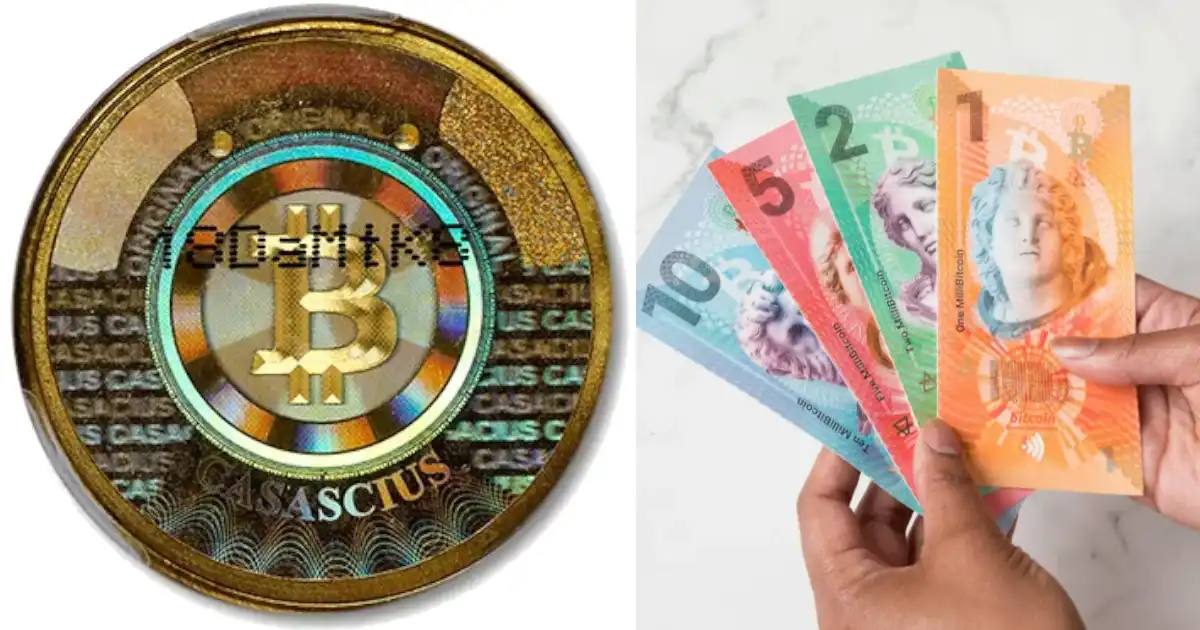
The Evolution of Physical Bitcoin Bitcoin's digital nature is its core strength, enabling self-custody and rapid global transfers. However, its intangibility also hinders mainstream adoption. For over a decade, creators have attempted to materialize Bitcoin while preserving its cash-like properties, yielding notable results. Casascius Coins, launched in 2011, were the first and most iconic physical Bitcoin. Creator Mike Caldwell generated private keys offline, printed them on coins, and sealed them with tamper-evident holograms. This model relied on user trust in the centralized issuer. Production ceased in 2013 due to regulatory pressure from FinCEN. RavenBit Coins emerged in 2014 aiming to decentralize minting by letting users generate and apply their own keys. However, this led to trust issues with numerous untrusted minters and insecure key generation methods. In 2016, Coinkite introduced Opendimes—a breakthrough in bearer asset technology. These USB-shaped devices generate and store keys internally. Funds can be received by checking the public key, but spending requires physically breaking the device to extract the private key. While innovative and open-source, its cost (~$20) and form factor limit its use for small, everyday transactions. Satochip's Satodime, a card-shaped device using similar secure chip technology, followed. It supports NFC interaction and comes in various forms. While potentially cheaper in bulk (~13€), it remains a high-security hardware wallet, not a low-cost cash substitute. A fundamental cost barrier exists. For physical Bitcoin to achieve widespread commercial use, hardware costs must drop below $1 to match the production cost of fiat banknotes. Current secure chips capable of running Bitcoin's cryptographic algorithms (like secp256k1) are too expensive. Chips like NXP's NTAG X DNA (~$3) show cost-reduction potential but lack native Bitcoin curve support. Projects like OfflineCash embed chips in banknote-like paper, but face challenges with durability, the need for custom Bitcoin-enabled chips, and the inherent requirement for users to verify balances online—which conflicts with Bitcoin's trustless ideal. Coinkite's Tapsigner, a ~$20 card with a proprietary Bitcoin NFC chip, is seen as a more practical step forward. It functions as a reloadable hardware wallet for contactless payments, solving the "change" problem and focusing on real-world retail integration, a direction also pursued by companies like Cash App and Square. In summary, the journey to physical Bitcoin has progressed from trusted centralized mints (Casascius) to user-generated keys (RavenBit) and finally to self-contained secure hardware (Opendimes, Satodime, Tapsigner). The core challenge remains developing a sufficiently low-cost, durable, and truly trustless physical bearer asset that can function like cash in daily transactions. Current solutions are either too expensive or introduce new trust assumptions, keeping the ideal of ubiquitous physical Bitcoin just out of reach for now.

marsbit51m ago

The Evolution Path of Physical Bitcoin

marsbit51m ago

Samsung Relies on Technology Cycles, SK Hynix on HBM, How Did Micron Win a Trillion-Dollar Market Cap?

Micron Technology, the third-largest memory chip maker alongside Samsung and SK Hynix, recently saw its market cap surpass $1 trillion. Founded in 1978 in Boise, Idaho, Micron survived brutal industry cycles while American peers and Japan's memory sector faltered. Its survival is attributed to a dual strategy: leveraging political and legal avenues for critical breathing room, coupled with relentless manufacturing cost control. Historically, Micron sought U.S. government intervention three times. In 1985, it filed an anti-dumping complaint against Japanese firms, leading to the U.S.-Japan Semiconductor Agreement. Ironically, this created an opening for Samsung, which later became its toughest competitor. In 2002, Micron turned "whistleblower" in a DRAM price-fixing investigation, escaping penalties while rivals were fined. In 2017, it sued China's Fujian Jinhua, contributing to its placement on a U.S. entity list, stifling a nascent competitor. However, a major strategic misstep occurred in 2013 with the acquisition of bankrupt Japanese firm Elpida. Integrating Elpida's mobile-DRAM-focused technology diverted resources, causing Micron to miss the critical early decade of development for High Bandwidth Memory (HBM)—the high-performance memory essential for AI chips like NVIDIA GPUs. By the time AI demand exploded in 2022, SK Hynix, which launched the first HBM in 2013, held about 85% of the HBM3 market, leaving Micron with roughly 3%. Micron now faces a triple squeeze. In the high-end HBM market, it lags significantly behind SK Hynix and Samsung. In the mid-to-low end DRAM market, it faces aggressive price competition from China's CXMT. Furthermore, a 2023 Chinese cybersecurity ban on its products slashed its revenue from China, a once-core market, from over 10% to just 7.1% by FY2025, causing it to exit China's data center server business. Beneath its political maneuvering lies Micron's core strength: exceptional manufacturing efficiency and cost control. Decades of engineering have yielded DRAM chips with a smaller cell area than rivals, meaning more chips per wafer and lower unit costs. This efficiency, not subsidies, has allowed it to withstand price wars. While political leverage bought time, Micron is now paying a "time debt" in the HBM race. It is racing to ramp up HBM3E production and develop HBM4, but catching up to competitors who started a decade earlier is a monumental challenge. Its future hinges on whether its expertise in cost control and political strategy can compensate for the lost time in a technology race where early-mover advantage is decisive.

链捕手1h ago

Samsung Relies on Technology Cycles, SK Hynix on HBM, How Did Micron Win a Trillion-Dollar Market Cap?

链捕手1h ago

New AMD Paper Overturns Conventional Wisdom: FP4 Training Instability's Cause Is Not Insufficient Randomness

AMD's new research challenges the conventional understanding of FP4 training instability. While reducing precision from FP8 to FP4 promises doubled computational throughput and is supported by new hardware like NVIDIA Blackwell and AMD MI350 series, training large language models natively with FP4 has been notoriously unstable, often attributed to insufficient stochasticity. The paper "Pretraining large language models with MXFP4 on Native FP4 Hardware" demonstrates successful end-to-end FP4 pre-training of Llama 3.1-8B on AMD MI355X GPUs using the MXFP4 format, achieving a 9-10% overall speedup over FP8. Crucially, it identifies the root cause of instability: not randomness, but the accumulation of *structural micro-scaling errors* along the sensitive weight gradient (Wgrad) path. Through controlled experiments, researchers found that quantizing the Wgrad operation to FP4 caused significant convergence degradation. Counterintuitively, common stochasticity-based mitigation techniques like stochastic rounding and randomized Hadamard transforms worsened performance. In contrast, applying a *deterministic* Hadamard transform successfully stabilized training by ensuring consistent error patterns, reducing the extra token cost from 26-27% to just 8-9%. This work has significant implications: 1) It provides a clear diagnostic for low-precision training instability, steering focus towards structural errors. 2) It pushes FP4 from a primarily inference-focused format into the realm of viable training. 3) It leverages the open OCP Microscaling (MX) standard, promoting cross-vendor compatibility. The research marks a critical step towards more economical large model training by further pushing the boundaries of low-precision computation.

marsbit1h ago

New AMD Paper Overturns Conventional Wisdom: FP4 Training Instability's Cause Is Not Insufficient Randomness

marsbit1h ago

Trading

Spot
Futures

Hot Articles

Discussions

Welcome to the HTX Community. Here, you can stay informed about the latest platform developments and gain access to professional market insights. Users' opinions on the price of ETH (ETH) are presented below.

活动图片