$IP 将以200亿美元的FDV启动?,市场会以多少的价格买单?

链捕手Published on 2025-02-11Last updated on 2025-02-11

Abstract

其中 58.4% 的 $IP 代币将分配给社区,用于支持生态发展?

作者:defizard
来源:defizard X 账号
编译:深潮 TechFlow

$IP 将以 200 亿美元的 FDV 启动?


其中 58.4% 的 $IP 代币将分配给社区,用于支持生态发展?


以下是关于代币经济学与价格预测的探讨。


「等等,$IP 是什么?」


简单来说,$IP 是知识产权 (Intellectual Property) 的代币,由 @StoryProtocol 推出。


「知识产权?具体指什么呢?」


知识产权涵盖的范围非常广,包括:专利(例如发明、化学解决方案)、商标(如标志、文字、短语)、版权(如照片、表情包)、商业机密(例如专有信息、商业方法)、设计权(产品的视觉设计、工业设计)、以及植物育种者权利(新植物品种)等。


@jasonjzhao 发布了他们的新白皮书。他们的白皮书内容非常精彩,我对 @StoryProtocol 的多核心层架构印象深刻:

  • 执行层
  • 存储层
  • 共识层


推文详情

  • 执行层:负责处理交易和智能合约的执行任务。这一层由多个核心模块组成,协同工作以确保协议的正常运行。
  • 存储层:位于执行层和共识层之间,类似于网络的数据库。它屏蔽了底层数据组织的复杂性,为用户提供简化的存储体验。
  • 共识层:采用权益证明 (Proof-of-Stake) 机制,委托者和验证者共同参与,以维护网络的安全性和数据完整性。

「那简单来说,@StoryProtocol 是做什么的?」


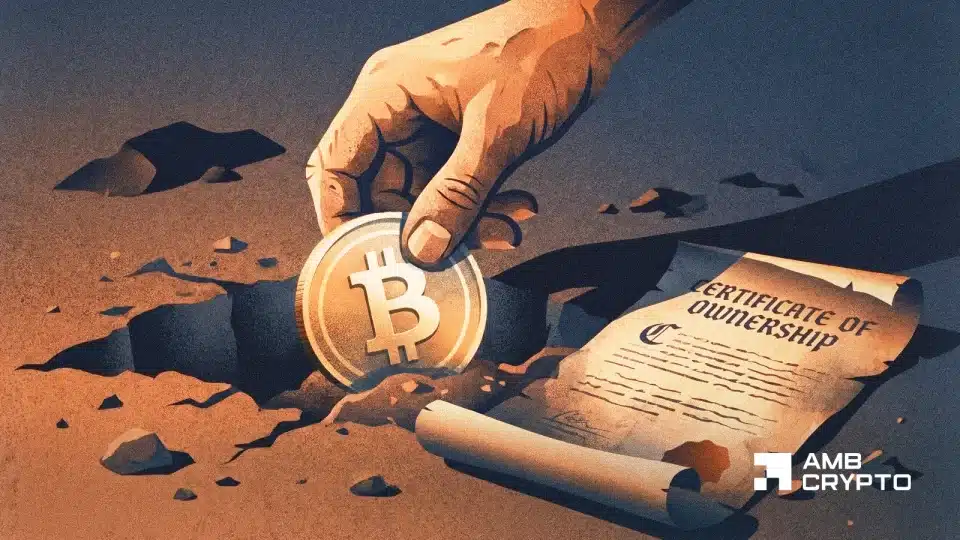
@StoryProtocol 的目标是通过代币化让知识产权 (IP) 实现可编程化,解决诸如知识产权盗窃等现实问题,为 IP 拥有者提供真正的所有权和控制权。
附注:主网可能会在几周(甚至几天)内上线。


「那么,$IP 的实际用途是什么?」

  1. 用于质押以支持网络运行;
  2. 作为 @StoryProtocol 上的 Gas 代币,支付交易费用;
  3. 参与 $IP 生态系统的治理,协助决策制定。

此外,$IP 在每笔交易中都会被部分销毁,在某些条件下可能导致代币供应的通缩,从而提升代币的稀缺性和价值。


推文详情


「可以将 @StoryProtocol 与类似项目进行比较吗?」


由于 @StoryProtocol 是一个 L1,我们可以将其与以下项目进行对比:

  • $NEAR:主打人工智能的 L1 区块链;
  • $AR:专注于存储解决方案的 L1 区块链;
  • $PEAQ:聚焦于去中心化物联网 (DePin) 的 L1 区块链。

「如果对比 FDV 和市值,$IP 的价格可能是多少?」

  • 如果 $IP 的完全稀释估值 (FDV) 与 $NEAR 相同,则 $IP = $4;
  • 如果 FDV = $AR,则 $IP = $0.64;
  • 如果 FDV = $PEAQ,则 $IP = $1;
  • 如果 $IP 的市值与 $NEAR 相同,则 $IP = $15.24;
  • 如果市值 = $AR,则 $IP = $2.56;
  • 如果市值 = $PEAQ,则 $IP = $0.672。

Related Reads

Founder of Baixing.com: The Notion That Large Language Models Will Devour Everything, I Believe Half of It

Founder of Baixing.com: I Only Half-Believe the Saying “Large Language Models Will Devour Everything” Author: Wang Jianshuo, Founder of Baixing.com Many proclaim that large models are everything, but the author is skeptical. He argues that such sweeping claims often stem from a limited understanding of the future. Drawing parallels to past technologies like electricity and the internet—which were predicted to “devour everything” but didn’t—he suggests that large language models (LLMs) are better seen as a foundational base. Like electricity, this base is essential for modern development, but its real value emerges only when applied to specific scenarios through various “machines” or “tools” (e.g., Claude Code for programming, Claude Design for design). The author acknowledges that LLMs may indeed replace many existing software systems built on rigid rules, workflows, and forms (e.g., CRMs, SaaS tools), as these are precisely what LLMs excel at processing. However, he emphasizes that beyond software, elements like customer data, execution capabilities (e.g., booking a flight), trust, and physical-world interactions will not be “devoured.” Instead, he foresees that after streamlining existing software, LLMs will open up a larger space for innovative, next-generation applications. These new tools will likely feature fluid interfaces and rely less on fixed rules, unleashing greater creativity. The author cautions against short-sightedness, recalling how in 2004 many believed internet giants like Sina, Sohu, and NetEase would monopolize the market—only to be proven wrong by subsequent disruptions. In conclusion, while LLMs are a crucial foundation and a current focal point, the true mainstream of this wave lies in the diverse applications built atop them to solve concrete problems. The phrase “devour everything” is imprecise; the real opportunity lies in identifying and leveraging the areas where LLMs do bring transformative change.

marsbit2h ago

Founder of Baixing.com: The Notion That Large Language Models Will Devour Everything, I Believe Half of It

marsbit2h ago

Founder of Baixing.com: I Only Half Believe in the Notion that Large Language Models Devour Everything

The founder of Baixing Wang states that while large language models (LLMs) are an extremely important foundational technology—akin to electricity or the internet—he only "half believes" the notion that they will "consume everything." He argues that LLMs provide a base layer of intelligence, but real-world value and transformation come from integrating this intelligence into specific applications and devices designed for particular scenarios—like how electricity powers various appliances from washing machines to TVs. He agrees LLMs will likely consume or replace a significant portion of existing rule-based, workflow-driven software (e.g., many SaaS systems, CRMs), as these are precisely what LLMs excel at handling. However, numerous other elements—such as customer data, execution capabilities (e.g., booking a flight), trust, and physical-world interactions—will not be consumed. Wang emphasizes that after LLMs absorb certain software layers, they will open up a much larger space for innovation: new types of "streaming" software with less rigid interfaces, where fixed rules are managed by AI. This next wave of applications built on top of the stable LLM foundation is where the true mainstream opportunity lies. He cautions against the short-sightedness of declaring any technology as all-consuming, drawing parallels to past premature predictions about internet giants monopolizing the web. The key is to find opportunities within the areas LLMs do transform.

链捕手2h ago

Founder of Baixing.com: I Only Half Believe in the Notion that Large Language Models Devour Everything

链捕手2h ago

Trading

Spot
活动图片