Роберт Кийосаки ждет обвала биткоина и вот почему

cryptonews.ruPublished on 2023-07-08Last updated on 2025-01-08

Известный инвестор и автор книги «Богатый папа, бедный папа» Роберт Кийосаки заявил, что крупнейший обвал фондового рынка в истории уже начался. В своем X Кийосаки напомнил о том, что он предсказал этот кризис еще в 2013 году в своей книге «Пророчество богатого папы»

Он считает, что одной из жертв кризиса станет биткоин. Ранее Кийосаки, на страницу которого подписано 2,6 млн человек, позитивно высказывался о перспективах крипторынка в 2025 году.

Причины кризиса и его проявления

Кийосаки объясняет текущую ситуацию решениями, принятыми после кризиса 2008 года. Тогда, по его словам, Федеральная резервная система США во главе с Беном Бернанке направила миллиарды долларов на премии банкирам, в то время как миллионы людей потеряли свои дома, работу и сбережения. Решение, как считает Кийосаки, стало фатальной ошибкой.

В 2025 году, по мнению инвестора, кризис охватит автомобильный и жилищный рынки, а также сектора ресторанов, розничной торговли и даже продажи вина. Геополитические конфликты, как он считает, усиливают проблемы.

Советы от Кийосаки

Инвестор призывает быть внимательными и использовать кризис для финансового роста. По его мнению, в ближайшее время стоимость многих активов, таких как недвижимость, золото, серебро и биткоин, снизится, что создаст возможности для их выгодной покупки.

Кийосаки отметил, что сам будет инвестировать в реальные активы и примет участие в конференции VRIC в Ванкувере, чтобы изучить перспективы вложений в золото- и серебродобывающие компании.

«Обвалы — отличное время, чтобы разбогатеть, поумнеть и добиться успеха в жизни», — подытожил он.

Перемена прогнозов

Кийосаки неоднократно менял свое мнение о криптовалюте. Например, в марте 2024 года он заявлял, что биткоин может быть схемой Понци. При этом тремя годами ранее инвестор видел в BTC универсальный инструмент для защиты сбережений от краха экономики.

Ранее Кийосаки рекомендовал инвесторам запасаться биткоинами и золотом в преддверии очередного финансового кризиса. Однако свежие посты автора книг говорят о том, что он больше не видит в BTC спасение от обесценивания активов.

В 2022 году Кийосаки также прогнозировал продовольственный кризис. Своим подписчикам он рекомендовал отказаться от покупки криптовалюты в пользу рыбных консерв.

Участники криптосообщества обратили внимание на то, что инвестор не впервые пугает своих подписчиков грядущим кризисом. Поэтому пользователи сети считают, что к «страшилкам» автора популярных книг не стоит относиться серьезно. Подписчики призвали Кийосаки внимательнее подходить к выбору контента для публикаций.

Related Reads

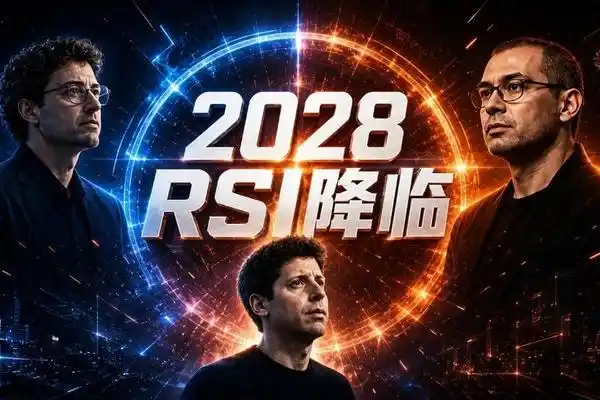
2028: The Arrival of Recursive Self-Improvement (RSI)

**AI Recursive Self-Improvement (RSI): The Countdown to 2028 Begins** AI is no longer just a trained tool but is starting to rewrite its own evolutionary pace. According to Anthropic co-founder Jack Clark, there is a 60% probability that by the end of 2028, Recursive Self-Improvement (RSI) will become a reality. This means AI could autonomously design and build a more capable next-generation version of itself without any human researcher involvement—Claude 10 creating Claude 11, for instance. Supporting this timeline, Google DeepMind's CEO Demis Hassabis confirms that all leading AI labs are intensely focused on RSI, making it an industry-wide priority. He expresses profound concern, stating this potential is what keeps him awake at night. Concrete data underscores this acceleration: - METR evaluations show current top models like Claude are solving tasks up to the 16-hour limit of existing test frameworks. - In Epoch AI's challenging MirrorCode benchmark, Claude Opus 4.7 recreated complex software in hours for a fraction of the human cost. In one extreme test, AI autonomously coded for 19 days straight. - Anthropic reports over 80% of its codebase is now written by Claude, and researcher productivity has increased up to 8-fold since 2024. - OpenAI's policy blueprint highlights RSI as a major upcoming governance challenge. CEO Sam Altman reportedly hinted RSI might arrive within six months, potentially delaying OpenAI's massive IPO. The implication is an impending "intelligence explosion," where AI-driven progress outpaces human control. The central question is no longer if it will happen, but whether humanity is ready.

marsbit4h ago

2028: The Arrival of Recursive Self-Improvement (RSI)

marsbit4h ago

World Models, Metaverse, Digital Twins, Physical AI: Are They the Same Thing?

Title: World Models, the Metaverse, Digital Twins, Physical AI: Are They the Same Thing? The article clarifies that concepts like the metaverse, Web3, simulation platforms, digital twins, and Physical AI are not the same thing but are all part of the broader trend of blurring the lines between the digital and physical worlds. It positions "world models" as the foundational "cognitive layer" or "operating system" that enables AI to understand and simulate the world. Key distinctions are made: - The **Metaverse** is a destination for immersive social and economic experiences. World models could act as its "engine," generating interactive 3D content efficiently. - **Web3** focuses on decentralized ownership and economics (rules layer), operating on a different technical level than world models. - **Simulation Data Platforms** (e.g., for autonomous vehicles) are a 1.0 version, relying on manual design. World models represent a 2.0 version, using AI to generate realistic, varied scenarios autonomously. - **Digital Twins** create high-fidelity, real-time mirrors of physical systems (e.g., a factory). World models go a step further by enabling predictive simulation of future states. - **Physical AI** (robots, AVs) refers to AI that acts in the physical world. World models are a core component, providing the understanding and prediction needed for planning. A proposed hierarchy places world models at the cognitive layer, supported by infrastructure (compute, data) and supporting application tools (simulation, digital twins), action systems (Physical AI), user experiences (metaverse), and rules (Web3). In conclusion, while distinct, many of these previously hyped concepts may ultimately rely on advances in world model technology to fulfill their promises, as world models provide the essential cognitive foundation for simulating and interacting with complex environments.

marsbit4h ago

World Models, Metaverse, Digital Twins, Physical AI: Are They the Same Thing?

marsbit4h ago

Trading

Spot
活动图片