Криптовалюта есть у миллионов людей в мире. Сколько из них ею пользуются

RBK-cryptoPublished on 2024-10-17Last updated on 2024-10-17

Цифровые валюты проложили себе путь к глобальному принятию, и в этой отрасли есть большие возможности, считают в венчурном фонде a16z crypto

В a16z оценили количество активных пользователей криптовалют в мире в 30–60 млн человек. По данным ежегодного отчета под названием State of Crypto от компании a16z crypto, в мире насчитывается порядка 617 млн пользователей криптовалют, но по-настоящему активных из них — только 5–10%. Большинство владельцев предпочитают пассивно держать криптовалюту на кошельках.
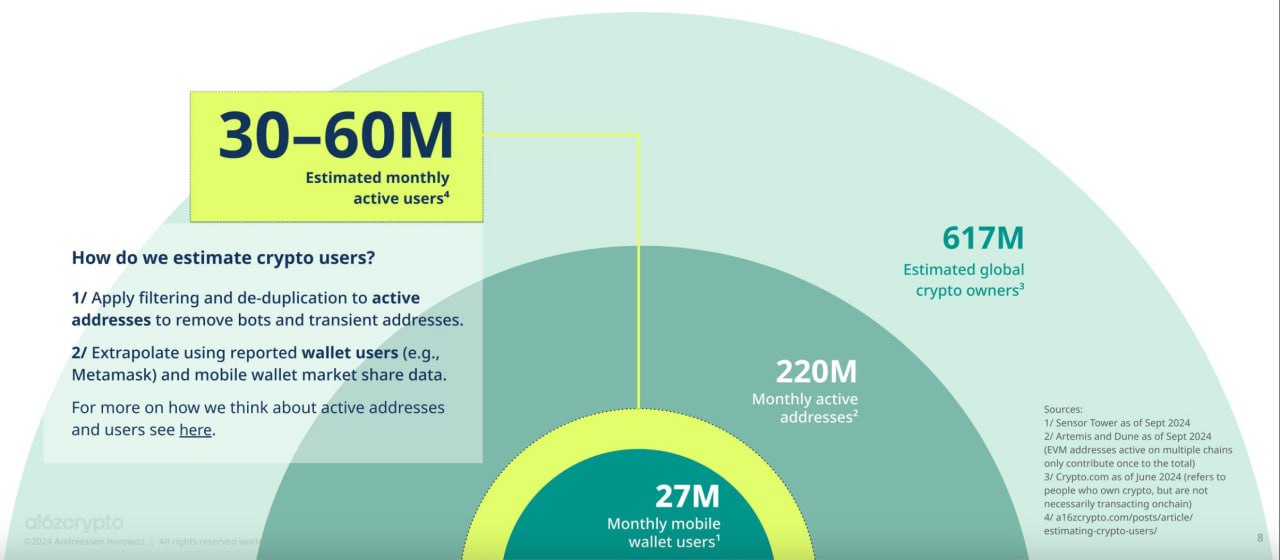
Количество пользователей криптовалют. Источник: a16z

a16z crypto — крупнейший на рынке венчурный фонд для инвестиций в криптостартапы от основанной в 2009 году Марком Андриссеном и Беном Хоровицем компании Andreessen Horowitz (a16z, цифра 16 — это количество букв в названии компании между первой A и последней Z). Портфель фонда насчитывает десятки криптопроектов, среди которых как состоявшиеся игроки, так и стартапы, которые еще только создают инфраструктуру.

Миллиарды на Web3. Во что инвестирует крупнейший криптовалютный фонд a16z

В отчете поясняется, что компания разработала ряд собственных методик для выявления активных пользователей. Они отсеивали вероятных ботов, группы кошельков-дубликатов и кошельки с околонулевыми балансами, учитывали наличие на кошельках NFT, привязанных к ним ENS-доменов или аккаунтов на социальных платформах типа Farcaster.

Кроме того, авторы отчета брали статистику популярных криптоприложений, в том числе кошелька MetaMask, и фильтровали их количественные показатели по различным критериям.

Число 617 млн владельцев криптовалют взято за основу из данных июньского отчета о крипторынке от биржи Crypto com. Довольно высокий разброс в оценке в 30–60 млн активных пользователей связан со сложностью анализа из-за необходимости делать поправку на то, что часть владельцев криптовалют используют по несколько кошельков и аккаунтов.

Телеграм-канал «РБК-Крипто» — подпишитесь и будьте в курсе самых главных и актуальных новостей о криптовалюте.

Присоединяйтесь к форуму «РБК-Крипто» в Telegram для обсуждения новостей и тенденций криптомира.

«К категории владельцев криптовалют отнесли людей, которые просто хранят криптовалюту, например, на кошельке централизованной биржи. Они необязательно используют блокчейн, а активные пользователи — это те, кто использует блокчейн для таких вещей, как покупка NFT или перевод USDC», — пояснил технический директор a16z Эдди Лаззарин в интервью Fortune.

Лаззарин считает, что небольшой процент активных пользователей можно объяснить тем, что работу с блокчейном пока затрудняет сложный пользовательский интерфейс. Процесс включает в себя множество этапов и требует продвинутых знаний о технологии, пояснил топ-менеджер фонда.

«Это говорит о том, что нам нужны более качественные приложения, нужно больше креативности, нужны более низкие цены, нужна ясность в регулировании. Это шанс для разработчиков, я вижу в этом большую возможность». — сказал Лаззарин.

В то же время в отчете говорится, что ежемесячное количество активных адресов в блокчейнах достигло 220 млн, а годом ранее их было менее 100 млн. Авторы исследования сравнивают этот темп роста с траекторией распространения интернета в первые годы его существования.

Криптовалюты раз и навсегда проложили себе путь к глобальному принятию, считают в Andreessen Horowitz. В основном, по мнению исследователей, этому способствуют растущий мировой рынок стейблкоинов, развивающаяся блокчейн-инфраструктура и снижение комиссий за транзакции.

Глава ЦБ подтвердила план запустить криптоплатежи за границу в 2024 году

Курс биткоина закрепился около $67 тыс. Что произошло на крипторынке

Взломавший биржу Bitfinex уроженец России получит тюремный срок в 5 лет

Криптопроект семьи Трампа привлек $11 млн в первый день продаж. Что далее

«РБК-Крипто» запустил мониторинг криптовалютных обменников. Выбирайте надежный обменный сервис с выгодным курсом на yourcryptoex.ru или в удобном телеграм-боте.

Related Reads

Blood Loss of $55 Million Selling 3,588 BTC, Strategy Becomes a Literal Scumbag

On July 6th, Strategy (formerly MicroStrategy) disclosed in an SEC filing that it sold 3,588 Bitcoin (BTC) between June 29th and July 5th for approximately $216 million, at an average price of ~$60,200. This marked the company's largest net sale since initiating its Bitcoin strategy in 2020 and its first institutionalized reduction of its core holding. The sale resulted in a realized loss of about $54.8 million, as the selling price was below its average cost basis of ~$75,476 per BTC. The proceeds were used to pay preferred stock dividends and replenish USD reserves. This move follows a new "Digital Credit Capital Framework" approved on June 29th, authorizing the sale of up to $1.25 billion in Bitcoin. The sale consumes roughly 17% of this authorized amount in its first week. Strategy's foundational narrative, built by founder Michael Saylor, was a commitment to "never sell" Bitcoin. The recent institutionalized selling framework and these substantial sales represent a significant shift from that original promise. While the amount sold is only 0.4% of Strategy's total holdings of 843,775 BTC, the action challenges the premium at which its stock (MSTR) trades relative to its Bitcoin holdings. Investors had priced in the "never sell" narrative. The company now faces a contradiction: it sells Bitcoin at a loss to pay dividends on the preferred stock it issued to fund Bitcoin purchases. Saylor has framed selling as a tool for future strategic purchases, but each sale erodes the credibility of the original commitment, potentially threatening the premium valuation of MSTR shares.

Foresight News33m ago

Blood Loss of $55 Million Selling 3,588 BTC, Strategy Becomes a Literal Scumbag

Foresight News33m ago

Dialogue with Yihui Capital, SoundAI Technology, Ling Universe, and Zhongbo Jili: Opportunities and Challenges in the AI Smart Hardware Track

On June 28, 2026, an event titled "New Opportunities in AI Hardware: The Battle for Interactive Entry Points Begins" was held in Beijing. It featured a report from ITJuzi and discussions with experts from SoundAI, Ling Universe, One Reed Capital, and Zhongbo Juli on the opportunities and challenges in China's AI hardware sector. Key report findings highlight the sector's intense activity: 327 out of 431 startups founded post-2023 have secured funding, with 179 investments in H1 2026 alone. The landscape is dominated by embodied intelligent robots, while wearable tech like smart rings and AI glasses shows rapid growth. Geographically, Shenzhen leads, leveraging its superior hardware supply chain, followed by Beijing and Shanghai. The overarching trend is for companies to focus on micro-innovations within specific scenarios rather than reinventing foundational technology. Industry leaders shared several critical insights: 1. **Balancing Innovation & Market Readiness**: Entrepreneurs face the "hammer looking for a nail" dilemma. Success requires balancing technical capability with user acceptance, cost control, and incremental design improvements rather than chasing disruptive innovation. 2. **Competitive Landscape**: The future interactive entry point may not be a single super-device but a mix of universal terminals and specialized, scenario-specific hardware. While large companies have ecosystem advantages, startups can win by deeply targeting vertical markets and specific user groups. 3. **Core Challenges & Business Models**: Key hurdles include deep understanding of AI models and navigating non-transparent hardware supply chains. Viable business models may involve selling hardware at cost and generating revenue through software subscriptions, but this requires tight control over both hardware BOM and model inference costs. 4. **The Road to Commercialization**: The ultimate test is market validation—achieving sales growth and sustainable cash flow. Companies must find the right application scenario, use edge computing effectively, and close the loop from technology to commercial success. 5. **The Future of Interaction**: Proactive, context-aware interaction is the next frontier, though it's currently limited by issues like model hallucinations and environmental perception. The near-term focus should be on identifying target users and creating a coherent experience in specific domains, such as health wearables. In summary, to succeed in the competitive AI hardware arena, companies must strategically choose their niche, build a team with the right geographical advantages (e.g., leveraging Shenzhen's supply chain), and most importantly, execute a flawless commercialization strategy that translates technology into market-accepted products and sustainable business growth.

marsbit1h ago

Dialogue with Yihui Capital, SoundAI Technology, Ling Universe, and Zhongbo Jili: Opportunities and Challenges in the AI Smart Hardware Track

marsbit1h ago

Trading

Spot
活动图片