Solana 变「疯狂动物城」,以太坊 Robot 异军突起

深潮Published on 2024-09-26Last updated on 2024-09-26

喉喉喉!呱呱呱!哔哔哔!

撰文:Joyce

今晨,网红河马 MOODENG 市值突破一亿美元大关,在 Solana 的 meme 市场中再度掀起一阵「动物园」热潮,与此同时,马斯克为特斯拉机器人产品预热发布的推文,则让以太坊 meme 市场展开了一场「机器人乱斗」。

Solana 动物城

企鹅 PESTO

$PESTO 是一只来自澳大利亚的萌物巨型帝企鹅 Pesto,Pesto 在 Web2 的火热程度直追河马 Moodeng,MOODENG 引起 meme 社区注意后,PESTO 也成为了「龙二」标的,Solana 上的 $PESTO 上线于 9 月 18 日,表现强势。上线后涨幅超 8 倍。之后的一天遭遇大幅回调,日跌幅超 80%,市值跌破一百万美元。昨日晚间,PESTO 开始拉盘,至今日上午涨幅超 300%。
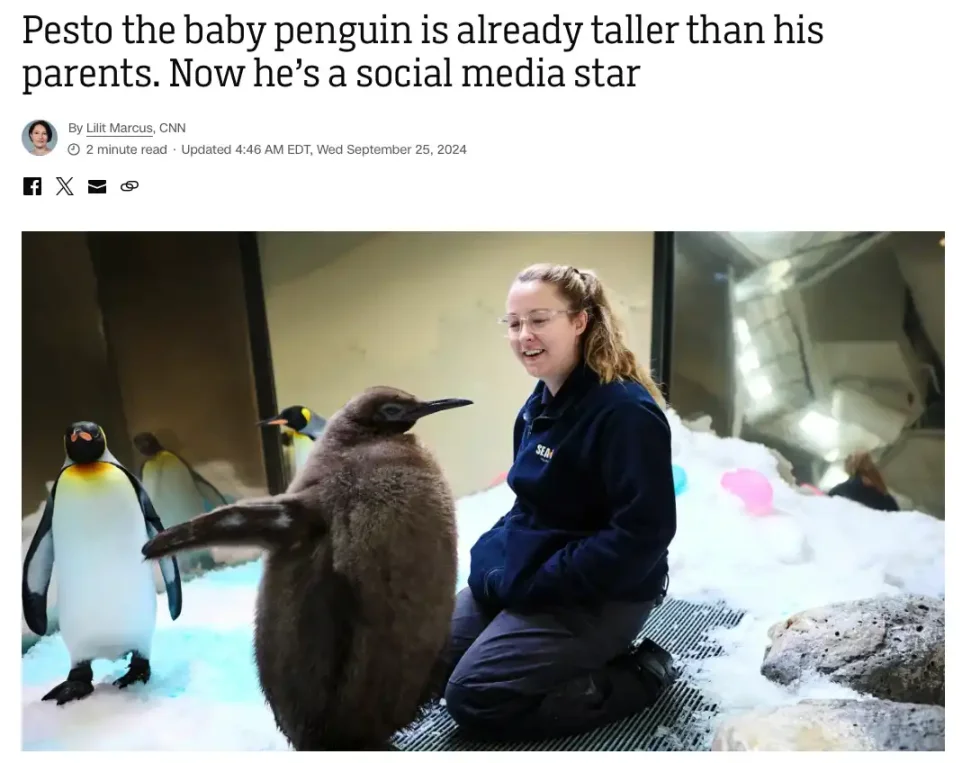
最高市值:21.27M

当前市值:18M

24h 交易量:17M

今日 12AM(GMT+8)买入最高盈利:170%;当前盈利:117%
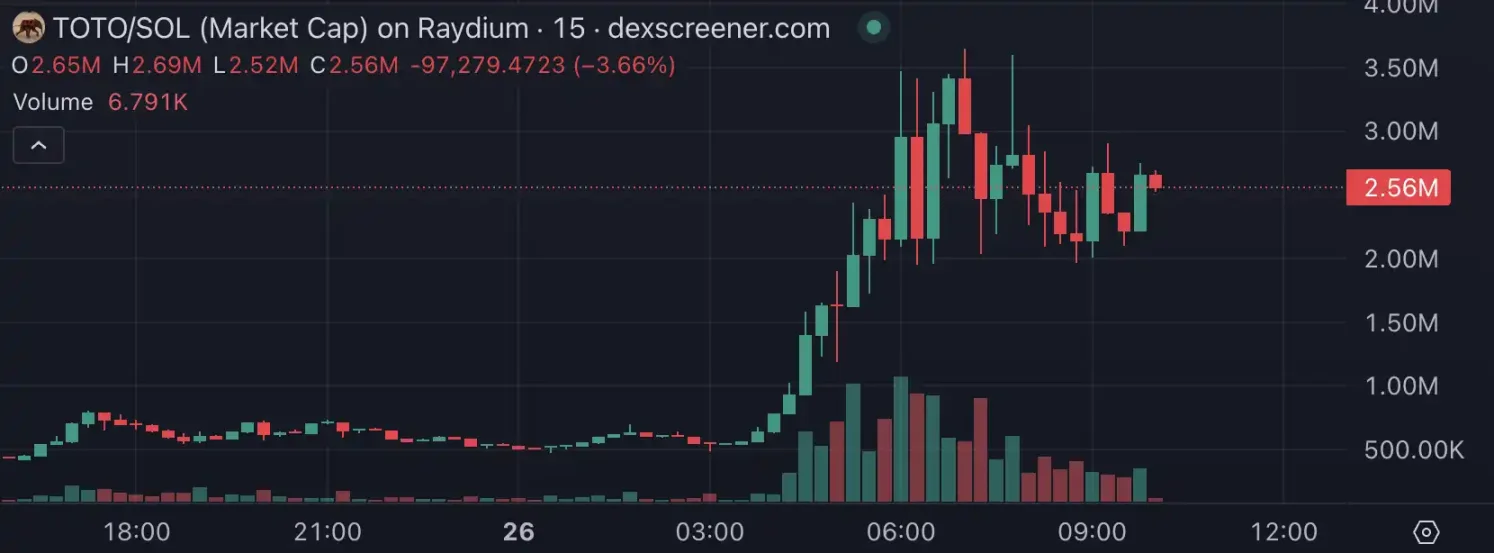
小象 TOTO

TOTO 是一只被慈善动物保护信托基金 SheldrickTrust 所救助的小象,马斯克曾在 8 月 11 日回复过 TOTO 被救助的推文,TOTO 代币上线于 19 日,市值在突破 1M 美元后持续下跌,昨日晚,TOTO 的救助组织 Sheldrick Wildlife Trust 发布了 TOTO 回顾视频,meme 社区的 TOTO 喊单也密集出现,三个小时后,TOTO 开启暴涨。

最高市值: 4.6M

当前市值:2.56M

24h 交易量:3.6M

今日 12AM(GMT+8)买入最高盈利:600;当前盈利:374%
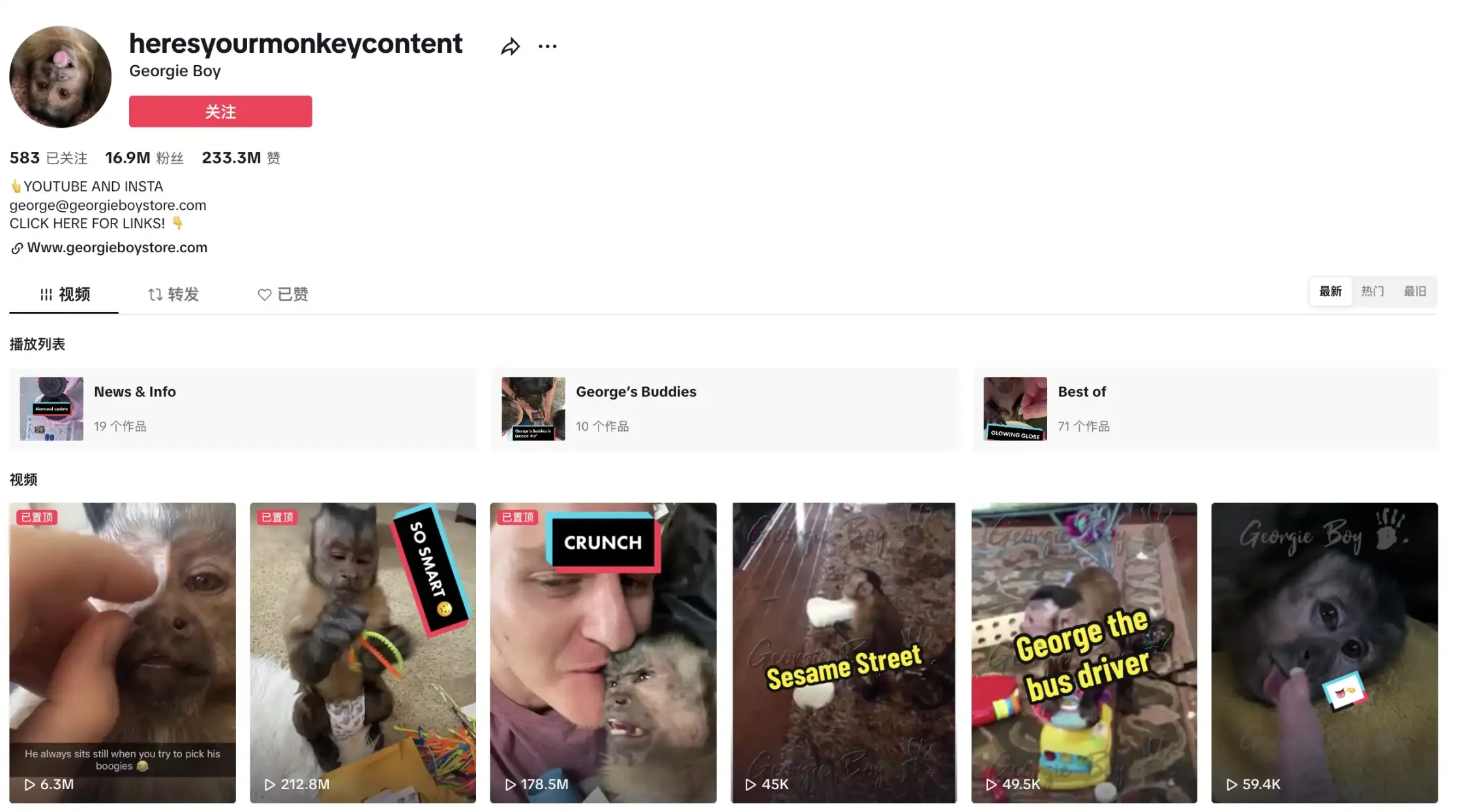
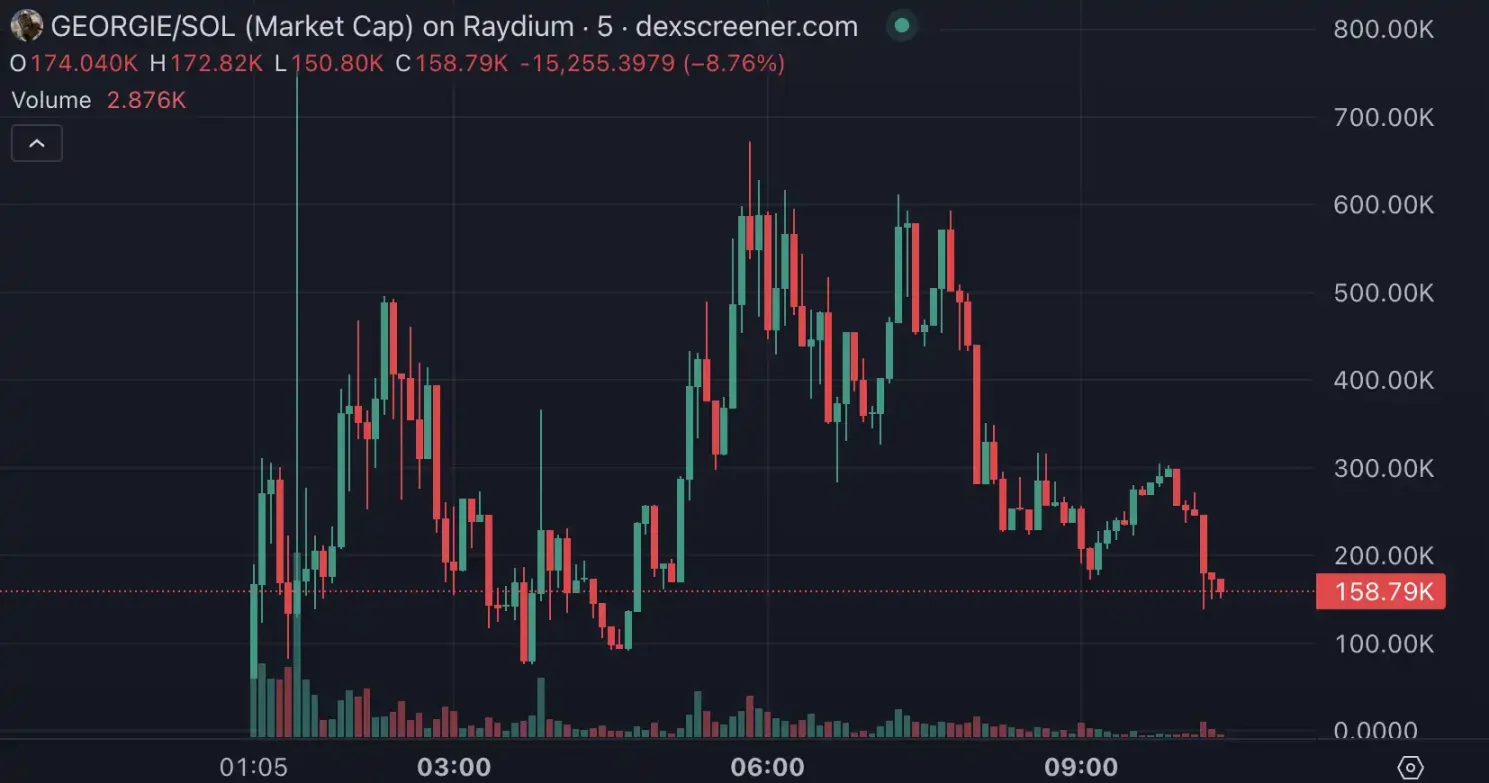
猴子 GEORGIE

乔吉·男孩 (Georgie Boy) 是 Tiktok 上的一只网红小猴,在 Tiktok 上拥有 1600 万粉丝,于 2021 年 6 月 Georgie 去世。代币上线于今日凌晨,目前共有 1088 个持有者。
最高市值: 679K

当前市值:158K

24h 交易量:3.0M

今日 12AM(GMT+8)买入最高盈利:678%;当前盈利:158%
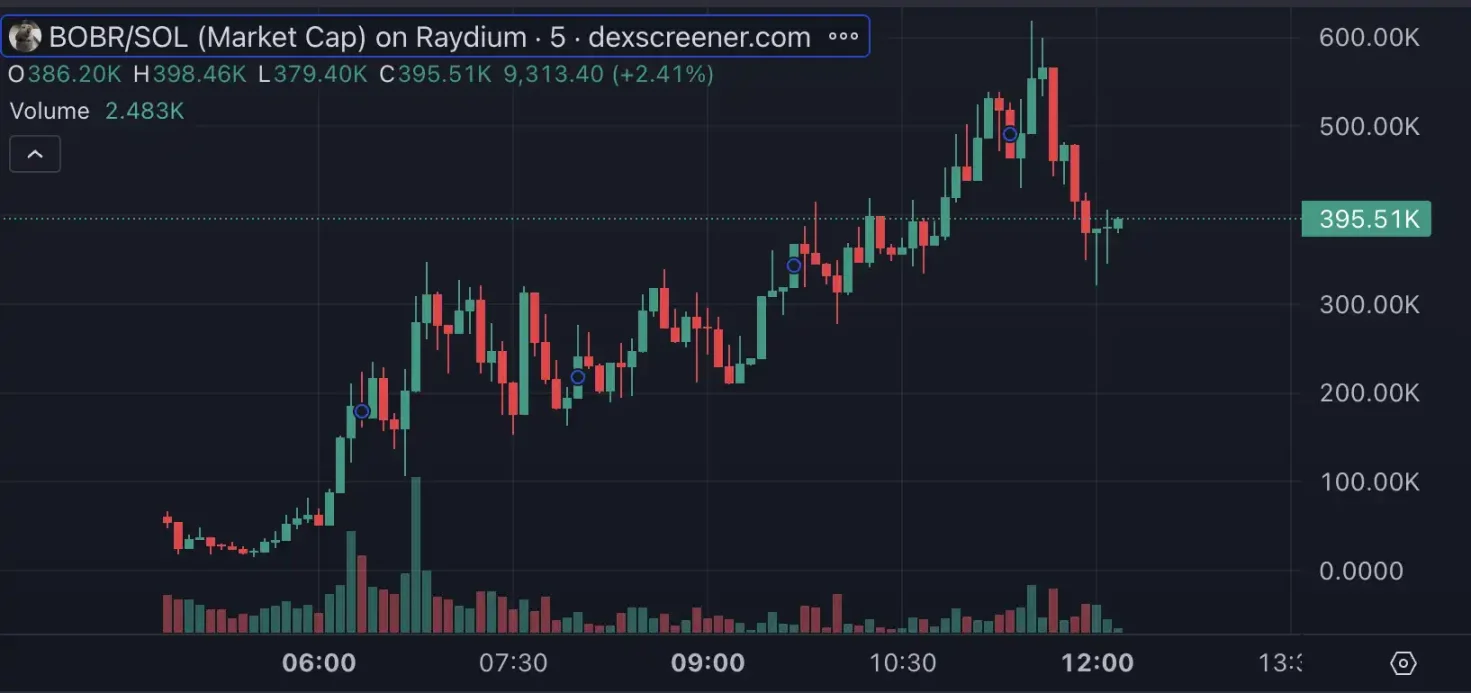
河狸 BOBR

波兰网民多年来一直保持着一项长期的网络传统,即在网上发布看到海狸的画面,通常会配上大声的惊叹「Kurwa Bóbr」,翻译过来就是脏话,也是波兰语中「海狸」的意思。但这个曾经只是 YouTube 上的小众奇闻,如今成为了网上广为人知的梗。

最高市值: 618K

当前市值:359K

24h 交易量:1.5M

今日 12AM(GMT+8)买入最高盈利:864%;当前盈利:556%
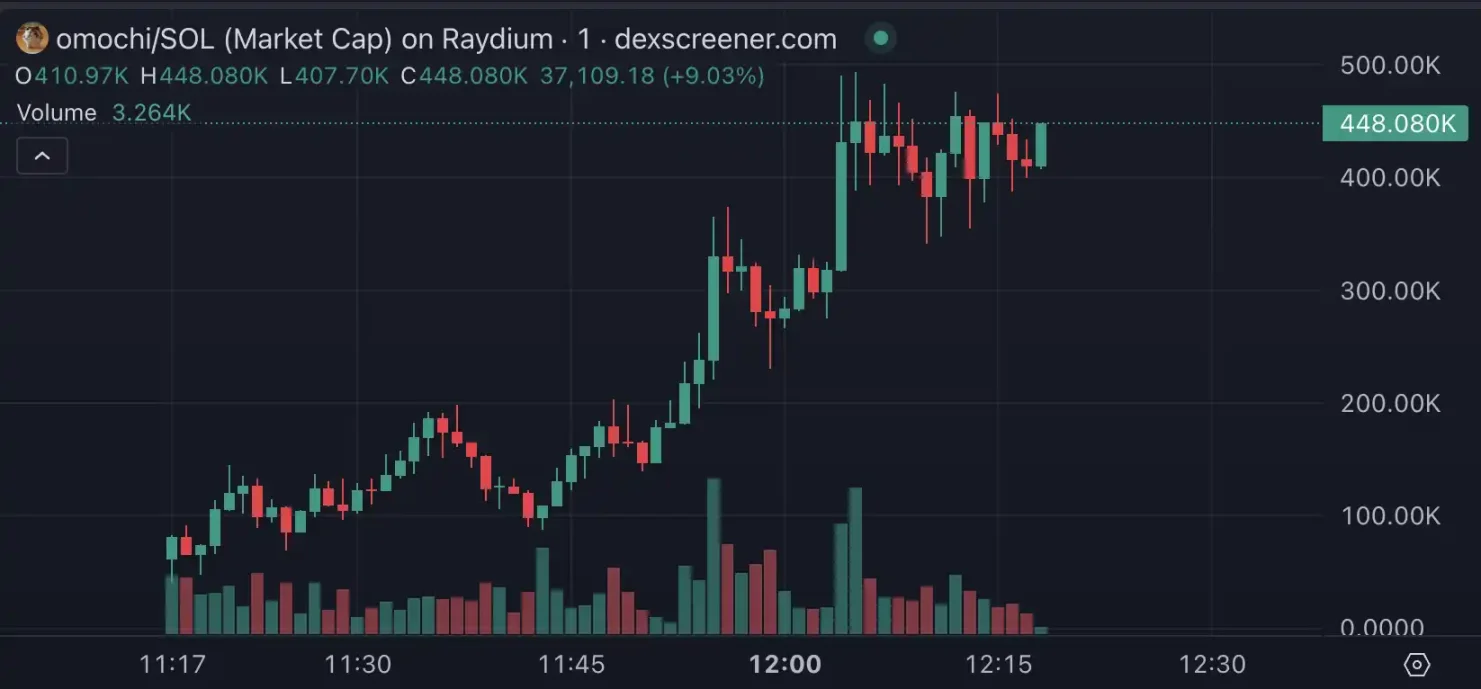
青蛙 omochi

Omochi 也是 Tiktok 上一只广受欢迎的小青蛙,它在 Tiktok 上有 42 万个关注者,数条短视频浏览量超过千万次。
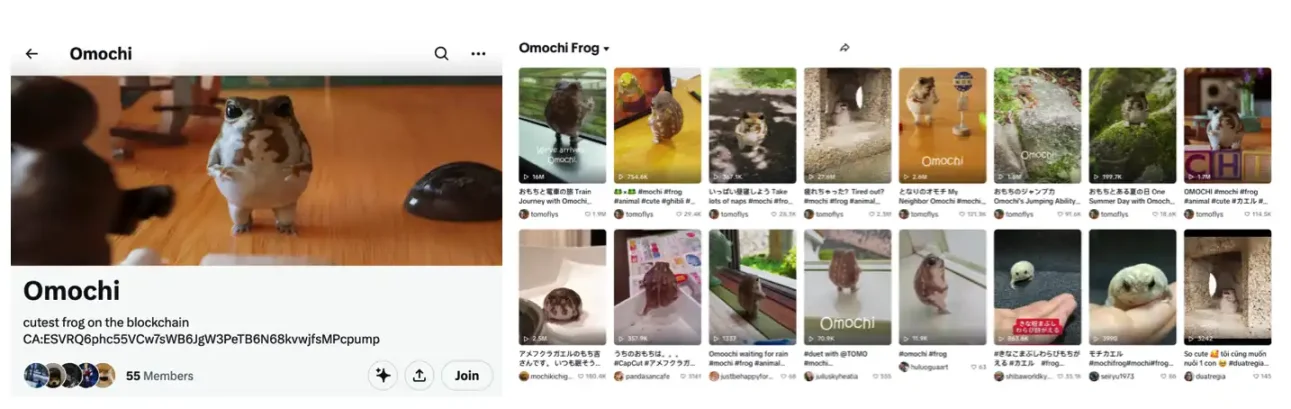
最高市值:494M

当前市值:448K

24h 交易量:1.3M

今日 12AM(GMT+8)买入最高盈利:622%;当前盈利:619%
以太坊机器人

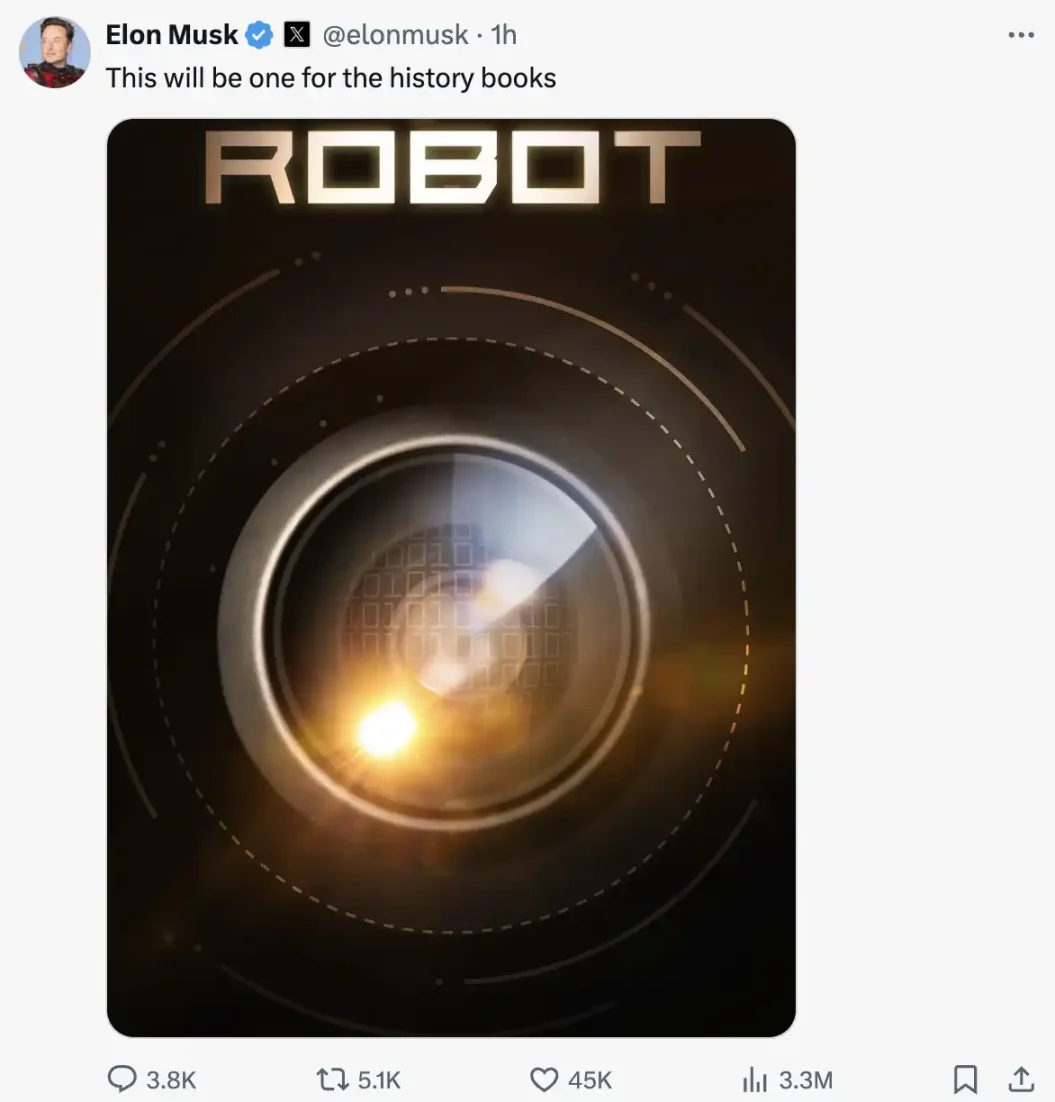
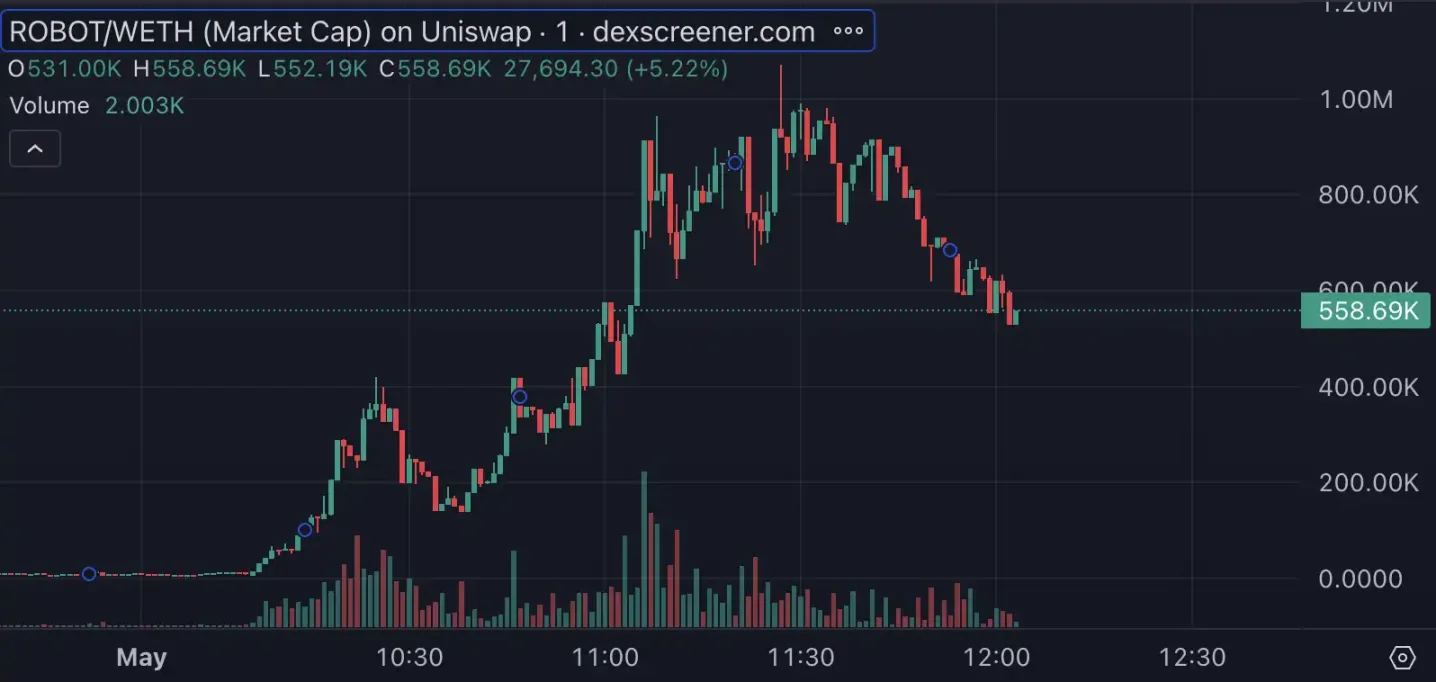
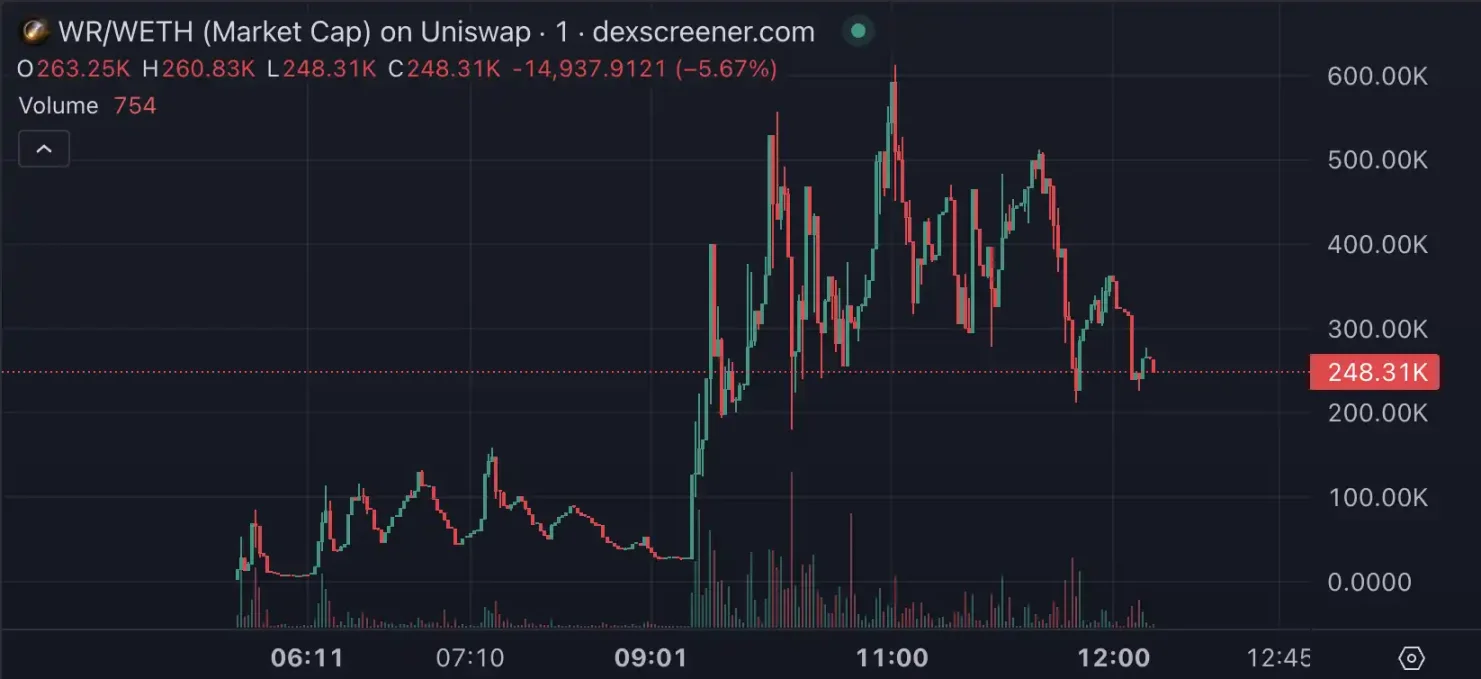
今日上午 10 时,马斯克在 X 平台发布预告称将于 10 月 10 日发布人形机器人产品,并称「这将载入史册」,海报中配文「We Robot」,随后以太坊上便出现了 ROBOT 和 WR 两个较为火热的 meme。其中,ROBOT 短时拉升近 6 倍,WR 短时亦拉升近 20 倍。还有社区成员根据对产品名称的猜测,将此前的大小写 $Robotaxi、$cybercrab、$FSD 等均列入了观察列表。
ROBOT

最高市值: 1.07M

当前市值:623K

24h 交易量:1.7M

今日 12AM(GMT+8)买入最高盈利:13500%;当前盈利:9130%
WR

最高市值: 613K

当前市值:248K

24h 交易量:1M

今日 12AM(GMT+8)买入最高盈利:4021%;当前盈利:1742%
Related Reads

New AMD Paper Overturns Conventional Wisdom: FP4 Training Instability's Cause Is Not Insufficient Randomness

AMD's new research challenges the conventional understanding of FP4 training instability. While reducing precision from FP8 to FP4 promises doubled computational throughput and is supported by new hardware like NVIDIA Blackwell and AMD MI350 series, training large language models natively with FP4 has been notoriously unstable, often attributed to insufficient stochasticity. The paper "Pretraining large language models with MXFP4 on Native FP4 Hardware" demonstrates successful end-to-end FP4 pre-training of Llama 3.1-8B on AMD MI355X GPUs using the MXFP4 format, achieving a 9-10% overall speedup over FP8. Crucially, it identifies the root cause of instability: not randomness, but the accumulation of *structural micro-scaling errors* along the sensitive weight gradient (Wgrad) path. Through controlled experiments, researchers found that quantizing the Wgrad operation to FP4 caused significant convergence degradation. Counterintuitively, common stochasticity-based mitigation techniques like stochastic rounding and randomized Hadamard transforms worsened performance. In contrast, applying a *deterministic* Hadamard transform successfully stabilized training by ensuring consistent error patterns, reducing the extra token cost from 26-27% to just 8-9%. This work has significant implications: 1) It provides a clear diagnostic for low-precision training instability, steering focus towards structural errors. 2) It pushes FP4 from a primarily inference-focused format into the realm of viable training. 3) It leverages the open OCP Microscaling (MX) standard, promoting cross-vendor compatibility. The research marks a critical step towards more economical large model training by further pushing the boundaries of low-precision computation.

marsbit8m ago

New AMD Paper Overturns Conventional Wisdom: FP4 Training Instability's Cause Is Not Insufficient Randomness

marsbit8m ago

Will ONDO's 'Tokenization Narrative' Change After Its CEO's Unexpected Passing?

Ondo Finance founder and CEO Nathan Allman has passed away unexpectedly. Allman, a Brown University graduate with a background in private credit and Goldman Sachs' digital asset team, was a key architect of Ondo's pivot from DeFi structured yield products to becoming a leading Real-World Asset (RWA) protocol. He drove the strategy to tokenize traditional financial assets like US Treasuries (OUSG), yield-generating dollar assets (USDY), and US stocks/ETFs (Ondo Global Markets) for on-chain accessibility. The company announced that President Ian De Bode, a former McKinsey partner with a strong institutional strategy and operations background, will succeed Allman as CEO. While Allman's sudden departure presents a near-term challenge, testing market confidence and Ondo's continuity, the project is seen as more than a founder-driven narrative. It has an established product suite and a management team with deep traditional finance experience. The long-term impact hinges on the new leadership's ability to execute. De Bode's expertise in compliance, distribution, and institutional partnerships aligns with RWA's next phase of scaling infrastructure. The core question is whether Ondo can maintain its product momentum and institutional relationships. Ondo's native ONDO token represents governance and RWA narrative value, not direct revenue from the underlying assets. Its future as a "top tokenization play" will depend on the team's continued delivery of product growth, asset scale, and real-world demand, moving beyond the initial emotional shock.

marsbit54m ago

Will ONDO's 'Tokenization Narrative' Change After Its CEO's Unexpected Passing?

marsbit54m ago

Bankless Co-founder's Confession on Selling Off ETH: Ethereum Did the Right Thing, but 'ETH as Money' Has No Future

Bankless co-founder David Hoffman recently sold his remaining ETH holdings, sparking debate within the Ethereum community. In a detailed explanation, Hoffman clarifies that his decision was not based on bearish sentiment towards Ethereum itself, which he remains highly optimistic about, but rather on the conclusion that the "ETH is Money" narrative has largely run its course. Hoffman argues that for ETH to achieve its envisioned status as global money, Ethereum needed to execute flawlessly across multiple layers—governance, technology, and market dominance—in a highly coordinated manner. He acknowledges Ethereum's significant successes and current justified valuation but suggests the window for a major revaluation based on this monetary narrative is closing. The post examines several challenges: the strong correlation between L1 chain activity/fees and native token value; the perceived failure of the "strong version" of crypto (user-owned, egalitarian systems) versus the rise of a "weak version" (efficient ledger technology for traditional finance); and the possibility that ETH's momentum as money was uniquely tied to the distorted conditions of the 2020-2021 period. Crucially, Hoffman highlights a structural tension: Ethereum is architected as a "giver, not a taker," providing critical infrastructure like secure block space and tokenization at cost. This ethos benefits the broader ecosystem (applications, L2s) but doesn't prioritize extracting maximum value for ETH itself. The "ETH is Money" thesis required Ethereum to win a war of overwhelming market dominance—a war its design philosophy refuses to explicitly fight. Therefore, while he sees continued immense success for the Ethereum network and its ecosystem (following a "fat application" theory where value accrues to apps and L2s), Hoffman finds it increasingly difficult to foresee a structural upward revaluation for the ETH asset based on the monetary narrative. His capital reallocation reflects a belief that this particular investment thesis has played out.

Odaily星球日报1h ago

Bankless Co-founder's Confession on Selling Off ETH: Ethereum Did the Right Thing, but 'ETH as Money' Has No Future

Odaily星球日报1h ago

Trading

Spot
Futures

Hot Articles

Discussions

Welcome to the HTX Community. Here, you can stay informed about the latest platform developments and gain access to professional market insights. Users' opinions on the price of ETH (ETH) are presented below.

活动图片