发行代币之前,需要找到产品与市场契合度吗?

Odaily星球日报Published on 2024-09-13Last updated on 2024-09-13

Abstract

除非产品确实依赖代币,否则你不应该在实现产品与市场契合度之前急于推出代币。

原文作者:Alex Topchishvili,CoinList

原文编译: 1912212.eth,Foresight News

根据美国商人埃里克·莱斯的说法,产品与市场契合度(PMF)是创业公司最终找到与其产品产生共鸣的广泛客户群时的时刻。

尽管 Web2 和 Web3 初创公司存在差异,但关于 PMF 的深刻洞察同样适用于加密领域:找到它,否则就会失败。

这引出了一个问题:PMF 是否应该在发行代币之前就实现?

简而言之,这取决于产品需要多少代币来找到产品市场契合点。使用代币中的重要性将决定产品何时引入代币的最佳时机。

在本文中,我们将探讨在实现 PMF 之前发行代币所带来的问题,以及少数几个适合提前发行代币的情况。

实现 PMF 之前发行代币的问题

平心而论,现存的许多代币对其所服务的产品并没有起到关键作用。

对于不依赖代币运作的加密产品,应该在发行代币前努力确保 PMF,因为这些项目的去中心化特性使得在发行后进行调整极其困难。例如,虽然治理代币可能对项目的生态系统至关重要,但它们并非产品的核心。

过早引入代币可能会通过扭曲激励机制、影响用户行为以及锁定特定产品元素来阻碍寻找 PMF 的过程。此外,发行代币后要调整其经济模型往往十分困难,即便这些调整对实现 PMF 是必要的。而且,虽然代币激励可能最初会吸引用户,但它们无法确保长期用户留存,或解决在发行之前必须处理的产品根本性问题。

什么情况下适合在实现 PMF 之前发币

对于以代币设计为核心的加密产品(这种情况很少见),代币实际上是产品功能运作的必要部分,必须在找到 PMF 之前发行。

代币对找到 PMF 至关重要的例子,包括那些从矿工或验证者中获得经济安全性的 L1,如比特币、以太坊、Solana 和 BNB Chain,或者像 Helium 和 Dimo 这样依赖代币发行来启动网络供应方的 DePIN。

虽然不太常见,但也有部分 DeFi 需要代币来正确调整网络中的激励机制(不包括治理)。对于这些产品,代币网络必须正常运作,才能实现规模化和激励对齐。

什么情况下不适合在实现 PMF 之前发币

尽管许多产品都有代币,但很少有加密项目真正依赖代币运作。代币最常见的用途是有效启动用户获取(或最终提供退出流动性)。其中一个成功的例子可能是 Blur。他们通过代币激励机制有效地对 OpenSea 发起吸血攻击,而当时 OpenSea 是领先的 NFT 市场。

虽然代币在启动用户获取方面可能有效,但如果产品没有真正的 PMF,当这些激励活动结束时,活动量必然会大幅下降(参见 2024 年所有主要空投的情况)。

相反,如果产品已经有效运作,再通过增加激励来提升用户获取(在许多情况下是为了去中心化治理),你就能享受到加速增长的好处。

以 Compound 为例。虽然他们有一个用于治理的代币,但该代币对其核心产品(去中心化借贷)并非关键。Compound 在推出代币之前已经取得了显著的产品牵引力。

同样,Uniswap 在推出代币之前,凭借其协议的第二版已经占据了去中心化交易的主要市场份额。他们通过发行自己的代币匹配激励,有效抵御了 SushiSwap 的吸血攻击。

最近,Polymarket 在去中心化预测市场上找到了极强的 PMF,用户可以使用 USDC 对现实世界事件的结果进行押注,而不是使用价格波动剧烈的代币。

总而言之,除非你的产品确实依赖代币,否则在实现 PMF 之前,你不应急于推出代币。如果没有实现 PMF,你的代币可能会减缓增长速度,而不是推动它。
Related Reads

Huawei's "Tao Law": A Comprehensive Overview of Core Companies

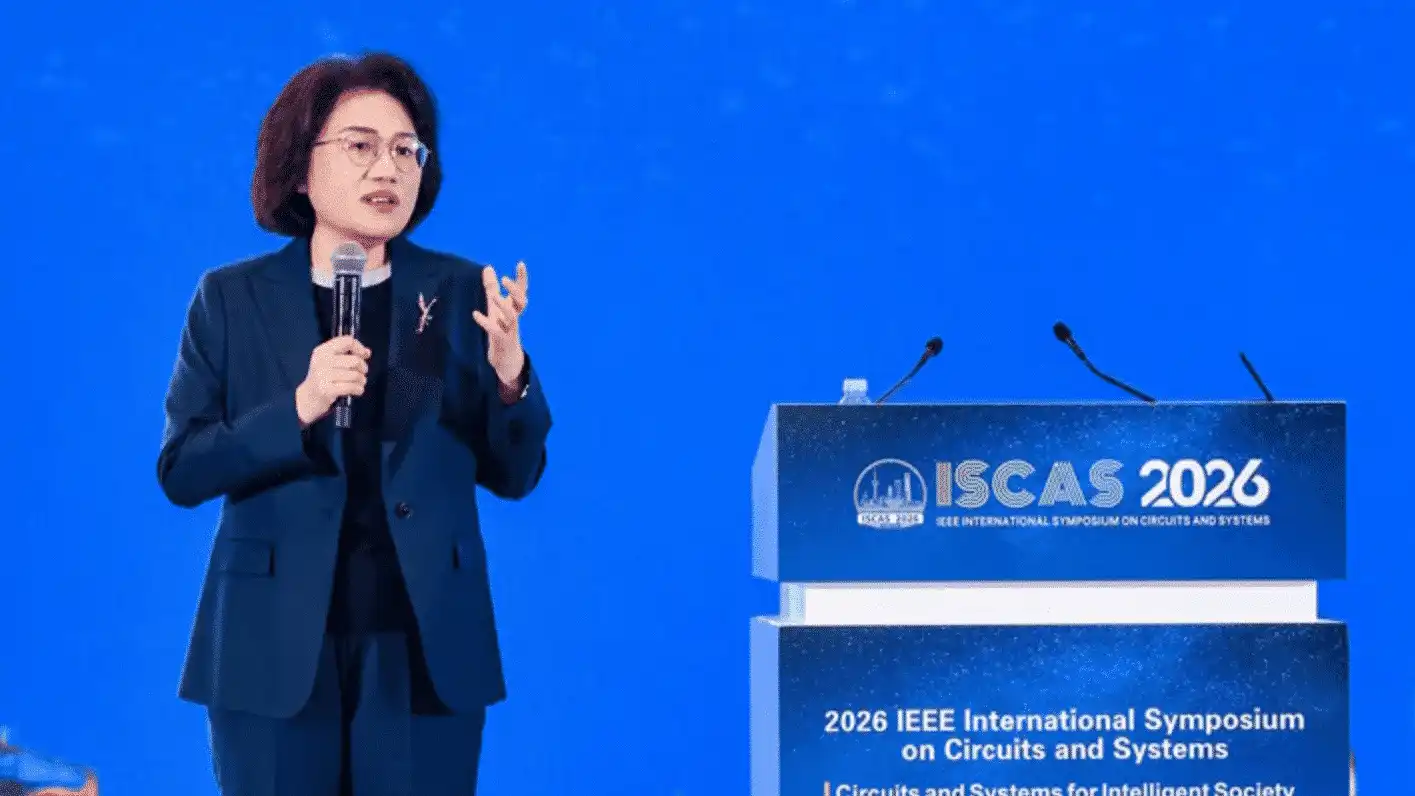
Huawei's "Tau Law": Core Companies Overview On May 25, 2026, Huawei's Director and President of the Semiconductor Business Division, He Tingbo, formally introduced the "Tau (τ) Law" at ISCAS 2026, marking a significant principle guiding industry development in the global semiconductor field from China. The Tau Law shifts focus from traditional Moore's Law, which pursues geometric transistor scaling, to "time scaling"—continuously compressing signal propagation delay (time constant τ) without solely relying on extreme feature size reduction. The core implementation path is "logic folding." This technique transforms circuit layouts from two-dimensional planes to multi-layer 3D stacks, using short vertical interconnects to replace long horizontal wiring, thereby drastically reducing τ. Huawei has already designed and mass-produced 381 chips following this principle over the past six years, with plans to launch a Kirin chip utilizing logic folding in Fall 2026. By 2031, high-end chips based on the Tau Law are expected to achieve performance levels equivalent to a 1.4nm process node. This development impacts several key industry segments, with related Chinese companies poised to benefit: 1. **EDA Design Software**: Essential for circuit-level optimization. Key players include: * **Empyrean Technology** (Huada Jiutian): China's largest full-flow EDA provider. * **Primarius Technologies** (Gailun Dianzi): Specializes in device modeling and verification. * **Semitronix** (Guangliwei): Focuses on yield enhancement and test chip EDA. 2. **Chiplet & Advanced Packaging**: Logic folding's 3D stacking necessitates advanced packaging (e.g., TSV, hybrid bonding). Core participants are: * **Tongfu Microelectronics**: A leader in advanced packaging and a key partner for AMD's Chiplet products. * **JCET Group** (Changdian Keji) & **Tianshui Huatian Technology**: Major OSATs with advanced packaging capabilities. * **VeriSilicon** (Xinyuan Gufen): Provides Chiplet-based design platforms and IP. 3. **Foundry Manufacturing**: Optimization must be implemented in transistor structures and process parameters. Potential foundries for Huawei's future chips include: * **SMIC**: China's leading foundry with advanced FinFET capabilities, the most likely candidate for next-gen Kirin chips. * **Hua Hong Semiconductor** (Huahong Gongsi): A leader in specialty processes (power, embedded memory). * **Nexchip Semiconductor** (Jinghe Jicheng): Major foundry for display driver ICs and MCUs. The Tau Law represents a strategic move towards architectural innovation and design-process co-optimization, driving demand across the domestic semiconductor supply chain.

marsbit30m ago

Huawei's "Tao Law": A Comprehensive Overview of Core Companies

marsbit30m ago

TechFlow Intelligence Report: Huawei Unveils "Tao" Law, Semiconductor Sector Surges; Meta Cuts 10% of Workforce

"TechFlow Intelligence Brief": Huawei's new "Tau Law" in semiconductors and Meta's 10% layoffs headline today's tech landscape. In AI, breakthroughs include an AI solving 9 high-difficulty pure math problems for just a few hundred dollars each, and DeepSeek's new Reasonix programming agent challenging commercial models. However, research highlights a "constraint decay" issue in LLM-generated backend code. Open-source model Qwen 3.6 27B achieves high speeds on older GPUs, sparking debate on NVIDIA's future dominance. In Crypto/Web3, Ethereum Foundation plans to downsize, possibly reducing ETH selling pressure. Fake news about CZ ignited a meme coin frenzy, showing the market's sensitivity to celebrity narratives. DeFi sees a new trend in HELOC-backed Real World Asset (RWA) pools. The chip sector is stirred by Huawei's proposed "Tau (τ) Law," aiming for 1.4nm-equivalent performance by 2031 through architectural innovation, causing related stocks to surge. A report notes memory now constitutes nearly two-thirds of AI chip cost. Meanwhile, executives at 7 Chinese semiconductor firms sold shares after price peaks. Meta announces 10% layoffs as it pivots to AI. Google's CEO faced student protests over AI ethics during a speech, and the company controversially published a Chromium exploit before patching was complete. Xiaomi permanently banned installers for AC installation fraud. In US stocks, AMD is seen as a potential challenger to NVIDIA, while a survey reveals 99% of CEOs expect AI-driven layoffs within two years. Palantir secured a government contract for employee monitoring, raising privacy concerns. Macro developments include a 6% drop in WTI crude oil on hopes for reopened Hormuz Strait, and silver prices rising over 4%. Global oil inventories are nearing critical lows. New trends highlight a "audio prompt injection" attack targeting AI voice assistants via hidden commands, and CBS pausing takedowns of pirated Stephen Colbert episodes after public pushback. The underlying narrative connects AI's cost-effective problem-solving, widespread planned job displacement, and Huawei's challenge to Western tech hegemony, framing the AI and chip race as a broader contest over employment, geopolitics, and the very definition of intelligence.

marsbit1h ago

TechFlow Intelligence Report: Huawei Unveils "Tao" Law, Semiconductor Sector Surges; Meta Cuts 10% of Workforce

marsbit1h ago

Trading

Spot
Futures

Hot Articles

Discussions

Welcome to the HTX Community. Here, you can stay informed about the latest platform developments and gain access to professional market insights. Users' opinions on the price of ETH (ETH) are presented below.

活动图片