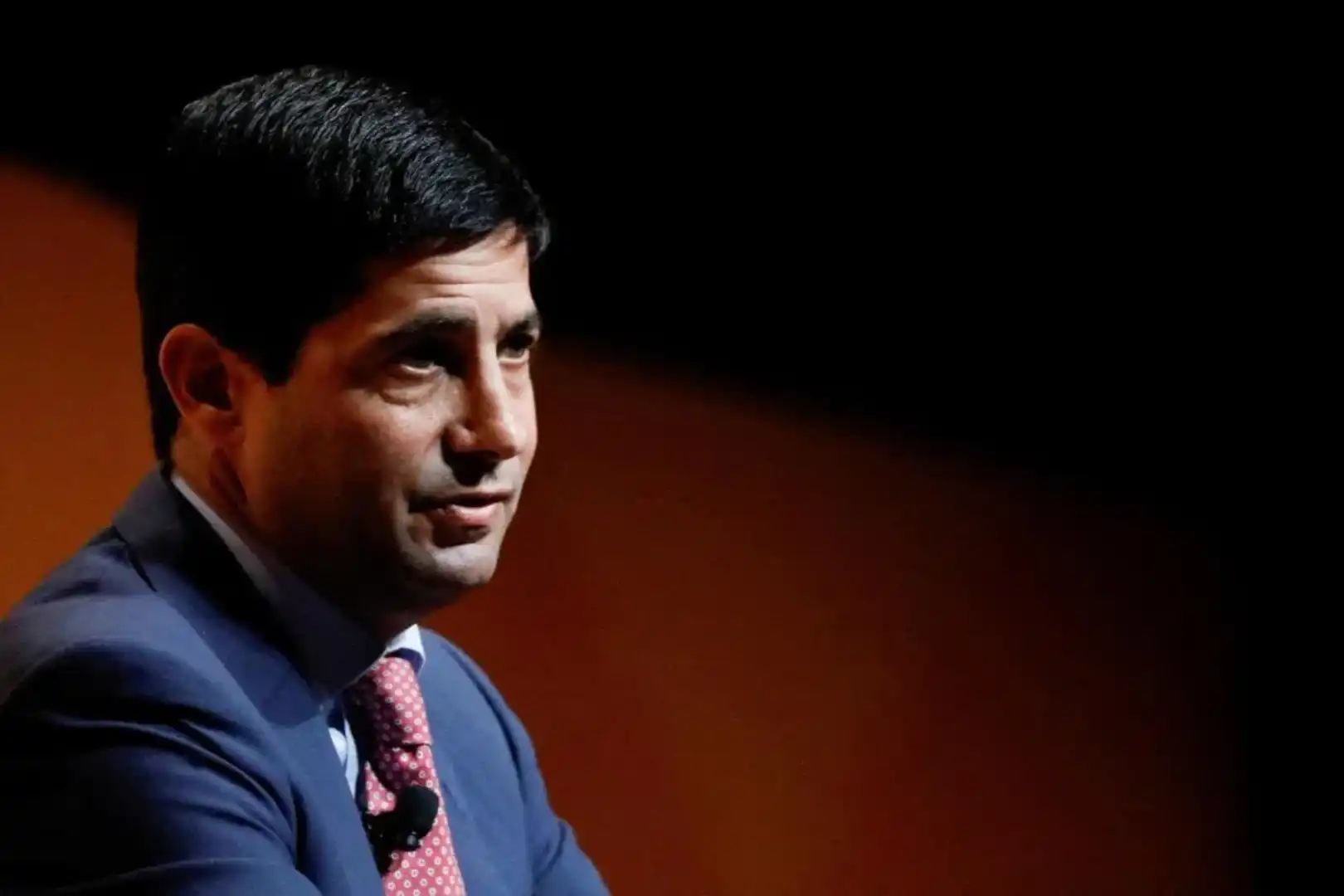
Former FTX Executive Ryan Salame Faces Judge’s Wrath Over 2023 Guilty Plea Deception

bitcoinistPublished on 2024-09-12Last updated on 2024-09-12

Abstract

In a dramatic hearing on Thursday, a federal judge expressed his anger at former FTX executive Ryan Salame, threatening sanctions...

In a dramatic hearing on Thursday, a federal judge expressed his anger at former FTX executive Ryan Salame, threatening sanctions for what he described as false testimony during Salame’s guilty plea last year. 

According to CNBC, the proceedings occurred in the US District Court in Manhattan, where Judge Lewis Kaplan addressed Salame’s claims that federal prosecutors had made promises to him regarding his plea agreement.

FTX Executive’s Guilty Plea Under Scrutiny

As reported by Bitcoinist, in 2023, Salame had initially pleaded guilty to campaign finance and money transmission violations, claiming that prosecutors had offered no inducements. 

However, during Thursday’s hearing, he contradicted that statement, claiming that prosecutors had assured him through his former attorneys that they would drop a criminal investigation into his romantic partner, Michelle Bond if he agreed to plead guilty. According to the report, Kaplan, “visibly frustrated,” stated: 

You are asking me to let stand a conviction and sentence that I now know is based on false testimony before me in the plea allocution.

Kaplan emphasized the importance of truthfulness during plea hearings, noting that defendants must disclose any promises made to them in exchange for their guilty pleas. “Salame induced me to accept his guilty plea,” the judge repeated, clarifying that this situation could have serious implications for Salame’s case.

Judge Threatens Sanctions Over False Testimony

As the hearing unfolded, Kaplan indicated that he would take time to consider appropriate actions against Salame, including the possibility of sanctions. Salame’s legal team had previously sought to void his 2023 guilty plea, claiming that prosecutors had failed to uphold their end of the agreement regarding Bond. 

Salame’s lawyers alleged that despite assurances made in April 2023, the investigation into Bond for campaign finance violations continued, culminating in her indictment shortly after.

Bond faces charges related to her congressional campaign in 2022, with prosecutors asserting that she conspired to raise “illegal campaign contributions” from the defunct FTX exchange. 

The indictment includes allegations that Salame facilitated these actions by wiring substantial amounts of money to Bond’s account, which she allegedly used to fund her campaign unlawfully.

Following Bond’s indictment, Salame sought to withdraw his motion to vacate his guilty plea, stating during the hearing that he no longer wished to pursue this course of action. Judge Kaplan then ordered Salame to report to prison by October 11, adjusting the original surrender date.

FTX
The daily chart shows FTX native token’s price trending upwards. Source: FTTUSDT on TradingView.com

At the time of writing, FTX’s native token FTT is trading at $1.311, up 1.4% in the 24-hour time frame and the same amount every month, as the broader crypto market approaches recovery.

Featured image from DALL-E, chart from TradingView.com

Ronaldo Marquez

Ronaldo Marquez

Ronaldo is a seasoned crypto enthusiast with over four years of experience in the field. He is passionate about exploring the vast and dynamic world of decentralized finance (DeFi) and its practical applications for achieving economic sovereignty. Ronaldo is constantly seeking to expand his knowledge and expertise in the DeFi space, as he believes it holds tremendous potential for transforming the traditional financial landscape.

Related Reads

Continuous Net Outflows from ETFs, Are Institutions Exiting?

US spot Bitcoin ETFs have experienced approximately $6 billion in net outflows over the past six weeks, marking the longest consecutive weekly withdrawal streak since their launch in 2024. The iShares Bitcoin Trust (IBIT) from BlackRock has been particularly affected, accounting for over 70% of recent outflows. On-chain analysis indicates that long-term Bitcoin holders (holding for over 155 days), who control about 83% of the circulating supply, remain steadfast. The selling pressure is primarily coming from allocators who entered through ETF brokerage accounts. This represents the first major collective capitulation since Bitcoin gained mainstream Wall Street recognition, driven more by risk-off portfolio adjustments than a fundamental rejection of the asset. Factors such as rising inflation, a hawkish shift in Federal Reserve policy, massive capital inflows into AI infrastructure, and attractive IPO opportunities have redirected speculative funds. Bitcoin, treated as a high-beta risk asset, was among the first to be sold. While the pace of outflows has slowed significantly—from $1.72 billion in early June to $226.8 million mid-month—the structural issue remains. IBIT's large size means its outflows alone exert substantial market pressure. With spot market volume thin, new capital inflows absent, and ETF buying muted, the market lacks sufficient buying support to absorb this selling. The coming sessions are critical. If IBIT outflows decelerate and Bitcoin reclaims $60,000, this phase could be seen as a healthy reset. However, if heavy IBIT redemptions resume and the price falls below $58,000, it would signal a more sustained institutional exit, requiring non-ETF buyers to shoulder the entire selling pressure alone. The ETF, while lowering entry barriers, has not removed Bitcoin's inherent volatility.

marsbit4m ago

Continuous Net Outflows from ETFs, Are Institutions Exiting?

marsbit4m ago

Introduction to the Concept of World Models: A Story from Psychology to the Main Battlefield of AI

**World Models: From Psychology to AI's Core Concept** "World model" is a trending but often confusing term in AI, describing a system that allows machines to internally simulate, predict, and rehearse potential outcomes before taking real-world action—like a mental "sandbox." While definitions vary—Yann LeCun emphasizes physical understanding, OpenAI's Sora is a video-based "world simulator," Google DeepMind's Genie 3 creates interactive 3D environments, and companies like Alibaba and Tesla focus on practical applications—the core goal is consistent: reduce reliance on vast real-world data by creating an internal, predictive model for safer and more efficient AI. The concept has deep roots, tracing back to psychologist Kenneth Craik (1943). In AI, it was revitalized by researchers like David Ha and Jürgen Schmidhuber (2018). Major technical approaches include: 1) generative video models (e.g., Sora) for visual realism; 2) abstract predictive models (e.g., LeCun's JEPA) for efficiency and physical reasoning; and 3) explicit 3D simulators (e.g., NVIDIA Omniverse) for precision. Fei-Fei Li proposes a classification based on the AI action loop: renderers (output observations), simulators (output world states), and planners (output actions). The emerging "World Action Model" (WAM) paradigm aims to unify future prediction and action generation. An industry framework is forming: upstream (data, compute, sensors), midstream (general and vertical platforms), and downstream applications (autonomous driving, robotics, gaming, etc.). Autonomous driving is currently the most mature use case. The current lack of a unified definition reflects the field's early, dynamic stage, similar to past tech revolutions. Different approaches—focusing on pixels, physics, or behavior—represent parallel explorations of how best to compress and understand the world. This diversity, while seemingly chaotic, signals that world models have moved from an academic idea to a critical industrial battleground, ultimately aiming to give machines the ability to understand, imagine, and reason about the world.

marsbit29m ago

Introduction to the Concept of World Models: A Story from Psychology to the Main Battlefield of AI

marsbit29m ago

Building the Bright Path While Secretly Crossing Chencang: Is Walsh Paving the Way for a September "Rate Cut"?

The title "Building the Plank Road Openly While Secretly Crossing at Chencang: Is Walsh Paving the Way for a September 'Rate Cut'?" suggests Federal Reserve Chair Kevin Walsh's hawkish stance may be a deliberate smokescreen. Academy Securities analyst Peter Tchir argues in a report that markets, currently pricing a 75% chance of a September hike, are missing a potential path to a September rate cut that Walsh himself might be quietly preparing. Tchir posits that Walsh's hawkish rhetoric aims to suppress long-term yield risks (with the 10-year Treasury yield falling recently) while creating room for a narrative shift based on upcoming data. The potential political endgame, according to this view, could be rate cuts in September and October, ahead of the midterm elections. This hinges on a political logic where the Trump administration's preference for lower rates remains unchanged. A core part of Tchir's argument involves redefining inflation metrics. He contends the Fed under Walsh may deprioritize the PCE index, criticizing its lagging components like Owners' Equivalent Rent (OER). Instead, he points to alternative, more real-time indicators like the New Tenant Repeat Rent Index (NTRR) and the Truflation daily index, which shows core inflation around 1.45%. He suggests the Fed could shift its data narrative to justify policy easing. Furthermore, Tchir downplays AI-driven inflation fears. He argues that consumer price sensitivity, evidenced by negative market reactions to price hikes (e.g., Apple), contradicts persistent inflation narratives. He also separates AI/data center spending—which he sees as relatively rate-insensitive—from broader consumer affordability issues, implying rate hikes are misdirected. Based on this analysis, Tchir sees a re-pricing of rate cut expectations as likely, creating opportunities in short-duration Treasuries. He maintains a neutral-to-slightly-bullish view on the long end of the yield curve. For equities, he recommends a significant overweight in energy (especially global nuclear assets) and, within defense/security themes, an overweight in biotech/pharma versus an underweight in semiconductors, expressing caution on AI/data center valuations.

marsbit56m ago

Building the Bright Path While Secretly Crossing Chencang: Is Walsh Paving the Way for a September "Rate Cut"?

marsbit56m ago

Trading

Spot
活动图片