Glassnode报告:比特币矿工信心强劲而收入下滑,ETF资金流出揭示市场冷却

marsbitPublished on 2024-09-10Last updated on 2024-09-11

摘要

  • 哈希率仍略低于历史最高水平,尽管收入下降,但矿工的持续投资表明了对比特币网络的巨大信心。
  • 投资者与交易所的互动正在减少,交易量的全面萎缩表明投资者和交易的兴趣有所减弱。
  • 比特币和以太坊 ETF 均出现资金流出,不过,投资者对比特币 ETF 的兴趣在规模和数量上仍然明显更大

矿工

矿工仍然是比特币网络的基本参与者,也是新币的主要生产来源。矿工提供用于发现下一个有效区块的哈希算力,网络则自动以新发行的币和交易费奖励他们。

这使得采矿业成为一个极具挑战性的行业,因为他们既无法控制能源的投入成本,也无法控制 BTC 的产出成本。

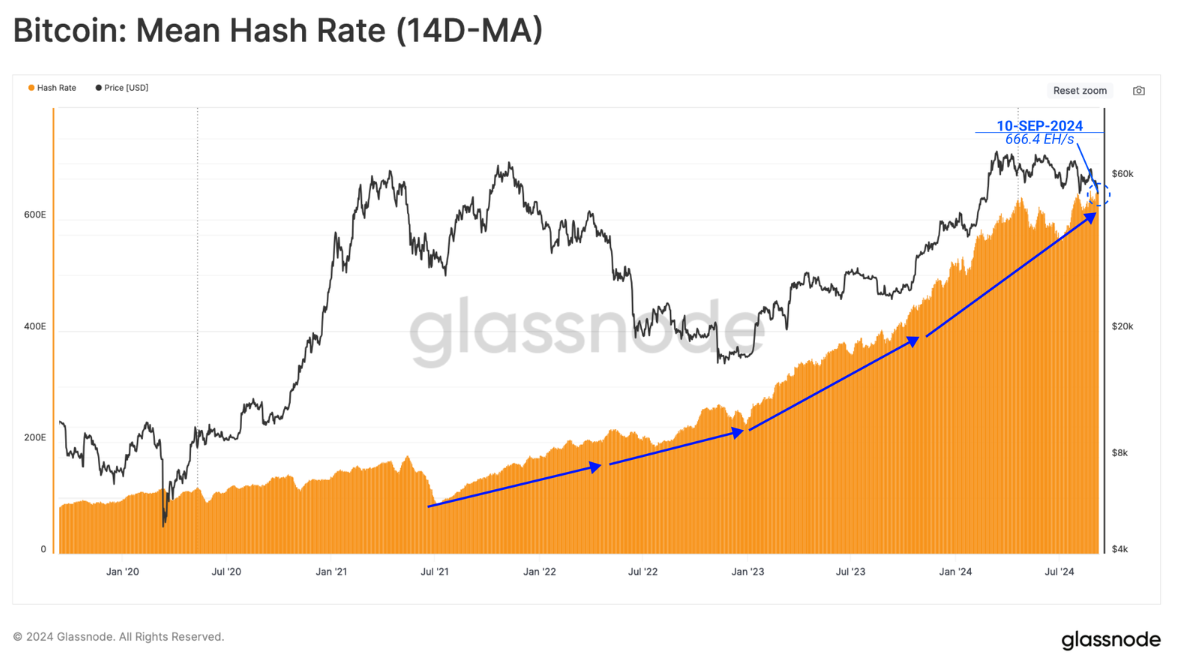
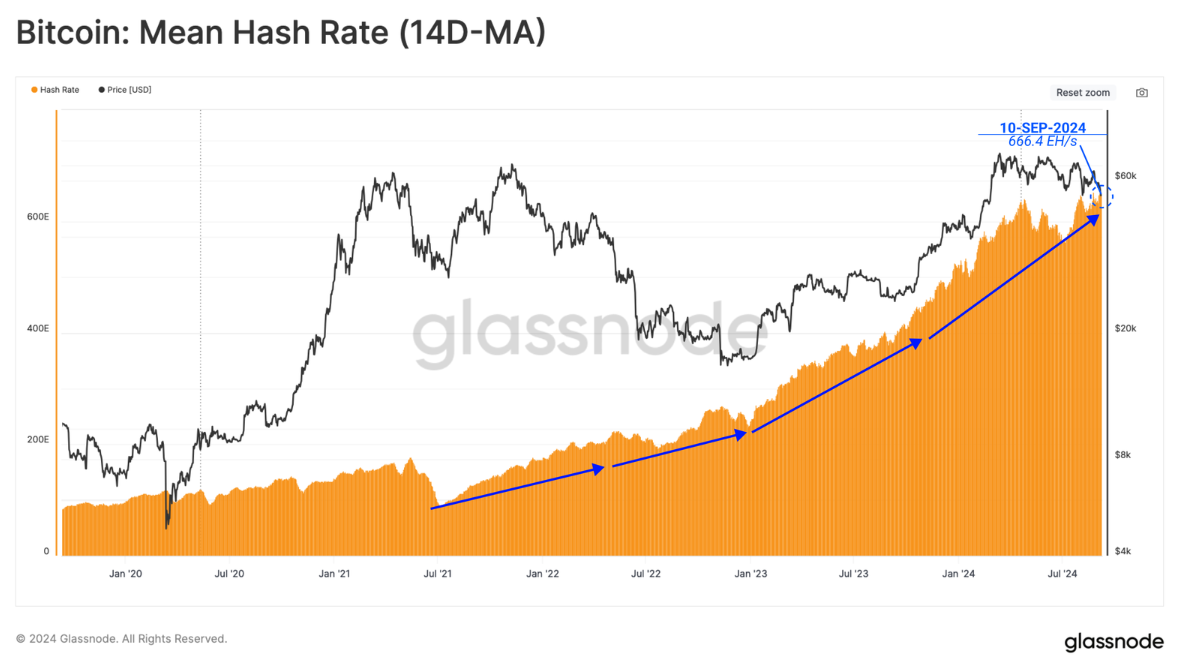
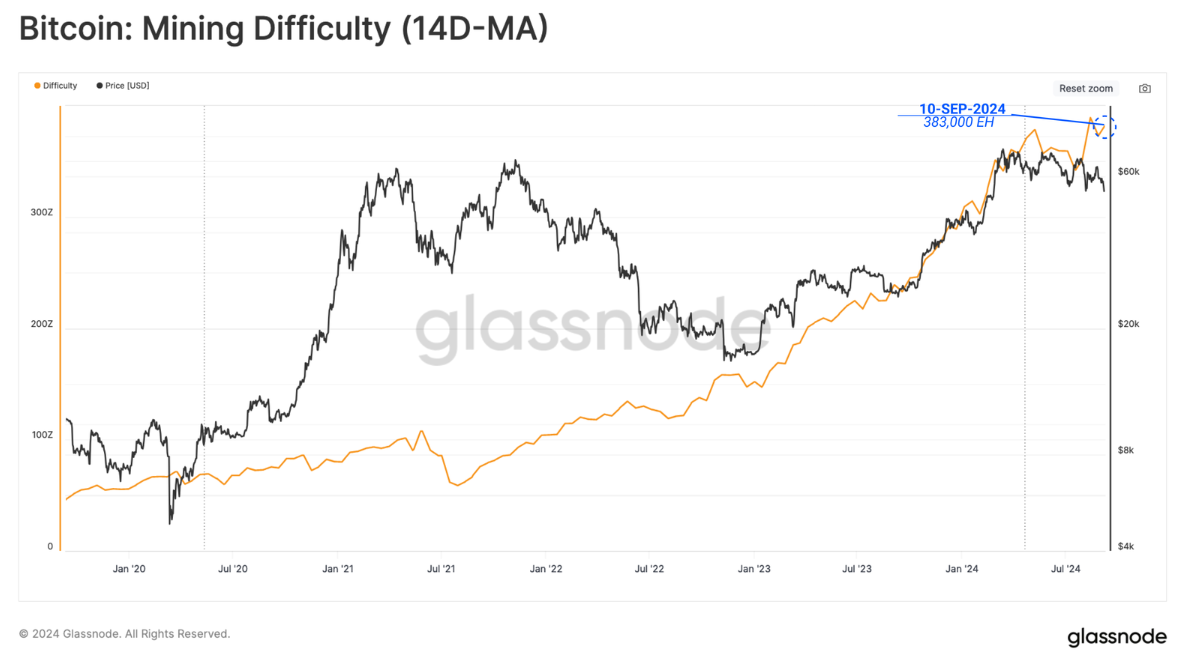
尽管市场状况波动且不确定,但比特币矿工仍继续安装新的 ASIC 硬件,从而推高整体哈希率(14D-MA),达到 666.4EH/s,仅比 ATH 低 1%。
以太坊随着哈希率的增加,成功挖掘有效区块的目标难度也会增加。比特币协议会自动调整难度,以适应网络上哈希率的上升和下降。

目前,挖出一个区块所需的平均哈希值为 338k exahash。这是比特币历史上第二大的难度,凸显了挖矿行业日益激烈的竞争。
以太坊

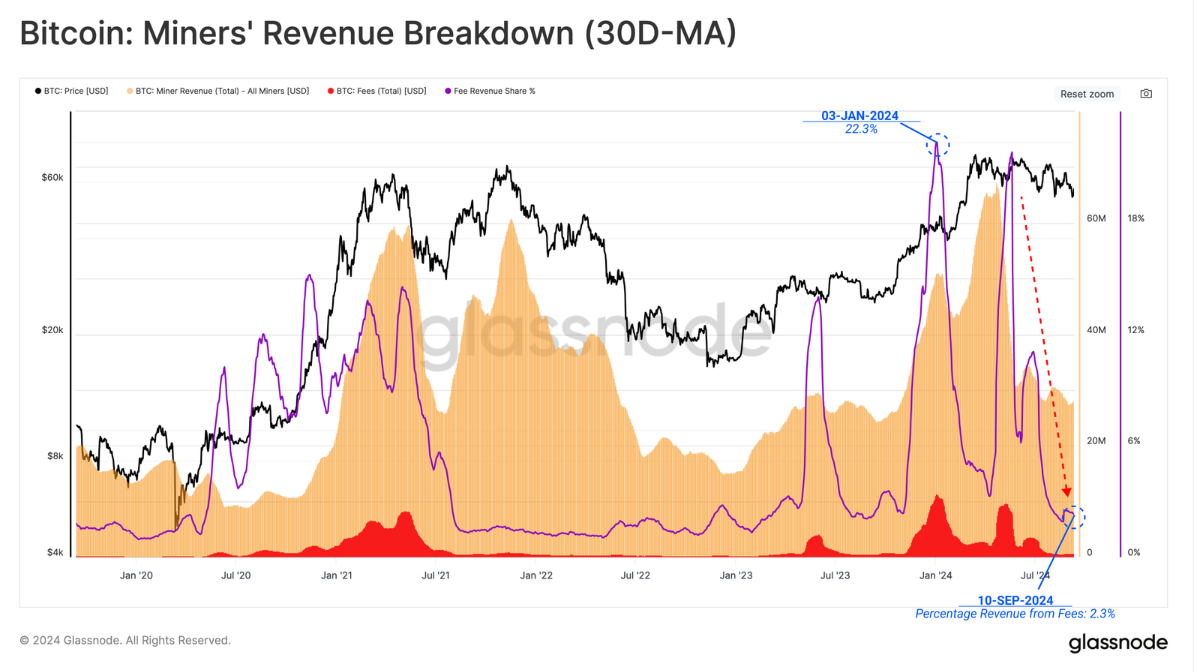
然而,自 3 月份市场价格创下新高以来,矿工收入大幅下降。收入下降的很大一部分可以归因于费用压力下降。这是由于货币转移需求下降以及符文和铭文相关交易产生的费用下降所致。

由于现货价格超过 55,000 美元,与区块补贴相关的矿工收入仍然相对较高,但仍比之前的最高水平低 22% 左右。

  • 整块补贴收入:8.24 亿美元
  • 交易费收入:2000 万美元

以太坊

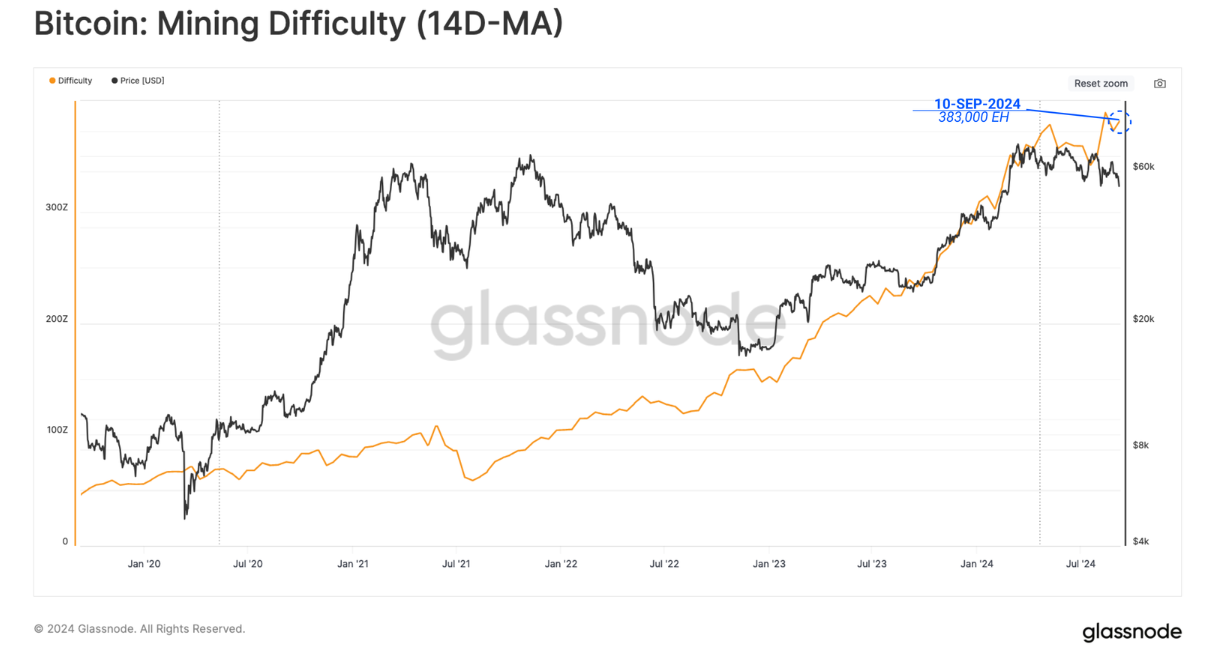
随着哈希率的增加,成功挖掘有效区块的目标难度也会增加。比特币协议会自动调整难度,以适应网络上哈希率的上升和下降。

目前,挖出一个区块所需的平均哈希值为 338k exahash。这是比特币历史上第二大的难度,凸显了挖矿行业日益激烈的竞争。
以太坊

然而,自 3 月份市场价格创下新高以来,矿工收入大幅下降。收入下降的很大一部分可以归因于费用压力下降。这是由于货币转移需求下降以及符文和铭文相关交易产生的费用下降所致。

由于现货价格超过 55,000 美元,与区块补贴相关的矿工收入仍然相对较高,但仍比之前的最高水平低 22% 左右。

  • 整块补贴收入:8.24 亿美元
  • 交易费收入:2000 万美元

以太坊

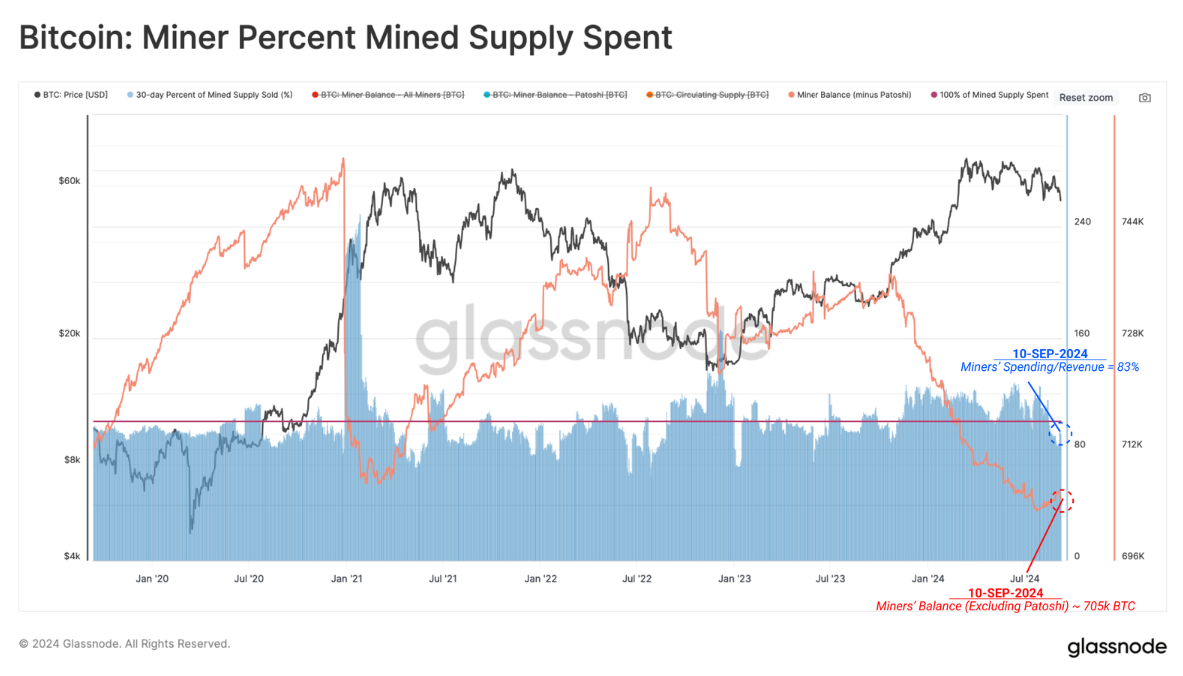
随着收入下降,我们可以推断,一定程度的收入压力可能会开始出现。我们可以估算矿工在 30 天内花费的挖矿供应量百分比,以衡量情况是否如此。

由于挖矿行业的竞争性和资本密集性,矿工历来需要分配大部分挖出的货币以支付投入成本。有趣的是,矿工已经从对挖出的货币进行净分配转变为现在将一部分挖出的货币保留在其金库储备中。

这凸显了一个有趣的发展,因为矿工往往是顺周期的,在下跌期间是卖家,在上涨期间是持有者。哈希率和难度的上升意味着 BTC 的生产成本越来越高,这可能会在不久的将来对矿工的盈利能力产生不利影响。
以太坊

结算放缓

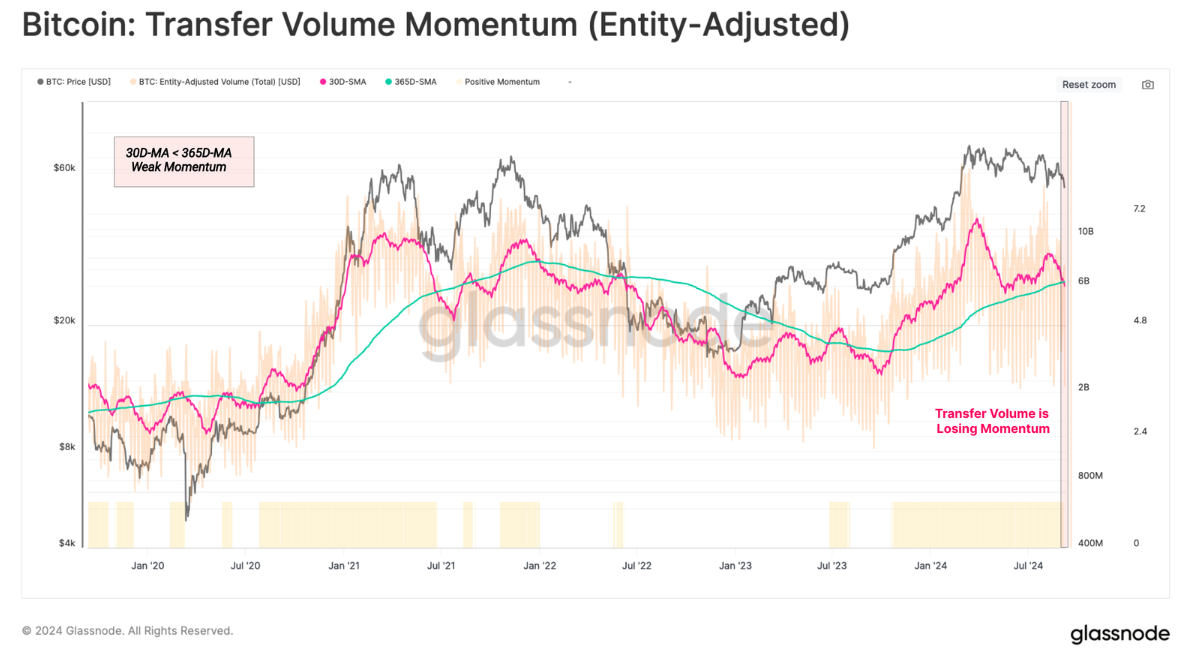
链上结算的交易量大小也可以反映出网络的采用程度和健康状况。当筛选实体调整后的交易量时,网络目前每天处理和结算的交易量约为 62 亿美元。

然而,结算量开始下降至年平均水平,表明网络使用率和吞吐量明显下降。总体而言,这是一个净负面观察结果。
以太坊

交易意愿下降

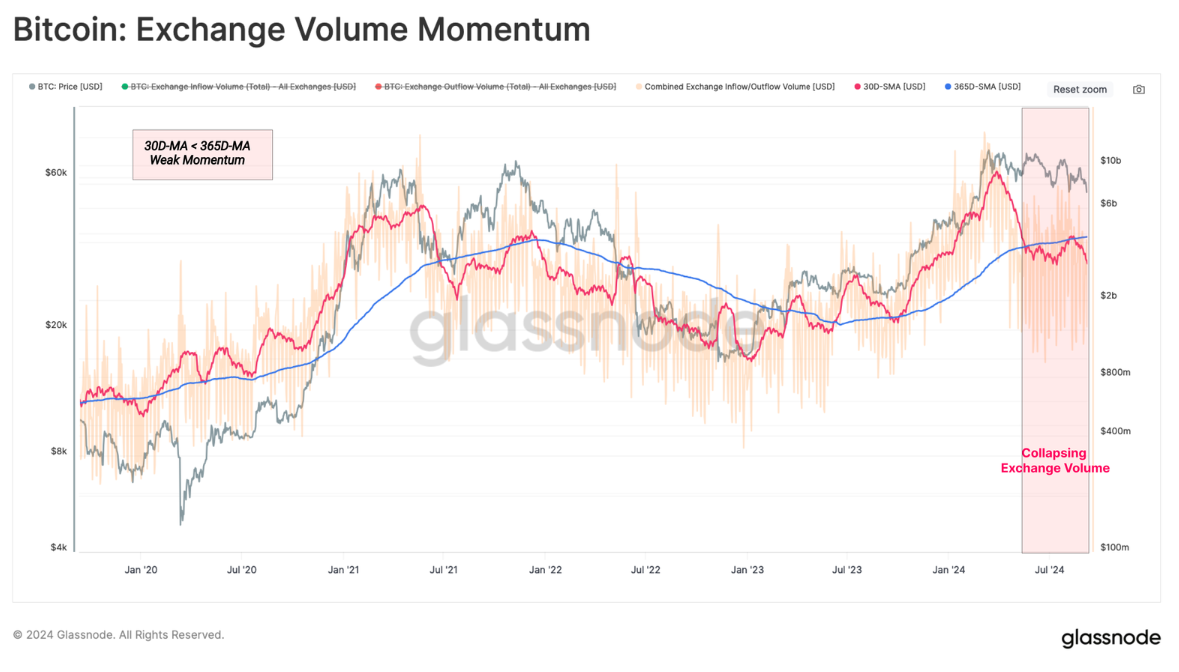
在不断变化的市场格局中,中心化交易所一直是投机活动和价格发现的中心场所。因此,我们可以评估这些场所的链上交易量,以此作为投资者活动和投机兴趣的指标。

对交易所相关的流入和流出进行类似的 30 天/365 天动量交叉,我们可以看到月平均交易量远低于年平均交易量。这凸显了投资者需求的下降以及当前价格范围内投机者交易的减少。
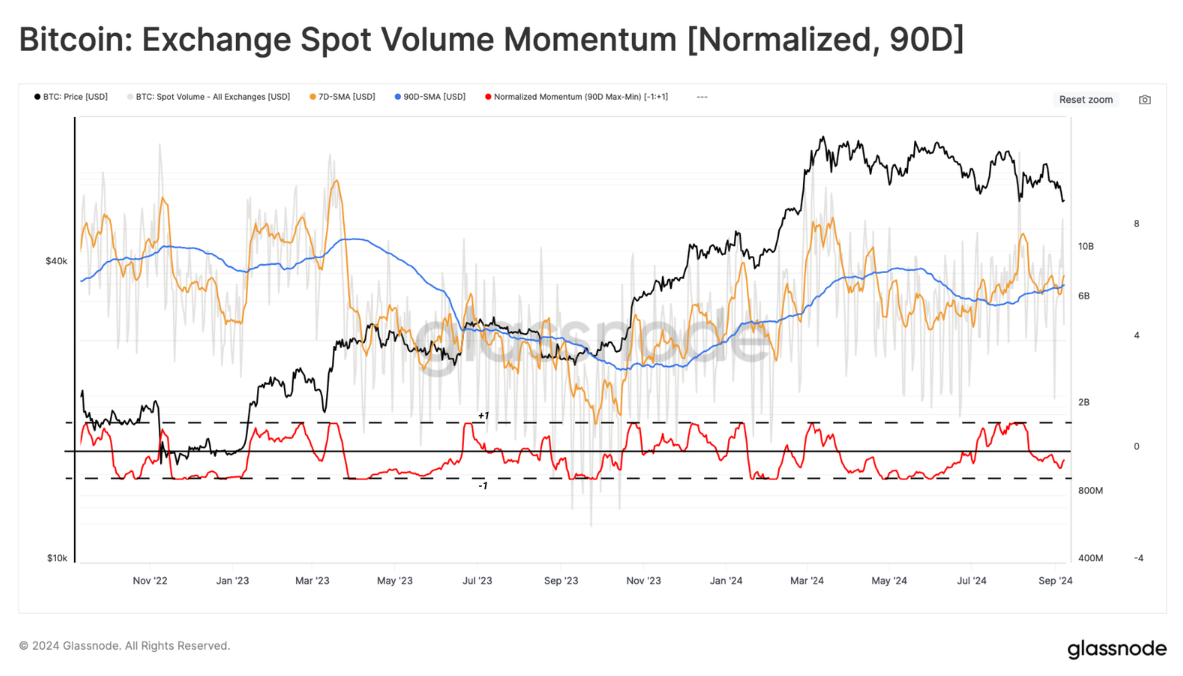
以太坊接下来,我们将查看交易所的现货交易量。在这里,我们应用 90d MinMax 标量,该标量将相对于所选期间的最大值和最小值在 1 到 -1 范围内设置的值标准化。

由此可以看出,现货交易量势头持续减弱,这与之前的观察结果类似。这进一步证实了上个季度贸易活动明显下降的观点。
以太坊

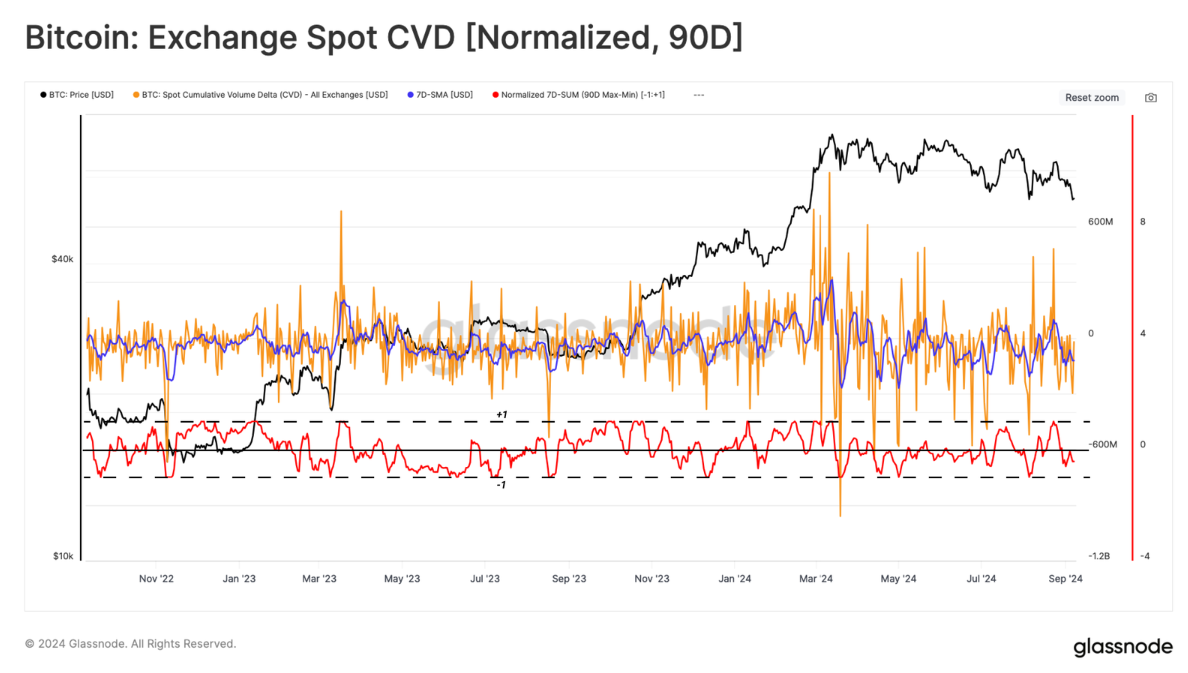
CVD 指标可以估算现货市场中当前买卖压力之间的净平衡。利用同样的方法,我们注意到投资者的抛售压力在过去 90 天内一直在增加,导致价格走势向下倾斜。
以太坊

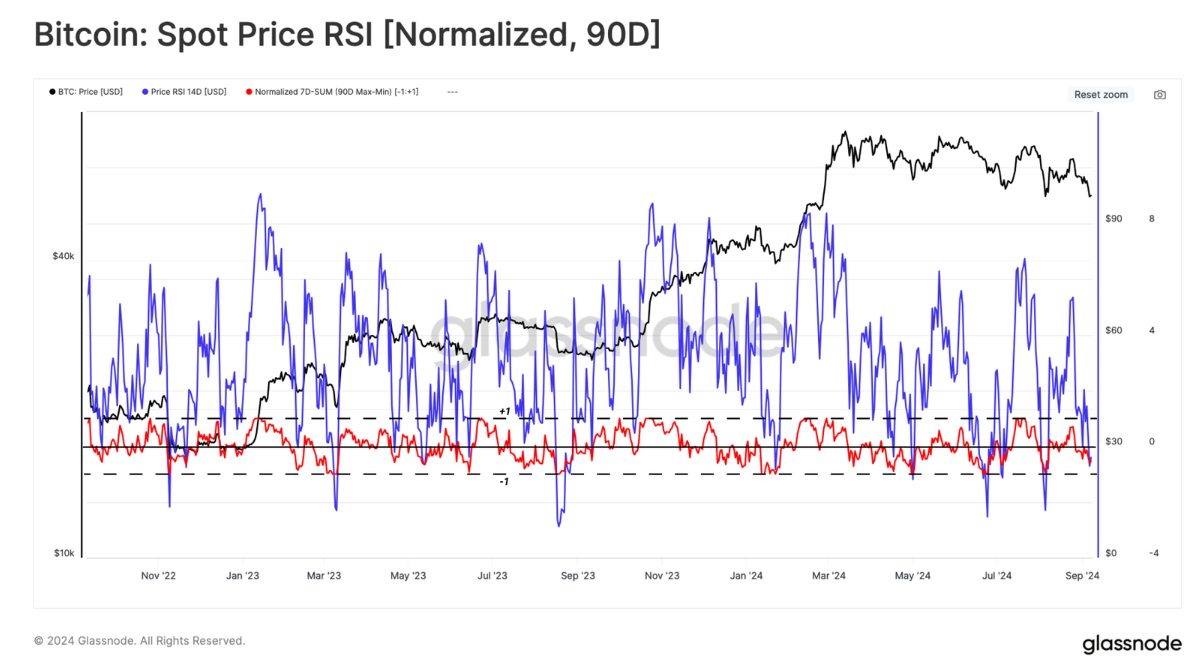
最后,我们可以评估比特币价格的动能。在这里,我们可以看到一定程度的犹豫不决,8 月份出现了正值和负值数据点。这与之前强调的两个指标形成了鲜明对比,这两个指标在同一时期都明显为负值。
以太坊

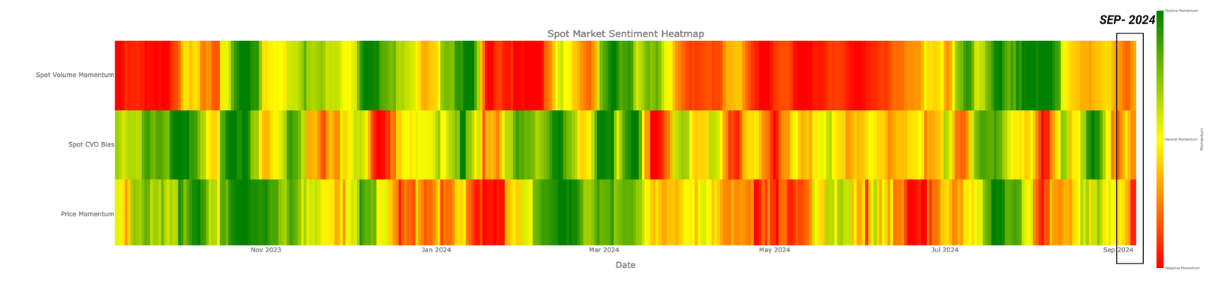
分别结合成交量、CVD 和价格行为的 MinMax 变换,我们能够生成一个关于 1 到 -1 之间特征值的情绪热图。我们可以在以下框架上考虑这一点:

  • 🟢 值为 1 表示风险较高
  • 🟡 0 表示中等风险
  • 🔴 -1 表示风险较低

所有三个指标都表明,相对于过去 90 天的数据点,市场正在进入低风险区。所讨论的现货指标之间的这种融合可以转化为减少(现货成交量动量)卖出量(CVD < 0),而价格行动正在缓慢下降。这种结构可能容易受到外部力量的影响,如果形势发生变化,可能会在任一侧爆发。
以太坊ETF

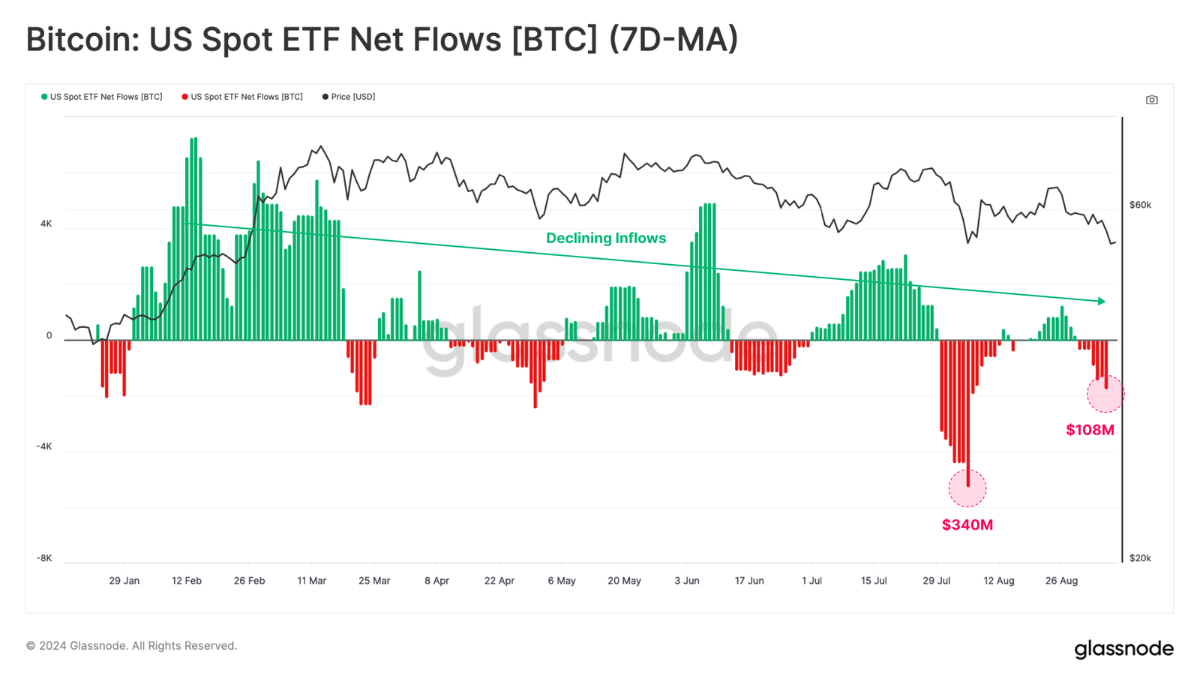
以太坊 ETF 现已在 8 月份跟随美国比特币 ETF 的推出。这两项事件标志着数字资产生态系统的“跨越卢比孔河”事件,为美国传统市场提供了一个接触领先两种加密货币的便捷入口。

从比特币 ETF 开始,我们可以看到,美元的净资本流动自 2024 年 8 月以来有所减弱,目前每周的流出量为 1.07 亿美元。
以太坊

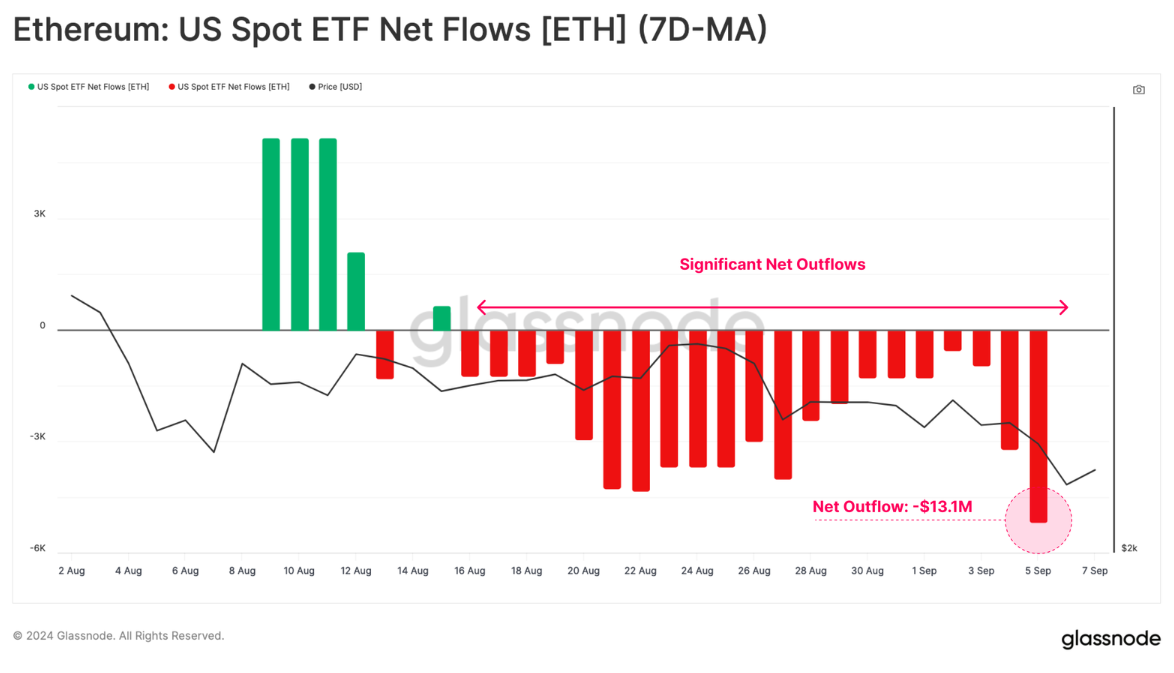
近期以太坊 ETF 的需求相对低迷,出现净负流出。这主要是由于 Grayscale ETHE 产品的赎回,而其他工具的流入需求不足以抵消这一需求。

总体而言,以太坊 ETF 的总流出量为 1310 万美元。这凸显了 BTC 和 ETH 之间需求规模的差异,至少在当前市场条件下是如此。
以太坊

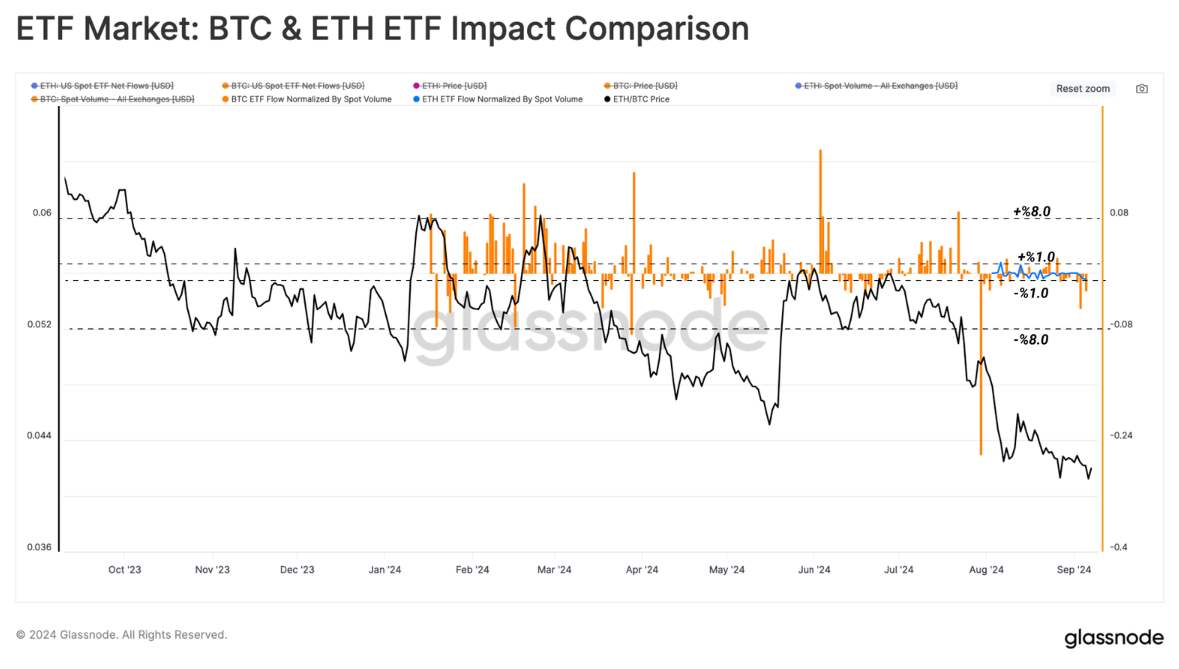
为了近似估计 ETF 对比特币和以太坊市场的影响,我们已通过相应的现货交易量对 ETF 净流量偏差进行了标准化。此比率使我们能够直接比较每个市场中 ETF 的相对权重。

如下图所示,ETF 对以太坊市场的相对影响力相当于现货交易量的 ±1%,而比特币 ETF 则为 ±8%。这表明,尽管比特币 ETF 已经正常化,但人们对比特币 ETF 的兴趣仍然比以太坊 ETF 大一个数量级。
以太坊

总结

矿工继续表现出对比特币网络的极大信心,尽管收入大幅下降,但哈希率仍略低于历史最高水平然而,由于矿工往往具有顺周期性,在下跌期间是卖方,在上涨期间是持币者,因此如果进一步下跌,可以预期卖方会面临一定程度的压力。

与此同时,投资者与交易所的互动持续下降,交易量全面萎缩,表明投资者和交易的兴趣减弱。这在机构投资者中也很明显,比特币和以太坊 ETF 均出现净流出。


Related Reads

Morning Post | Michael Saylor Says This Week's Buy Was Bonds, Not Bitcoin; StablR Suffers Attack Losing Approximately $2.8 Million; US Congress Reintroduces Bitcoin Reserve Bill

This cryptocurrency industry digest covers key developments from May 25. MicroStrategy's Michael Saylor clarified the company purchased bonds, not Bitcoin, this week. In regulatory news, the US Congress reintroduced a Bitcoin reserve bill, with Republican backing aiming to accumulate 5% of global supply. The legal and audit firms for the collapsed FTX agreed to a $66 million settlement over fraud allegations. Several CFTC officials skeptical of prediction market oversight were reportedly suspended and forced out. On the security front, the StablR stablecoin was attacked and de-pegged, resulting in an estimated $2.8 million loss for the attacker. The Ethereum Foundation faced criticism, though a researcher defended its core protocol-building mission over influencing ETH's price. Market data from GMGN showed the top 24-hour trending meme tokens on ETH were HEX, SHIB, LINK, PEPE, and mUSD. On Solana, leaders were TROLL, neet, WORLDCUP, HANTA, and Buttcoin. Base chain's top tokens included TOSHI, KEYCAT, BRETT, CLANKER, and LUNA. Featured articles included an a16z analysis arguing tokenization, or real-world assets (RWA), is fundamentally transforming asset nature and financial systems, with the market growing tenfold to ~$34 billion in two years. Another piece deconstructed Hyperliquid's success through a five-layer financial stack framework, emphasizing the critical importance of building from a robust settlement layer upward.

链捕手46m ago

Morning Post | Michael Saylor Says This Week's Buy Was Bonds, Not Bitcoin; StablR Suffers Attack Losing Approximately $2.8 Million; US Congress Reintroduces Bitcoin Reserve Bill

链捕手46m ago

SuperEx's Mars Exploration Dream: Digital Currency is the Key to Unlocking Economic Exchanges in the Interstellar Era

SuperEx envisions digital currencies as the key to enabling economic exchange in the interstellar era. Inspired by humanity's enduring dream of space exploration, exemplified by Elon Musk’s Mars colonization plan and the UAE's Mars Science City project, SuperEx established a space fund to support such initiatives. The exchange positions itself not merely as a trading platform but as a contributor to humanity's future, claiming that user transactions help fuel the journey to Mars. The article argues that traditional sovereign currencies will be inadequate for interplanetary economies due to their limitations in free cross-border flow. In contrast, digital currencies, built on Web3.0 principles of decentralization, distributed ledgers, and smart contracts, possess the borderless, shared, and accessible attributes necessary for future interstellar trade. Examples like Bitcoin demonstrate this potential. SuperEx presents itself as the world's first Web3.0-based digital asset exchange, aiming to lay the groundwork for a future interstellar economic system. It reports over 10 million users, support for 1000+ trading pairs, and integration with a decentralized wallet (Super Wallet) for security. Its long-term goal is to evolve into a fully decentralized autonomous organization (DAO), with its existing SuperEx DAO already being one of the largest Web3.0 communities. Ultimately, SuperEx's vision is to create a free, borderless financial world, leveraging blockchain technology to empower individual value and freedom.

链捕手48m ago

SuperEx's Mars Exploration Dream: Digital Currency is the Key to Unlocking Economic Exchanges in the Interstellar Era

链捕手48m ago

Vitalik Finally Opens Up: ETH Is Ethereum's Most Important Product

In a recent statement, Ethereum co-founder Vitalik Buterin outlined his vision for the Ethereum Foundation's future direction. He stressed that Ethereum must not succumb to mainstream trends but instead must strive to be "impressive" by steadfastly upholding its core CROPS values: censorship resistance, openness, privacy, and security. Buterin clarified that the EF should not be seen as the "center" of Ethereum but as one specialized node among many, with a finite lifespan and resources. He highlighted that the EF holds only about 0.16% of all ETH, far less than foundations of other blockchains. Its renewed focus will be on tasks critical to CROPS that others are unlikely to undertake, even if this means narrowing its scope. Technically, Buterin argued that Ethereum's path to being impressive lies not in chasing maximal transaction speed but in excelling within the CROPS framework. Key technical goals include: building a provably bug-free Ethereum through AI-assisted formal verification; maintaining its unique hybrid consensus model for high liveness; and minimizing intermediaries in transaction submission to reduce systemic fragility. Buterin revealed that nearly 90% of his personal net worth is held in ETH, stating that "the highest-value 'product' of the Ethereum blockchain is the ETH asset." He acknowledged that supporting ETH's value requires work beyond the EF's mandate, necessitating collaboration with other ecosystem players. The future EF, according to Buterin, will be a more focused, opinionated, and enduring "small boat," dedicated to ensuring Ethereum delivers something meaningful to the world.

marsbit51m ago

Vitalik Finally Opens Up: ETH Is Ethereum's Most Important Product

marsbit51m ago

Trading

Spot
Futures

Hot Articles

What is $BITCOIN

DIGITAL GOLD ($BITCOIN): A Comprehensive Analysis Introduction to DIGITAL GOLD ($BITCOIN) DIGITAL GOLD ($BITCOIN) is a blockchain-based project operating on the Solana network, which aims to combine the characteristics of traditional precious metals with the innovation of decentralized technologies. While it shares a name with Bitcoin, often referred to as “digital gold” due to its perception as a store of value, DIGITAL GOLD is a separate token designed to create a unique ecosystem within the Web3 landscape. Its goal is to position itself as a viable alternative digital asset, although specifics regarding its applications and functionalities are still developing. What is DIGITAL GOLD ($BITCOIN)? DIGITAL GOLD ($BITCOIN) is a cryptocurrency token explicitly designed for use on the Solana blockchain. In contrast to Bitcoin, which provides a widely recognized value storage role, this token appears to focus on broader applications and characteristics. Notable aspects include: Blockchain Infrastructure: The token is built on the Solana blockchain, known for its capacity to handle high-speed and low-cost transactions. Supply Dynamics: DIGITAL GOLD has a maximum supply capped at 100 quadrillion tokens (100P $BITCOIN), although details regarding its circulating supply are currently undisclosed. Utility: While precise functionalities are not explicitly outlined, there are indications that the token could be utilized for various applications, potentially involving decentralized applications (dApps) or asset tokenization strategies. Who is the Creator of DIGITAL GOLD ($BITCOIN)? At present, the identity of the creators and development team behind DIGITAL GOLD ($BITCOIN) remains unknown. This situation is typical among many innovative projects within the blockchain space, particularly those aligning with decentralized finance and meme coin phenomena. While such anonymity may foster a community-driven culture, it intensifies concerns about governance and accountability. Who are the Investors of DIGITAL GOLD ($BITCOIN)? The available information indicates that DIGITAL GOLD ($BITCOIN) does not have any known institutional backers or prominent venture capital investments. The project seems to operate on a peer-to-peer model focused on community support and adoption rather than traditional funding routes. Its activity and liquidity are primarily situated on decentralized exchanges (DEXs), such as PumpSwap, rather than established centralized trading platforms, further highlighting its grassroots approach. How DIGITAL GOLD ($BITCOIN) Works The operational mechanics of DIGITAL GOLD ($BITCOIN) can be elaborated on based on its blockchain design and network attributes: Consensus Mechanism: By leveraging Solana’s unique proof-of-history (PoH) combined with a proof-of-stake (PoS) model, the project ensures efficient transaction validation contributing to the network's high performance. Tokenomics: While specific deflationary mechanisms have not been extensively detailed, the vast maximum token supply implies that it may cater to microtransactions or niche use cases that are still to be defined. Interoperability: There exists the potential for integration with Solana’s broader ecosystem, including various decentralized finance (DeFi) platforms. However, the details regarding specific integrations remain unspecified. Timeline of Key Events Here is a timeline that highlights significant milestones concerning DIGITAL GOLD ($BITCOIN): 2023: The initial deployment of the token occurs on the Solana blockchain, marked by its contract address. 2024: DIGITAL GOLD gains visibility as it becomes available for trading on decentralized exchanges like PumpSwap, allowing users to trade it against SOL. 2025: The project witnesses sporadic trading activity and potential interest in community-led engagements, although no noteworthy partnerships or technical advancements have been documented as of yet. Critical Analysis Strengths Scalability: The underlying Solana infrastructure supports high transaction volumes, which could enhance the utility of $BITCOIN in various transaction scenarios. Accessibility: The potential low trading price per token could attract retail investors, facilitating wider participation due to fractional ownership opportunities. Risks Lack of Transparency: The absence of publicly known backers, developers, or an audit process may yield skepticism regarding the project's sustainability and trustworthiness. Market Volatility: The trading activity is heavily reliant on speculative behavior, which can result in significant price volatility and uncertainty for investors. Conclusion DIGITAL GOLD ($BITCOIN) emerges as an intriguing yet ambiguous project within the rapidly evolving Solana ecosystem. While it attempts to leverage the “digital gold” narrative, its departure from Bitcoin's established role as a store of value underscores the need for a clearer differentiation of its intended utility and governance structure. Future acceptance and adoption will likely depend on addressing the current opacity and defining its operational and economic strategies more explicitly. Note: This report encompasses synthesised information available as of October 2023, and developments may have transpired beyond the research period.

363 Total ViewsPublished 2025.05.13Updated 2025.05.13

What is $BITCOIN

Discussions

Welcome to the HTX Community. Here, you can stay informed about the latest platform developments and gain access to professional market insights. Users' opinions on the price of BTC (BTC) are presented below.

活动图片