入局 Web3,索尼为何不直接选比特币?

深潮Published on 2024-09-06Last updated on 2024-09-06

一览索尼帝国的 Web3 野心。

撰文:木沐

一直以来,很多传统机构巨头尝试入局加密、Web3 都是先谨慎地购买一些比特币现货 ETF,然后对外宣称自己布局了加密、web3 世界,而索尼并没有按这个惯例直接选择比特币,而是走了一条与众不同的路,自己成立子公司悄悄布局起了 Web3 基础设施和交易平台。

如果说配置 ETF 或者直接持有 BTC 很好理解,毕竟投机成分更多一些,但索尼则是选择直接下场参与 Web3 建设,算是开了一个先例,或许电子巨头索尼早已对 Web3 未来认真做好了规划,已经想清楚了自己要什么…….

索尼区快链 Soneium

近日,索尼集团旗下 Sony Block Solutions Labs 开发的以太坊 Layer2 Soneium 区块链宣布上线测试网 Minato 并推出开发者孵化计划 Soneium Spark。与 Base 区块链一样,Soneium 使用 Optimism 区块链生态系统的 OP Stack 构建,索尼将它定位为一个通用的区块链平台,旨在唤起情感共鸣,赋予创造力,满足多样化的需求并推动主流采用。

Sony Block Solutions Labs 由索尼集团和 Startale Labs 创立,总部位于新加坡的 Web3 公司 Startale Labs 已经获得 Sony Network 和 Samsung Next Ventures、UVM Signum Blockchain Fund 的种子轮投资。简而言之,与很多传统机构只买 ETF、持股入局 Web3 的方式不同, Soneium 项目 (最初命名为 Sony Chain)就是索尼集团亲自下场入局 Web3 的「亲儿子」。

9 月 1 日,Startale Labs CEO 在 X 上透露, Soneium 正致力于打造一个全民创作平台,让每个人都成为创作者,不受地域和职业限制。目前,Soneium 正在开发多个创意 IP 用例,旨在通过社区力量推动项目进入主流市场。该平台将为个人和社区提供协作创作的机会,以情感共鸣为核心,激发用户创造力。

Soneium 区块链的官方博客文章引用了 Sony Block Solutions Labs 董事长 Jun Watanabe 的话:「我们认为开发基于区块链技术的综合 Web3 解决方案对索尼集团来说非常重要,该公司已经开发了各种各样的业务,作为其'通过创造力和技术的力量让世界充满情感'目标的一部分。我们将努力创造多样化的业务和新的用例,旨在为尽可能多的用户提供只有通过 Web3 技术才能享受的客户价值,让人们的生活更丰富多彩。」

总监 Sota Watanabe 则表示:「我们相信,Sony Group 与 Startale 合作推出以太坊 Layer2 是整个行业的关键时刻。由于缺乏一般用户接触点和他们的反馈,Web3 行业一直在为自己制作产品。索尼集团在多个行业拥有强大的分销渠道,并在我们的日常生活中拥有现有用户。通过 Soneium,我们将制作人们想要的东西,并在 web3 之外成为主流。」

从 Soneium 官方所披露的信息看,索尼看准了当前 Web3 行业里很多基础设施和应用仅仅面向「圈内」人群,这也是 Web3 行业和加密市场目前的主要困局之一。索尼的目的是打造一个面向 Web3 基础设施和工具解决实际问题的真实应用,而不仅仅是「炒 Token」,结合自身业务和资源优势,把 Web3 的好处带给更广阔的 Web2 主流互联网用户。

据悉,Soneium 区块链的大部分特性和其他以太坊 Layer2 一样,EVM 兼容、高速、用户可以无需支付 Gas 费。这样可以在融入以太坊大生态的同时,为开发者创建 API 和工具用于创建主流用户熟悉的直观、用户友好的应用程序,从而降低区块链技术的进入门槛,创建一个将 Web3 技术带给日常用户的生态系统。

按理说,Web3 基础设施通常由加密原生创业团队推出,因为加密原生团队更加了解加密用户,但索尼的入局开创了一个新局面。目前,市值一千多亿美金的索尼集团旗下拥有电子设备、游戏娱乐服务、影视、音乐、金融等业务,其产品和服务、品牌知名度遍布全球。其中,索尼更是游戏产业龙头,根据索尼最新发布的财务报告,截至 2024 年 6 月底 PS5 总销量已超过 6170 万台,PlayStation 游戏平台的月活跃用户数也从去年同期的 1.08 亿增长到了 1.16 亿。

游戏是 Web3 最具落地采用潜力的赛道之一,索尼旗下的游戏平台坐拥大量用户、创造者和开发者,相对于「白手起家」的加密原生创业团队来说,Soneium 背靠索尼的优势不言而喻。按索尼的体量和品牌号召力,完全有能力打造满足其用户的 Web3 真实用例,这对 Web3 行业来说是绝对的利好。

索尼交易平台 S.BLOX Corporation 与超级 Token

2024 年 3 月,索尼集团旗下的 S.BLOX Corporation 正式宣布,将推出其全新的加密货币交易服务。这一计划标志着索尼在 Web3 领域的进一步扩展,旨在利用区块链技术和加密货币服务为用户提供更多价值。
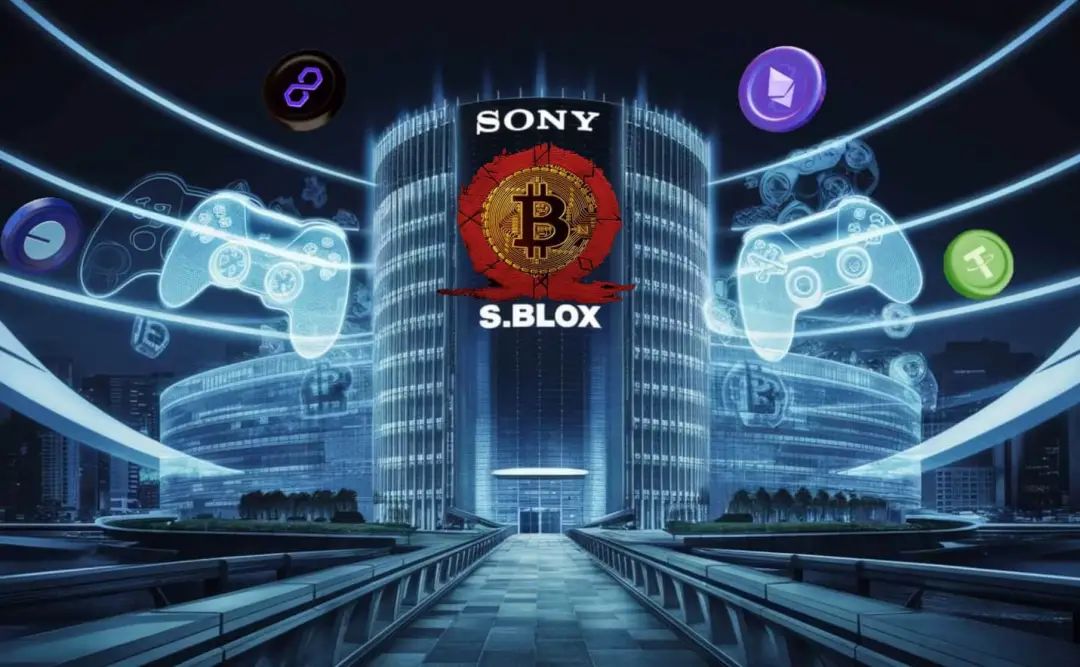
S.BLOX Corporation 是索尼在 2023 年收购的 Amber Japan 的全新名字。Amber Japan 原为日本一家 CEX DeCurret 的子公司,2022 年被新加坡 Amber Group 收购。去年 8 月,索尼全资子公司 Quetta Web Ltd.接手了该平台,并决定将其重新品牌化为 S.BLOX。这一转变不仅仅是更换名称,还包括对用户界面的全面改造,并推出更易用的移动应用程序。

索尼希望通过 S.BLOX,将其在 Web3 领域的经验与技术应用到加密货币交易中。S.BLOX 的推出将与索尼其他业务紧密结合,预示着公司在数字资产领域的野心。

值得一提的是,索尼在过去一年还积极扩展其在区块链和加密货币领域的布局。不久前,索尼还申请了一项关于「超级 Token」(super-fungible tokens)的专利。这种 Token 将允许玩家在不同的游戏中使用和交换游戏资产,可能会对游戏界产生深远影响。

在游戏社区,向玩家赠送游戏内物品已经成为一种流行趋势,像《堡垒之夜》、《我的世界》等游戏提供这类功能。索尼正在着手开发的这种「超级 Token」,以类似的方式用于交换。这个被称为「超级 Token」的专利旨在容纳多种不可替代 Token,这些 Token 与各种类型的游戏资产相关联。

索尼的这一专利展示了其在游戏资产和数字货币交互方面的创新思路,通过来自 Web3 技术的赋能,为索尼自身游戏业务带来新的增长空间的同时,也为旗下游戏平台用户和创作者们带来了更多的选项。

小结

电子科技行业日新月异,索尼作为一一个毅力数十年不倒的知名品牌企业,其超强生命力来自其对产品需求的精准定位和不断的创新,不断调整自身业务,从而避免了像诺基亚、柯达一样一蹶不振,而这一次,它似乎又看到了 Web3 的潜力……

一个 Layer2、一个交易平台,都是 Web3 不可或缺的基础设施同时也是蛋糕最大的两个赛道,索尼的 Web3 战略正在一步一步推进中,索尼的精准卡位,毋庸置疑这一手布局必然是对 Web3 和加密领域的深入研究和了解的结果。

传统电子巨头索尼过去打造出很多风靡世界的产品,或许未来能基于自己对游戏影音等娱乐产业的独到理解,给 Web3 带来丰富的实际应用的同时,也将通过自身品牌号召力等强大的资源与广泛的合作,打造一个具有竞争力的基础设施生态平台。


Related Reads

Warsh's First Day in Office, Markets Deliver a 'Wake-up Call': Rate Hike Expected This Year

On his first day in office, newly inaugurated Federal Reserve Chairman Warsh received a stark market warning, with expectations now fully pricing in a 25-basis-point interest rate hike this year. The shift was triggered by hawkish remarks from Fed Governor Waller, who stated that inflation is now the key policy "driver" and that the odds of a hike or cut are evenly split. This sent short-term Treasury yields higher. Waller signaled a significant pivot in his stance, citing disappointing inflation and labor data. He suggested removing "easing bias" language from Fed statements and did not rule out future rate increases if inflation fails to recede, though he noted immediate action isn't warranted without signs of unanchored inflation expectations. Chairman Warsh faces immediate pressure at his first FOMC meeting in June. With the preferred inflation gauge at a three-year high, analysts warn that failing to hike could be interpreted as an implicit easing of policy. The geopolitical situation in the Middle East is adding to existing price pressures. The market's expectation for a hike contrasts sharply with earlier forecasts for multiple cuts. While long-term Treasury yields have been contained by lower energy prices recently, analysts note they remain under structural upward pressure. Warsh's swearing-in at the White House highlights political scrutiny over Fed independence. However, the market has made it clear that inflation is the most urgent challenge, leaving the new chairman little time to settle in.

marsbit6h ago

Warsh's First Day in Office, Markets Deliver a 'Wake-up Call': Rate Hike Expected This Year

marsbit6h ago

Has Microsoft Lost Its Way in the AI Race, and Can Copilot Bring It Back on Track?

Microsoft, once seen as an early AI frontrunner due to its investment in OpenAI, is navigating a strategic shift amid increased competition. Its initial reliance on OpenAI’s GPT models has been complicated by OpenAI’s growing ambitions as a direct competitor, rapid advancements from rivals like Claude and Gemini, and the disruptive rise of AI agents, which challenge its traditional SaaS business model. These factors contributed to stock declines and slower-than-expected adoption of its flagship Copilot products. In response, CEO Satya Nadella has taken a hands-on role in product development, signaling the urgency of change. Microsoft is pivoting from a model-centric strategy to a "model-agnostic" enterprise platform approach. It aims to become the foundational layer connecting various AI models—from OpenAI, Anthropic, or its own new "Superintelligence" team—with enterprise workflows, data, security, and cloud services. Recent organizational changes merged consumer and enterprise Copilot teams to accelerate innovation, exemplified by new products like Copilot Tasks and Copilot Cowork. However, this transformation comes at a high cost. Microsoft faces massive capital expenditures, potentially reaching ~$190 billion by 2026, to support AI infrastructure. While its platform strategy shows early signs of traction with growing Azure AI revenue, it must balance startup-like agility with the reliability expected by enterprise clients. The core challenge is no longer being the sole AI winner but defending its position as the essential enterprise software entry point amidst rapid technological commoditization and the shift towards always-on AI agents.

marsbit7h ago

Has Microsoft Lost Its Way in the AI Race, and Can Copilot Bring It Back on Track?

marsbit7h ago

Why Haven't Forex Stablecoins Taken Off?

Why FX Stablecoins Never Took Off: A Path Forward via Synthetic FX Despite the explosive growth of stablecoin-powered digital banking, which has seen ~$6B in VC investment and a 24x surge in crypto card spending in under a year, a major limitation persists: these banks are essentially dollar-only accounts. This leaves 95-99% of global accounts, which are denominated in non-USD currencies, underserved. Attempts to create native foreign currency (FX) stablecoins (like EURC) have largely failed, with total FX stablecoin TVL at ~$600M compared to $400B for USD stablecoins—a 700x gap. These FX tokens face critical challenges: fragile pegs due to low liquidity, limited exchange/FinTech acceptance, poor on/off-ramps, complex regional compliance, and a chicken-and-egg adoption problem. The article argues that the solution lies not in competing with entrenched USD stablecoin networks (USDT/USDC), but in adopting a synthetic FX model inspired by traditional finance. Specifically, it advocates for Mark-to-Market Non-Deliverable Forwards (NDFs)—cash-settled FX derivatives that allow users to maintain underlying USD stablecoin holdings while having their account balance and P&L denominated in a foreign currency. This approach offers key advantages: strong oracle-based pegs, retention of deep USD stablecoin liquidity and yield, superior on/off-ramps, scalability to any currency with a reliable feed, and capital efficiency. It mirrors how modern institutional FX markets operate. Primary use cases for on-chain NDFs include: 1. **Digital Banks/Wallets:** Enabling multi-currency accounts for international users without leaving the USD stablecoin ecosystem, boosting deposits and retention. 2. **FX Carry Trade Vaults:** Offering access to sovereign interest rate differentials (e.g., earning yield on BRL) in a more stable and scalable format than crypto-native products like Ethena. 3. **Global Enterprise Payments:** Allowing merchants to receive payments in local currency equivalents while settling in USD stablecoins, similar to services offered by Stripe for fiat. The conclusion is that synthetic FX, not native FX stablecoins, is the viable path to integrating foreign exchange into the growing stablecoin digital banking landscape, potentially unlocking the next phase of institutional DeFi and multi-trillion-dollar global adoption.

链捕手8h ago

Why Haven't Forex Stablecoins Taken Off?

链捕手8h ago

Trading

Spot
Futures

Hot Articles

What is $BITCOIN

DIGITAL GOLD ($BITCOIN): A Comprehensive Analysis Introduction to DIGITAL GOLD ($BITCOIN) DIGITAL GOLD ($BITCOIN) is a blockchain-based project operating on the Solana network, which aims to combine the characteristics of traditional precious metals with the innovation of decentralized technologies. While it shares a name with Bitcoin, often referred to as “digital gold” due to its perception as a store of value, DIGITAL GOLD is a separate token designed to create a unique ecosystem within the Web3 landscape. Its goal is to position itself as a viable alternative digital asset, although specifics regarding its applications and functionalities are still developing. What is DIGITAL GOLD ($BITCOIN)? DIGITAL GOLD ($BITCOIN) is a cryptocurrency token explicitly designed for use on the Solana blockchain. In contrast to Bitcoin, which provides a widely recognized value storage role, this token appears to focus on broader applications and characteristics. Notable aspects include: Blockchain Infrastructure: The token is built on the Solana blockchain, known for its capacity to handle high-speed and low-cost transactions. Supply Dynamics: DIGITAL GOLD has a maximum supply capped at 100 quadrillion tokens (100P $BITCOIN), although details regarding its circulating supply are currently undisclosed. Utility: While precise functionalities are not explicitly outlined, there are indications that the token could be utilized for various applications, potentially involving decentralized applications (dApps) or asset tokenization strategies. Who is the Creator of DIGITAL GOLD ($BITCOIN)? At present, the identity of the creators and development team behind DIGITAL GOLD ($BITCOIN) remains unknown. This situation is typical among many innovative projects within the blockchain space, particularly those aligning with decentralized finance and meme coin phenomena. While such anonymity may foster a community-driven culture, it intensifies concerns about governance and accountability. Who are the Investors of DIGITAL GOLD ($BITCOIN)? The available information indicates that DIGITAL GOLD ($BITCOIN) does not have any known institutional backers or prominent venture capital investments. The project seems to operate on a peer-to-peer model focused on community support and adoption rather than traditional funding routes. Its activity and liquidity are primarily situated on decentralized exchanges (DEXs), such as PumpSwap, rather than established centralized trading platforms, further highlighting its grassroots approach. How DIGITAL GOLD ($BITCOIN) Works The operational mechanics of DIGITAL GOLD ($BITCOIN) can be elaborated on based on its blockchain design and network attributes: Consensus Mechanism: By leveraging Solana’s unique proof-of-history (PoH) combined with a proof-of-stake (PoS) model, the project ensures efficient transaction validation contributing to the network's high performance. Tokenomics: While specific deflationary mechanisms have not been extensively detailed, the vast maximum token supply implies that it may cater to microtransactions or niche use cases that are still to be defined. Interoperability: There exists the potential for integration with Solana’s broader ecosystem, including various decentralized finance (DeFi) platforms. However, the details regarding specific integrations remain unspecified. Timeline of Key Events Here is a timeline that highlights significant milestones concerning DIGITAL GOLD ($BITCOIN): 2023: The initial deployment of the token occurs on the Solana blockchain, marked by its contract address. 2024: DIGITAL GOLD gains visibility as it becomes available for trading on decentralized exchanges like PumpSwap, allowing users to trade it against SOL. 2025: The project witnesses sporadic trading activity and potential interest in community-led engagements, although no noteworthy partnerships or technical advancements have been documented as of yet. Critical Analysis Strengths Scalability: The underlying Solana infrastructure supports high transaction volumes, which could enhance the utility of $BITCOIN in various transaction scenarios. Accessibility: The potential low trading price per token could attract retail investors, facilitating wider participation due to fractional ownership opportunities. Risks Lack of Transparency: The absence of publicly known backers, developers, or an audit process may yield skepticism regarding the project's sustainability and trustworthiness. Market Volatility: The trading activity is heavily reliant on speculative behavior, which can result in significant price volatility and uncertainty for investors. Conclusion DIGITAL GOLD ($BITCOIN) emerges as an intriguing yet ambiguous project within the rapidly evolving Solana ecosystem. While it attempts to leverage the “digital gold” narrative, its departure from Bitcoin's established role as a store of value underscores the need for a clearer differentiation of its intended utility and governance structure. Future acceptance and adoption will likely depend on addressing the current opacity and defining its operational and economic strategies more explicitly. Note: This report encompasses synthesised information available as of October 2023, and developments may have transpired beyond the research period.

363 Total ViewsPublished 2025.05.13Updated 2025.05.13

What is $BITCOIN

Discussions

Welcome to the HTX Community. Here, you can stay informed about the latest platform developments and gain access to professional market insights. Users' opinions on the price of BTC (BTC) are presented below.

活动图片