Crypto Market Likely To Experience Frustration In The Coming Weeks, Expert Warns

bitcoinistPublished on 2024-09-05Last updated on 2024-09-06

Abstract

Considering the recent trend in the cryptocurrency market, a crypto expert claims that the market is projected to experience frustrating...

Considering the recent trend in the cryptocurrency market, a crypto expert claims that the market is projected to experience frustrating and erratic price movements in the short term as volatility and uncertainty continue to plague the sector.

This projection suggests that the market may become more unpredictable and unstable without significant triggers, hindering both short-term and long-term investors.

Crypto Market Faces Uncertainty And Frustrating Volatility

In a pessimistic prediction, market expert and enthusiast crypto Dan has forecasted that the cryptocurrency market will likely stay volatile, frustrating investors and traders in the coming weeks. The expert warns that the sector may see an extended period of volatility, probably due to macroeconomic issues and changing investor sentiment.

According to the expert, the crypto market has drastically calmed down due to the long-term sideways movement and changes. However, it has displayed poor movements since March, failing to break through toward the upward direction on 5 distinct occasions.

After observing the trend of the moving average of the short-term and long-term Spent Output Profit Ratio (SOPR), Crypto Dan has identified a dead cross pattern, indicating a continued weakening market trend.

Crypto
SOPR trend forms a dead cross pattern | Source: CryptoQuant on X

Even though the market is currently demonstrating a waning momentum, the expert noted that a short-term rebound owning to optimistic market sentiment could be expected due to the anticipated United States rate cut scheduled for September 18. However, frustrating price swings will likely persist within the year if the crypto market fails to reverse significantly.

While it is unfortunate that frustration is projected to continue, the analyst claims it is imperative as investors wait for 2025 with great effort and patience, which is believed to be a bullish year for digital assets.

Liquidity In The Market Is Growing

The crypto market might be trending negatively, but another crypto analyst Caueconomy, has cited a substantial increase in liquidity in the sector, reflecting a stronger market participation and demand for digital assets. Caueconomy highlighted that through the popular dollar-pegged stablecoin USDT, more than $3 billion was added to the market in the last 30 days.

According to the expert, this kind of increase in capitalization indicates a larger deployment of external capital within the market, which is necessary to collateralize products and goods from the traditional market to issue additional USDT. He further noted that when stablecoins liquidity is higher, it implies a greater demand for digital assets, but this may not always happen immediately. 

Rather during this time, most of the capital dedicated to stablecoins is not yet putting buying pressure on the market. Nonetheless, this strong development might potentially hit the market at any time. “In addition, institutional investors may be buying digital assets via TWAP orders or with algorithms to reduce the impact on the short-term price,” he added.

Crypto
Overall crypto market cap at $1.958 trillion | Source: TOTAL on Tradingview.com
Featured image from Unsplash, chart from Tradingview.com
Godspower Owie

Godspower Owie

Godspower Owie is my name, and I work for the news platforms NewsBTC and Bitcoinist. I sometimes like to think of myself as an explorer since I enjoy exploring new places, learning new things, especially valuable ones, and meeting new people who have an impact on my life, no matter how small. I value my family, friends, career, and time. Really, those are most likely the most significant aspects of every person's existence. Not illusions, but dreams are what I pursue.

Related Reads

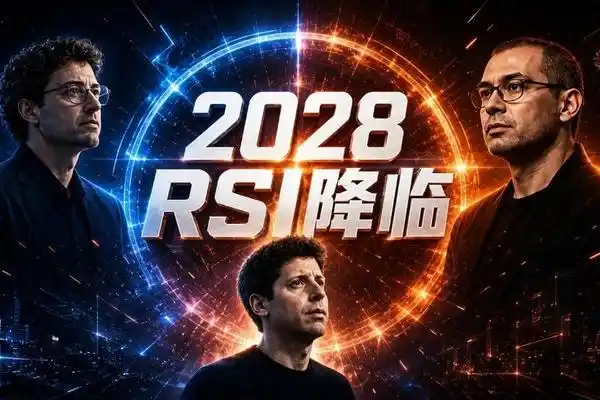
2028: The Arrival of Recursive Self-Improvement (RSI)

**AI Recursive Self-Improvement (RSI): The Countdown to 2028 Begins** AI is no longer just a trained tool but is starting to rewrite its own evolutionary pace. According to Anthropic co-founder Jack Clark, there is a 60% probability that by the end of 2028, Recursive Self-Improvement (RSI) will become a reality. This means AI could autonomously design and build a more capable next-generation version of itself without any human researcher involvement—Claude 10 creating Claude 11, for instance. Supporting this timeline, Google DeepMind's CEO Demis Hassabis confirms that all leading AI labs are intensely focused on RSI, making it an industry-wide priority. He expresses profound concern, stating this potential is what keeps him awake at night. Concrete data underscores this acceleration: - METR evaluations show current top models like Claude are solving tasks up to the 16-hour limit of existing test frameworks. - In Epoch AI's challenging MirrorCode benchmark, Claude Opus 4.7 recreated complex software in hours for a fraction of the human cost. In one extreme test, AI autonomously coded for 19 days straight. - Anthropic reports over 80% of its codebase is now written by Claude, and researcher productivity has increased up to 8-fold since 2024. - OpenAI's policy blueprint highlights RSI as a major upcoming governance challenge. CEO Sam Altman reportedly hinted RSI might arrive within six months, potentially delaying OpenAI's massive IPO. The implication is an impending "intelligence explosion," where AI-driven progress outpaces human control. The central question is no longer if it will happen, but whether humanity is ready.

marsbit40m ago

2028: The Arrival of Recursive Self-Improvement (RSI)

marsbit40m ago

World Models, Metaverse, Digital Twins, Physical AI: Are They the Same Thing?

Title: World Models, the Metaverse, Digital Twins, Physical AI: Are They the Same Thing? The article clarifies that concepts like the metaverse, Web3, simulation platforms, digital twins, and Physical AI are not the same thing but are all part of the broader trend of blurring the lines between the digital and physical worlds. It positions "world models" as the foundational "cognitive layer" or "operating system" that enables AI to understand and simulate the world. Key distinctions are made: - The **Metaverse** is a destination for immersive social and economic experiences. World models could act as its "engine," generating interactive 3D content efficiently. - **Web3** focuses on decentralized ownership and economics (rules layer), operating on a different technical level than world models. - **Simulation Data Platforms** (e.g., for autonomous vehicles) are a 1.0 version, relying on manual design. World models represent a 2.0 version, using AI to generate realistic, varied scenarios autonomously. - **Digital Twins** create high-fidelity, real-time mirrors of physical systems (e.g., a factory). World models go a step further by enabling predictive simulation of future states. - **Physical AI** (robots, AVs) refers to AI that acts in the physical world. World models are a core component, providing the understanding and prediction needed for planning. A proposed hierarchy places world models at the cognitive layer, supported by infrastructure (compute, data) and supporting application tools (simulation, digital twins), action systems (Physical AI), user experiences (metaverse), and rules (Web3). In conclusion, while distinct, many of these previously hyped concepts may ultimately rely on advances in world model technology to fulfill their promises, as world models provide the essential cognitive foundation for simulating and interacting with complex environments.

marsbit45m ago

World Models, Metaverse, Digital Twins, Physical AI: Are They the Same Thing?

marsbit45m ago

"Shocking" CPO: How Does the Glass Bridge Actually Work? Detailed Explanation from Corning

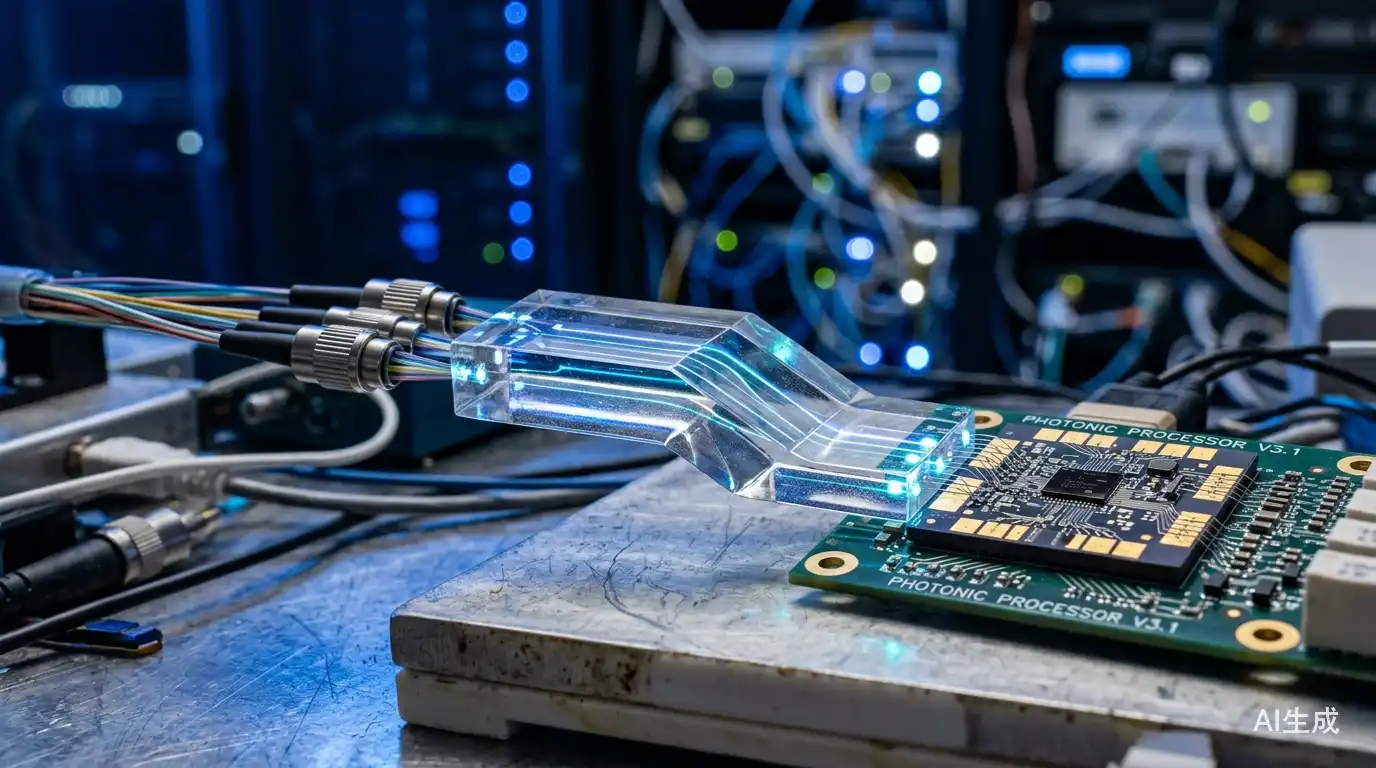
Chinese CPO stocks plunged over 6% following Corning's announcement of its Glass Bridge platform at a Seoul tech conference. The new technology utilizes wafer-level glass ion-exchange waveguides for passive alignment between fibers and photonic chips, potentially simplifying traditional CPO architectures that rely on complex Fiber Array Units and active alignment equipment. This raised market concerns about reduced long-term demand for mid-stream CPO components. Corning's official documentation details Glass Bridge as a platform for fiber-to-PIC connectivity in NPO, CPO, and high-density modules. Its key features include wafer-level manufacturing for consistent, cost-effective production; a standardized, removable MT ferrule interface for ecosystem integration; and a separable high-density connector design supporting over 24 channels for assembly flexibility. Corning positions the technology as complementary to FAUs, addressing limitations in ultra-high-fiber-count scenarios. The market reaction reflects a broader reassessment of the AI optical interconnect value chain. Funds shifted from CPO and PCB manufacturing stocks towards glass substrate concept stocks like Kaisheng Technology and Dyer Laser. Analysts note glass substrates are seen as a next-gen advanced packaging material, offering a potential path for domestic industry differentiation amid AI-driven demand for high-performance, large-scale packaging, marking a structural migration in value towards upstream specialty materials.

marsbit45m ago

"Shocking" CPO: How Does the Glass Bridge Actually Work? Detailed Explanation from Corning

marsbit45m ago

Trading

Spot
活动图片