一个比特币价值20万美金?4种估值方法理解比特币价值

Odaily星球日报Published on 2024-09-05Last updated on 2024-09-05

Abstract

用 4 种估值方法计算比特币价格,结果差异很大,究竟哪个更准确呢?

原文作者:Biteye 核心贡献者 Viee

原文编辑:Biteye 核心贡献者 Crush

最近 BTC 震荡下跌至 56000 美元附近,而 7 月份美国资管公司 VanEck 预测了 2050 年 BTC 的价格将达到 290 万美元,相较之下,这的确是十分惊人的数据。

那么比特币的合理价格应该是多少? 0 美元、 5 万美元还是 100 万美元?甚至更高?在这篇文章中,Biteye 将探讨 4 种比特币估值方法,有助于大家更全面地理解比特币的价值。

一个比特币价值20万美金?4种估值方法理解比特币价值

比特币估值方法

股票和债券等传统资产已经建立了多种成熟且有效的估值方法。然而,评估比特币的价值却面临更多挑战,目前还没有明显优于其他方法的单一估值方式。以下是 4 种比较普遍的比特币估值方法:生产成本模型、库存流量模型、梅特卡夫定律以及 AHR 999 囤币指标。

  • 生产成本模型:挖矿不仅消耗大量电力,还需要其他资源,因此挖矿成本可以视为比特币的基本价值。

  • 库存流量模型:库存流量比越高,通常意味着比特币的稀缺程度越高,这可能会推动其价格上涨。

  • 梅特卡夫定律:这一理论强调,网络用户数量的增加对价值增长的影响是指数级的。

  • AHR 999 囤币指标:由微博用户 ahr 999 创建,辅助比特币定投用户结合择机策略做出投资决策。

01 生产成本模型

与欧元或美元等法定货币几乎没有成本的生成方式不同,比特币是通过复杂的挖矿过程产生的。因此,比特币的生产成本主要指的是挖矿成本。

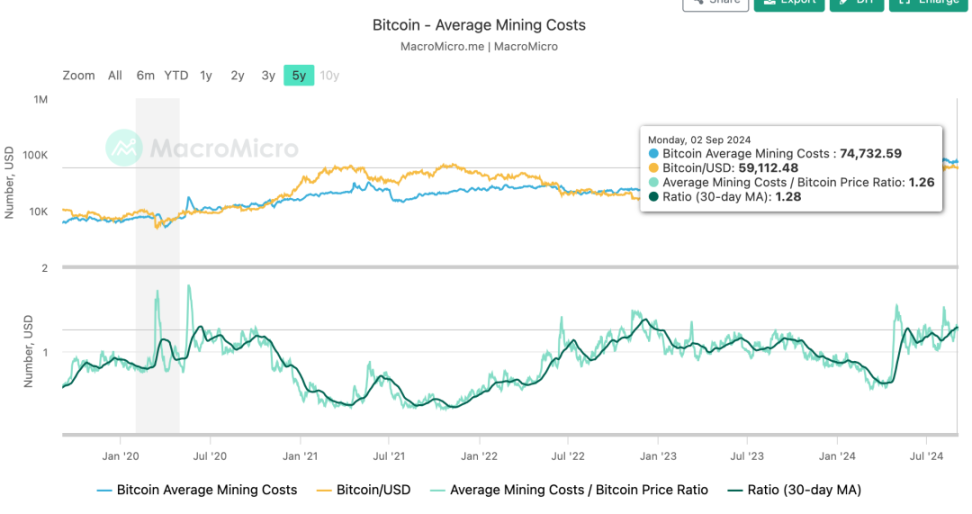
长期来看,挖掘一个比特币的成本通常与比特币的市场价格相近。挖矿成本可以视为比特币价格的底线,因为历史上比特币的价格很少长时间低于挖矿成本。这一现象部分是由于比特币价格与用于挖矿的总计算能力(即哈希率)之间的相关性,以及挖矿竞争环境的影响,效率较低的矿工往往会被迫停止运营。下图为比特币的平均挖矿成本:
一个比特币价值20万美金?4种估值方法理解比特币价值

数据来源:https://en.macromicro.me/charts/29435/bitcoin-production-total-cost

根据 MacroMicro 网站的数据,截至 2024 年 9 月 2 日,一枚比特币的平均挖矿成本约为 74000 美元,这也是根据生产成本模型计算的比特币目前估值。

由于现在比特币的价格低于这一挖矿成本(生产成本模型计算的估值),这意味着在不久的将来可能会发生以下两种情况之一:一是矿工数量减少,二是比特币的价格上涨至超过挖矿成本的水平。

02 库存流量模型

库存流量模型又被称作 S 2 F(Stock-to-Flow),是一种常用于评估大宗商品价值的方法。具体来说,「库存」指的是某种资产当前的总供应量,而「流量」则是每年新增的供应量

库存 / 流量两者比值越高,表明越稀缺,因为要达到当前存量水平需要的时间越长。比如,如果一种商品的库存是流量的 100 倍,那么要补充当前存量需要 100 年的时间。相比之下,如果一种商品的库存只有流量的 10 倍,那么它就不太稀缺,因为要补充当前存量只需要 10 年时间。因此,库存流量模型为我们提供了一个衡量商品稀缺性的简单有效的方法。这种稀缺性是影响价格的一个重要因素。

比特币的库存流量比

截至 2024 年 8 月,当前流通中的比特币数量约为 19750000 个(库存),根据矿工目前得到的每个区块奖励是 3.125 个比特币,每十分钟挖出一个区块,每年大约有 164359 个 BTC 的产量。因此,比特币的库存流量比为:

19750000 / 164359 ≈ 120.1 

这个比值表明以当前的增长速度(流量),需要大约 120 年才能达到当前的流通量(库存)。

接下来,让我们看看全球最重要的储备资产——黄金。根据世界黄金协会 2023 年的数据,黄金的库存流量比为:

209000 / 3500 ≈ 59.7 

参考前文所说,较高的库存流量比意味着资产的稀缺性更高。那么按照库存流量模型,比特币的稀缺性约为黄金的两倍!

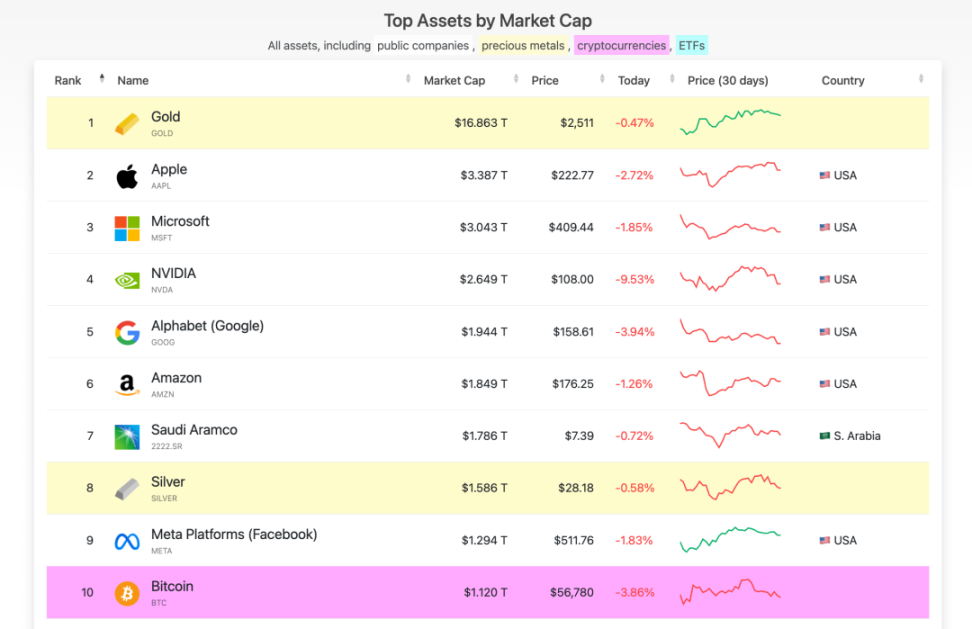
然而,在 2024 年 8 月,黄金的市场总值约为 16.8 万亿美元,而比特币的市场总值约为 1.1 万亿美元,后者仅为前者的十六分之一。
一个比特币价值20万美金?4种估值方法理解比特币价值

数据来源:https://companiesmarketcap.com/assets-by-market-cap/

因此,通过库存流量模型计算可得,比特币稀缺性为黄金的两倍,如果我们简单粗暴把比特币市值也算作黄金的两倍,那结果会是 33.6 万亿美元。如此一来,比特币估值将达到惊人的 170.8 万美元,为当前的 30.5 倍。

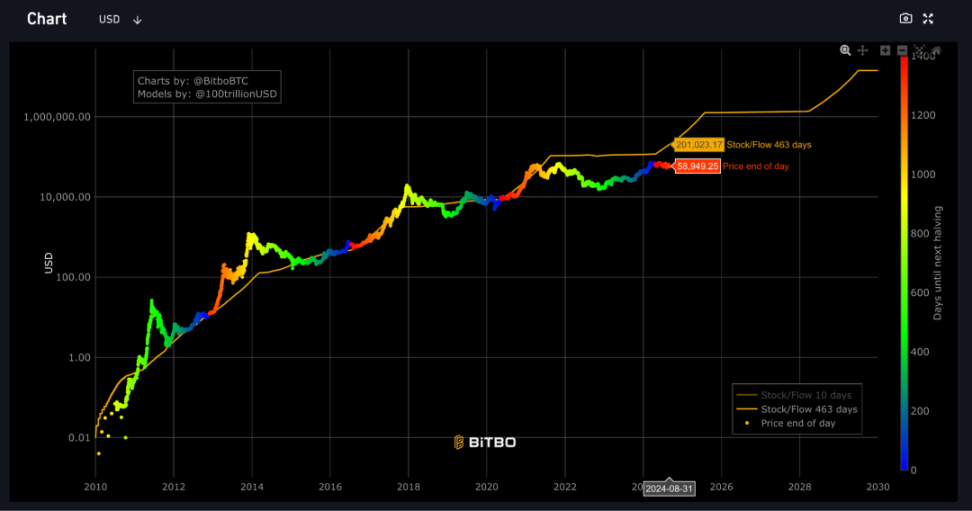
当然,这么计算是缺乏一定依据的,毕竟稀缺性无法量化。所以,我们也可以参考「比特币库存流量比实时图表」,此图表对比特币估值进行了更详细的计算。在下图中,黄色线代表模型所计算出的比特币价格,而彩色线代表比特币在市场上的实际价格。需要注意的是,从 2022 年以来该指标开始出现偏差,模型预测价格持续高于比特币实际价格,仅供参考。

根据「比特币库存流量比实时图表」,比特币的当前估值应该是 21 万美元。
一个比特币价值20万美金?4种估值方法理解比特币价值

数据来源:https://charts.bitbo.io/stock-to-flow/

03 梅特卡夫定律

梅特卡夫定律主要用于评估通信网络的价值,但也适用于区块链技术(如比特币)。

根据这一理论,网络或技术的用户越多,其吸引力和价值就越大,并且网络的价值与用户数量的平方成正比。举个例子,如果一个网络有 10 个用户,那么网络的价值与用户数量的平方成正比,即 10 * 10 = 100 。如果用户数量增加到 20 ,网络的价值将增加到 20 * 20 = 400 。这表明,网络的价值随着每个新用户的加入呈指数级增长,而非线性增长。

截至 2024 年 9 月 4 日,比特币地址数量在过去 5 年中从约 2600 万个翻倍至 5400 万个,约为 2.076 倍。根据梅特卡夫定律,比特币持币用户增长的平方和市值变化成正比,那么比特币市值应该为 5 年前的 4.3 倍,现在一枚比特币大概是 41000 美元估值。

04 AHR 999 囤币指标

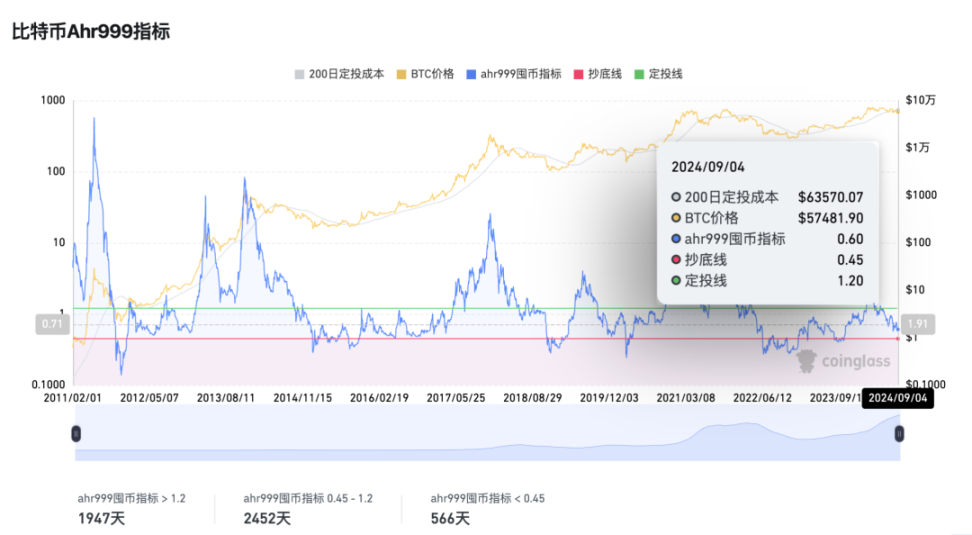
该指标隐含了比特币短期定投的收益率及比特币价格与预期估值的偏离度。

  • 当 ahr 999 指数 < 0.45 ,就可以抄底;

  • 当 ahr 999 在 0.45-1.2 之间,则适合定投;

  • 当 ahr 999 >1.2 ,那么币价已经比较高了,不适合操作。

从长期来看,比特币价格与区块高度呈现出一定的正相关,同时借助定投方式的优势,用户可以控制短期定投成本,使其大都位于比特币价格之下。
一个比特币价值20万美金?4种估值方法理解比特币价值

ahr 999 指标=(比特币价格 /200 日定投成本)*(比特币价格 / 指数增长估值)

按照 9 月 4 日比特币价格 57481.9 美元来计算:

0.6 =(57481.9/63570.07)*(57481.9/ 指数增长估值)

得出,BTC 指数增长估值为 86628 美元

虽然这个指数增长估值每天都在变动,不过目前看得出的比特币几乎是在 8 万以上。

05 总结

这些估值方法各有特点,有助于我们更全面地理解比特币的价值。不过,最终比特币的价格变化还需要时间来观察和验证,谨慎将此作为投资依据。

Related Reads

Warsh's First Day in Office, Markets Deliver a 'Wake-up Call': Rate Hike Expected This Year

On his first day in office, newly inaugurated Federal Reserve Chairman Warsh received a stark market warning, with expectations now fully pricing in a 25-basis-point interest rate hike this year. The shift was triggered by hawkish remarks from Fed Governor Waller, who stated that inflation is now the key policy "driver" and that the odds of a hike or cut are evenly split. This sent short-term Treasury yields higher. Waller signaled a significant pivot in his stance, citing disappointing inflation and labor data. He suggested removing "easing bias" language from Fed statements and did not rule out future rate increases if inflation fails to recede, though he noted immediate action isn't warranted without signs of unanchored inflation expectations. Chairman Warsh faces immediate pressure at his first FOMC meeting in June. With the preferred inflation gauge at a three-year high, analysts warn that failing to hike could be interpreted as an implicit easing of policy. The geopolitical situation in the Middle East is adding to existing price pressures. The market's expectation for a hike contrasts sharply with earlier forecasts for multiple cuts. While long-term Treasury yields have been contained by lower energy prices recently, analysts note they remain under structural upward pressure. Warsh's swearing-in at the White House highlights political scrutiny over Fed independence. However, the market has made it clear that inflation is the most urgent challenge, leaving the new chairman little time to settle in.

marsbit7h ago

Warsh's First Day in Office, Markets Deliver a 'Wake-up Call': Rate Hike Expected This Year

marsbit7h ago

Has Microsoft Lost Its Way in the AI Race, and Can Copilot Bring It Back on Track?

Microsoft, once seen as an early AI frontrunner due to its investment in OpenAI, is navigating a strategic shift amid increased competition. Its initial reliance on OpenAI’s GPT models has been complicated by OpenAI’s growing ambitions as a direct competitor, rapid advancements from rivals like Claude and Gemini, and the disruptive rise of AI agents, which challenge its traditional SaaS business model. These factors contributed to stock declines and slower-than-expected adoption of its flagship Copilot products. In response, CEO Satya Nadella has taken a hands-on role in product development, signaling the urgency of change. Microsoft is pivoting from a model-centric strategy to a "model-agnostic" enterprise platform approach. It aims to become the foundational layer connecting various AI models—from OpenAI, Anthropic, or its own new "Superintelligence" team—with enterprise workflows, data, security, and cloud services. Recent organizational changes merged consumer and enterprise Copilot teams to accelerate innovation, exemplified by new products like Copilot Tasks and Copilot Cowork. However, this transformation comes at a high cost. Microsoft faces massive capital expenditures, potentially reaching ~$190 billion by 2026, to support AI infrastructure. While its platform strategy shows early signs of traction with growing Azure AI revenue, it must balance startup-like agility with the reliability expected by enterprise clients. The core challenge is no longer being the sole AI winner but defending its position as the essential enterprise software entry point amidst rapid technological commoditization and the shift towards always-on AI agents.

marsbit8h ago

Has Microsoft Lost Its Way in the AI Race, and Can Copilot Bring It Back on Track?

marsbit8h ago

Why Haven't Forex Stablecoins Taken Off?

Why FX Stablecoins Never Took Off: A Path Forward via Synthetic FX Despite the explosive growth of stablecoin-powered digital banking, which has seen ~$6B in VC investment and a 24x surge in crypto card spending in under a year, a major limitation persists: these banks are essentially dollar-only accounts. This leaves 95-99% of global accounts, which are denominated in non-USD currencies, underserved. Attempts to create native foreign currency (FX) stablecoins (like EURC) have largely failed, with total FX stablecoin TVL at ~$600M compared to $400B for USD stablecoins—a 700x gap. These FX tokens face critical challenges: fragile pegs due to low liquidity, limited exchange/FinTech acceptance, poor on/off-ramps, complex regional compliance, and a chicken-and-egg adoption problem. The article argues that the solution lies not in competing with entrenched USD stablecoin networks (USDT/USDC), but in adopting a synthetic FX model inspired by traditional finance. Specifically, it advocates for Mark-to-Market Non-Deliverable Forwards (NDFs)—cash-settled FX derivatives that allow users to maintain underlying USD stablecoin holdings while having their account balance and P&L denominated in a foreign currency. This approach offers key advantages: strong oracle-based pegs, retention of deep USD stablecoin liquidity and yield, superior on/off-ramps, scalability to any currency with a reliable feed, and capital efficiency. It mirrors how modern institutional FX markets operate. Primary use cases for on-chain NDFs include: 1. **Digital Banks/Wallets:** Enabling multi-currency accounts for international users without leaving the USD stablecoin ecosystem, boosting deposits and retention. 2. **FX Carry Trade Vaults:** Offering access to sovereign interest rate differentials (e.g., earning yield on BRL) in a more stable and scalable format than crypto-native products like Ethena. 3. **Global Enterprise Payments:** Allowing merchants to receive payments in local currency equivalents while settling in USD stablecoins, similar to services offered by Stripe for fiat. The conclusion is that synthetic FX, not native FX stablecoins, is the viable path to integrating foreign exchange into the growing stablecoin digital banking landscape, potentially unlocking the next phase of institutional DeFi and multi-trillion-dollar global adoption.

链捕手8h ago

Why Haven't Forex Stablecoins Taken Off?

链捕手8h ago

Trading

Spot
Futures

Hot Articles

What is $BITCOIN

DIGITAL GOLD ($BITCOIN): A Comprehensive Analysis Introduction to DIGITAL GOLD ($BITCOIN) DIGITAL GOLD ($BITCOIN) is a blockchain-based project operating on the Solana network, which aims to combine the characteristics of traditional precious metals with the innovation of decentralized technologies. While it shares a name with Bitcoin, often referred to as “digital gold” due to its perception as a store of value, DIGITAL GOLD is a separate token designed to create a unique ecosystem within the Web3 landscape. Its goal is to position itself as a viable alternative digital asset, although specifics regarding its applications and functionalities are still developing. What is DIGITAL GOLD ($BITCOIN)? DIGITAL GOLD ($BITCOIN) is a cryptocurrency token explicitly designed for use on the Solana blockchain. In contrast to Bitcoin, which provides a widely recognized value storage role, this token appears to focus on broader applications and characteristics. Notable aspects include: Blockchain Infrastructure: The token is built on the Solana blockchain, known for its capacity to handle high-speed and low-cost transactions. Supply Dynamics: DIGITAL GOLD has a maximum supply capped at 100 quadrillion tokens (100P $BITCOIN), although details regarding its circulating supply are currently undisclosed. Utility: While precise functionalities are not explicitly outlined, there are indications that the token could be utilized for various applications, potentially involving decentralized applications (dApps) or asset tokenization strategies. Who is the Creator of DIGITAL GOLD ($BITCOIN)? At present, the identity of the creators and development team behind DIGITAL GOLD ($BITCOIN) remains unknown. This situation is typical among many innovative projects within the blockchain space, particularly those aligning with decentralized finance and meme coin phenomena. While such anonymity may foster a community-driven culture, it intensifies concerns about governance and accountability. Who are the Investors of DIGITAL GOLD ($BITCOIN)? The available information indicates that DIGITAL GOLD ($BITCOIN) does not have any known institutional backers or prominent venture capital investments. The project seems to operate on a peer-to-peer model focused on community support and adoption rather than traditional funding routes. Its activity and liquidity are primarily situated on decentralized exchanges (DEXs), such as PumpSwap, rather than established centralized trading platforms, further highlighting its grassroots approach. How DIGITAL GOLD ($BITCOIN) Works The operational mechanics of DIGITAL GOLD ($BITCOIN) can be elaborated on based on its blockchain design and network attributes: Consensus Mechanism: By leveraging Solana’s unique proof-of-history (PoH) combined with a proof-of-stake (PoS) model, the project ensures efficient transaction validation contributing to the network's high performance. Tokenomics: While specific deflationary mechanisms have not been extensively detailed, the vast maximum token supply implies that it may cater to microtransactions or niche use cases that are still to be defined. Interoperability: There exists the potential for integration with Solana’s broader ecosystem, including various decentralized finance (DeFi) platforms. However, the details regarding specific integrations remain unspecified. Timeline of Key Events Here is a timeline that highlights significant milestones concerning DIGITAL GOLD ($BITCOIN): 2023: The initial deployment of the token occurs on the Solana blockchain, marked by its contract address. 2024: DIGITAL GOLD gains visibility as it becomes available for trading on decentralized exchanges like PumpSwap, allowing users to trade it against SOL. 2025: The project witnesses sporadic trading activity and potential interest in community-led engagements, although no noteworthy partnerships or technical advancements have been documented as of yet. Critical Analysis Strengths Scalability: The underlying Solana infrastructure supports high transaction volumes, which could enhance the utility of $BITCOIN in various transaction scenarios. Accessibility: The potential low trading price per token could attract retail investors, facilitating wider participation due to fractional ownership opportunities. Risks Lack of Transparency: The absence of publicly known backers, developers, or an audit process may yield skepticism regarding the project's sustainability and trustworthiness. Market Volatility: The trading activity is heavily reliant on speculative behavior, which can result in significant price volatility and uncertainty for investors. Conclusion DIGITAL GOLD ($BITCOIN) emerges as an intriguing yet ambiguous project within the rapidly evolving Solana ecosystem. While it attempts to leverage the “digital gold” narrative, its departure from Bitcoin's established role as a store of value underscores the need for a clearer differentiation of its intended utility and governance structure. Future acceptance and adoption will likely depend on addressing the current opacity and defining its operational and economic strategies more explicitly. Note: This report encompasses synthesised information available as of October 2023, and developments may have transpired beyond the research period.

363 Total ViewsPublished 2025.05.13Updated 2025.05.13

What is $BITCOIN

Discussions

Welcome to the HTX Community. Here, you can stay informed about the latest platform developments and gain access to professional market insights. Users' opinions on the price of BTC (BTC) are presented below.

活动图片