XRP、TON价格仍面临挑战,BTC未能突破关键阻力位

金色财经Published on 2024-09-02Last updated on 2024-09-02

  • 加密货币市场正在经历一些可能影响其未来发展的关键发展。

  • XRP 目前正受到审查,因为它在波动性加剧的情况下难以维持关键价格水平。

  • 最近的趋势凸显了 0.60 美元的障碍对于 XRP 潜在复苏的重要性,而尽管交易量激增,但 Toncoin 的表现仍然受到阻碍。

XRP 的价格挣扎和关键支撑位

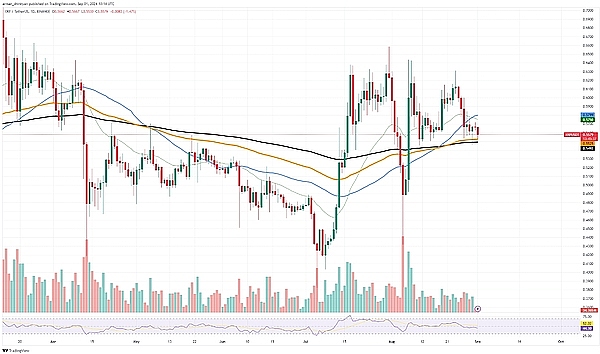
XRP 已成为投资者关注的焦点,因为它正在努力应对波动的市场动态。该数字资产未能维持关键的 0.60 美元门槛上方的势头,这是一个重要的心理阻力位,历史上曾影响投资者的情绪。

0.55 美元左右是第一个需要关注的关键水平。近期的价格走势作为重要支撑位,阻止了进一步下跌。如果XRP能够维持当前水平,这可能表明市场将进入一段盘整期,在进一步波动之前先稳定下来。不过,跌破 0.55 美元可能会导致进一步下跌,并可能导致重新测试先前的支撑位。
VUPvzwu8VoMTXhqyLxFxeS7caQrFIsSKwNAFY0aV.jpeg

历史上支持和反对 XRP 的一个重要心理门槛是 0.50 美元大关。如果价格跌破 0.55 美元,下一个值得关注的区域是 0.50 美元。投资者信心取决于维持这一水平,因为跌破 0.50 美元可能预示着更严重的调整,从而破坏近期的乐观前景。

上行 0.60 美元仍是关键阻力位。XRP 近期的看涨潜力因无法在此水平之上站稳脚跟而受到限制。如果价格能够突破并维持在 0.60 美元以上,可能会引发向更高目标的反弹,并可能吸引更多购买兴趣。突破这一障碍将是 XRP 即将逆转的迹象。

Toncoin 仍面临挑战

在交易量大幅上升之后,Toncoin 的价格走势仍然令人失望,引发了对其未来前景的担忧。该加密货币受到其创始人 Pavel Durov 被捕的显著影响,这扰乱了市场的势头。尽管 Durov 获释的消息引发了短暂的价格上涨,但这种上涨是短暂的,揭示了潜在的市场疲软。

饱和市场中 Toncoin 的未来

Toncoin 的持续挣扎是许多加密货币目前面临的更广泛挑战的象征。尽管该项目已融入 Telegram 生态系统,但其在停滞的市场中缺乏创新发展,导致其未来前景不明朗。无论 Toncoin 等资产的基本实力如何,通过创新催化剂振兴市场的需求都至关重要。

由于缺乏许多新的创新或价格上涨催化剂,市场一直停滞不前。由于投资者的谨慎态度以及加密货币领域缺乏令人兴奋的新项目,Toncoin 是众多处于不确定状态的资产之一。

重要的是要记住,尽管存在这些困难, Toncoin 仍然拥有坚实的基础。它得到了 Telegram 的支持,而 Telegram 是加密货币领域最具弹性的生态系统之一。由于强大的社区支持和代币与 Telegram 生态系统的整合,Toncoin 的长期潜力是有充分理由的。然而,即使是基本面良好的项目,在当前的市场条件下也很难获得关注。

比特币未能突破关键阻力位

比特币多次试图突破 60,000 美元的重要阻力位均失败,目前正面临重大挑战。近期跌破 200 日指数移动平均线 (EMA) 是一个关键的技术发展,预示着其局部上升趋势可能结束。这一失败凸显了市场存在强大的抛售压力,并引发了人们对推动价格上涨所需的看涨信念的质疑。

一个关键的技术信号是,此次跌破表明当前局部上涨趋势已经结束,表明比特币近期的看涨势头已经停止。比特币的主要技术和心理障碍之一是 60,000 美元大关。近期的下跌是多次试图突破这一水平时遭遇的强大抛售压力的结果。

技术指标对比特币表现的重要性

跌破 200 日均线是交易员的明确警告信号,因为该指标通常用于评估长期市场趋势。当比特币交易低于此线时,通常表示看跌阶段。相对强弱指数 (RSI) 也跌破 50,进一步表明上涨势头减弱。随着购买兴趣持续减弱,市场参与者可能需要为未来充满挑战的时期做好准备,等待更清晰的复苏信号。
Related Reads

When Hyperliquid Takes Away Solana's "Internet Capital Markets" Script

The article discusses how Solana's vision of becoming the "Internet Capital Markets" is being challenged, primarily by the rise of Hyperliquid. While Solana positioned itself as a high-performance blockchain for tokenizing all global assets, its native token SOL has significantly underperformed, and its core narrative faces pressure. Hyperliquid, initially a perpetual contracts platform, has evolved into a specialized Layer 1 financial network. Its focused, trading-optimized design is attracting users and capital, suggesting a vertical L1 may be better suited for a core capital market than a general-purpose chain like Solana. This external competition was compounded by an internal $200M+ exploit on Solana's key derivatives protocol, Drift, creating a strategic vacuum. In response, Solana founder Anatoly Yakovenko heavily promoted the Phoenix protocol as a decentralized, composable alternative. However, Phoenix's trading volume remains far behind leading platforms. Solana supporters also launched critiques against Hyperliquid's decentralization, citing its limited validators and closed-source code. Critics countered that Solana's own decentralization metrics have weakened, and the foundation's overt backing of Phoenix caused friction with other ecosystem builders. The piece concludes that Solana risks losing the "Internet Capital Markets" race if it cannot regain dominance in derivatives, potentially remaining a meme coin hub rather than achieving its grand ambition of hosting all global assets.

marsbit35m ago

When Hyperliquid Takes Away Solana's "Internet Capital Markets" Script

marsbit35m ago

Trump Signs Executive Order, Kraken, Coinbase and Others May Gain Access to Fed Payment Channels

President Trump has signed an executive order, "Incorporating Financial Technology Innovation into the Regulatory Framework," pressuring the Federal Reserve to reassess its rules on granting non-bank financial companies—including crypto and fintech firms—access to its payment systems, specifically master accounts that connect to the Fedwire settlement system. Currently, such accounts are primarily reserved for depository institutions. The order mandates a review to determine if broader access is permissible and to establish an application process. This move, supported by figures like Senator Cynthia Lummis, aims to reduce barriers to innovation and lower public payment costs by fostering fairer competition. It does not grant immediate access but could pave the way for companies like Kraken, Coinbase, Ripple, and Circle to reduce reliance on intermediary banks, lowering costs and speeding up settlements. A key precedent is the Kansas City Fed granting Kraken's parent company a restricted master account in March, offering limited payment services without interest or credit privileges. This model is seen as a potential template for allowing controlled access while mitigating systemic risk. Other firms like Anchorage, Paxos, and BitGo, which hold specialized banking charters, are also well-positioned to apply. The banking industry, represented by the American Bankers Association, opposes easing access, arguing any institution handling bank-like payments must meet the same stringent regulatory, consumer protection, and risk-management standards as traditional banks. Their core concerns include potential systemic risks, compliance gaps in areas like anti-money laundering, and the diversion of liquidity from the traditional banking system. The outcome of the Fed's review will be crucial in determining whether and how crypto and fintech firms can integrate more directly into the core U.S. financial infrastructure, balancing innovation with financial stability.

marsbit35m ago

Trump Signs Executive Order, Kraken, Coinbase and Others May Gain Access to Fed Payment Channels

marsbit35m ago

The First Large-Scale Strike in the AI Era Comes from the Factories That Build AI

The article describes a potential large-scale strike at Samsung Electronics, narrowly averted in May 2026 after a temporary agreement. The strike, planned by the company's union, would have been the first major labor action in the AI era targeting a core AI supply chain player. Samsung, alongside SK Hynix, produces roughly two-thirds of the world's memory chips, critical components for AI training and data centers like HBM. An 18-day strike could have disrupted global supply, affecting prices and production for tech companies and cloud providers. For South Korea, where semiconductors constitute about 35% of exports and Samsung represents a quarter of the stock market's value, such an action threatens national economic stability. The union's demands include a 7% base wage increase and, crucially, a clear, substantial profit-sharing model. They want 15% of annual operating profit as an employee bonus pool and the removal of the existing cap (about 50% of annual salary). This frustration is amplified by seeing rival SK Hynix successfully negotiate a deal granting employees 10% of operating profit as bonuses, with reports suggesting some workers could receive bonuses equivalent to hundreds of thousands of dollars. The conflict stems from deeper issues in South Korea's chaebol (conglomerate) system, where rapid national industrialization often prioritized corporate growth over labor rights. Samsung long maintained a "no union" policy until a 2020 apology from its leader. The article argues this strike highlights a fundamental tension in the AI age: as technology advances and corporate profits soar—often driven by AI—the workers who build the infrastructure are demanding a fair share and dignity, rejecting the notion that they are mere expendable components in a machine that "must not stop." The piece concludes that the true test of the AI era isn't just computational power, but whether the people who build the future can secure a stable and valued place within it.

marsbit1h ago

The First Large-Scale Strike in the AI Era Comes from the Factories That Build AI

marsbit1h ago

Ripple’s Fed Master Account Bid Gains Momentum After Trump Order

President Donald Trump has signed an executive order directing financial regulators and the Federal Reserve to review expanding fintech and crypto firms' access to core payment infrastructure. This order significantly advances the industry's push for direct Fed connectivity, a central issue for Ripple. The company has been seeking a Federal Reserve master account as part of its strategy for its RLUSD stablecoin, which would allow it to hold reserves directly with the central bank and access its payment rails. The order, titled "Integrating Financial Technology Innovation into Regulatory Frameworks," mandates a Fed review within 120 days on allowing access for entities like uninsured depository institutions and non-bank financial companies, including those in digital assets. This creates a formal policy timeline for resolving whether crypto payment firms must rely on traditional bank intermediaries. Ripple's application for a national bank charter and a master account is part of this broader landscape. The issue gained precedent when Kraken Financial received a limited-purpose master account, while Custodia Bank's application was denied after a legal battle. The Fed has also proposed a more restricted "payment account" option. Trump's order does not guarantee approval for Ripple but forces a high-level examination of the regulatory barriers, bringing the company's long-running effort to the forefront of Washington's financial policy agenda.

bitcoinist1h ago

Ripple’s Fed Master Account Bid Gains Momentum After Trump Order

bitcoinist1h ago

Trading

Spot
Futures

Hot Articles

How to Buy TON

Welcome to HTX.com! We've made purchasing TONCOIN (TON) simple and convenient. Follow our step-by-step guide to embark on your crypto journey.Step 1: Create Your HTX AccountUse your email or phone number to sign up for a free account on HTX. Experience a hassle-free registration journey and unlock all features.Get My AccountStep 2: Go to Buy Crypto and Choose Your Payment MethodCredit/Debit Card: Use your Visa or Mastercard to buy TONCOIN (TON) instantly.Balance: Use funds from your HTX account balance to trade seamlessly.Third Parties: We've added popular payment methods such as Google Pay and Apple Pay to enhance convenience.P2P: Trade directly with other users on HTX.Over-the-Counter (OTC): We offer tailor-made services and competitive exchange rates for traders.Step 3: Store Your TONCOIN (TON)After purchasing your TONCOIN (TON), store it in your HTX account. Alternatively, you can send it elsewhere via blockchain transfer or use it to trade other cryptocurrencies.Step 4: Trade TONCOIN (TON)Easily trade TONCOIN (TON) on HTX's spot market. Simply access your account, select your trading pair, execute your trades, and monitor in real-time. We offer a user-friendly experience for both beginners and seasoned traders.

14.2k Total ViewsPublished 2024.03.29Updated 2025.07.23

How to Buy TON

Discussions

Welcome to the HTX Community. Here, you can stay informed about the latest platform developments and gain access to professional market insights. Users' opinions on the price of TON (TON) are presented below.

活动图片