解读 2024 年 Web3 游戏:发展、趋势和市场动态

链捕手Published on 2024-08-26Last updated on 2024-08-26


作者:Elsa

翻译:白话区块链 

Web3 游戏行业自成立以来经历了显著的演变。最初由“边玩边赚”(P2E)模式驱动,如今该行业正转向更平衡的“边玩边赚”方式,优先考虑游戏的吸引力和赚钱的潜力。这种转变解决了纯 P2E 模式的可持续性问题,尤其是在游戏公会起着关键作用的发展中国家。

当我们审视 2024 年 Web3 游戏的发展状况时,这些基础性的转变为我们分析当前市场趋势、玩家行为和经济影响奠定了基础…

1、玩家基础动态

自 2023 年以来,Web3 游戏的玩家数量逐渐下降。玩家基础从 2023 年的 603 万人缩减到目前大约 100 万月活跃用户。

2024 年 1 月是上半年玩家数量最多的月份,约有 173 万玩家。值得注意的是,与 2021 年 11 月行业峰值时的约 2100 万玩家相比,现在的玩家数量是当时的二十分之一。

2、玩家分类和活动情况

当前数据显示,绝大多数游戏地址处于不活跃状态。只有 1,970 个地址被归类为活跃地址,而 1,450 个则被归类为不活跃的投资者地址。值得注意的是,只有 14 个地址在所有 Web3 游戏中被认定为铁杆玩家。这种分布描绘出一个只有少量核心高参与度用户的市场。

3、游戏合约的区块链分布

在活跃的游戏智能合约数量方面,Polygon 以约 12,400 个合约领先。BNB Chain 紧随其后,但合约数量仅为 Polygon 的十分之一左右。以太坊和 Avalanche 落后较多,每个区块链上仅有几百个游戏合约。这种分布的原因包括交易成本、速度和生态系统支持等因素。

4、游戏中的Token标准

在所有游戏合约地址中,ERC20 Token最为常见,其数量是 ERC721 Token的三倍多。ERC1155 Token则最少,约有 1,890 万个实例。

5、游戏表现和用户参与度

在过去的六个月里,一些游戏表现非常出色,例如 Matr1x、Cellula 和 Yuliverse。它们的活跃独立钱包数量名列前茅,用户参与度非常高。

6、游戏中的资产铸造情况

CryptoMines 在资产铸造量方面领先,约有 2,480 万个 NFT,其次是 Bomb Crypto 和 Flowerpatch。

新的游戏资产铸造量每月波动,2023 年 12 月达到高峰,约有 318,000 个新资产。

尽管 2024 年初的牛市推动了资产价格上涨,但链上数据显示,游戏行业仍处于冷却期,没有显著的实际增长。

7、游戏活动模式

对游戏活动的分析显示,在 UTC 时区的下午时段参与度最高,交易频率超过 9500 万次。这一时间段对应美国的早晨和亚洲的晚上。活动量在 UTC 夜间最低,下降到峰值水平的约三分之二。
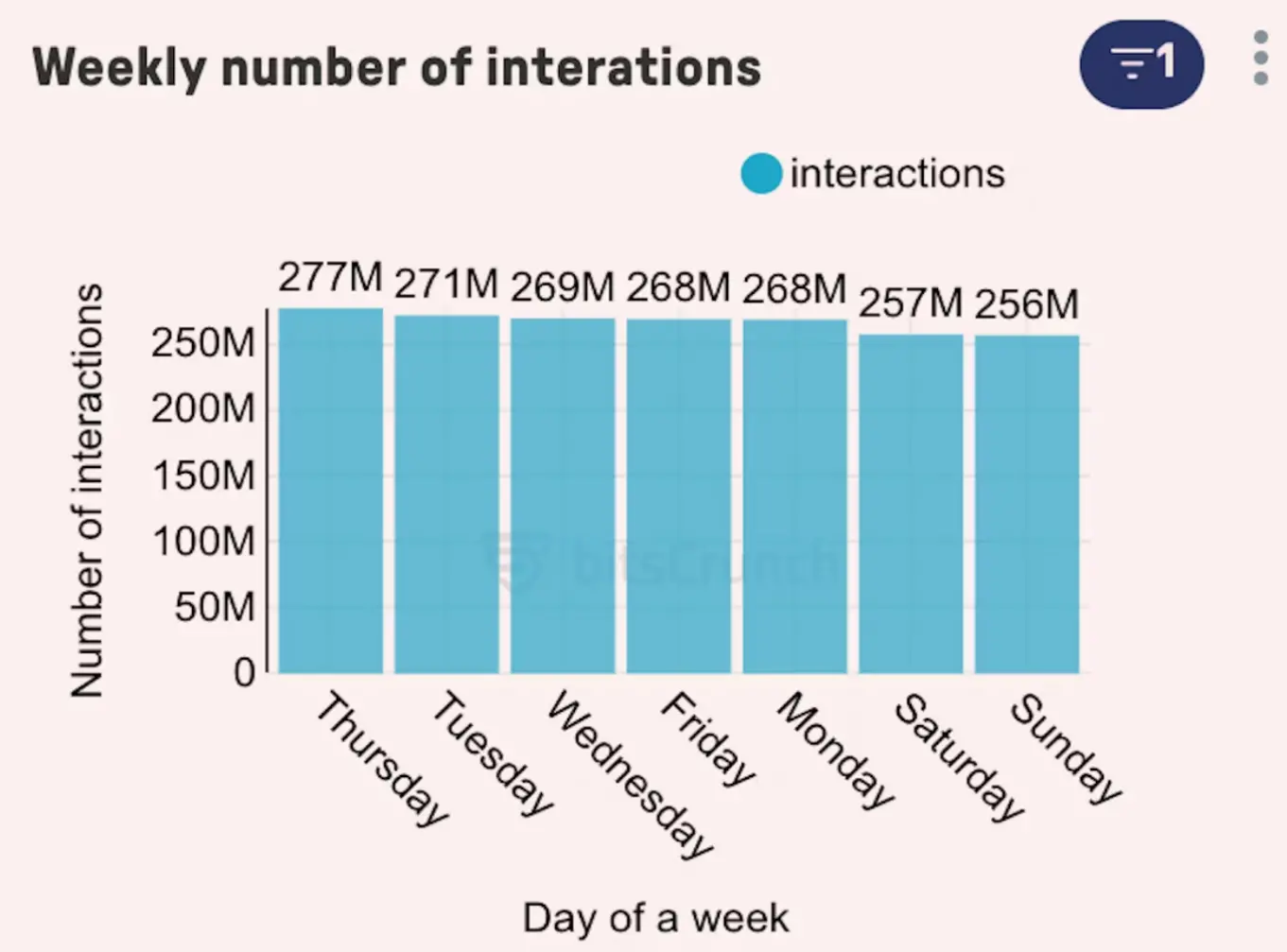
每周的模式显示,星期四是链上交易最活跃的日子,平均约为 2.77 亿次,其次是星期二和星期三。周末的活动明显较低。

注:本文图片来源:bitsCrunch

Related Reads

Vitalik's Latest Long Read: In the AI Era, How Can Code Become More Secure?

Vitalik Buterin explores the role of formal verification as a critical tool for software security, especially in the AI era and for blockchain systems. He defines formal verification as using machine-checkable mathematical proofs to verify that code meets specified properties, moving beyond manual auditing. The article highlights that while AI can generate code and find vulnerabilities rapidly, it also makes formal verification more accessible by assisting in writing proofs. This is crucial for Ethereum's complex components like STARKs, ZK-EVMs, consensus algorithms, and high-performance EVM implementations, where bugs can lead to irreversible losses. Vitalik argues that formal verification enables a powerful "separation of concerns": AI can write highly optimized (e.g., assembly) code for efficiency, while a separate, human-readable specification defines correctness. A machine-checked proof then verifies their equivalence. This paradigm can create a more secure "trusted core" of software. However, he cautions that formal verification is not a panacea. "Proven correctness" depends on the accuracy of the specifications and proofs themselves, which can be wrong or incomplete. Risks include unverified code sections, hardware-level side-channel attacks, and overlooked assumptions. The true goal is not absolute proof but increased confidence through redundant expressions of intent—using code, tests, types, and formal proofs—and automatically checking their consistency. The article concludes that AI and formal verification are complementary: AI enables scale, while verification ensures accuracy. For critical systems, this combination offers a path toward stronger security in a future with powerful AI adversaries, helping to maintain the defensive advantage essential for a decentralized internet.

marsbit3m ago

Vitalik's Latest Long Read: In the AI Era, How Can Code Become More Secure?

marsbit3m ago

IOSG: After the Number of Developers Halved, Crypto Did Not Die

The crypto development community has undergone a significant transformation, with monthly active developers on GitHub halving from 45K in 2022 to approximately 23K by 2026. This decline is largely attributed to the departure of newcomers, whose roles were often tied to market-driven hype cycles like NFTs and forked DeFi protocols, leading to a 52% churn rate among those with less than a year of experience. However, the core of the industry has strengthened. Established developers with over two years of experience have reached a record high, contributing about 70% of the code. They are consolidating around ecosystems with genuine users and revenue, such as Bitcoin and Solana, while moving away from narrative-driven projects. The talent shift represents a "deleveraging" and an increase in core density. This core group has developed a unique skillset by operating in an environment of "code is law," with zero tolerance for error and no external recourse. They have learned to build trust and functional systems from the ground up without central authorities, as demonstrated by protocols like Uniswap and MakerDAO. These capabilities are now being repriced and leveraged in the AI era. The structural challenges of AI scaling—such as trust, coordination, and verification—mirror those long addressed in crypto. Examples include CoreWeave pivoting from GPU mining to AI compute, OpenSea's founder applying NFT market logic to AI model routing with OpenRouter, and projects like NEAR and Catena Labs transitioning crypto-native architectural and financial insights into AI infrastructure and agent banking. Key areas where crypto-bred skills are directly applicable to AI include: 1. **Compute Aggregation & Optimization**: Using token incentives and cryptographic verification (e.g., Proof of Sampling & Privacy) to create trusted, decentralized GPU networks, as seen with Hyperbolic. 2. **AI Governance & Incentive Design**: Applying economic mechanism design from DAOs and tokenomics to align the goals of multiple, fast-acting AI agents, a direction explored by EigenLayer's EigenCloud. 3. **AI Agent Autonomous Payments**: Leveraging stablecoins and programmable, permissionless blockchains to enable the micro-transactions required for AI agent economies, exemplified by protocols like x402. The role of the crypto builder is evolving from writing smart contracts to designing trust mechanisms for autonomous AI systems. This convergence is reflected in hiring trends at major firms and significant capital allocation from funds like Paradigm and a16z crypto, which are investing at the intersection of crypto and AI. Regional differences exist, with the US favoring foundational protocol innovation and Asia focusing on compliant application-layer integration, but the underlying trend is clear. The industry's "deleveraging" has not signaled its demise but rather a maturation, positioning its core builders to solve critical trust and coordination problems in the age of AI.

marsbit31m ago

IOSG: After the Number of Developers Halved, Crypto Did Not Die

marsbit31m ago

Currency and Stock Market Barometer: Strategy Invested Over $2 Billion to Buy Over 24,800 BTC Last Week; Bitmine's ETH Holdings Increase to 4.37% of Total Supply (May 19)

Crypto & Stock Market Watch: Institutional BTC Buying Surges, ETH Holdings Grow Major listed companies aggressively accumulated Bitcoin last week, with net purchases skyrocketing over 44x to $2.03 billion. Strategy (formerly MicroStrategy) led the charge, spending approximately $2.01 billion to buy 24,869 BTC, bringing its total holdings to 843,738 BTC. Overall, listed firms (excluding miners) now hold 1,113,841 BTC, valued at ~$86.16 billion. On the Ethereum front, Bitmine purchased 71,672 ETH in the past week. It now holds 5,278,462 ETH, worth $11.56 billion and representing 4.37% of ETH's total supply. A significant portion (4,712,917 ETH) is staked, generating an annualized yield of $289 million. Industry leaders note a divergence from the MicroStrategy model, with ETH treasury firms increasingly focusing on staking yields and simpler balance sheets. In traditional markets, Morgan Stanley warns of a potential significant U.S. stock market correction if bond yields and volatility continue rising. Investment giants like Berkshire Hathaway and Bridgewater adjusted portfolios in Q1, with Bridgewater notably increasing its stakes in chipmakers like Nvidia, Broadcom, and Micron while shedding software stocks. Among other crypto-focused public companies, Solana treasury firm Upexi reported a widened net loss of $109 million for its fiscal Q3, driven by a decline in its crypto holdings' value. Meanwhile, Hyperion DeFi, a HYPE token treasury company, reported a Q1 net profit of $8.8 million and increased its HYPE holdings past 2 million tokens.

marsbit32m ago

Currency and Stock Market Barometer: Strategy Invested Over $2 Billion to Buy Over 24,800 BTC Last Week; Bitmine's ETH Holdings Increase to 4.37% of Total Supply (May 19)

marsbit32m ago

Trading

Spot
Futures
活动图片