2024年4种加密货币将在下半年抢尽风头爆发100倍

币界网Published on 2024-08-16Last updated on 2024-08-16

币界网报道:

宏观方面

素有“恐怖数据”之称的美国7月零售销售月率录得1%,远超预期;上周初请人数略低于预期,降至7月以来最低水平;这个数据出来之后,市场对于美国衰退的预期大幅降低,但9月份降息50个基点的概率也随之降低至29%。下个月的三件大事很重要:CPI、非农、议息会。

关于ETF,8月16日美国比特币现货ETF净流入1111万美元,以太坊现货ETF净流出3921万美元,市场资金观望情绪仍比较重,ETF资金有点追涨杀跌的意思,下一次拉升或下跌的开启,资金面表现肯定会是正相关。

链上方面,LTH派发压力明显减小,之前LTH的派发对BTC的价格产生巨大影响,但与之前历史持仓比较,LTH持有的BTC数量仍处于历史高位。

行情方面

昨天美国的零售销售数据和当周初请失业金人数数据出来后,市场波动加大。美股上涨势头仍强劲,比特币没有联动。这两天走势比较重要,能否收回60000甚至63000上方,是决定右侧走势是否可以确立的关键。

市场依然有需求存在,但右侧的缩量走势还没出现,始终在确认供应水平,这位置如果能够持续出现缩量走势,币价基本就可以确认要开始上涨了。耐心等,现在有点像312之后的走势,看后市能否走出相近的形态。

ETH联动走势,压力位2800。

山寨方面,还是没有热点项目,资金不活跃,对于大多数人来讲,是非常难熬的阶段,但也是布局阶段,现在这个时点,还能参与市场、关注市场的人应该是凤毛麟角了。

c9e753e7f0597a35d329c37bf667256b.png

2024年4种加密货币将在下半年抢尽风头爆发100倍!

1.DOGE

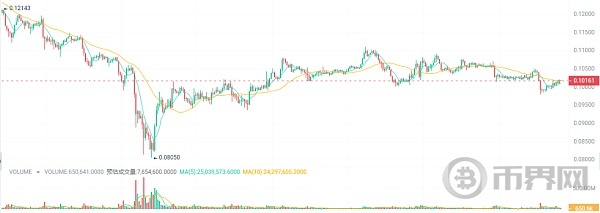
狗狗币正在复制其在 2021 年暴涨之前创造的相同模式。在下跌三角形内盘整,然后回调。因此,对于顶级 meme 币来说,未来几个月 10 倍的涨幅并不罕见。
860de24014b5613432a645760249582c.png

毕竟,DOGE 仍然是伊隆·马斯克最喜欢的加密货币,据传它将被整合到 X 平台中。马斯克还暗示特斯拉可能很快就会接受 DOGE 支付其电动汽车的费用。因此,仍然相信 DOGE 将在此牛市周期中创下历史新高。事实上,1 美元可能是可能的目标,这意味着新买家仍可能获得近 10 倍的回报。

2.LTC

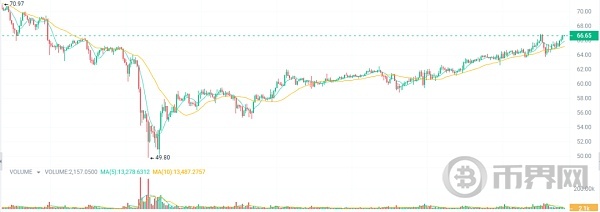
莱特币基于区块链技术,旨在提供快速、安全且低成本的支付解决方案。此外,莱特币交易通常在几分钟内即可确认,相关费用也保持在最低水平。
845830508b555901b1275d68c980be1e.png

莱特币的 14 天相对强弱指数 (RSI) 为 43.85,表明处于中性位置。这表明该资产可能在短期内继续横盘整理。然而,市场情绪和技术指标暗示莱特币有可能在年底前达到 223.39 美元。

3.SOL

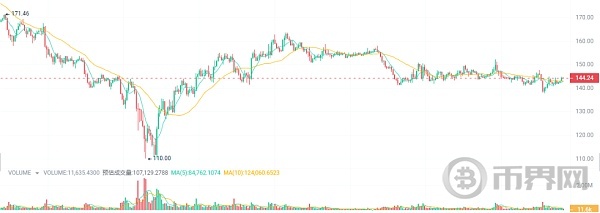
Solana 是一个快速的区块链平台,与以太坊和 Cardano 竞争,为应用程序提供了良好的基础。它的代币 SOL 对于交易和奖励参与者至关重要。SOL 的价值显而易见,因为它支持其生态系统而没有复杂的功能。
c5c83ff293359a2b8789cb7b55358a62.png

投资者可能会考虑 SOL,因为它拥有强大的网络和开发者兴趣。其好处包括更快的交易和 Solana 网络上的广泛项目访问。到 2025 年,SOL 可能达到 377.70 美元,比目前的水平大幅增加。展望 2030 年,价格可能会升至 443.70 美元。这表明潜在的增长超出了当前的投资,未来有机会获得数倍的回报。

4.SATS

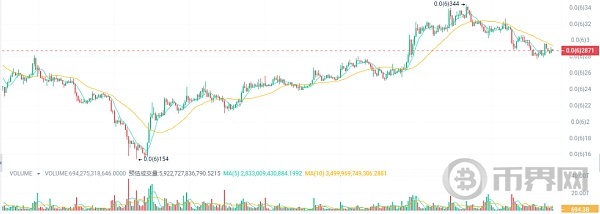
SATS 的故事不管重复说多少遍,依然能被称为比特币生态上的传奇。它是第一个在比特币生态上被铸造完的巨量 Meme 代币,总量 2100 万亿,耗时半年,铸造完成时持有地址达 3.6 万。而且与后来铭文热潮来临时被铸造的其他 BRC-20 代币不同,SATS 的铸造大部分是在比特币生态低谷期完成的,这也意味着其背后站着一群比特币生态的忠实用户。
623184603fe1be0136ce75b551eaf358.png

SATS 日线是一根大阴线,成交量跟前两天基本相同,价格回踩了日线MA30线,颈线位在2540附近,价格不会一昧的不停上涨,中间也会有下跌回踩和震荡洗盘,9月份的预期利好依然还在,回踩就是给你上车的机会,如果已经在2860-3060区域补过仓的,拿好就行,不要乱补仓。等到价格回到2540附近再去补仓。

Related Reads

South Korean Institutions' Crypto Race: Dual Explosion of Stablecoins and RWA

**Summary: South Korea's Institutional Crypto Race: Stablecoins and RWA Take Off** South Korea is undergoing a structural shift in its crypto ecosystem, moving beyond its historical role as a major retail trading hub. Major financial institutions and internet platforms are now building institutional-grade blockchain infrastructure, with stablecoins and Real-World Asset (RWA) tokenization as the primary drivers. The push for a regulated Korean won stablecoin market is a major policy and corporate focus. This is driven partly by an estimated $115 billion outflow into dollar stablecoins like USDC, threatening the domestic financial system. Banks (e.g., KB Financial, Hana), payment giants (e.g., Shinhan Card, BC Card), and internet super-apps (KakaoPay, NAVER Pay) are all conducting pilots. The goal is to anchor future digital finance to the Korean won and local regulations. In RWA, South Korea is advancing rapidly within regulatory sandboxes, focusing on unique domestic assets beyond typical global templates like US Treasuries. Projects involve tokenizing ships (with Hyundai Heavy Industries), defense supply chain assets, and K-pop intellectual property, alongside more conventional assets. A legal framework is set for 2027, and platforms like NXT are preparing for regulated trading. Key opportunities for crypto-native projects lie in providing the underlying technology these traditional institutions lack: global distribution channels for tokenized assets, cross-chain liquidity solutions, and enabling infrastructure tools (e.g., for asset packaging and management). Partnerships, such as Solana with Shinhan Card or LayerZero with the Korea Gold Exchange, exemplify this proactive approach. Crucially, user access is being shaped by consumer platforms. NAVER's planned acquisition of Upbit's operator Dunamu and Kakao's development of a unified wallet aim to seamlessly integrate crypto with everyday payments for tens of millions of users. The race is now about which protocols and projects will become the foundational standards as regulation solidifies and institutional adoption accelerates.

Foresight News10m ago

South Korean Institutions' Crypto Race: Dual Explosion of Stablecoins and RWA

Foresight News10m ago

How to Detect AI-Generated Videos? A Review of Dynamic, Traceable, and Explainable Detection Systems

**How to Detect AI-Generated Videos: A Survey on Dynamic, Traceable, and Explainable Detection Systems** With rapid advances in AI video generation (e.g., Sora, Veo), creating highly realistic, multi-minute videos is now possible, widening the gap with detection research. Current AI video detection, often limited to unreliable binary classifications, is insufficient. This survey, accepted at ACL 2026, reframes the goal as **"factual fidelity verification"**—checking if a video's content (who, when, where, what) aligns with the real world perceptually and cognitively. It categorizes AI-generated videos into three paradigms: **Local Manipulation Videos (LMV**, e.g., face swaps), **Audio-Visual Editing (AVE**, e.g., lip-syncing), and **Generative Video Synthesis (GVS**, fully synthetic videos like Sora's). Detection challenges evolve from visual artifacts in LMV to multi-modal inconsistencies in AVE and higher-level world knowledge violations in GVS. The core proposal is a **Vision-Language Dual-View framework** with four hierarchical layers: 1. **Layer 1 (Intrinsic Visual Cues):** Analyzes low-level signal statistics, noise patterns, and physiological signals. 2. **Layer 2 (Spatiotemporal Consistency):** Checks for temporal coherence in object motion and scene dynamics. 3. **Layer 3 (Cross-Modal Consistency):** Verifies alignment between video, audio, and text within the video. 4. **Layer 4 (Language-Guided World-Level Reasoning):** Uses external knowledge, facts, and physical laws to judge semantic plausibility and factual correctness. The survey traces a shift in detection focus from lower layers (1 & 2) toward higher, language-involved layers (3 & 4). It also reviews evolving evaluation metrics and datasets tailored for each video paradigm. The conclusion advocates for a **dynamic, evidence-first detection system** that moves beyond simple classification. Future trustworthy detection requires combining visual evidence (from CV) with semantic reasoning and explanation (from NLP & multimodal AI), ultimately creating traceable and explainable judgments about a video's adherence to real-world constraints.

marsbit46m ago

How to Detect AI-Generated Videos? A Review of Dynamic, Traceable, and Explainable Detection Systems

marsbit46m ago

It Turns Out the First Real-World Application of AI x Crypto is in Security Auditing

The article explores the surprising trend where AI's first major impact on crypto has been in security auditing, not in areas like trading or analytics. It details how AI-powered tools are dramatically lowering the barrier to finding smart contract vulnerabilities, enabling attackers to scan thousands of contracts and execute exploits within minutes. This has rendered traditional, manually-produced audit reports with their month-long validity periods increasingly obsolete, creating a critical "structural crack" in the old security model. Cases like Drift Protocol and KelpDAO show that even extensively audited protocols can be hacked through social engineering, operational flaws, or infrastructure misconfigurations beyond pure code review. Attackers are also using AI to find and exploit vulnerabilities in years-old, deployed contracts. Notably, OpenZeppelin's co-founder has expressed a grim view that "all DeFi is insecure" due to AI's asymmetric advantage. In response, the audit industry is undergoing a fundamental shift. While there's a short-term spike in defensive re-audits, the long-term business model is changing. Firms are developing AI-assisted systems and moving from one-time report deliveries towards embedded, continuous services like real-time monitoring and formal verification. Examples include AI tools uncovering critical, previously missed vulnerabilities in heavily audited protocols like Curve Finance and Zcash. The conclusion is that security must become a continuous investment, not a one-time checkbox, and audit firms must rapidly evolve their tools and service models to survive.

marsbit53m ago

It Turns Out the First Real-World Application of AI x Crypto is in Security Auditing

marsbit53m ago

Never expected that the first tangible application of AI x Crypto is in security auditing

Unexpectedly, the initial major application of AI in the Crypto sphere has turned out to be security auditing. In 2026, DeFi has faced significant security challenges, with 121 hacking incidents resulting in approximately $942 million in losses. While AI was expected to first impact areas like quantitative trading, its initial breakthrough has instead transformed security auditing by drastically lowering the cost and skill barrier for finding smart contract vulnerabilities. The traditional audit model is facing obsolescence. Advanced AI models, such as Claude Mythos, enable attackers to scan thousands of contracts and identify vulnerability patterns at scale, compressing the time from discovery to execution to mere minutes. This renders the month-long validity of traditional audit reports ineffective. Notably, attacks now frequently target well-audited, established protocols by exploiting business logic flaws, operational security weaknesses, and even years-old historical contracts, demonstrating that old audit reports offer zero protection. This pressure is forcing a fundamental shift in the industry. In the short term, a wave of defensive re-auditing is occurring, driven by projects seeking to meet new AI-era security standards and regulatory requirements. In the long run, audit firms' business models are diverging. The one-time report delivery model is declining in value, as evidenced by platforms like Code4rena shutting down. Leading firms are now pivoting towards AI-powered defense, integrating continuous monitoring, real-time on-chain risk detection, and embedding security directly into the development phase, as seen with tools like OpenZeppelin's Skills system. Ultimately, the era of "audit once, secure forever" is over. Security must become a continuous, embedded infrastructure investment for projects. For audit companies, survival depends on proactively transforming from traditional service providers into platforms offering AI-native, ongoing security solutions.

链捕手1h ago

Never expected that the first tangible application of AI x Crypto is in security auditing

链捕手1h ago

Trading

Spot
活动图片