24H Hot Posts Overview: TA Made 100K U by 'Shorting Eggs' on Prediction Markets!

比推Published on 2026-02-27Last updated on 2026-02-27

Abstract

This 24-hour roundup covers key discussions from crypto influencers. One trader reportedly earned $100K by consistently shorting egg futures on Polymarket, with commentators highlighting the importance of discipline and market-specific expertise over complex models. In regulatory news, ZachXBT exposed alleged insider trading at Axiom exchange, sparking warnings about the risks of centralized platforms and comparisons of crypto to "online Myanmar." A technical thread detailed arbitrage strategies between Kalshi and Polymarket, including common pitfalls. Another topic explored the experimental use of AI trading bots, with mixed results. (Note: All content represents personal opinions from X platform and not investment advice.)

Dear readers, hello~

What have crypto KOLs been talking about in the past 24 hours?

Note: The following content is compiled from the X platform, represents personal opinions, does not represent the stance of this platform, and does not constitute investment advice.

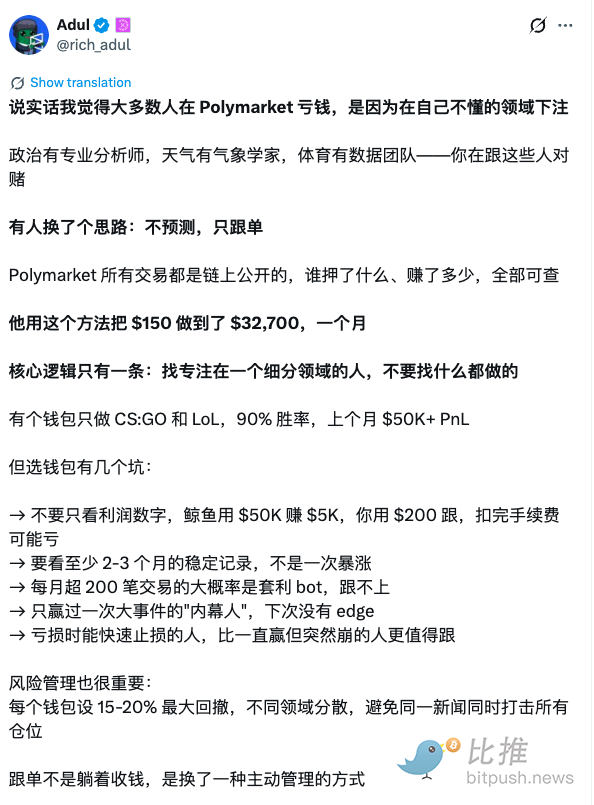
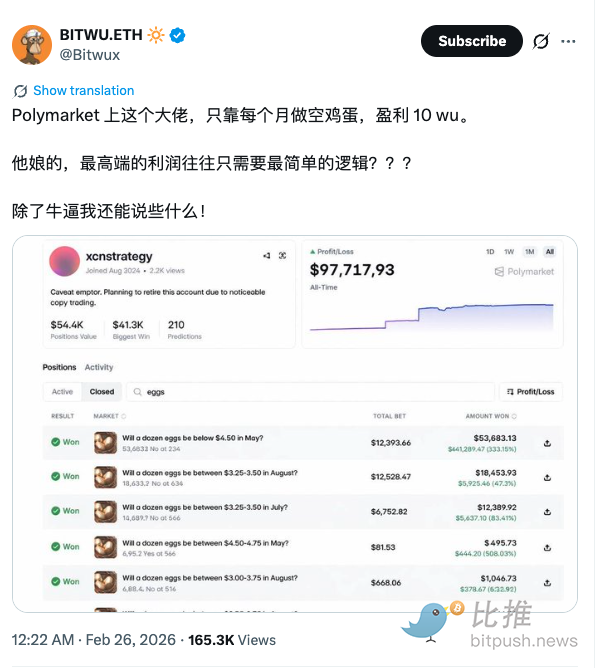
Made 100K U by 'Shorting Eggs Every Month' on Polymarket!
Hot Replies:

People who focus on one category are more sensitive to pricing deviations in this market than anyone else; this is the real edge, not some complex model;

The volatility of eggs is indeed outrageous, but the most impressive part is that they consistently short it every month. If it were me, I probably would have been shaken out by the weekly fluctuations long ago—discipline is the core skill.

This is hedging in a strongly correlated industry, right? Every trade has its master;

Egg futures are just bizarre. The domestic egg futures market has been manipulated by a few people because the market cap is too small.

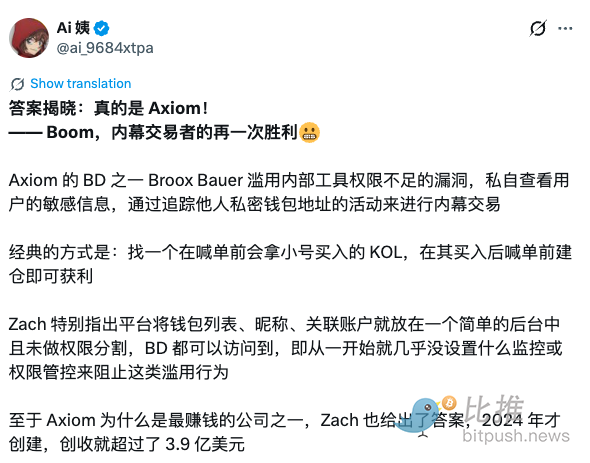
Zach's Hammer Falls: Insider Trading at Axiom Exchange

Hot Replies:

Suggest everyone not be too quick to kick them while they're down. For centralized custodial services, users' private keys and funds are in the hands of the project team. Push them too hard, and they might just pull the plug and run.

Institutions manipulate Bitcoin, exchanges engage in insider trading, project teams pump and dump... Nothing is surprising in the crypto world, which is famously called the 'Online Northern Myanmar'.

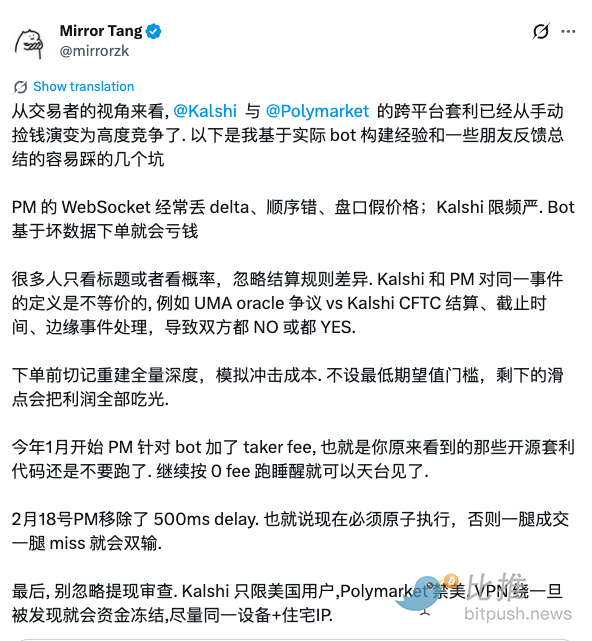
Common Pitfalls and Experience in Kalshi vs. Polymarket Arbitrage (Technical干货)

Experience post link:https://x.com/mirrorzk/status/2023303202196570420
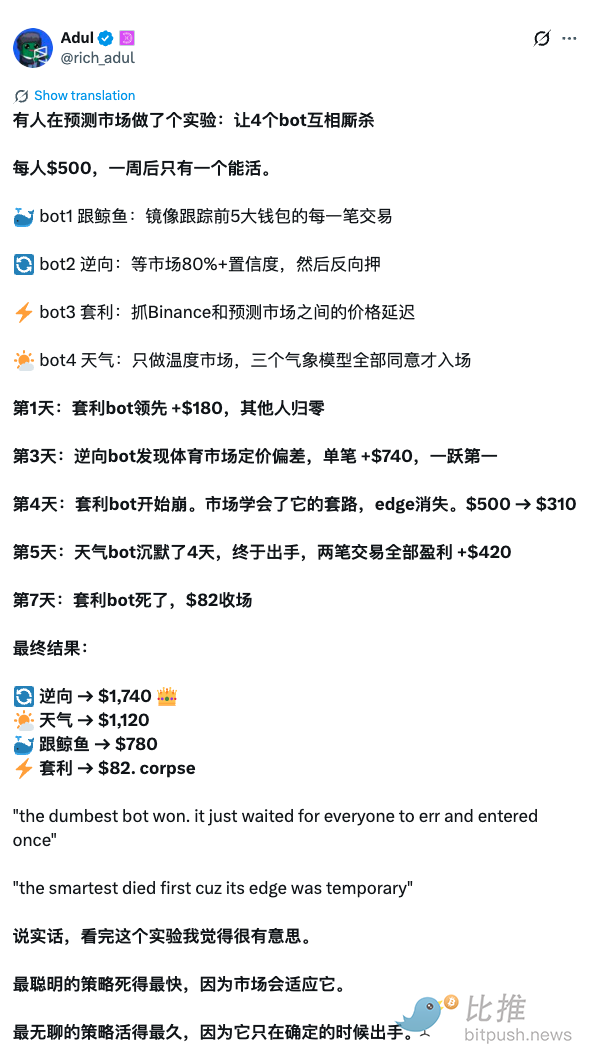
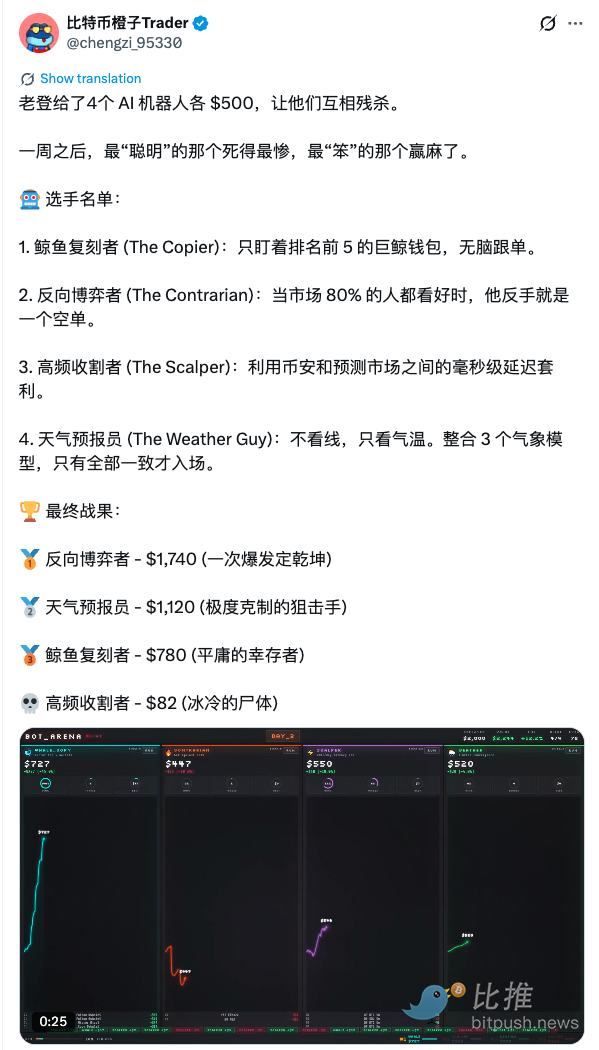
Letting AI Bots/Agents Trade Crypto for You: How Did It Go?

Twitter:https://twitter.com/BitpushNewsCN

BitPush TG Discussion Group:https://t.me/BitPushCommunity

BitPush TG Subscription: https://t.me/bitpush

Original link:https://www.bitpush.news/articles/7614958

Related Questions

QWhat strategy did the trader use to earn 100,000 USDT on Polymarket?

AThe trader consistently shorted eggs on the prediction market, capitalizing on pricing inefficiencies and high volatility in the egg market.

QAccording to the article, what is considered the real 'edge' in prediction markets?

AThe real edge is having deep knowledge and sensitivity to pricing deviations in a specific category, rather than relying on complex models.

QWhat major issue was exposed involving Axiom Exchange?

AAxiom Exchange was involved in an insider trading scandal, as highlighted by Zach's investigation.

QWhat platform comparison is discussed for arbitrage opportunities in the article?

AThe article discusses arbitrage between Kalshi and Polymarket, including common pitfalls and technical insights.

QWhat caution is advised regarding centralized exchanges in the context of the Axiom scandal?

AUsers are cautioned against provoking centralized exchanges, as they control private keys and funds, and might disconnect services or exit scam if pressured.

Related Reads

What Structural Changes Have Occurred in the Cryptocurrency Industry by 2026?

By 2026, the crypto industry is undergoing profound structural shifts, moving beyond price speculation towards deeper integration with the real-world economy. Major changes are driven by four key areas. First, stablecoins, now a $300B+ market, are evolving from crypto-native trading tools into real-world payment and B2B settlement backbones, extending business chains and creating complex accounting and tax obligations. Second, global regulation is maturing. Frameworks like the EU's MiCA are moving from legislation to active enforcement, determining market access. Anti-money laundering rules, such as the Travel Rule, see wider adoption but face enforcement and cross-border challenges. Third, AI Agents are emerging as autonomous transaction entities. Protocols like Coinbase's x402 enable machine-to-machine micropayments using stablecoins, necessitating new frameworks for transaction authorization, tax attribution, and audit trails. Finally, tax transparency is entering an implementation phase. Initiatives like the OECD's CARF, EU's DAC8, and the US Form 1099-DA are shifting reporting burdens to platforms, requiring them to reconcile on-chain data with user identity and tax residency information. Collectively, these trends signify that crypto compliance is becoming foundational infrastructure, requiring consistent data and control systems to meet cross-border operational, regulatory, and audit demands.

marsbit15m ago

What Structural Changes Have Occurred in the Cryptocurrency Industry by 2026?

marsbit15m ago

Trading

Spot
活动图片