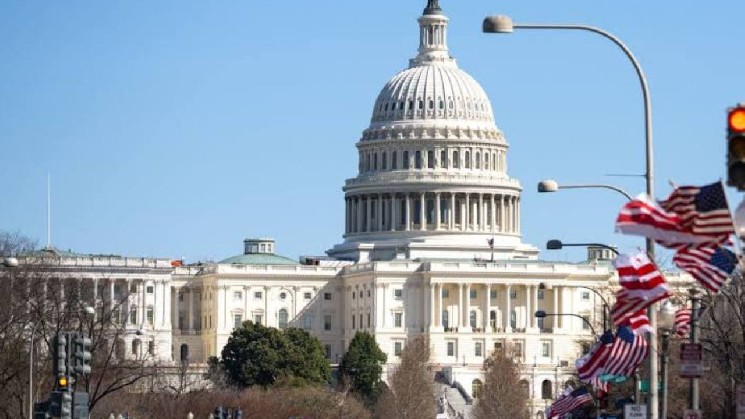
Прогноз цены биткоина: Даёт ли задержка CLARITY Act учреждениям время загрузиться до $73,000
**Bitcoin Price Forecast: Technical Consolidation Amidst Institutional Catalysts**
Bitcoin (BTC) has broken out above a cup-and-handle pattern near $65,000 and is now consolidating in the $64,000-$65,500 range, a typical post-breakout behavior. Key support lies at the 20-day and 50-day EMAs ($64,336 and $64,649), while major resistance is seen at the 100-day EMA ($66,825), the 200-day EMA ($72,195), and a measured move target of $73,000.
Derivatives data shows increased activity, with options volume surging 65.88% and short liquidations dominating, indicating underlying pressure on bearish bets. Top traders maintain a solid net-long position.
Fundamental analysis centers on two catalysts. Analyst Ash Crypto compares the delay of the CLARITY Act to BlackRock's 2022-2024 ETF playbook, suggesting institutions may use the regulatory postponement to accumulate at lower prices before potential massive capital inflows. Separately, Michael Saylor's recent hint could signal MicroStrategy may resume its Bitcoin purchasing program.
An independent analyst notes Bitcoin concentration has risen to 14.8%, signaling increased volatility risk. In the current context of an uptrend, this is viewed more as a volatility warning than a bearish signal.
**Bullish Case (Target: $73,000):** Holds consolidation above key EMAs, institutional accumulation narrative gains traction, and short squeezes propel price toward resistance levels.
**Bearish Case (Risk Level: $62,000):** Breakout structure fails if price closes below the 50-day EMA ($64,649), potentially triggering a volatile move down to test the $62,000 handle support, with a deeper fall to $55,000 possible.
cryptonews.ru1m ago