特朗普与加密货币:一场危险的政治游戏

深潮Published on 2024-08-06Last updated on 2024-08-06

如果美国政府给予比特币和其他加密资产认可,许多加密货币从业者肯定会受益,但该行业的主要目标是将加密资产纳入主流投资世界,同时保持尽可能少的监管。

撰文:John Cassidy,The New Yorker

编译:比推 BitpushNews Scott Liu

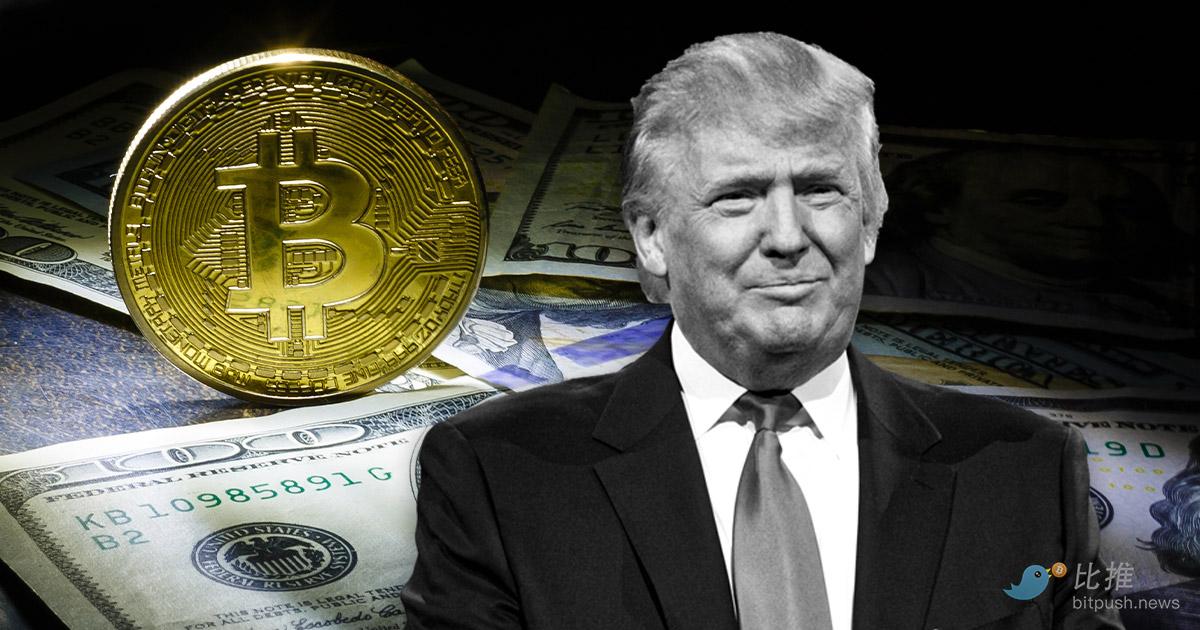
政治上,短短一个月就可能意味着巨大的变化。随着平淡无奇的民主党总统竞选变成了「卡马拉·哈里斯秀」,唐纳德·特朗普的连任竞选则演变成了「加密货币秀」。在风险投资家和加密货币支持者 J.D.万斯成为竞选搭档后,特朗普出现在纳什维尔的比特币大会上,承诺建立战略比特币储备,并使美国成为全球比特币超级大国。他还承诺解雇证券交易委员会(SEC)主席,加密货币坚定的反对者,曾批评加密行业有「失败、欺诈和破产的记录」的加里·根斯勒 (Gary Gensler)。
特朗普这一举动颇具讽刺意味,2019 年他还曾表示比特币的价值虚无缥缈。据 CNBC 报道,在纳什维尔的活动上,包括文克莱沃斯兄弟 (Winklevoss twins) 和 Kid Rock 在内的数十位加密货币支持者每人支付了 50 万美元与前总统进行私人圆桌会议。几天后,特朗普拥有的一家公司在网上列出了限量版印有比特币和「TRUMP CRYPTO PRESIDENT」字样的金色运动鞋,每双售价 500 美元。(据报道,这些鞋子随后在 eBay 上的价格高达 25,000 美元,其中一个标价甚至高达 69,999 美元。)

近年来,加密货币行业面临危机。2022 年 12 月,加密货币交易所 FTX 的创始人萨姆·班克曼 - 弗里德因欺诈 FTX 客户超过 17 亿美元被捕,随后被判处 25 年监禁。2023 年 11 月,全球最大加密货币交易所币安的创始人兼 CEO 赵长鹏因未能打击洗钱行为而认罪,并被判处四个月监禁。

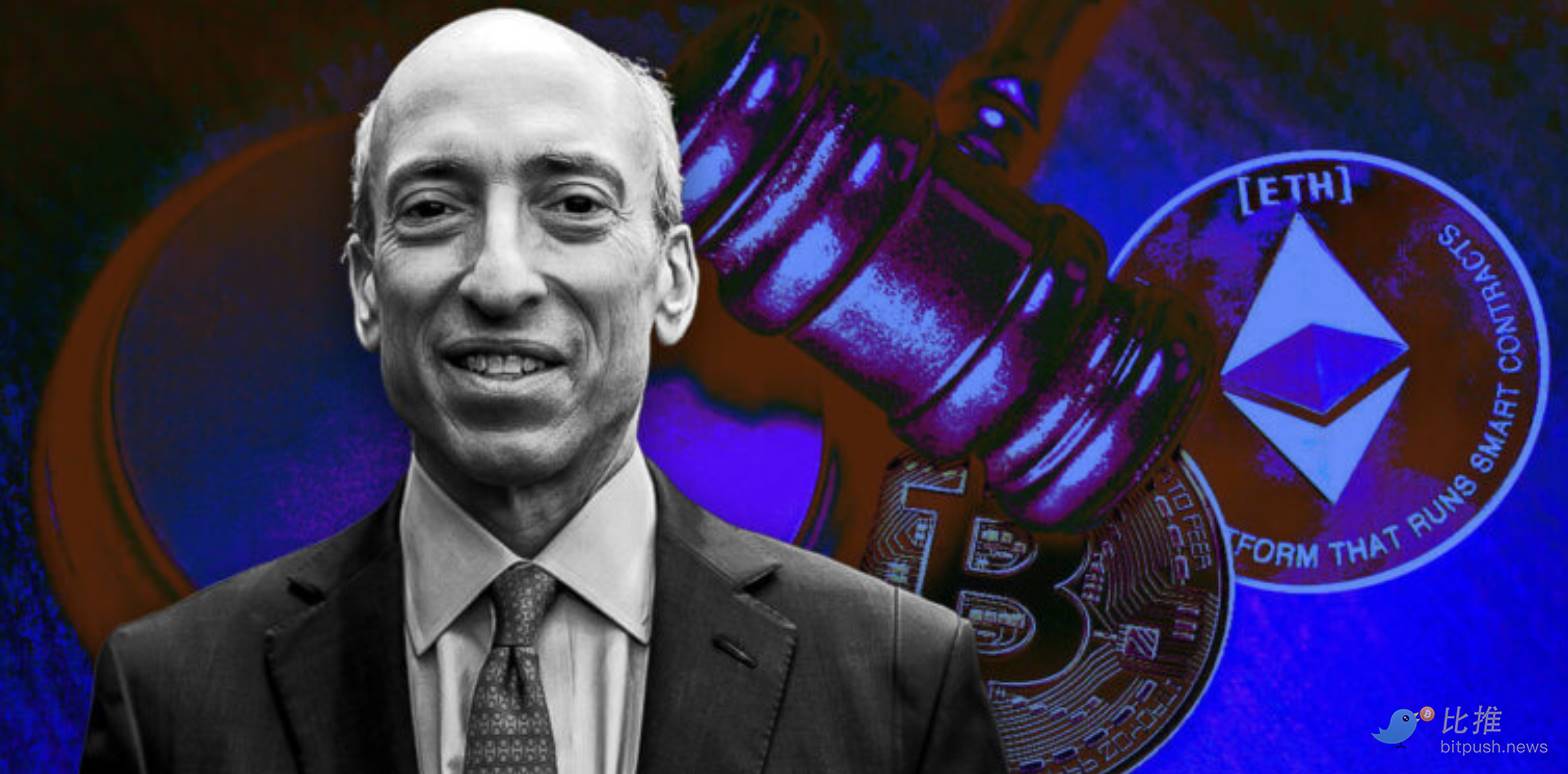
对加密货币行业来说,更大的威胁来自根斯勒和他对许多加密资产作为投资证券的监管要求,这将使它们受到严格的投资者保护法律和政府监督的约束。加密货币行业长期以来辩称,投资加密货币更像是购买商品,如贵金属和牛腩,这些商品应由商品期货交易委员会(CFTC)监管,而不是由更大的 SEC 监管。

2022 年 9 月,根斯勒在华盛顿的一次演讲中表示,他认为「绝大多数」加密货币代币都是证券,并引用了该机构首任负责人约瑟夫·肯尼迪的话:「SEC 会让没有诚信业务的企业害怕。」在接下来的几个月里,SEC 起诉了一些领先的加密货币公司,包括币安和美国最大的加密货币交易所 Coinbase,指控它们经营未注册的证券交易所和其他违规行为。虽然被告的公司否认了任何不当行为,并试图在审判前驳回案件。但今年 3 月,纽约的一名联邦法官裁定 Coinbase 的大部分案件可以继续进行。6 月,华盛顿特区的一名法官也表示币安的大部分案件可以继续进行。去年 12 月,纽约的一名联邦法官认定韩国加密货币公司 Terraform Labs 出售的四种加密货币代币是证券。
SEC 在这个关键问题上也遭遇了挫折。2023 年 7 月,加利福尼亚州的一家联邦法院裁定,由旧金山加密货币公司 Ripple Labs 创建的 XRP 代币在公开销售时不是证券。今年 6 月,SEC 结束了对以太坊的调查,这个仅次于比特币的区块链网络。但总体上,SEC 在还是取得了进展。公众利益组织 Better Markets 的总裁丹尼斯·凯勒赫 (Dennis Kelleher) 说:「加密货币行业的人在加倍贡献政治捐款。加密货币行业最大的诉求是通过国会判定数字资产不是证券,从而让 SEC 没有管辖权」。

加密货币行业的捐款规模令人震惊。据彭博社报道,包括最大的 Fairshake 在内的三个加密货币政治行动委员会(PAC)从 Coinbase、Ripple 以及风投公司 Andreessen Horowitz 等捐赠者那里筹集了一亿七千万美元。这些加密货币资金不仅流向了特朗普的总统竞选,还流向了众议院和参议院的竞选。而且,大部分资金似乎是为了击败那些批评加密货币的民主党人,包括俄亥俄州的参议员谢罗德·布朗和蒙大拿州的参议员约翰·特斯特,一部分资金也流向了其他民主党人。

在上周亚利桑那州第三选区的初选中,凤凰城市议会的民主党成员 Yassamin Ansari 在一个由 PAC 资助的广告帮助下,击败了州民主党前主席 Raquel Teran。考虑到大量加密货币资金的涌入,最近有超过十几名众议院民主党人联名写信给民主党全国委员会主席 Jaime Harrison,要求委员会「采取面向未来的态度对待数字资产和区块链技术」。然而,事实仍然是,加密货币行业最大的政治支持者是共和党人。

在特朗普出席了最近的比特币大会之后,怀俄明州参议员辛西娅 - 卢米斯宣布,她将提议立法建立一个由大约一百万比特币组成的「比特币战略储备」。( 另一位加密货币的支持者小罗伯特 - 肯尼迪也在为此欢呼。) 黑色幽默的是,加密货币中的许多人都自诩为自由主义者,他们经常争辩说,比特币的一大优点就是独立于政府。而现在,一位共和党参议员提议花费纳税人 600 多亿美元(考虑到比特币目前的价格)来收购加密货币全部存量的约 5%。

特朗普则有个更为温和的提议,即美国政府只需持有执法机构没收的所有比特币。持有这些比特币有什么经济好处呢?乔治城大学的金融经济学家詹姆斯 - 安吉尔(James Angel)说:「最大的好处是,它会让比特币最大用户投票给特朗普。」

如果美国政府给予比特币和其他加密资产认可,许多加密货币从业者肯定会受益,但该行业的主要目标是将加密资产纳入主流投资世界,同时保持尽可能少的监管。Kelleher 说,我们已经看到了这个故事的发展。2000 年,美国国会通过了《商品期货现代化法案》,有效地将某些金融衍生品免于监管,这些合同的价值与基础资产的价格挂钩。在随后的几年里,抵押贷款衍生品的发行,如信用违约互换,大幅增加。许多大银行最终在财务上的崩溃就源于这些衍生品。当房地产市场崩溃时,基础抵押证券的价值崩溃,整个金融体系倒塌,最终导致使用纳税人的钱救助。

而加密货币对潜在风险最有力的反驳可能是:数字资产价格崩溃,对更广泛的金融体系影响不大。(在 2021 年和 2022 年,比特币的价值下跌了三分之二以上。)但正如 Kelleher 指出的那样,那次崩溃发生在监管机构坚持将加密货币和加密资产与金融体系隔离的环境中。Kelleher 说:「想象一下,如果崩溃发生在加密货币被放松管制并且完全融入和连接到银行系统的情况下,会有无数的衍生品,其价值与比特币价格挂钩,这些负债将遍布银行的资产负债表上。然后我们就会回到 2008 年的情景。」

这可能是最糟糕的情况,但更大的问题是:我们已经看到了宽松金融监管的危险。抵押贷款证券至少服务于更大的社会群体,例如扩大住房拥有权。即便有人发掘出了加密资产对社会显著的帮助,这些人也会选择一直隐而不发。不过,别想把这些话告诉这位 Mar-a-Lago 的加密货币的相信者。他还要为竞选活动募集资金,还要卖运动鞋。

Related Reads

Fed Turns Hawkish, Wall Street Capitulates, Citi Stands as 'Last Holdout': Insists on Resuming Rate Cuts in October

Amid a surprisingly hawkish shift from the Fed and most of Wall Street capitulating on rate cut expectations, Citigroup stands as a notable outlier, holding firm to its forecast for monetary easing to restart this October. Following the June FOMC meeting, where the "dovish bias" was removed and the dot plot shifted dramatically, markets priced in nearly 37bps of tightening for 2026. Major banks like Deutsche Bank and Goldman Sachs revised their calls, predicting rate hikes as soon as September. Citigroup, however, maintains a baseline scenario for a 25bps rate cut in October, followed by two more cuts in December and January 2027. Its counter-consensus view rests on three key arguments: 1) Plunging oil prices are eliminating a major inflation upside risk. 2) Rising initial jobless claims are mirroring seasonal weakening patterns seen in 2024-2025, signaling a labor market cool-down. 3) The strong core PCE is an "outlier," heavily influenced by AI-related prices and equity market gains rather than broad consumer price pressures, with other inflation metrics showing more moderation. While Wall Street largely "surrenders" to the hawkish Fed narrative, with Deutsche Bank forecasting two hikes and Goldman Sachs warning of potential back-to-back moves, Citigroup remains the "last holdout," betting that disinflationary forces will pave the way for cuts before year-end.

marsbit2m ago

Fed Turns Hawkish, Wall Street Capitulates, Citi Stands as 'Last Holdout': Insists on Resuming Rate Cuts in October

marsbit2m ago

Open Systems Will Ultimately Prevail: Why Ethereum Is the Next Linux?

The article "Open Systems Will Ultimately Prevail: Why Ethereum Is the Next Linux?" argues that Ethereum, like Linux before it, will triumph over closed, proprietary systems in finance due to its open, permissionless, and credibly neutral nature. It draws a historical parallel: just as the open internet defeated corporate private networks and Linux outcompeted proprietary Unix systems, open financial infrastructure like Ethereum will surpass private blockchains. The core advantage lies in the "bazaar" development model (as described in Eric Raymond's "The Cathedral and the Bazaar"), where decentralized, permissionless innovation by a global community of developers outpaces the controlled "cathedral" approach of centralized entities. This model fosters rapid innovation, as seen with Ethereum standards like ERC-20 and applications like Uniswap, which were built without needing permission. Ethereum's key, irreplicable strength is its credible neutrality: transparent, equally applicable, immutable rules that allow anyone to participate. This ensures sovereign independence, meaning no single entity (company, government) can control or change its core rules—a critical feature for global financial infrastructure. In contrast, private blockchains and consortium chains (like SWIFT or various bank-led projects) suffer from platform risk, central control, and an inability to attract broad developer ecosystems, leading to frequent failures. The article notes that major institutions (e.g., BlackRock, JPMorgan, Coinbase, Robinhood) are already building on Ethereum or its Layer 2 networks, recognizing its security, developer ecosystem, and network effects. While critics argue finance requires accountable, controlled systems, the response is that compliance (KYC, regulations) can be built at the application layer on top of a neutral settlement layer like Ethereum, just as secure commerce was built on the open internet via HTTPS. Ultimately, the thesis is that attempting to build walled-garden, proprietary financial networks is a flawed strategy that stifles innovation. The winning approach is to build applications on top of open, credibly neutral infrastructure like Ethereum, which is poised to become the foundational settlement layer for global finance.

Foresight News13m ago

Open Systems Will Ultimately Prevail: Why Ethereum Is the Next Linux?

Foresight News13m ago

The Computing Power Dilemma in the Sino-US AI Rivalry

The Sino-US AI rivalry faces a fundamental bottleneck: the widening compute power gap. While Chinese AI chip companies have seen investment surges, their current focus remains largely on the less demanding inference market. The real challenge lies in the high-end training chip sector, crucial for developing cutting-edge large language models (LLMs), where Nvidia holds a near-monopoly. The compute disparity is stark. US tech giants like Meta, Google, and xAI command massive GPU clusters, enabling them to train trillion-parameter models rapidly. Estimates suggest US data center count and total compute capacity significantly outstrip China's. This "brute force" advantage allows for faster model iteration and exploration of larger parameter scales, with top US models reportedly leading their Chinese counterparts by 8 to 15 months. Chinese alternatives, such as Huawei's Ascend and others from companies like Moore Thread and Biren, are emerging. They show promise in inference and some training scenarios, closing the performance gap with mid-range Nvidia products. However, the core hurdle extends beyond raw chip performance to the entrenched software ecosystem, exemplified by Nvidia's CUDA platform. The path forward involves "walking on two legs": navigating import restrictions while heavily investing in the domestic chip industry. Though still in a catch-up phase, China's vast market, talent pool, and capital are fostering progress. The ultimate test is whether Chinese firms can build a competitive hardware-software ecosystem to power the next generation of AI.

marsbit20m ago

The Computing Power Dilemma in the Sino-US AI Rivalry

marsbit20m ago

He Kaiming's Team's New Work: After Deleting VAE and Private Data, Text-to-Image Generation Becomes Even Stronger

KaiMing He's team introduces **MiniT2I**, a minimalist text-to-image (T2I) model that challenges the complexity of mainstream approaches. It eliminates components commonly considered essential: the VAE encoder-decoder, AdaLN conditioning mechanisms, auxiliary losses, private training data, and post-training alignment stages like RL/DPO. Instead, it uses a pure flow-matching objective trained directly on RGB pixels. The model employs a simplified **MM-JiT** Transformer architecture. It removes AdaLN blocks for conditioning and instead prepends two lightweight text adapter blocks to a standard pre-norm Transformer, allowing frozen T5 text features to adapt to the denoiser. Training follows a two-stage, LLM-like paradigm using only public datasets: pre-training on LLaVA-recaptioned CC12M for coverage, followed by fine-tuning on ~120k high-quality image-text pairs. With just 258M parameters (B/16), MiniT2I achieves competitive scores (0.87 on GenEval, 84.2 on DPG-Bench), outperforming larger pixel-space models. Scaling to 912M parameters (L/16) yields results comparable to SD3-Medium (~2B parameters) in style, composition, and imagination, though it lags in text rendering and named entities due to public data limitations. Key advantages include lower computational cost (~570 GFLOPs vs. ~1379 for latent models) and architectural simplicity. Acknowledged limitations include patch boundary artifacts in pixel space, side effects of high CFG scales, resolution ceilings for sequences longer than 1024 tokens, and the aforementioned data bottlenecks. The work demonstrates that high-performance T2I generation is possible with a radically simplified, publicly reproducible baseline.

marsbit24m ago

He Kaiming's Team's New Work: After Deleting VAE and Private Data, Text-to-Image Generation Becomes Even Stronger

marsbit24m ago

Trading

Spot
Futures
活动图片