宏观研究:加密市场陷入恐慌,联储能否力挽狂澜

HTX成长学院Published on 2024-08-05Last updated on 2026-04-19

Abstract

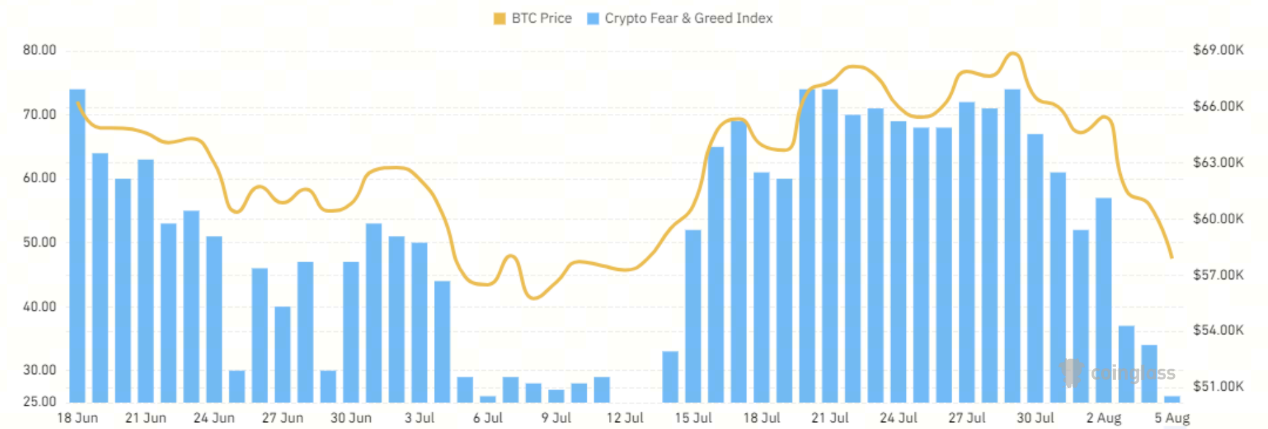
过去一周,市场在持续下跌后,周一迎来一轮抛售高潮。那么,现在是否是抄底的好机会呢?虽然美国降息似乎近在咫尺,但一直未能兑现。叠加失业突增触发萨姆法则,市场正在经受严峻考验。周末,巴菲特对苹果的抛售以及中东局势的紧张,成为压倒市场的最后一根稻草。亚洲早盘出现多年未见的抛盘,市场情绪尚未完全平稳,投资者应谨慎对待这一波下跌行情。

过去一周,市场在持续下跌后,周一迎来一轮抛售高潮。那么,现在是否是抄底的好机会呢?虽然美国降息似乎近在咫尺,但一直未能兑现。叠加失业突增触发萨姆法则,市场正在经受严峻考验。周末,巴菲特对苹果的抛售以及中东局势的紧张,成为压倒市场的最后一根稻草。亚洲早盘出现多年未见的抛盘,市场情绪尚未完全平稳,投资者应谨慎对待这一波下跌行情。

宏观环境

1)日元快速上涨,套利交易崩盘

日元套利交易是一种利用日元在不同市场或金融工具之间价格差异进行套利的策略。常见形式包括利率套利、货币套利、期货套利和跨市场套利。投资者通过借入低利率的日元资金,投资于高收益资产,或利用外汇市场和期货市场的价格差异进行买卖操作,从中获取利润。这种交易通常需要快速决策和执行,以在价格差异出现的瞬间获利。

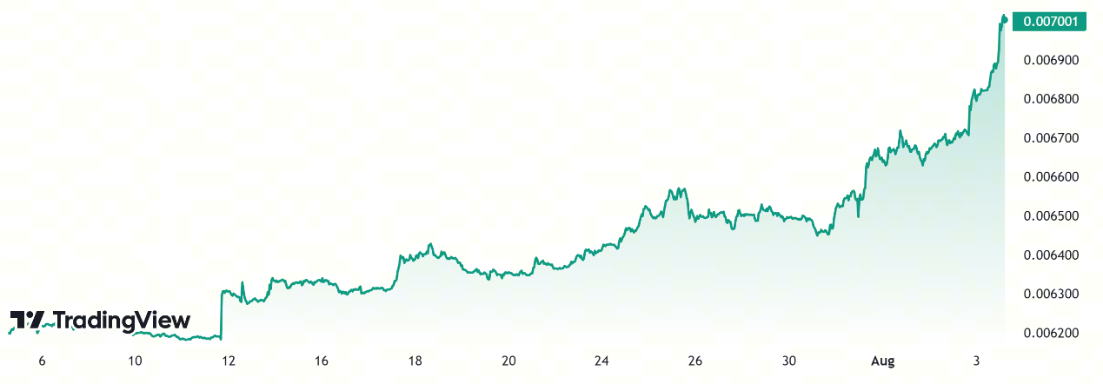
图1:美元对日元
来源:TradingView

许多交易员借入日元做多美元资产,目前出现的天量反转可能形成强大的反身性。估计套息交易的资金量在4万亿美元左右,目前市场继续外部注入流动性。

2)市场开始恐慌,联储有望入场干预

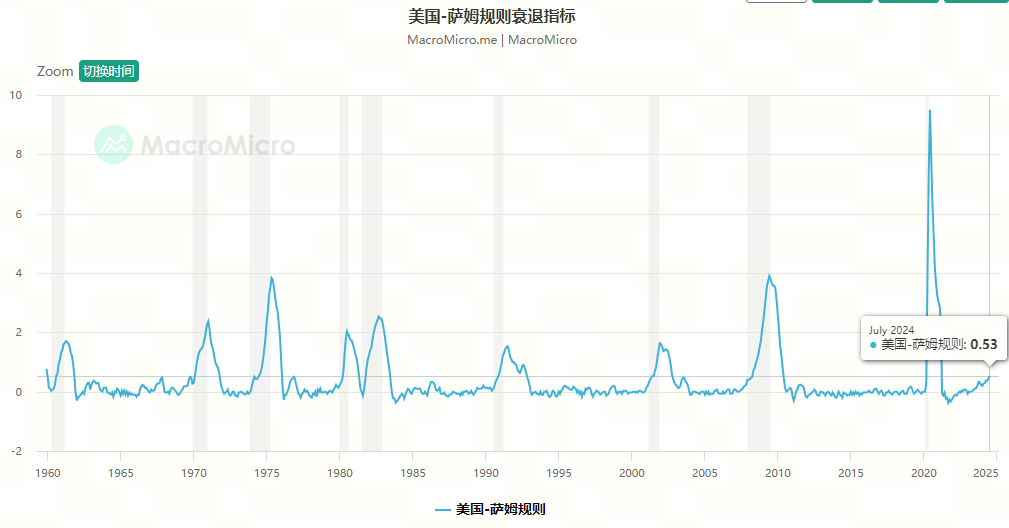
近期市场受美国经济走软影响,比特币(BTC)价格下滑,山寨币市场也随之下行。非农最新失业率计算,美国失业率从今年以来的低点飙升了0.6%,失业率连续超预期激增数月后,终于触发了基于失业率预测衰退的“萨姆规则”。

图2:萨姆规则衰退指标
来源:MacroMicro

需要密切关注美联储的下一步行动。网传美联储将于周一召开紧急会议,讨论日本股市股灾后的利率问题。

图3:恐惧贪婪指数
来源:Coinglass

这波抛售潮似乎源于一个“时间触发”的算法程序,该程序在过去7个交易日内每天美国东部时间上午10点(美国市场开盘后)触发卖单。这个算法在周末仍在运行,可能导致高频交易(HFT)驱动的抛售和做空潮,迫使杠杆多头投资者认输。

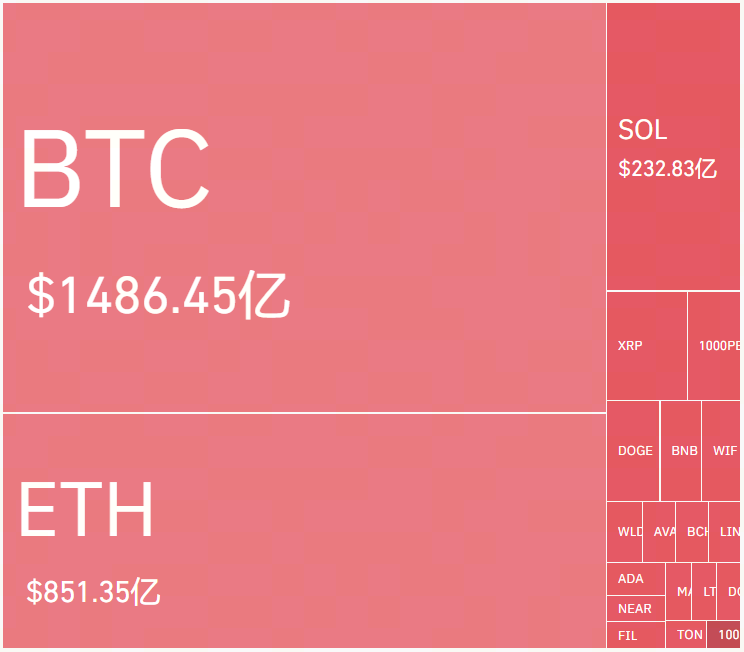
图4:爆仓热力图(24小时)
来源:Coinglass官网

在杠杆多头遭遇“爆金币”阻击后,市场可能会在短期内收拾筹码,进入上涨状态。

优质赛道

在当前市场环境下,投资者应谨慎选择投资标的,并密切关注宏观环境和市场动态,以便在适当时机做出明智的投资决策。

1)链上黄金(XAUT)

基本面:实物黄金抵押

Tether Gold(XAUt)是一种数字资产,代表着在金库中持有的实物黄金所有权。

价值稳定

XAUt的价值与实际黄金挂钩,每枚XAUt代表一定数量的黄金。这使得XAUt在市场恐慌中表现出色。

透明度和安全性

XAUt采用区块链技术,确保交易透明和安全。每笔交易都记录在区块链上,可追溯和验证,降低潜在的欺诈和风险。

便捷性

XAUt可以在全球范围内快速、低成本地交易。相比传统的黄金交易,XAUt交易速度更快,并且不受地理和时间限制。

2)波场(TRX)

交易量超越以太坊

根据 X Lookonchain 上的区块链分析,Tron 网络上的交易数量已超过 80 亿。这是以太坊 (ETH) 的四倍。

盈利稳定

TRX 预计今年能达到7-8亿美元的整体协议收入,每年协议通缩率达到6%,在不稳定的熊市中,TRX将是更稳定的代币。

总结

周一的抛售导致加密市场避险情绪飙升,考虑到日元套利交易的崩盘和市场恐慌加剧可能导致的高频交易抛售潮。本次的链上回稳可能将取决于美联储的强力干预与市场情绪的修复。我们认为在高风险的市场中,持有或者买入链上黄金(XAUt)和波场(TRX)作为优质赛道将能够较好的规避市场进一步下挫的风险。


Related Reads

a16z on Hiring: How to Choose Between Crypto-Native and Traditional Talent?

Hiring in Crypto: Balancing Crypto-Native and Traditional Talent As the crypto industry grows, founders face the dilemma of whether to prioritize hiring professionals with blockchain experience or those with traditional tech backgrounds who can learn. The key is recognizing that crypto companies are still tech companies at their core and should apply proven hiring best practices. Crypto-native talent offers immediate productivity and is essential for roles involving high-stakes, specialized work like smart contract development, where errors can be catastrophic. However, traditional professionals from large-scale software companies bring valuable experience in scaling products, operational flexibility, and expertise in areas like fintech, UX, and security, which are crucial as crypto products target mainstream adoption. Recruiting requires tailored approaches. Some candidates may be hesitant due to crypto's volatility or complexity, while others are excited by its innovative potential. Assess candidates' motivations, curiosity, and alignment with the company's vision early. Emphasize the opportunity to shape technology's future and address financial incentives, such as token-based compensation, which can offer liquidity compared to traditional equity. Onboarding is critical. Identify knowledge gaps during hiring and design education programs, mentorship, knowledge-sharing sessions, and resources like blogs or courses to accelerate learning. Pairing new hires with experienced crypto professionals helps bridge gaps and fosters collaboration. Ultimately, successful teams blend both crypto-native and traditional talent, leveraging their strengths to drive innovation and growth.

marsbit38m ago

a16z on Hiring: How to Choose Between Crypto-Native and Traditional Talent?

marsbit38m ago

DeFi Hacked Again for $292 Million, Is Even Aave No Longer Safe?

On April 19, a major DeFi security breach occurred, resulting in the loss of approximately $292 million. The attack targeted Kelp DAO’s rsETH bridge contract built on LayerZero, with 116,500 rsETH stolen. The attacker initiated the exploit using funds from Tornado Cash and manipulated the LayerZero EndpointV2 contract to transfer the assets. Kelp DAO confirmed the incident and temporarily paused rsETH contracts across multiple networks while collaborating with security experts for investigation. Initial analysis suggests the root cause was a compromised private key on the source chain, with the contract secured by only a 1/1 validator set, making it vulnerable to a single malicious transaction. The attacker used the stolen rsETH as collateral on lending platforms—including Aave, Compound, and Euler—to borrow more liquid assets like WETH, accumulating over $236 million in debt. Aave alone accounted for $196 million of this amount. In response, Aave froze its rsETH markets and stated it would explore covering potential bad debt through its Umbrella safety module, which holds around $50 million in WETH. This incident follows another large exploit earlier in April, where Drift Protocol on Solana lost $280 million. The repeated high-value attacks raise concerns about DeFi security, even affecting major protocols like Aave. Users are advised to exercise caution, diversify holdings, and limit exposure to on-chain protocols until more robust security measures are established.

marsbit2h ago

DeFi Hacked Again for $292 Million, Is Even Aave No Longer Safe?

marsbit2h ago

Trading

Spot
Futures

Hot Articles

What is $BITCOIN

DIGITAL GOLD ($BITCOIN): A Comprehensive Analysis Introduction to DIGITAL GOLD ($BITCOIN) DIGITAL GOLD ($BITCOIN) is a blockchain-based project operating on the Solana network, which aims to combine the characteristics of traditional precious metals with the innovation of decentralized technologies. While it shares a name with Bitcoin, often referred to as “digital gold” due to its perception as a store of value, DIGITAL GOLD is a separate token designed to create a unique ecosystem within the Web3 landscape. Its goal is to position itself as a viable alternative digital asset, although specifics regarding its applications and functionalities are still developing. What is DIGITAL GOLD ($BITCOIN)? DIGITAL GOLD ($BITCOIN) is a cryptocurrency token explicitly designed for use on the Solana blockchain. In contrast to Bitcoin, which provides a widely recognized value storage role, this token appears to focus on broader applications and characteristics. Notable aspects include: Blockchain Infrastructure: The token is built on the Solana blockchain, known for its capacity to handle high-speed and low-cost transactions. Supply Dynamics: DIGITAL GOLD has a maximum supply capped at 100 quadrillion tokens (100P $BITCOIN), although details regarding its circulating supply are currently undisclosed. Utility: While precise functionalities are not explicitly outlined, there are indications that the token could be utilized for various applications, potentially involving decentralized applications (dApps) or asset tokenization strategies. Who is the Creator of DIGITAL GOLD ($BITCOIN)? At present, the identity of the creators and development team behind DIGITAL GOLD ($BITCOIN) remains unknown. This situation is typical among many innovative projects within the blockchain space, particularly those aligning with decentralized finance and meme coin phenomena. While such anonymity may foster a community-driven culture, it intensifies concerns about governance and accountability. Who are the Investors of DIGITAL GOLD ($BITCOIN)? The available information indicates that DIGITAL GOLD ($BITCOIN) does not have any known institutional backers or prominent venture capital investments. The project seems to operate on a peer-to-peer model focused on community support and adoption rather than traditional funding routes. Its activity and liquidity are primarily situated on decentralized exchanges (DEXs), such as PumpSwap, rather than established centralized trading platforms, further highlighting its grassroots approach. How DIGITAL GOLD ($BITCOIN) Works The operational mechanics of DIGITAL GOLD ($BITCOIN) can be elaborated on based on its blockchain design and network attributes: Consensus Mechanism: By leveraging Solana’s unique proof-of-history (PoH) combined with a proof-of-stake (PoS) model, the project ensures efficient transaction validation contributing to the network's high performance. Tokenomics: While specific deflationary mechanisms have not been extensively detailed, the vast maximum token supply implies that it may cater to microtransactions or niche use cases that are still to be defined. Interoperability: There exists the potential for integration with Solana’s broader ecosystem, including various decentralized finance (DeFi) platforms. However, the details regarding specific integrations remain unspecified. Timeline of Key Events Here is a timeline that highlights significant milestones concerning DIGITAL GOLD ($BITCOIN): 2023: The initial deployment of the token occurs on the Solana blockchain, marked by its contract address. 2024: DIGITAL GOLD gains visibility as it becomes available for trading on decentralized exchanges like PumpSwap, allowing users to trade it against SOL. 2025: The project witnesses sporadic trading activity and potential interest in community-led engagements, although no noteworthy partnerships or technical advancements have been documented as of yet. Critical Analysis Strengths Scalability: The underlying Solana infrastructure supports high transaction volumes, which could enhance the utility of $BITCOIN in various transaction scenarios. Accessibility: The potential low trading price per token could attract retail investors, facilitating wider participation due to fractional ownership opportunities. Risks Lack of Transparency: The absence of publicly known backers, developers, or an audit process may yield skepticism regarding the project's sustainability and trustworthiness. Market Volatility: The trading activity is heavily reliant on speculative behavior, which can result in significant price volatility and uncertainty for investors. Conclusion DIGITAL GOLD ($BITCOIN) emerges as an intriguing yet ambiguous project within the rapidly evolving Solana ecosystem. While it attempts to leverage the “digital gold” narrative, its departure from Bitcoin's established role as a store of value underscores the need for a clearer differentiation of its intended utility and governance structure. Future acceptance and adoption will likely depend on addressing the current opacity and defining its operational and economic strategies more explicitly. Note: This report encompasses synthesised information available as of October 2023, and developments may have transpired beyond the research period.

363 Total ViewsPublished 2025.05.13Updated 2025.05.13

What is $BITCOIN

Discussions

Welcome to the HTX Community. Here, you can stay informed about the latest platform developments and gain access to professional market insights. Users' opinions on the price of BTC (BTC) are presented below.

活动图片