Ripple和Solana在以太坊ETF推出令人失望时抢走了风头:本周的加密货币更新

币界网Published on 2024-07-26Last updated on 2024-07-26

币界网报道:

对于加密货币行业来说,这是有趣的一周。虽然它的总市值基本保持不变,但发生了很多值得我们关注的事情,所以让我们来谈谈。

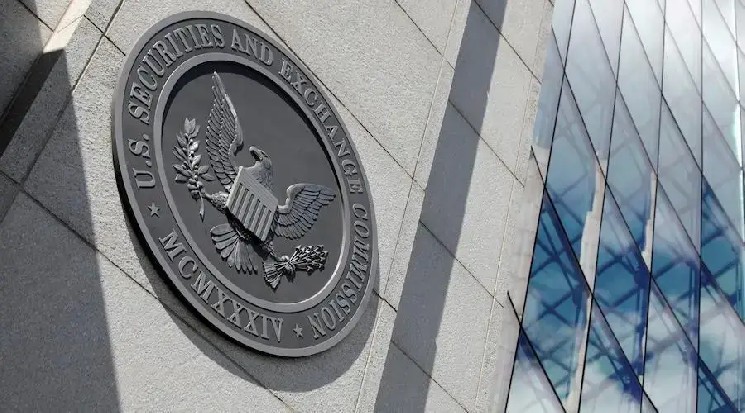
一开始,美国证券交易委员会就最终批准了以太坊ETF现货发行,以推出其产品。对于许多ETH投资者来说,这是一个备受期待的时刻,但推出后价格暴跌。值得注意的是,ETH ETF在前几个交易日的每个交易日都产生了超过10亿美元的交易量,约占BTC交易量的20%。这符合专家们的预期。

然而,自ETF开始交易以来的三天里,这些产品出现了约1.8亿美元的资金外流,主要是由于Grayscale的抛售。这显然抑制了价格,目前价格每周下跌4%。然而,ETH ETF的推出在很大程度上被认为是一个非常积极的事件,因为它为传统投资者通过熟悉和受监管的投资工具参与其中打开了大门。

尽管这次发布备受期待,但还是有其他东西抢走了风头。

Ripple的XRP和Solana(SOL)是本周大盘股加密货币中表现最好的,它们甚至还没有接近。XRP上涨了26%,而SOL表现更好,同期上涨了30%。山寨币显然已经回到了积极的趋势,行业参与者想知道这是否是另一次反弹的开始。

比特币也表现稳定,在过去七天里增长了约5%。值得注意的是,美国总统候选人、前总统唐纳德·特朗普将于明天在纳什维尔举行的比特币会议上发表主题演讲。整个社区都热切期待着这一事件。

也就是说,MT.Gox的债权人已经开始收到BTC和BCH的资金,看看这是否会影响未来几周的市场是很有趣的。

市场数据

市值:2.514T美元| 24小时交易量:990亿美元|比特币占比:52.8%

BTC:67150美元(+4.9%)| ETH:3237美元(-4.1%)| BNB:576美元(+0.5%)

本周不容错过的加密货币新闻

2024年最佳硬件钱包:五大加密货币冷藏选择。从我们最近制作的一份更长的指南开始,看看2024年需要考虑的一些最好的硬件钱包。安全很重要;不要忽视它。

ETH ETF终于上线,但价格受到打击。美国证券交易委员会(SEC)最后一次批准了以太坊现货ETF的发行人。这些产品现在正在实时交易,但自上市以来,价格几乎一直在下跌。

十亿分之一:微小的比特币挖矿设备打破了赔率,获得了20.6万美元的区块奖励。比特币挖矿已经变成了一个巨大的能源密集型过程,工业参与者竞争产生每个区块并获得奖励。好吧,一位幸运的手牌大小的家庭矿工克服了11亿分之一的几率,成功地制作了一个区块并获得了20.6万美元的奖励。

VanEck预测,如果发生这种情况,比特币到2050年可能会达到290万美元。知名资产管理公司VanEck最近提出了一个有趣的预测。该公司认为,到2050年,比特币的价格可能会达到高达290万美元的估值。

Marathon Digital通过1亿美元的购买增加了比特币的价值。著名的比特币矿工Marathon Digital采取了全面的HODL策略,最近宣布购买价值1亿美元的BTC。有了这个,该公司现在持有20000多个BTC。

图表

本周,我们将对以太坊、Ripple、Cardano、币安币和Shiba Inu进行图表分析——点击此处查看完整的价格分析。

Related Reads

Where Is the AI Infrastructure Industry Chain Stuck?

The AI infrastructure (AI Infra) industry chain is facing unprecedented systemic bottlenecks, despite the rapid emergence of applications like DeepSeek and Seedance 2.0. The surge in global computing demand has exposed critical constraints across multiple layers of the supply chain—from core manufacturing equipment and data center cabling to specialty materials and cleanroom facilities. Key challenges include four major "walls": - **Memory Wall**: High-bandwidth memory (HBM) and DRAM face structural shortages as AI inference demand outpaces training, with new capacity not expected until 2027. - **Bandwidth Wall**: Data transfer speeds lag behind computing power, causing multi-level bottlenecks in-chip, between chips, and across data centers. - **Compute Wall**: Advanced chip manufacturing, reliant on EUV lithography and monopolized by ASML, remains the fundamental constraint, with supply chain fragility affecting production. - **Power Wall**: While energy demand from data centers is rising, power supply is a solvable near-term challenge through diversified energy infrastructure. Expansion is further hindered by shortages in testing equipment, IC substrates (critical for GPUs and seeing price hikes over 30%), specialty materials like low-CTE glass fiber, and high-end cleanroom facilities. Connection technologies are evolving, with copper cables resurging for short-range links due to cost and latency advantages, while optical solutions dominate long-range scenarios. Innovations like hollow-core fiber and advanced PCB technologies (e.g., glass substrates, mSAP) are emerging to meet bandwidth needs. In summary, AI Infra bottlenecks are multidimensional, spanning compute, memory, bandwidth, power, and supply chain logistics. Advanced chip manufacturing remains the core constraint, while substrate, material, and equipment shortages present immediate challenges. The industry is moving toward hybrid copper-optical solutions and accelerated domestic supply chain development.

marsbit54m ago

Where Is the AI Infrastructure Industry Chain Stuck?

marsbit54m ago

Autonomy or Compatibility: The Choice Facing China's AI Ecosystem Behind the Delay of DeepSeek V4

DeepSeek V4's repeated delay in early 2026 has sparked global discussions on "de-CUDA-ization" in AI. The highly anticipated trillion-parameter open-source model is undergoing deep adaptation to Huawei’s Ascend chips using the CANN framework, representing China’s first systematic attempt to run a core AI model outside the CUDA ecosystem. This shift, however, comes with significant engineering challenges. While the model uses a MoE architecture to reduce computational load, it places extreme demands on memory bandwidth, chip interconnects, and system scheduling—areas where NVIDIA’s mature CUDA ecosystem currently excels. Migrating to Ascend introduces complexities in hardware topology, communication latency, and software optimization due to CANN’s relative immaturity compared to CUDA. The move highlights a broader strategic dilemma: short-term compatibility with CUDA offers practical benefits and faster adoption, as seen in CANN’s efforts to emulate CUDA interfaces. Yet, long-term over-reliance on compatibility risks inheriting CUDA’s limitations and stifling native innovation. If global AI shifts away from transformer-based architectures, strict compatibility could lead to technological obsolescence. Despite these challenges, DeepSeek V4’s eventual release could demonstrate the viability of a full domestic AI stack and accelerate CANN’s ecosystem growth. However, true technological independence will require building an original software-hardware paradigm beyond compatibility—a critical task for China’s AI ambitions in the next 3-5 years.

marsbit1h ago

Autonomy or Compatibility: The Choice Facing China's AI Ecosystem Behind the Delay of DeepSeek V4

marsbit1h ago

Trading

Spot
Futures

Hot Articles

Discussions

Welcome to the HTX Community. Here, you can stay informed about the latest platform developments and gain access to professional market insights. Users' opinions on the price of ETH (ETH) are presented below.

活动图片