CoinDeskPolicyPublished on 2024-04-04Last updated on 2024-04-05

Abstract

The U.S. SEC has argued that Do Kwon and his company lied to investors about the stability of TerraUSD and its integration with a Korean mobile payments app.

  • A New York jury has begun deliberations in the SEC’s civil fraud case against Terraform Labs and its co-founder Do Kwon
  • The SEC has accused the defendants of misleading investors about the stability of its so-called “algorithmic stablecoin,” Terra USD

NEW YORK – Lawyers for the U.S. Securities and Exchange Commission (SEC) rested their case against Terraform Labs and its co-founder, Do Kwon, on Friday, releasing a New York jury to decide whether Kwon and his company are liable for allegedly misleading investors about the stability of Terra USD (UST) and its integration with a Korean mobile payments app.

The so-called “algorithmic stablecoin” was supposed to maintain a peg to the U.S. dollar through on-chain mint-and-burn mechanics with its sister token, LUNA. But in May 2022, the UST de-pegged and began a death spiral that eventually took down the entire Terra ecosystem, wiping out approximately $40 billion in market value in its wake.

During its case, the SEC argued that Kwon and, under his direction, Terraform Labs deceived everyday investors about the nature of that algorithm, implying that it allowed UST to “naturally heal” and “automatically self-heal” in the event of a de-peg.

Advertisement
Advertisement

But there was no self-healing or algorithmic magic that kept UST pegged to the dollar, the SEC argued. Instead, the value of UST was maintained through continuous trading activity, including large-scale trading done by institutional investors.

During her closing arguments on Friday, SEC attorney Laura Meehan told the jury that during a prior de-peg in May 2021, Kwon and Terraform Labs made a “secret agreement” with Jump, a trading shop that acted as a market maker for Terraform Labs, to step in and buy millions of dollars of UST off-chain to inflate the value and bring it back to parity with the dollar.

Meehan added that after Jump’s intervention, Kwon and his company intentionally kept Jump’s involvement quiet, wanting instead to use the re-pegging as evidence of the algorithm’s effectiveness.

“Defendants lied for years. They lied about the success and size of their blockchain … they lied about the stability of their algorithm,” Meehan said. “They’re still parading themselves around like they’re a real company, like they’re legitimate.”

As Meehan neared the end of her remarks, the Manhattan courtroom gently shook – not, as District Court Judge Jed Rakoff quipped, “with the force of the SEC’s arguments” but with the tremors of a 4.8 magnitude earthquake in neighboring New Jersey.

Defense pushes back

Lawyers for Terraform Labs and Do Kwon made their closing arguments after the SEC, pausing intermittently as emergency alerts for the earthquake periodically sounded from cell phones across the courtroom.

Advertisement
Advertisement

The defense, led by attorney Louis Pellegrino, told the jury that the mobile payment app Chai did, in fact, utilize the Terra blockchain for a variety of things, including refunding purchases and providing liquidity.

But mostly, Pellegrino’s argument focused on the alleged “secret agreement” between Jump and Terraform Labs, and whether or not Kwon and his company had actually lied to investors about the nature of the algorithm.

“The mechanism was not a computer that functioned on its own,” Pellegrino said. “It wasn’t some magical machine…and everyone knew it.”

Minting-and-burning to maintain the peg had to be done by market participants, he argued, and Kwon and Terraform Labs had “never claimed” otherwise. Those market participants included companies like Jump – which Pellegrino said had a formal agreement, not a secret one, to provide liquidity to Terraform Labs when needed.

“All reasonable purchasers knew about the risks,” Pellegrino argued, pointing to a trading memo from Galaxy Digital citing the inherent risk of a collapse of the ecosystem.

When that collapse eventually came, Pellegrino said, it was as the result of a devastating short attack – carried out by hedge funds including Wintermute Trading, Celsius, and Jane Street – that made Terraform Labs a victim alongside its investors.

“Terraform is still here, trying to make things better,” Pellegrino said. “Terraform is no house of cards.”

Terraform Labs filed for bankruptcy protection in January. During his testimony earlier this week, current CEO Chris Amani testified that the company had approximately $150 million in assets remaining and that he made an annual salary of $3 million.

Advertisement
Advertisement

No Do

Former CEO and defendant Do Kwon was absent from court for the duration of the trial. Kwon remains in Montenegro, where he has been since his March 2023 arrest for using fake Costa Rican travel documents en route to Dubai after months on the lam.

Kwon served a prison sentence for his crime but was released on bail and placed under house arrest in the Balkan country last month. The country’s Supreme Court is currently weighing competing extradition requests from the U.S. and South Korea, Kwon’s native country, which both want to try him on criminal fraud charges in addition to civil ones.

Kwon’s ultimate destination remains unclear.
Edited by Jesse Hamilton.

Related Reads

Beyond the Model Lies the Harness: Deepseek Enters the Arena, Why Has the Main Battlefield of China's AI Competition Shifted?

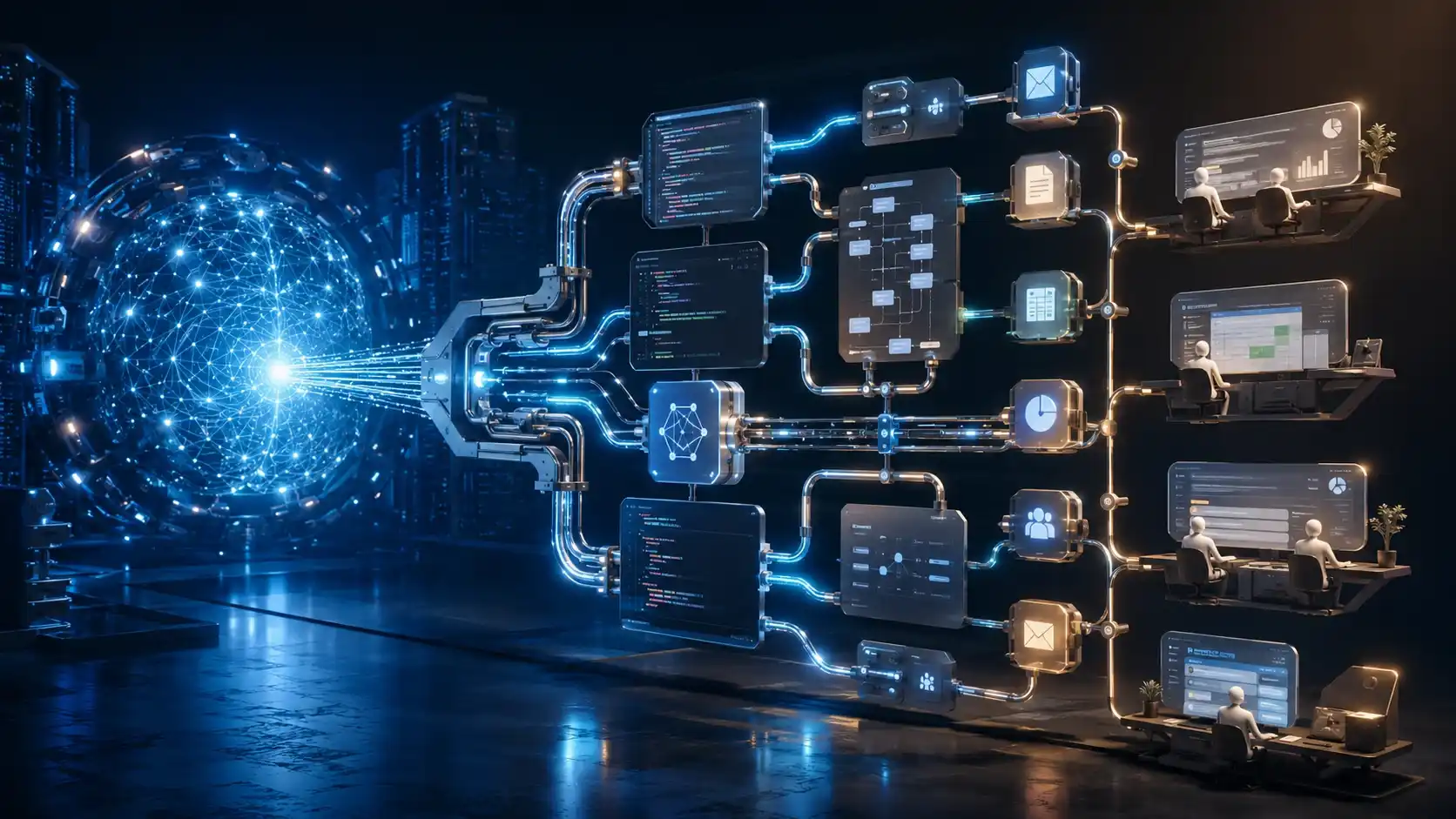
In mid-to-late May 2026, Deepseek internally established a new Harness team focused on code agent products, internally benchmarked against Anthropic's Claude Code. This move, marked by the formula "Model + Harness = Agent" in their job postings, signals a major shift in China's AI competition: the main battlefield is transitioning from developing large models to building toolchains and achieving workplace integration. Deepseek's direct involvement in Harness development aims to secure control over interface design and training data feedback loops, moving beyond open-sourcing powerful models. Harness, the runtime infrastructure for AI agents, handles everything beyond model reasoning—task orchestration, tool calling, context management, safety checks, and error recovery. It is crucial because agent products are not just outputs of model capability but also training grounds for it. Real-world task failures recorded by Harness can feed back into model training, creating a flywheel effect. Engineering Harness is more critical than optimizing prompts, as poor context management or error handling can drastically reduce agent success rates in multi-step, real-world scenarios. This shift is not isolated. Other major Chinese tech companies are also pursuing differentiated toolchain strategies. Tencent leverages its enterprise ecosystem (WeChat Work, Tencent Cloud) to build connectors for organizational-level AI collaboration and complex task delivery. Alibaba focuses on lowering automation barriers on the web with a front-end, browser-based GUI Agent framework, PageAgent. This diversification shows the industry recognizes that success lies not in a perfect general agent, but in vertically focused solutions built with robust engineering. The trend is validated by overseas success, such as Poland's Viktor, an AI coworker on Slack achieving $20M ARR by autonomously executing complex, multi-step tasks. This proves a shift in enterprise willingness to pay—from "AI-assisted generation" to "AI-autonomous execution." As Harness matures to provide safety guards and reliability, AI transitions from a human-supervised intern to an independent outsourcer. The competition now faces key engineering challenges: preventing "token explosion" through intelligent context compression, and building "thick frameworks" with features like sandbox isolation and checkpoint recovery for enterprise-grade stability. Geopolitical restrictions on tools like Claude Code further create a significant market vacuum for domestic solutions like Deepseek's Harness. For enterprises and developers, the focus must shift from comparing model benchmarks to evaluating a vendor's engineering capabilities, error recovery mechanisms, context management, and ecosystem compatibility when choosing AI products and platforms.

marsbit48m ago

Beyond the Model Lies the Harness: Deepseek Enters the Arena, Why Has the Main Battlefield of China's AI Competition Shifted?

marsbit48m ago

Soaring Export Data for Memory Chips, Market Is Redefining the Valuation Anchor for Memory Stocks

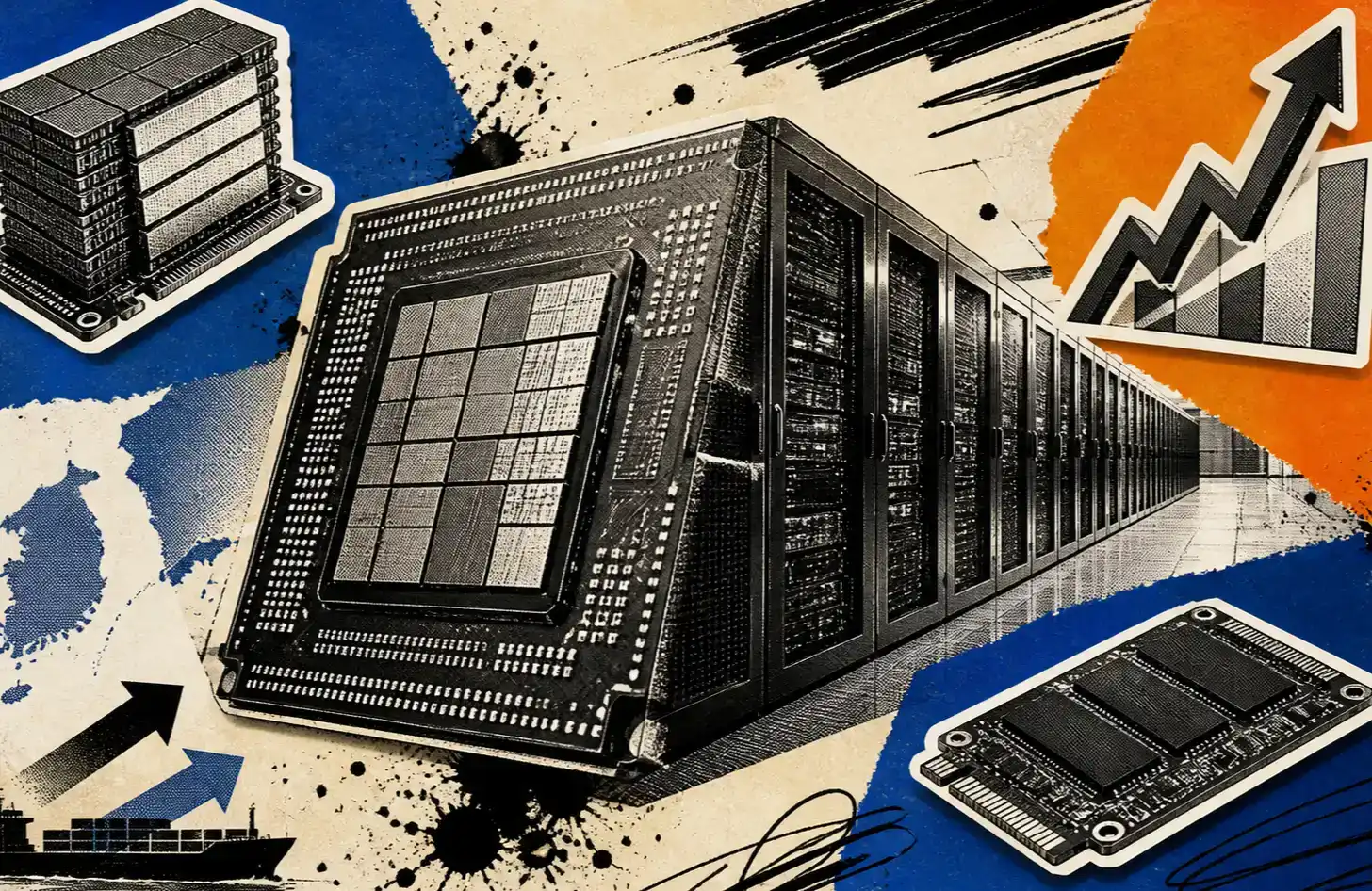
Korean storage export data for the first 20 days of June shows substantial year-on-year increases in both value and price-per-kilogram for categories like DRAM, NAND, and SSDs. This signals a potential shift beyond simple demand recovery, indicating rising prices and a product mix shift towards higher-value items, possibly influenced by AI infrastructure needs. A key point is that the surge in price-per-kilogram is not simply a uniform chip price hike. It reflects a combination of actual price increases and, more importantly, an export structure increasingly dominated by high-value-density products like HBM (High-Bandwidth Memory) and advanced DRAM, which are critical for AI servers. This suggests AI-driven demand may be spilling over from just HBM into broader memory markets. SK Hynix stands to benefit directly due to its leading HBM position. For Samsung and Micron, the implication is potential for greater margin elasticity if the tightness in high-end memory spreads to enterprise SSD and NAND prices. However, the storage sector remains cyclical. Risks include supply expansion, inventory changes, and potential slowdowns in broader AI capital expenditure. Ultimately, while the strong export data supports upward revisions for storage company earnings and fuels discussion of an "AI infrastructure bottleneck premium," a definitive valuation shift from a cyclical to a structural story depends on upcoming quarterly reports. Investors need confirmation from SK Hynix, Samsung, and Micron that improvements in average selling prices, product mix, and, crucially,毛利率 are sustained over multiple quarters.

marsbit2h ago

Soaring Export Data for Memory Chips, Market Is Redefining the Valuation Anchor for Memory Stocks

marsbit2h ago

Trading

Spot
Futures
活动图片