The Federal Reserve’s quest to rein in inflation is far from over, but fresh data on price growth suggest things are moving in the right direction.
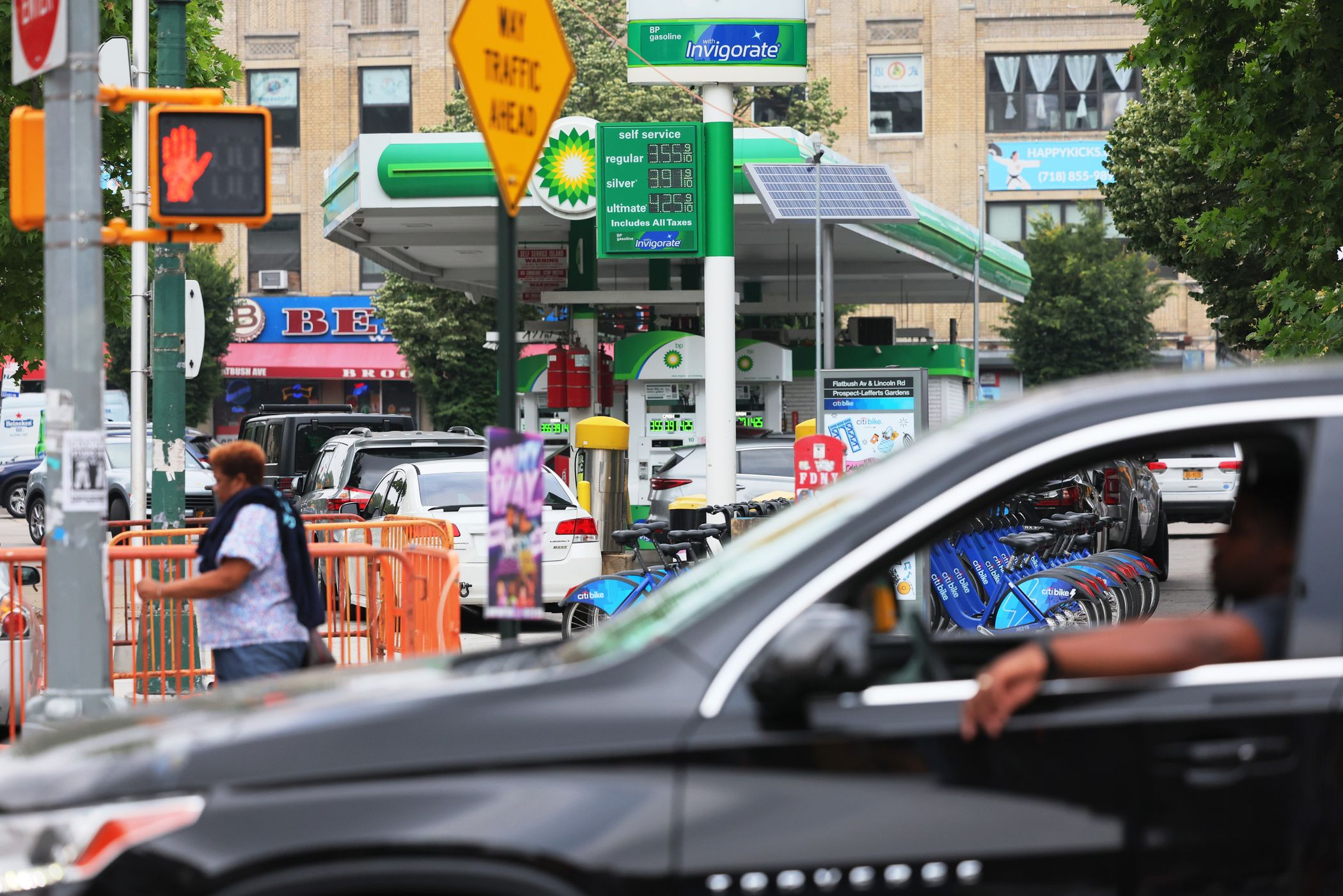
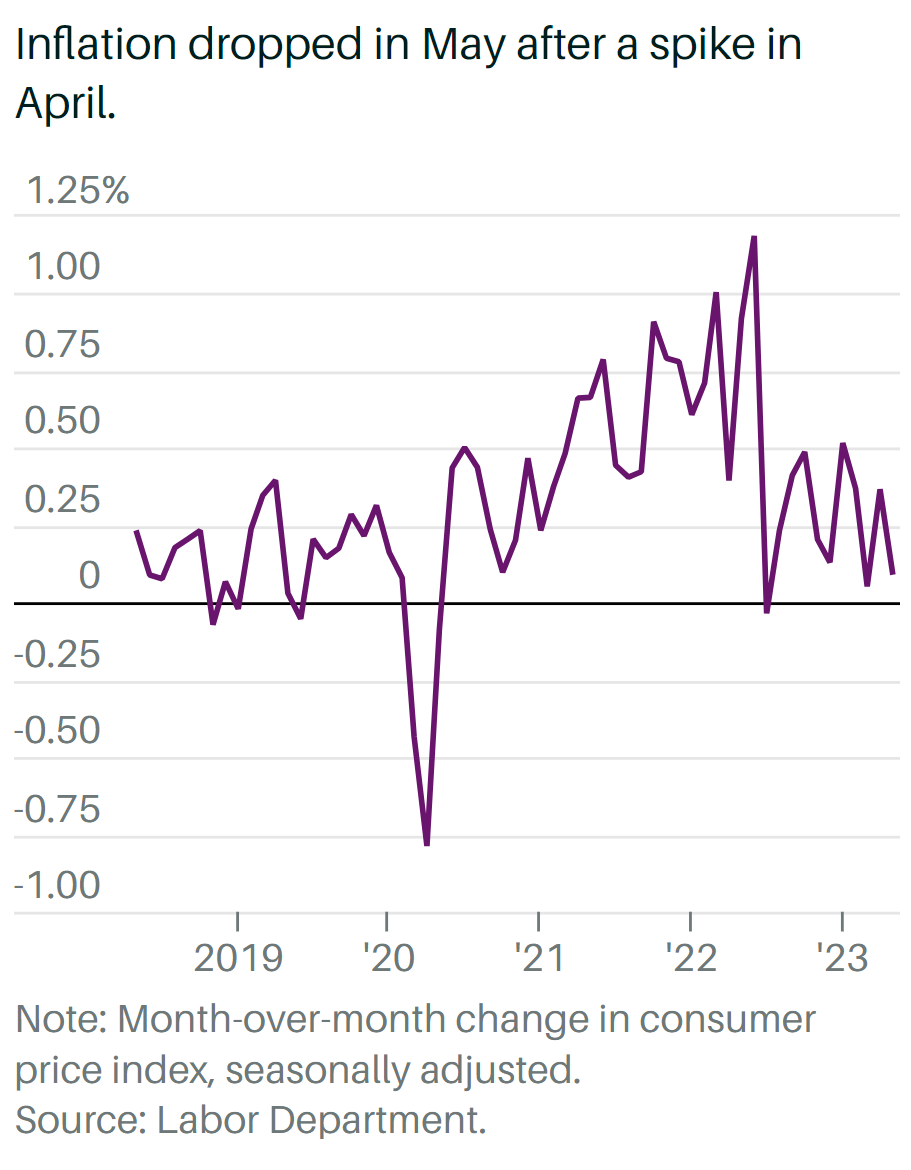
The headline consumer price index climbed 0.1% in May to reach a 4% annual pace, coming in below economists’ expectations and reflecting the slowest pace of growth since March 2021. The drop was fueled largely by a steep decline in energy costs, which fell 3.6% over the month, while prices for airfares and household furnishings also decreased.
Beneath the headline numbers, the details of the report were more mixed. Core prices, which exclude the volatile food and energy sectors, climbed 0.4% in May, matching April’s pace as shelter costs remained strong and used-car prices jumped. But core CPI slowed on an annual basis, to 5.3% in May from 5.5% the month before.
Overall, the report offered few surprises and came in better than expected at the headline level. That will clear the way for the Fed to hold interest rates steady at its June policy meeting, which wraps up on Wednesday. As of mid-morning Tuesday, after the data’s release, investors were pricing in a 94% chance that the central bank won’t raise rates this month.
But even with a June interest-rate hike likely off the table—an outcome for which Fed officials had long been laying the groundwork—the question will soon be what happens after that. The central bank made clear in recent weeks that any decision to hold interest rates steady in June wouldn’t mean the Fed’s work is done, as it could decide to lift the policy rate by another quarter-point in July.
While another round of jobs and inflation data will be released before then, May’s CPI report should keep the possibility of a future hike very much alive. Despite the improvement in headline inflation, a handful of categories continued to show persistent strength in price growth.
“It would likely have taken a meaningful upside inflation surprise to convince the Fed to hike in June,” wrote Seema Shah, chief global strategist at Principal Asset Management. “With inflation coming broadly in line with expectations, the pressure is off.”
The stock market opened higher Tuesday after the CPI release, as markets cheered the increased likelihood that the Fed’s policy arm wouldn’t vote to raise rates after Wednesday’s meeting. The Dow Jones Industrial Average was up 230 points, or 0.7%, while the S&P 500 was up 0.7% and the Nasdaq Composite had gained 0.8%.
One of the biggest contributors to core inflation in May was shelter, as rents climbed 0.5% over the month to reach an 8.7% annual pace. The other major contributor was used cars and trucks, whose prices climbed 4.4% for the second consecutive month.
Economists are optimistic that price gains in both of these areas will soon fade, bringing core inflation down. Private-sector data on rent costs, which reflect price changes in closer to real time, have suggested for months that relief should be coming soon. And the spike in used-car prices “is not sustainable,” as Wells Fargo economists Sarah House and Michael Pugliese wrote.
“That said, directional progress should not be confused with mission accomplished,” House and Pugliese added. “There is a lot of ground to cover between the 5.0% run rate of core inflation today and the [Fed’s] 2% goal.”
Excluding used-car prices, core CPI still rose 0.3% over the month, according to a calculation from Gregory Daco, chief economist with EY-Parthenon. Core price growth has moved in a narrow range between 0.3% and 0.4% since October of last year, despite the Fed’s best efforts to cool things down.
The Fed has been especially focused in recent months on core services excluding rent as it searches for indications of where underlying inflation is heading. Because private-sector data have long been suggesting that a slowdown in rent growth is on the way, the Fed presumes other services categories will provide better clues as to whether inflationary pressures are easing.
Here, May’s data again showed persistent strength. The core services category excluding rent and an equivalent measure for homeowners rose 0.2% over the month, accelerating from April’s 0.1% climb, BMO Capital Markets strategist Ben Jeffery found.
And a number of categories, from food and hospital services to transportation and tobacco products, all saw price growth accelerate in May.
“Don’t get sidetracked by falling headline inflation,” says John Leer, chief economist with Morning Consult. “The Fed may pause hiking rates tomorrow, but it will have to raise rates again if it hopes to tame inflation.”