港府新政出台在即,短期行情将如何发展

二十三画生Published on 2023-05-31Last updated on 2026-06-03

Abstract

从链上数据看,比特币分布正在发生变化,这背后展示出怎样的深层原因?加密行情短期将受哪些因素影响?比特币是否将因港府新政进入牛市?香港新政与美日等国有何不同?香港将于6月1日开始实行加密新规,本文将围绕上述问题进行探讨。

从链上数据看,比特币分布正在发生变化,这背后展示出怎样的深层原因?加密行情短期将受哪些因素影响?比特币是否将因港府新政进入牛市?香港新政与美日等国有何不同?香港将于6月1日开始实行加密新规,本文将围绕上述问题进行探讨。

比特币分布发生趋势逆转,香港处于难得机遇期

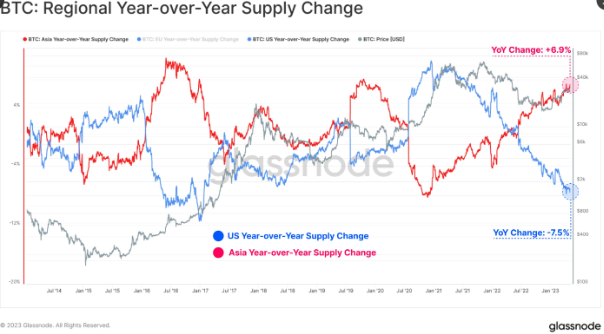
自从今年美国收紧加密市场监管之后,加密代币也出现了一些显著变化,以前位于美国的比特币不断向位于亚洲的钱包转移。Glassnode最近发布的一组比特币同比区域供应变化图,从图中可以观察在美国和亚洲交易时间持有BTC供应形成的变化图。在这张图中,可以注意到,几乎相等但相反的供应变化,这表明以前位于美国的代币继续转移到位于亚洲的钱包。

🔵美国同比供应变化:-7.5%

🔴亚洲同比供应变化:+6.9%
具体而言,在美国严监管背景下,加密交易所退出或资金流失是重要的原因之一。Kaiko在5月17日发推称,最近几周,Binance.US 在美国交易所的市场份额减少了一半,ETH 交易量的跌幅尤其大。Coinbase的交易份额今年以来也出现一定下滑。

这背后原因一方面是FTX爆雷之后,沉重打击美国市场信心,加密资金出逃甚至进一步危机美国加密银行,如硅谷银行等;另一方面,美国金融业发达,对于加密金融具有一定排斥性。哥伦比亚商学院教授、零知识咨询公司的管理合伙人Austin Campbell就表示:加密金融除了监管外,还有两个挑战。其一是美国传统金融机构通常不是技术人才的聚集地。因此,他们有时很难吸引到相关专业知识的人才,这对于完成这些任务非常困难。其二,我认为,在美国,我们已经拥有相当发达的资本市场,而且这些市场大多运转良好。这里的边际成本相对于收益较低,与许多其他司法管辖区相比,收益较低。

在美国驱赶加密金融之时,香港新政为加密市场寻找到一个极具吸引力的“避风港”。香港此轮新政,不同于美国、日本以及新加坡,虽然香港加密市场监管处于早期,但整体规划相对成熟。之前美国加密金融监管整体保持宽松,但却缺乏真正立法,SEC和CFTC对于谁该监管比特币和以太坊都尚未达成共识,致使很多机构想要寻求合规但无从着力。港府新政也不同于日本,日本受早期门头沟事件影响,立法较早较严,这很大程度上保护了投资者,比如日本FTX交易所用户在去年就未有大损失,但在加密市场发展过程中少有创新;港府新政也不同于新加坡的监管宽松,其政策制定相对更为谨慎。港府新政有望使香港成为真正的Web 3金融交易中心,伴随6月1日新政开始落地,加密资产的分布和重心转移预计将进一步加快。

港府新政对短期市场有何影响

今年2月,香港证监会就适用于虚拟资产交易平台营运者的建议规定展开谘询。香港证监会官网最新消息称:“有关适用于获证券及期货事务监察委员会发牌的虚拟资产交易平台营运者的建议监管规定的咨询期于2023年3月31日结束,回应者普遍支持适用于持牌虚拟资产交易平台的建议监管规定。经修订的建议监管规定将于2023年6月1日生效。香港证监会表示,本会注意到,回应者对容许持牌虚拟资产交易平台向零售投资者提供服务表示大力支持。本会将落实有关容许持牌虚拟资产交易平台向零售投资者提供服务的建议。”在这条消息背后,最引人注目的是“本会将落实有关容许持牌虚拟资产交易平台向零售投资者提供服务的建议”,加密市场行情受此影响较大。

除了香港加密新政可以催发牛市的预测,对于哪些代币会被港府批准上线也是市场普遍关注热点,下图为当前部分传统金融市场已经上线的代币。
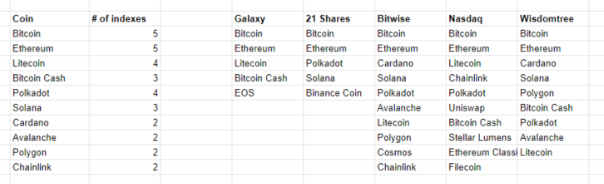
考虑到港府审慎监管态度,大概率港府首先会批准比特币和以太坊等,后续会根据运作情况逐步放开一些加密资产。在逐步放开的过程中,什么代币会上线会让市场充满猜测空间,这大概率又会进一步引发炒作预期。另外,一个值得关注的问题是对于大陆用户会有如何影响?有大V认为,这可以参照美股在国内。

短期仍然需要警惕DCG 风险

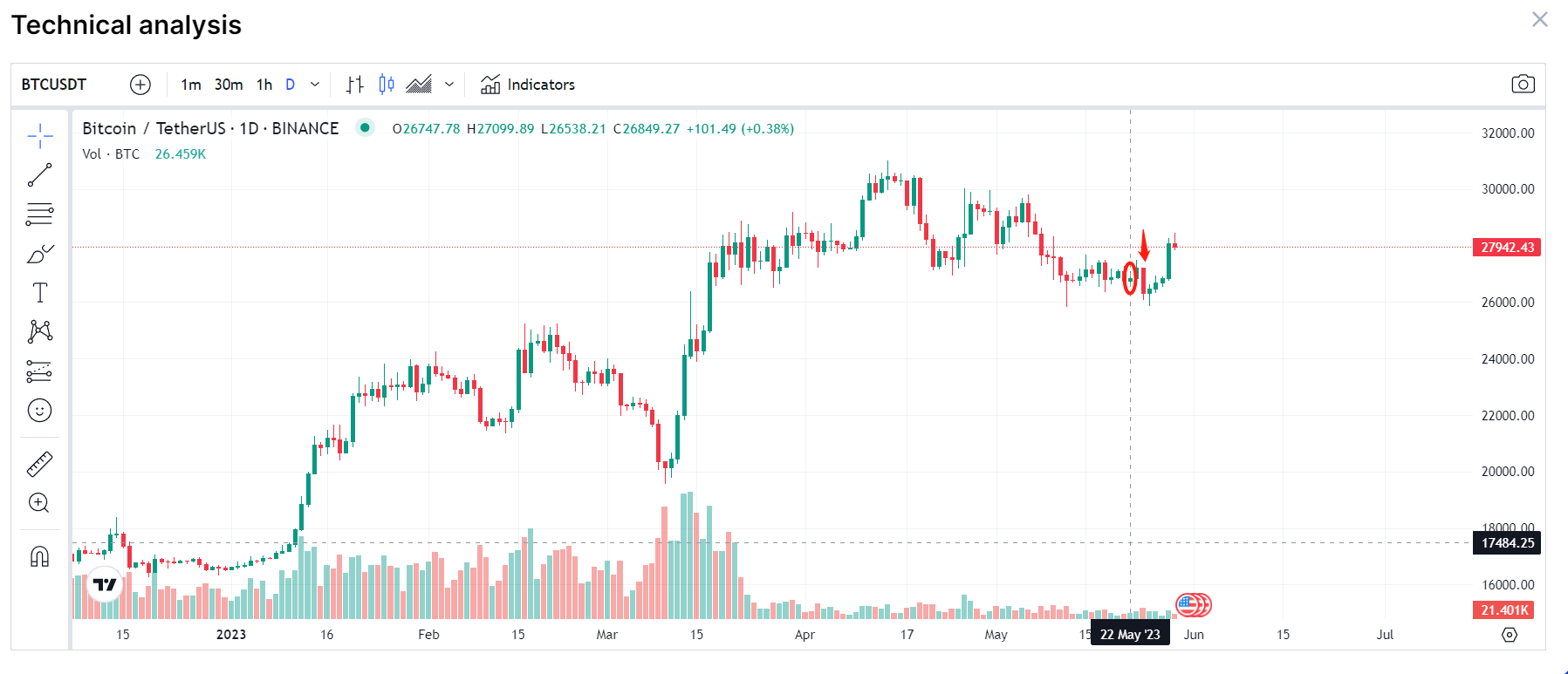
虽然我们在短期内看好港府新政对于加密市场产生的积极影响,不过潜在风险并非没有。从行情和消息面看,5月23日,香港证监会官方人士表示“散户最快下半年可在发牌交易平台买卖虚拟资产”,当日行情走势开始变强;5月28日,香港证监会正式宣布虚拟资产交易平台营运营牌照自6月1日起申领,市场交易热情高涨,比特币走出短期颓势。但5月24日比特币大挫背后的危机,我们并不能忽略,简而言之,那就是DCG的债务危机。
5月24日,市场大V Andrew(@AP_Abacus)发推表示,DCG 已经资不抵债,而且已经9个月了。其拖欠债务,无法支付合作伙伴公司,无法支付债权人。被指控以虚假的资产负债表叙述说服最小的债权人“重新启动”。DCG 只有一项业务,继续支付高管及其律师的费用;灰度。
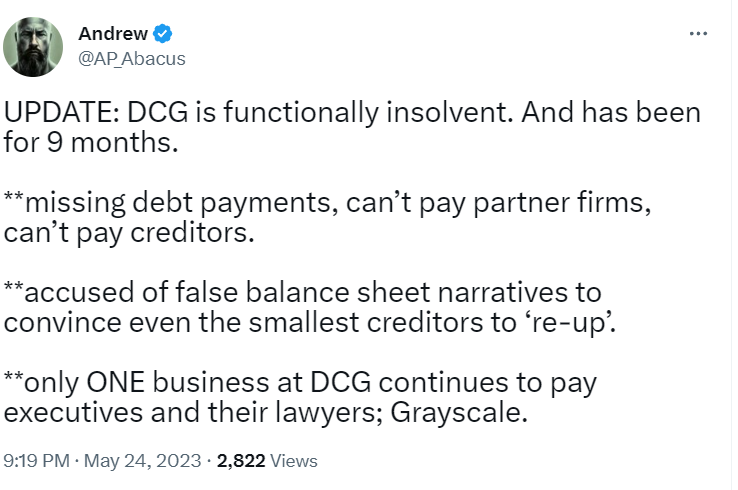
Andrew(@AP_Abacus)此前曾多次准确爆料DCG等内募,准确度相对较高,市场受此消息影响,极为恐慌。加之,5月22日,Gemini曾发布公告称,Digital Currency Group(DCG)未支付5月11日到期的约6.3亿美元欠款。市场当日在多空博弈之后,选择向下,那么,在港府新政热潮之后,市场将如何变化呢?毫无疑问,利好出尽,DCG债务危机仍将在很大程度上影响市场,投资者须保持警惕。
Related Reads

The Crypto Scene Is Dead, Perpetual Swaps Are Eternal

The crypto industry is undergoing a fundamental shift. The era defined by minting novel, native digital assets (altcoins) is fading. These assets, lacking real-world cash flows or clear value, are losing relevance as attention and capital flow elsewhere. Two powerful external forces are reshaping the space. First, traditional assets like U.S. stocks, bonds, gold, and oil are being tokenized and traded on-chain. Second, the explosive growth of AI, with its tangible products, has overshadowed crypto's once-dominant "future narrative." This marks a critical pivot: crypto is transitioning from being a "factory for new assets" to becoming a "global conduit for existing assets." Its validated utility is not complex financial reinvention but efficient global settlement, transfer, and trading—the original promise of blockchain. Stablecoins like USDT and USDC exemplify this, offering faster dollar movement rather than replacing it. Consequently, native ecosystems like Ethereum face profound challenges. While still crucial infrastructure, ETH struggles to capture value as users interact with Layer 2s or trade traditional assets without needing to hold it. DeFi's grand narrative of rebuilding finance has narrowed to core needs like cheap transfers and deep liquidity. The true breakout innovation is the perpetual contract (Perp). It brilliantly bypasses the complexities of direct asset ownership (custody, compliance, dividends) by creating pure price exposure. Users can speculate on the price movement of *any* asset—NVIDIA, gold, oil—24/7, globally, and with leverage. This "price casino" model, while risky and ethically fraught, delivers unmatched liquidity and accessibility. Projects like Hyperliquid succeeded not by inventing new mechanics but by perfecting the timing and execution of this model. Key drivers included making on-chain Perps feel like centralized exchanges, post-FTX trust migration towards transparency, and rising demand to trade macro assets and equities round-the-clock. In conclusion, the crypto world's most enduring successes are the dollar (via stablecoins), Bitcoin, and trading. Its new frontier is not creating alternative assets but providing a seamless, perpetual trading layer—a new API—for the world's existing financial system. The age of native altcoins is over; the age of perpetual synthetic exposure has begun.

Odaily星球日报5m ago

The Crypto Scene Is Dead, Perpetual Swaps Are Eternal

Odaily星球日报5m ago

After Marvell's 32% Surge, the Chinese Chip Family Behind It Emerges

The stock price of Marvell Technology surged 32.5% on June 2nd, driven by NVIDIA CEO Jensen Huang highlighting its custom ASICs and optical interconnects as core to AI data center architecture. This event brought attention to the Chinese semiconductor family behind Marvell: the Dai siblings. The story centers on three siblings, all UC Berkeley graduates, whose three-decade entrepreneurial journey aligns with major semiconductor industry shifts. In 1995, youngest sister Dai Wei Li co-founded Marvell with her husband Sehat Sutardja and his brother, focusing on storage controllers. Eldest brother Dai Wei Min founded EDA company Ultima, later sold to Cadence, and later founded VeriSilicon (芯原) in China, becoming a leading semiconductor IP provider. Second brother Dai Wei Jin co-founded EDA firm Silicon Perspective (sold to Cadence) and GPU IP company Vivante, later acquired by VeriSilicon. The combined "Dai-Sutardja" family network extends beyond Marvell. Their ventures and investments form a comprehensive ecosystem for the post-Moore's Law, chiplet era. Key holdings include: Dream Big Semiconductor (AI SuperNICs, acquired by Arm), Alphawave (high-speed SerDes IP, acquired by Qualcomm), and Silicon Box (a chiplet advanced packaging foundry). VeriSilicon itself thrives on the AI ASIC and IP boom in China. Collectively, the family's AI infrastructure-related portfolio is estimated at over $22 billion. Their strategy represents a distinct path: building critical components for open standards and key manufacturing capacity in the chiplet era, rather than pursuing standalone AI chip dominance. While this path may not create the next NVIDIA, it has enabled repeated successful exits and sustained influence within the global semiconductor industry.

marsbit1h ago

After Marvell's 32% Surge, the Chinese Chip Family Behind It Emerges

marsbit1h ago

Microsoft is Afraid of Being Marginalized by AI Giants

Microsoft, once the defining force of the PC era, now faces a familiar challenge in the AI age: the risk of being relegated to a profitable but invisible infrastructure provider. This anxiety was laid bare at Build 2026, where CEO Satya Nadella unveiled a major strategic pivot. The catalyst was a quiet April agreement that dissolved Microsoft's exclusive licensing and cloud-hosting deal with OpenAI, its once-vital partner. This erased Microsoft's key AI moat. With OpenAI and Anthropic defining AI applications and gaining enterprise traction—even within Microsoft's own ranks—Nadella had to answer: without exclusivity, what is Microsoft's role? The answer was a suite of seven in-house AI models, a developer-focused AI workstation (Surface RTX Spark Dev Box), and, most crucially, the Agent 365 platform for enterprise AI governance. The models, notably targeting Anthropic's strengths in coding and enterprise, signal a defensive move. However, the broader strategy is to make the models themselves less decisive. Financially, Microsoft's AI revenue is strong, driven largely by Azure running others' models. Yet its user-facing products like Copilot show weak penetration and engagement. Microsoft earns infrastructure money but lacks direct user mindshare. Nadella's core fear is being "hollowed out." As OpenAI and Anthropic prepare for IPOs and gain financial independence, they may build their own infrastructure, threatening Azure's lucrative AI revenue stream. Microsoft's window is to entrench itself deeper: not as the model creator, but as the indispensable platform for securely deploying, managing, and governing all AI models within the enterprise through Agent 365. Build 2026 revealed Microsoft's bet: in the AI era, the ultimate power lies not in any single model, but in the enterprise "operating system" that controls them. Nadella is determined to ensure Microsoft is the driver of this new era, not just a passenger.

marsbit1h ago

Microsoft is Afraid of Being Marginalized by AI Giants

marsbit1h ago

Trading

Spot
Futures
活动图片