Bitcoin’s Doldrums Below $26.5K Endure as Investors Weigh Debt Ceiling Stalemate, Latest FOMC Minutes

Tap Chi BitcoinPublished on 2023-05-26Last updated on 2023-05-26

Abstract

After two weeks of flatlining, crypto markets finally endured a little change of pace as investors spooked by UK inflation and the latest Janet Yellen warning about the U.S. debt ceiling stalemate sent prices reeling on Wednesday.

After two weeks of flatlining, crypto markets finally endured a little change of pace as investors spooked by UK inflation and the latest Janet Yellen warning about the U.S. debt ceiling stalemate sent prices reeling on Wednesday.

The release of the most recent Federal Open Market Committee (FOMC) minutes later in the day showing U.S. central bankers divided on a continuation of interest rate hikes did little to boost market confidence.

Bitcoin was recently trading at about $26,440, off roughly 3% over the past 24 hours and near its lowest level since May 12 when the largest cryptocurrency by market capitalization dipped below $26,000. In this period, BTC has been slogging through low trading volume and volatility as markets wrestle with the prospect of a U.S. government unable to pay its debts and ongoing crypto regulatory and macroeconomic uncertainties. Until Wednesday, bitcoin had remained in a $26,500 to $27,500 range.

In an email to CoinDesk, Ruslan Lienkha, chief of markets at fintech platform YouHodler, wrote that “increased tension in financial markets” had buffeted equities and digital assets.

“US stock indexes are under selling pressure by raised concerns about a possible default of the US: With just about 10 days left for authorities to reach some agreement, we have not yet seen any progress in these negotiations,” Lienkha wrote. “All this uncertainty forces financial institutions to restructure assets and prepare for a possible default, which puts additional pressure on participants in financial markets.”

Ether was recently changing hands at about $1,808, off approximately 2.6% from Tuesday, same time. Most major cryptos spent Wednesday firmly in the red with LTC and SOL, the token of the Solana smart contracts platform tumbling more than 5.2% and 3.6%, respectively. The CoinDesk Market Index, a measure of crypto markets performance, fell 2.8%. The CoinDesk Bitcoin Trend Indicator remained in downtrend territory, where it recently dropped – a reflection of the falling investor optimism. A number of analysts believe that bitcoin will remain stuck until a new catalyst emerges.

Major stock indexes struggled similarly on Wednesday, restoring at least temporarily the correlation between equity and crypto pricing with the tech-focused Nasdaq, S&P 500 and Dow Jones Industrial Average (DJIA) all dropping the better part of a percentage point. The two asset classes have been traveling increasingly different paths in recent months but Yellen’s third caution this month that the U.S. could “run out of money” without a debt limit agreement seemed to sweep up all assets.

Earlier Wednesday, cryptos plunged after the U.K.’s latest Consumer Price Index (CPI) rose to 6.8% in April, above the expected 6.2% and its highest point since 1992. The disappointing CPI suggested that England’s central bank would have to continue its recent diet of interest rate hikes, which have generally discouraged crypto markets.

In an interview with CoinDesk TV Wednesday, Glen Goodman, author of “The Crypto Trader,” noted that bitcoin had recently maintained more of a connection to the price of gold, a traditional safe haven asset. But he added that BTC still lacked some consistent motivation to account for investor decisions about buying and selling.

“We still haven't found a reason why everybody needs to have a goal rather we have found a number of reasons,” Goodman said. “The only problem is people haven’t coalesced on one main narrative. We’re waiting for events, for some kind of disaster to befall the world economy, such as the dollar collapsing. And then, of course, everybody would coalesce around one narrative.”

Related Reads

Solana Proposals Could Lead to Reduction in Staking Yields to 2.25% and Cut Emissions by $1.5 Billion

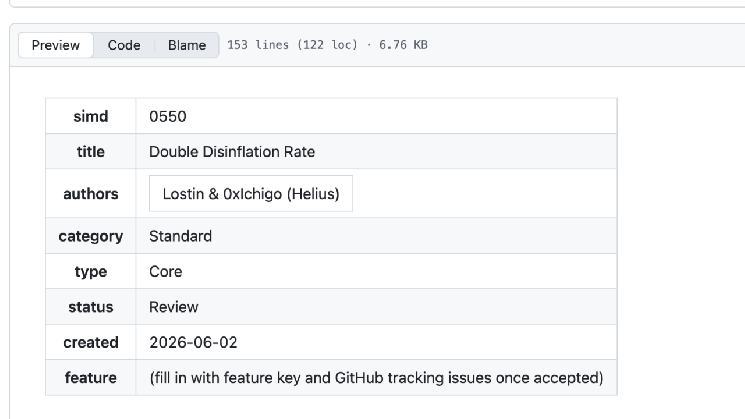
Solana is moving towards a stricter monetary model that could lead to a SOL deficit and significantly reduce staking rewards for holders. Two governance proposals drive these changes. SIMD-550, currently under vote, would double Solana's annual disinflation rate from 15% to 30%, accelerating the timeline to reach a final inflation rate of ~1.5% to the first half of 2029. The second, SIMD-553 (already approved), introduces additional token burning tied to computational units used on the network. Together, these measures could reduce SOL emission by an estimated $1.4-$1.5 billion over six years. The immediate impact would be lower staking yields, potentially falling from the current ~5.25% to approximately 4.34% in year one, 3% in year two, and 2.25% by year three. Analyst Matt Mena from 21Shares suggests inflation should be tied to economic metrics to help offset this decline. The changes also raise concerns for validator economics, with some potentially becoming unprofitable as inflation rewards decrease and voting costs may rise. However, the lower passive yield might push a significant portion of the 67.9% staked SOL into Solana's DeFi ecosystem for activities like lending and trading. This shift could boost network fee revenue to compensate for lower inflation rewards. The proposals aim to trade lower yield today for less dilution tomorrow, betting that network growth and usage will make this a worthwhile trade-off for SOL holders.

cryptonews.ru27m ago

Solana Proposals Could Lead to Reduction in Staking Yields to 2.25% and Cut Emissions by $1.5 Billion

cryptonews.ru27m ago

Bitcoin 'Basically Hopped' to $80K. What Will Happen to the Price in Autumn?

Bitcoin surged close to $80,000 in August, marking its fastest growth since 2024. Experts anticipate continued volatility for the autumn season, with price forecasts heavily dependent on macroeconomic conditions and regulatory developments in the US. Key drivers for the recent rise include a weakening US dollar, renewed capital inflows into spot Bitcoin ETFs, and liquidations of trading positions. The US Treasury's decision to increase long-term bond purchases has helped stabilize debt markets but pressured the dollar, leading investors to seek assets like Bitcoin as a hedge. Looking ahead, experts outline two primary scenarios for Bitcoin's price. A positive outcome, supported by favorable macroeconomics and the potential passage of the CLARITY Act regulating crypto in the US, could push Bitcoin toward $85,000-$100,000. Conversely, a negative scenario involving hawkish signals from the US Federal Reserve or regulatory setbacks could trigger a correction, potentially driving the price back down to the $62,000-$75,000 range. Institutional demand, reflected in consistent ETF inflows, is seen as a crucial stabilizing factor, gradually outweighing the influence of Bitcoin's traditional four-year cycles. Meanwhile, a broad rally in altcoins is not widely expected, as capital is likely to flow selectively into the most liquid projects. The central question for autumn is whether institutional buying can transform August's rapid surge into a sustainable upward trend.

cryptonews.ru31m ago

Bitcoin 'Basically Hopped' to $80K. What Will Happen to the Price in Autumn?

cryptonews.ru31m ago

Trading

Spot
活动图片