$PEPE大跌带崩迷因币:TURBO、POGAI、HAHA..单日跌超40%

CRYPTO BrefingPublished on 2023-05-08Last updated on 2023-05-08

Abstract

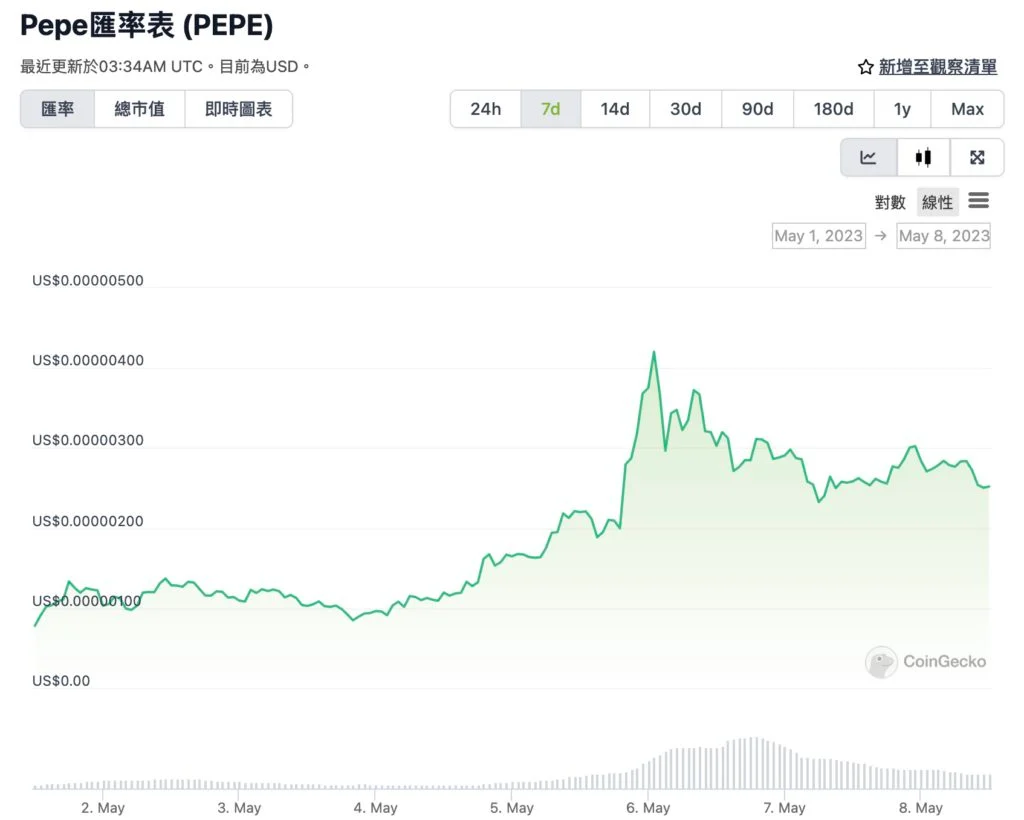
迷因币的狂热近期席卷整个加密货币市场,其中讨论度最高的项目之一, 佩佩蛙$PEPE 更是屡创新高,短时间内市值一度突破15 亿美元大关,目前成为第45 大加密货币。 不过在周末(6日)刷下历史后,目前$PEPE 币价已经从新高下跌近44%,现报0.00000254 美元,而同样受这股风潮带动的其他迷因币,也同样呈现剧烈下跌。

迷因币的狂热近期席卷整个加密货币市场,其中讨论度最高的项目之一, 佩佩蛙$PEPE 更是屡创新高,短时间内市值一度突破15 亿美元大关,目前成为第45 大加密货币。

不过在周末(6日)刷下历史后,目前$PEPE 币价已经从新高下跌近44%,现报0.00000254 美元,而同样受这股风潮带动的其他迷因币,也同样呈现剧烈下跌。

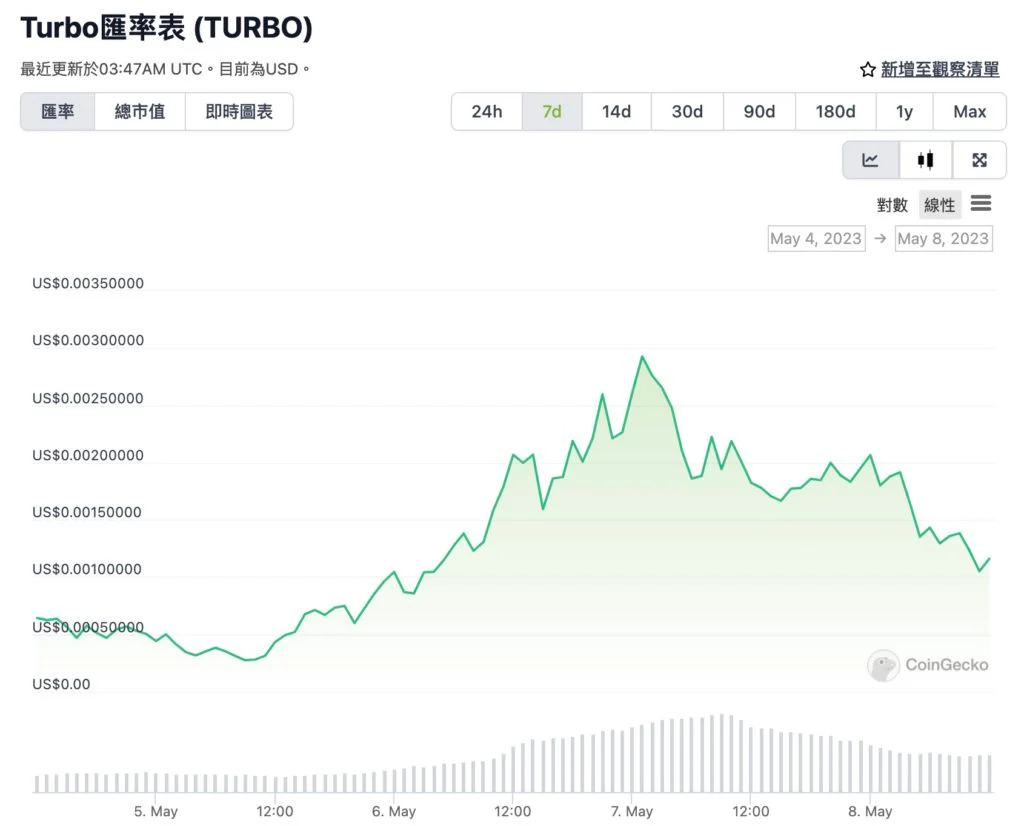
$TURBO,近24 小时下跌41.3%

搭上ChatGPT 热潮,用AI 取名、建立代币经济及白皮书的迷因币Turbo,近24 小时就下跌41.3%,现报$0.00116358。

$POGAI,近24 小时下跌40.1%

以中国网路上知名迷因「熊猫人」命名的穷人币(POGAI),虽然纯粹是一个恶搞的Meme 代币,但5 月迄今涨幅也翻了近5 倍。不过近24 小时同样下跌40.1%,现报$0.000141。

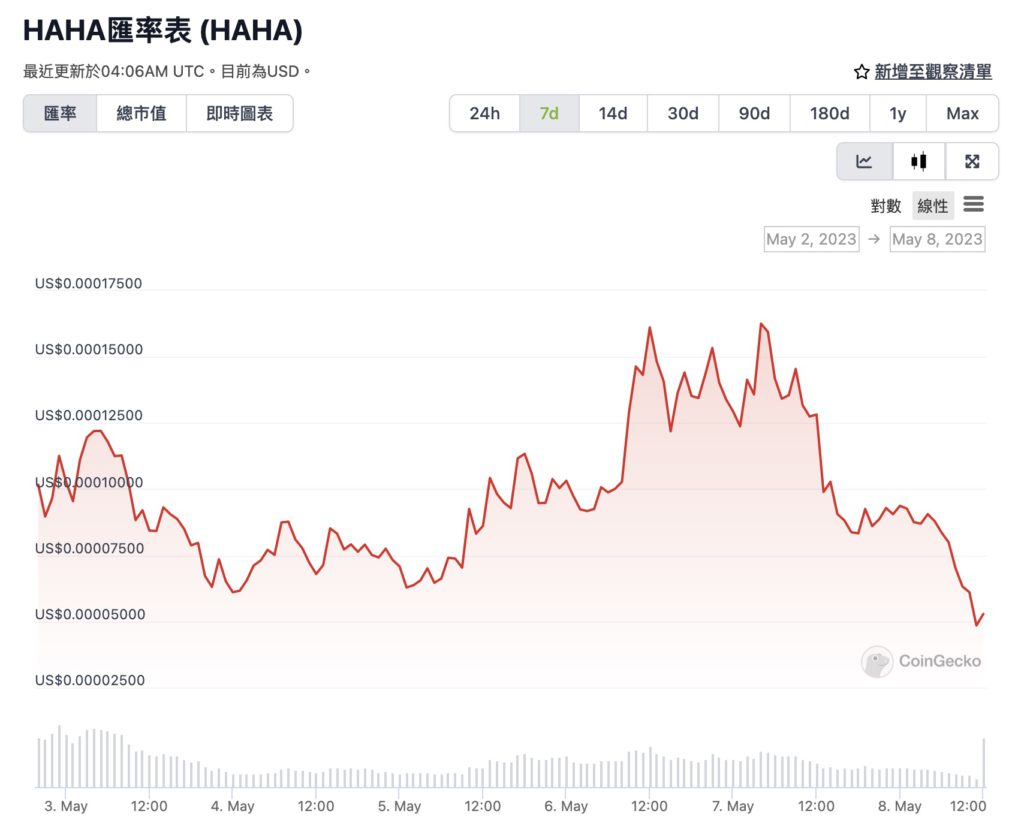
$HAHA,近24 小时下跌58.3%

以狗狗币为延伸、本月才推出的新迷因币$HAHA,随着佩佩蛙从高点下滑,近24 小时下跌超58%,现报$0.00005304。

Related Reads

Where Is the AI Infrastructure Industry Chain Stuck?

The AI infrastructure (AI Infra) industry chain is facing unprecedented systemic bottlenecks, despite the rapid emergence of applications like DeepSeek and Seedance 2.0. The surge in global computing demand has exposed critical constraints across multiple layers of the supply chain—from core manufacturing equipment and data center cabling to specialty materials and cleanroom facilities. Key challenges include four major "walls": - **Memory Wall**: High-bandwidth memory (HBM) and DRAM face structural shortages as AI inference demand outpaces training, with new capacity not expected until 2027. - **Bandwidth Wall**: Data transfer speeds lag behind computing power, causing multi-level bottlenecks in-chip, between chips, and across data centers. - **Compute Wall**: Advanced chip manufacturing, reliant on EUV lithography and monopolized by ASML, remains the fundamental constraint, with supply chain fragility affecting production. - **Power Wall**: While energy demand from data centers is rising, power supply is a solvable near-term challenge through diversified energy infrastructure. Expansion is further hindered by shortages in testing equipment, IC substrates (critical for GPUs and seeing price hikes over 30%), specialty materials like low-CTE glass fiber, and high-end cleanroom facilities. Connection technologies are evolving, with copper cables resurging for short-range links due to cost and latency advantages, while optical solutions dominate long-range scenarios. Innovations like hollow-core fiber and advanced PCB technologies (e.g., glass substrates, mSAP) are emerging to meet bandwidth needs. In summary, AI Infra bottlenecks are multidimensional, spanning compute, memory, bandwidth, power, and supply chain logistics. Advanced chip manufacturing remains the core constraint, while substrate, material, and equipment shortages present immediate challenges. The industry is moving toward hybrid copper-optical solutions and accelerated domestic supply chain development.

marsbit32m ago

Where Is the AI Infrastructure Industry Chain Stuck?

marsbit32m ago

Autonomy or Compatibility: The Choice Facing China's AI Ecosystem Behind the Delay of DeepSeek V4

DeepSeek V4's repeated delay in early 2026 has sparked global discussions on "de-CUDA-ization" in AI. The highly anticipated trillion-parameter open-source model is undergoing deep adaptation to Huawei’s Ascend chips using the CANN framework, representing China’s first systematic attempt to run a core AI model outside the CUDA ecosystem. This shift, however, comes with significant engineering challenges. While the model uses a MoE architecture to reduce computational load, it places extreme demands on memory bandwidth, chip interconnects, and system scheduling—areas where NVIDIA’s mature CUDA ecosystem currently excels. Migrating to Ascend introduces complexities in hardware topology, communication latency, and software optimization due to CANN’s relative immaturity compared to CUDA. The move highlights a broader strategic dilemma: short-term compatibility with CUDA offers practical benefits and faster adoption, as seen in CANN’s efforts to emulate CUDA interfaces. Yet, long-term over-reliance on compatibility risks inheriting CUDA’s limitations and stifling native innovation. If global AI shifts away from transformer-based architectures, strict compatibility could lead to technological obsolescence. Despite these challenges, DeepSeek V4’s eventual release could demonstrate the viability of a full domestic AI stack and accelerate CANN’s ecosystem growth. However, true technological independence will require building an original software-hardware paradigm beyond compatibility—a critical task for China’s AI ambitions in the next 3-5 years.

marsbit50m ago

Autonomy or Compatibility: The Choice Facing China's AI Ecosystem Behind the Delay of DeepSeek V4

marsbit50m ago

Trading

Spot
Futures
活动图片