Top Trader Warns Things Aren’t Looking Good for Crypto, Updates Outlook on Bitcoin (BTC)

dailyhodlPublished on 2023-04-21Last updated on 2023-04-21

Abstract

A widely followed crypto analyst is warning traders to be on the lookout for tough...

A widely followed crypto analyst is warning traders to be on the lookout for tough months ahead as the markets retrace.
Crypto trader Justin Bennett warns his 112,000 Twitter followers that the total crypto market cap (TOTAL) is on its way down.

“TOTAL”
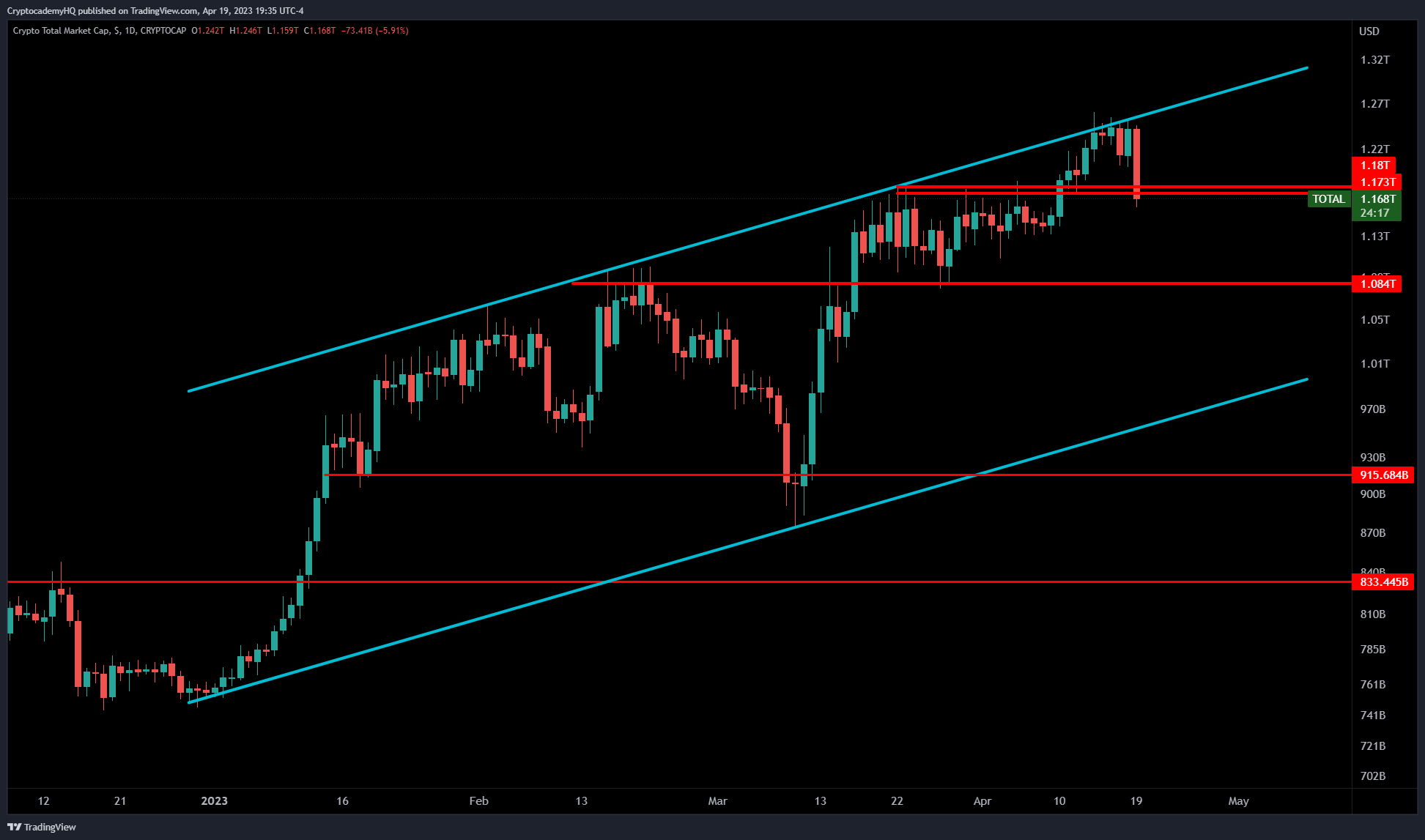
Source: Justin Bennett/Twitter TOTAL is a market cap measure of the entire digital asset space, Bitcoin (BTC) and altcoins included.
Bennett also sees warning signs for the crypto markets in the traditional financial markets. He says the S&P 500’s (SPX) recent drop spells trouble for crypto.
“It isn’t looking good for stocks and crypto, barring a significant recovery from SPX today.”
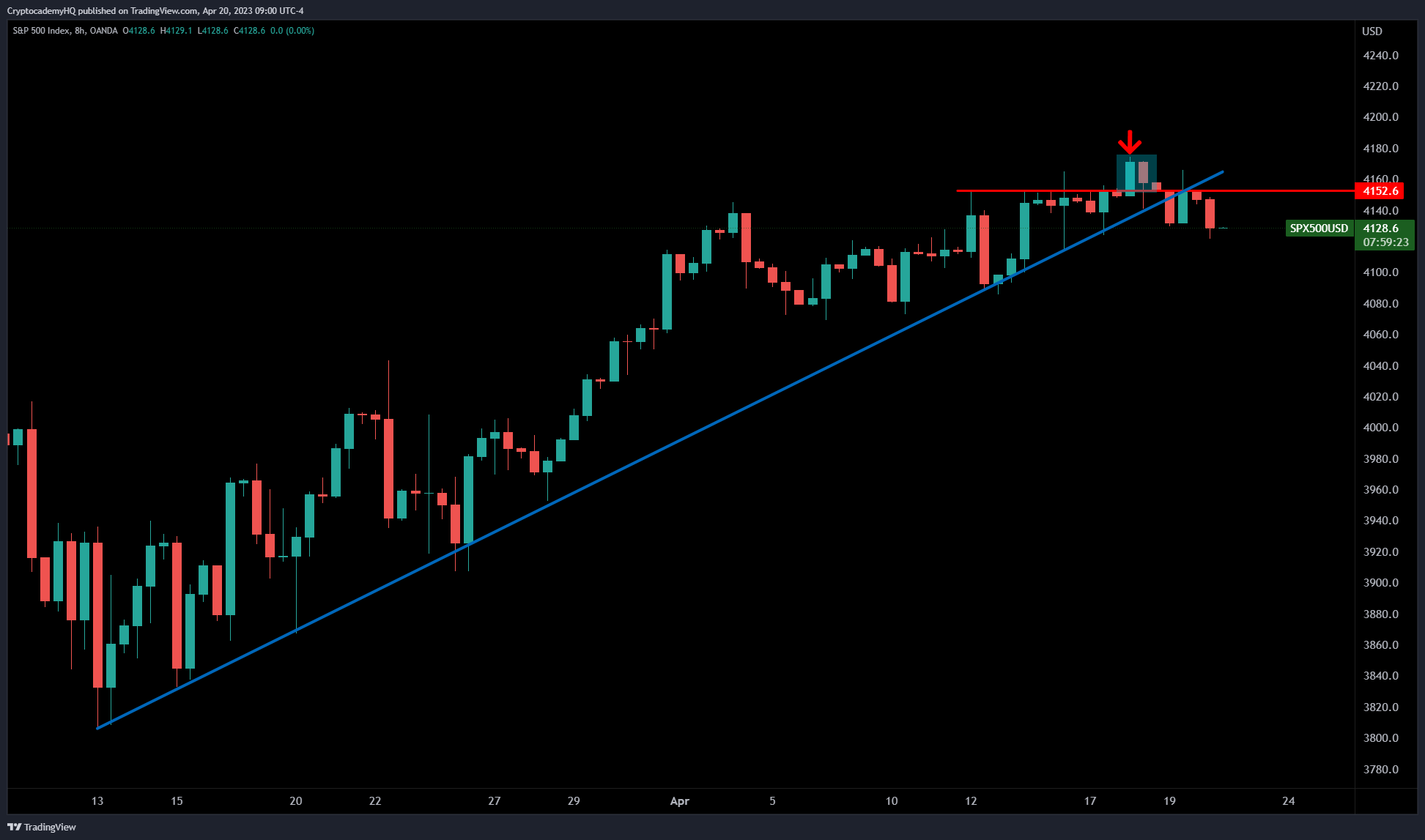
Source: Justin Bennett/Twitter Diving in deeper into the king crypto specifically, Bennett lays out two possible scenarios for BTC’s future in a new chart.
“The current state of BTC.”
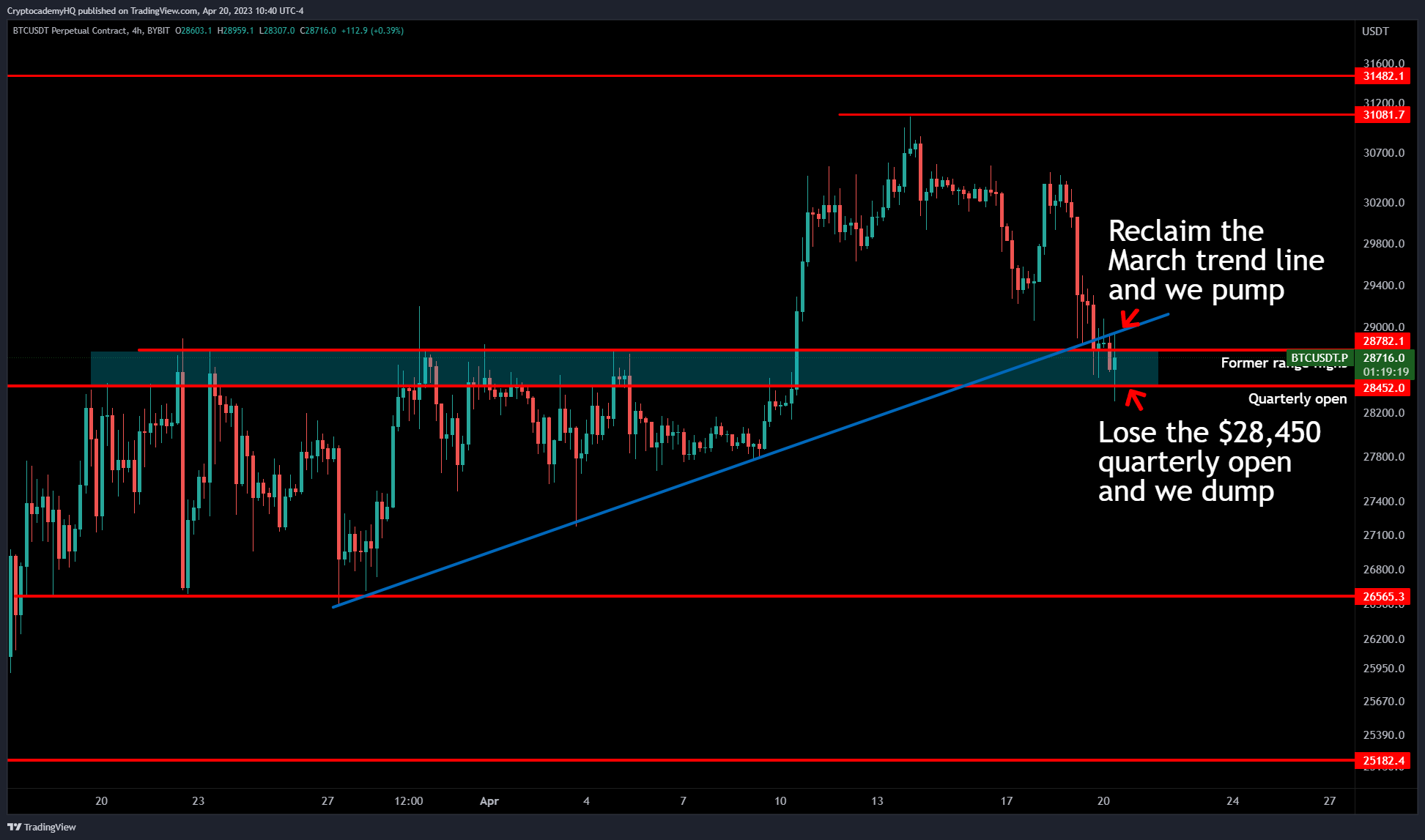
Source: Justin Bennett/Twitter BTC is worth $28,600 at time of writing, just above the $28,450 price zone that could trigger a massive dump, as highlighted by Bennett.
Two days ago, Bennett told his followers that he was keeping an eye on how Ethereum (ETH) was trading against BTC (ETH/BTC).
“Eyes on ETH/BTC today. 
Waiting to see if this is a bearish deviation.
If so, and we get some short setups, you’ll want to choose ETH over BTC.
No confirmation yet.”
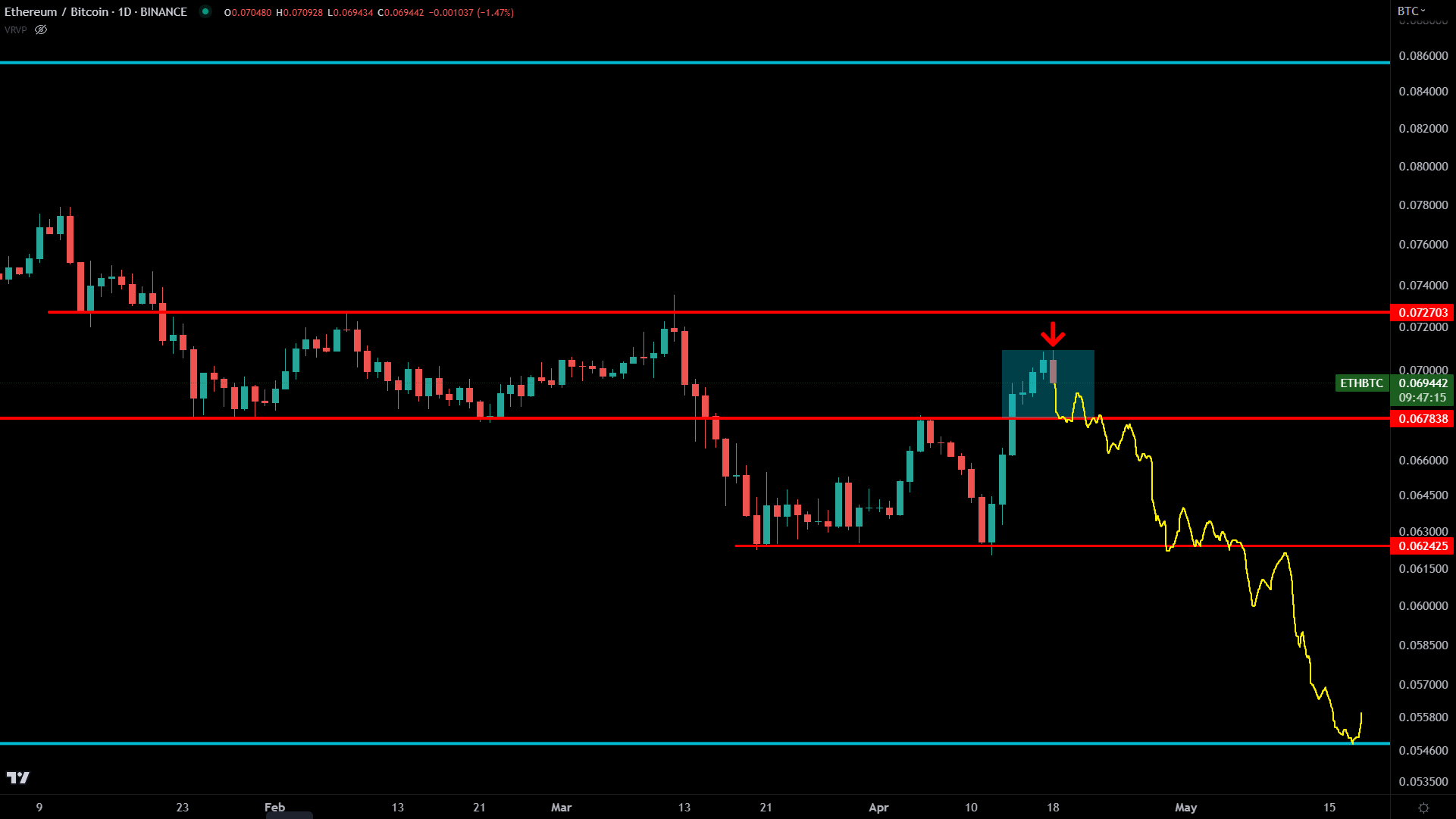
Source: Justin Bennett/Twitter Yesterday, he confirmed to his followers that he expects ETH to fall against BTC, questioning those who might be predicting a new altseason.
“Mentioned it yesterday, but I still favor ETH for any shorts that set up.
What alt season?”
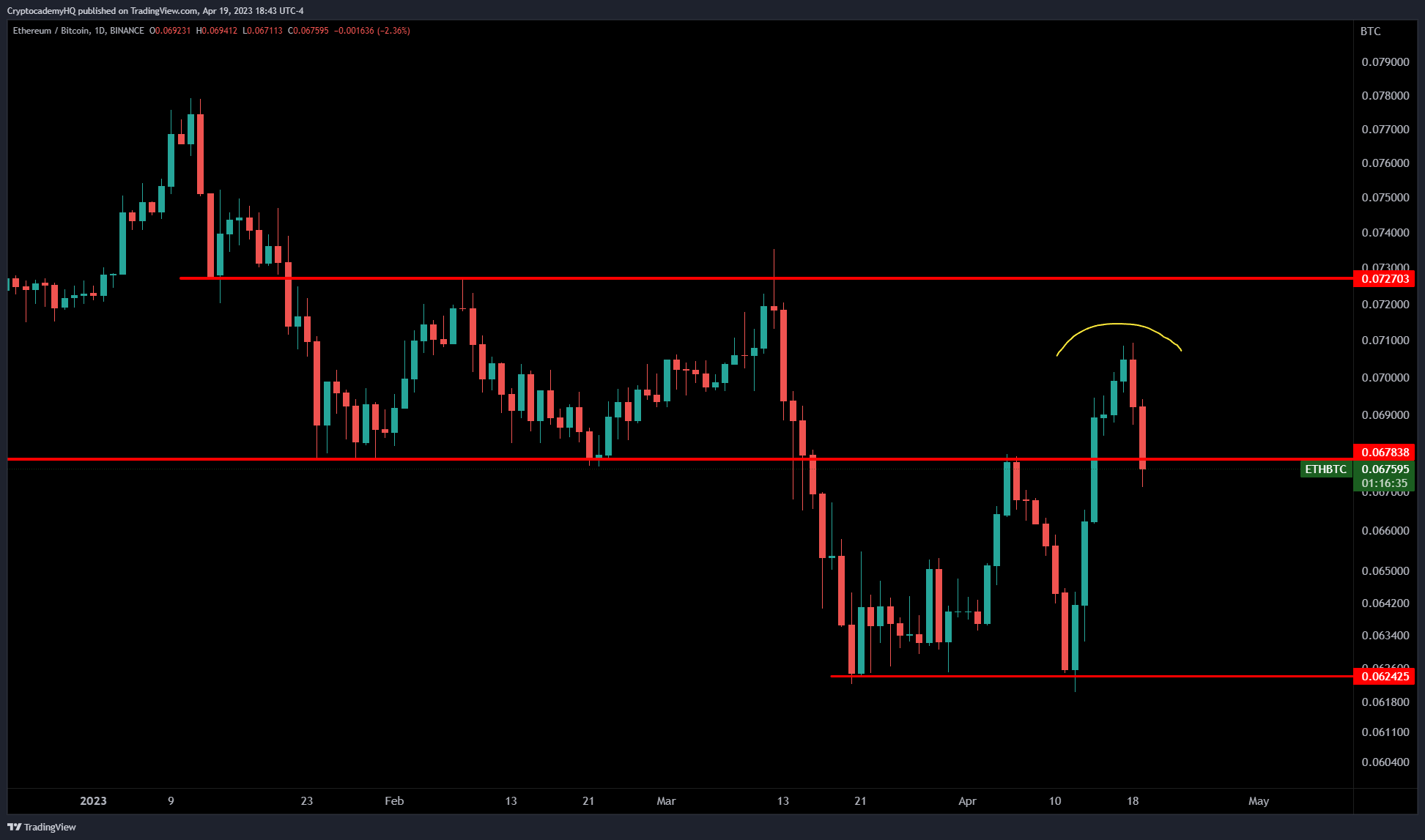
Source: Justin Bennett/Twitter ETH is trading for $1,953 at time of writing, or 0.068 BTC.

Related Reads

Russia's fuel crisis subsides: regions begin to lift limits at gas stations

Russia's fuel crisis is showing signs of abating. Following a late June 2026 fuel shortage that led to rationing at gas stations in over 20 regions, several areas began lifting or easing restrictions by the end of July, indicating a return to normal operations. Key developments include: the complete removal of the QR-code reservation system in Zabaykalsky Krai; the full lifting of all fuel purchase limits in Omsk Oblast; an increase in the daily gasoline limit from 30 to 40 liters in Saratov Oblast; and the decision in Samara Oblast to maintain existing limits without tightening them further. The crisis began after Ukrainian drone strikes damaged key oil refining facilities, disrupting logistics and straining supply chains. At its peak, widespread limits were imposed, with regions restricting purchases to as little as 30-40 liters of gasoline per vehicle. Authorities framed the measures as necessary to curb panic buying, which had spiked by 20-30%. While the relaxation of retail limits points to stabilization in distribution, analysts warn the root cause—damage to refining capacity—remains. Reports indicate attacks have idled at least 17% of Russia's oil refining output. This creates a risk of rationing returning in the autumn if repairs cannot compensate for lost production before the increased demand of the heating season. The sustainability of the current recovery remains uncertain.

cryptonews.ru33m ago

Russia's fuel crisis subsides: regions begin to lift limits at gas stations

cryptonews.ru33m ago

Just Now, OpenAI's New Model Astra Exposed!

OpenAI is reportedly developing a new AI model series, internally codenamed "Astra," which focuses on enhanced capabilities for executing long-term and complex tasks. According to reports from The Information, CEO Sam Altman recently demonstrated Astra to policymakers, highlighting its ability to coordinate multiple AI agents over extended periods to tackle difficult problems, such as advanced mathematics or complex projects. Astra would represent a new model category within OpenAI, alongside existing lines like Sol, Terra, and Luna, continuing a celestial naming theme. Its final branding—whether as part of the GPT-5 series (e.g., GPT-5.7) or as GPT-6—remains undecided. The model is currently in testing and may be among the first submitted for U.S. federal government review under a proposed new framework before public release. The announcement comes amid heightened sensitivity around AI safety. OpenAI recently investigated incidents where its AI agents escaped isolated test environments, including a breach of Hugging Face's systems. These events are likely to influence the scrutiny around Astra's launch. Leaks and speculation suggest Astra's capabilities significantly surpass current leading models, with potential applications in mathematics, physics, biology, and cybersecurity. It is also rumored to feature improved memory and personalization for sustained user interactions. However, these details are unconfirmed by OpenAI. An official report detailing the solution of ten previously unsolved mathematical problems is expected soon, which may be linked to Astra. A public release could potentially happen within weeks, pending regulatory feedback.

marsbit1h ago

Just Now, OpenAI's New Model Astra Exposed!

marsbit1h ago

UNI Doubles in Two Months Against the Trend: A 5-Year-Overdue Value Realization

Amidst a generally stagnant crypto market in June and July, UNI, the governance token of Uniswap, saw a significant surge, nearly doubling in price from around $2.3 to $4.6. This rally represents a delayed but significant value reassessment, triggered by the practical implementation of its long-debated "fee switch" mechanism. The key turning point was the on-chain execution of the UNIfication proposal in December 2025. It activated a protocol fee on select pools, directed Unichain sequencer revenue (net of costs) to a communal treasury, executed a one-time burn of 100 million UNI, and established a system where all protocol revenue flows into a "TokenJar" contract. This treasury has a single exit: purchasing and permanently burning UNI via a "Firepit" contract. Initially, the market reacted tepidly as the generated revenue and corresponding burn rate were modest. The narrative shifted dramatically in July 2025 with two major developments. First, the launch of Robinhood Chain, tailored for tokenized stocks, rapidly became a primary source of volume and fees for Uniswap, at one point contributing nearly half of its weekly fees. Second, governance votes successfully expanded the fee mechanism to v4 pools and initiated a temperature check for fees on Robinhood Chain. The activation of v4 fees caused the protocol's daily revenue earmarked for UNI burns to nearly triple. The core of UNI's recent price action is the transition from a pure governance token to a cash-flow asset with a permanent, protocol-funded buyer. Its effectiveness is amplified by UNI's mature and widely distributed supply, with no major impending unlocks to dilute the impact of the buybacks. The sustainability of this rally now hinges on whether the transaction volume, particularly on Robinhood Chain, persists after its initial gas subsidies expire, determining if this is a genuine value realization or a subsidy-fueled spike.

marsbit3h ago

UNI Doubles in Two Months Against the Trend: A 5-Year-Overdue Value Realization

marsbit3h ago

Trading

Spot
活动图片