Gotchi Lending is Aavegotchi’s solution for scaling up the gaming ecosystem
Aavegotchi introduced Gotchi Lending as a solution to improve the existing Scholarship Model in the market. It will help to address the current issue of blockchain gaming scalability by creating a more welcoming revenue-sharing model. It is worth mentioning that Gotchi Lending is a 100% on-chain solution that leverages smart contracts.
Aavegotchi is one of the most popular games living on Polygon. A brainchild of Pixelcraft Studios, Aavegotchi is a perfect combination of DeFi and NFT games. It is an intriguing game that reminds you of the happy childhood memories of Tamagotchi, more importantly, a simple and entertaining play-to-earn journey.
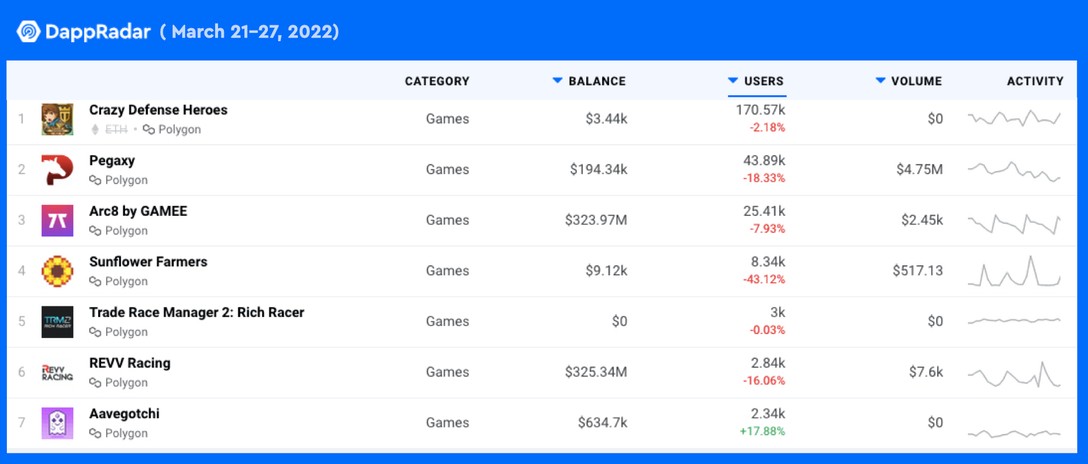
With Gotchiverse launching on March 31st, the anticipation and engagement of the game have been gaining traction. As of this writing, Aavegotchi recorded a 17.88% increase in user numbers over the last seven days. Notably, it is the only gaming dapp among the top 7 on the Polygon ranking board that has achieved positive user growth for the period.
Although blockchain gaming has disrupted the traditional gaming industry, it still has a long way to become mainstream. To accelerate the mass adoption of blockchain gaming, Aavegotchi proposed Gotchi Lending. Furthermore, it is a critical move to expand the Gotchiverse beyond their core audience.
Scholarship model and its drawbacks
Axie Infinity introduced a scholarship program to onboard newcomers via a more accessible pathway. Axie holders, for example guilds like Yield Guild Games, provide so-called scholarships to new players. Specifically, they loan their assets, the Axie NFTs, to new players who don’t own any of their own. Borrowers or scholars share their revenue with the Axie owners in return. It is a revenue-sharing model where the guild invests in NFT assets and rents or loans them to newcomers. As a result, new players can start playing and earning in-game tokens without investing any money upfront.
However, the scholarship model has drawbacks that make it inadequate to scale up the game ecosystem. In essence, it depends on humans to run the Axie loaning business. The model relies heavily on humans, with manual payouts and off-chain agreements. Abusive managers are not unusual. In addition, many scholars cash out their token earnings as a daily wage. Therefore they don’t spend their earned tokens on breeding or other in-game actions, causing inflation of SLP in Axie’s case.
Gotchi Lending upgrades the scholarship model
Gotchi Lending addresses the scalability of the gaming ecosystem through a different approach, which is to keep the entire lending process 100% on the blockchain. Gotchi Lending uses a smart contract that allows owners of Aavegotchi NFTs to lend these assets out to players with limited rights.
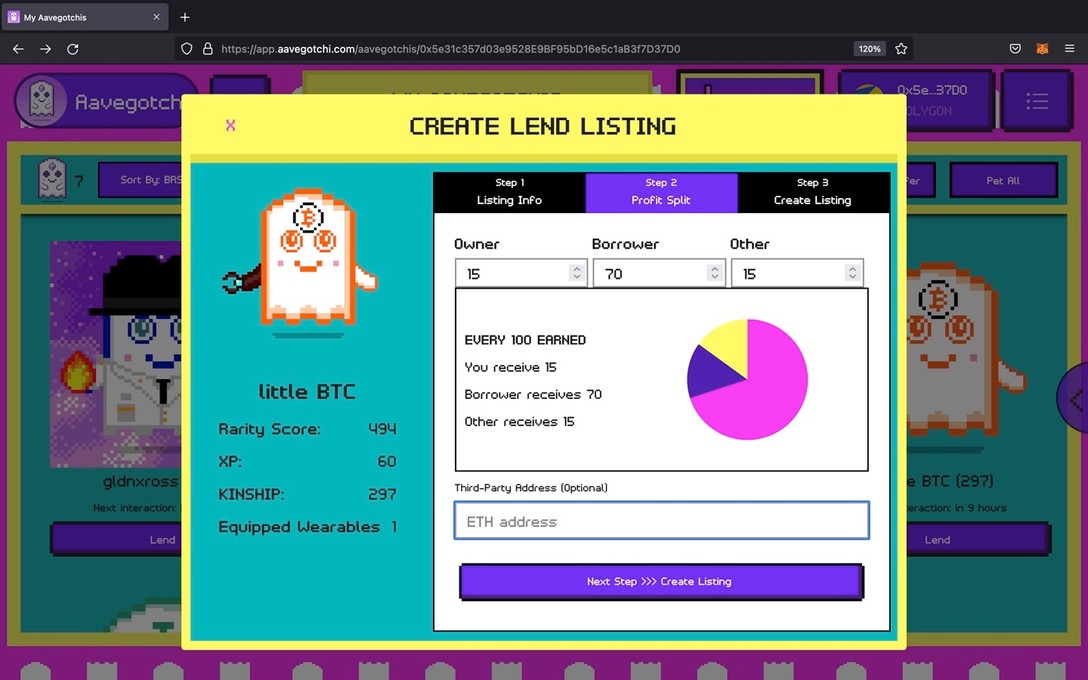
It is worth noticing that Gotchi Lending allows the owners to have complete control over their rental agreements. They can decide the contract duration, up-front fees, and earnings splitting rules between themselves and the borrower. For example, the lenders can decide which token they’d like to split with the borrower since the upcoming Gotchiverse will introduce four new ERC tokens. And of course, GHST, Aavegotchi’s eco-governance token, is one of the options. Moreover, they can also customize what percentage to split at, i.e., 50/50, 80/20, etc.
More notably, Gotchi Lending benefits large guilds and individuals alike. Guilds can seamlessly get their Aavegotchi’s into a member’s hands by whitelisting them as trusted addresses. Individual Aavegotchi owners can leverage Gotchi Lending to earn a passive income by listing Aavegotchis on the lending market. Users can also lend them to a friend or family member to enter the Gotchiverse to try it out for themselves at no cost.
Gotchi Lending goes live on March 28th and will make the Gotchiverse one of the most accessible NFT games in the world. To explore the unlimited opportunities of the sustainable play-to-earn game, all you need is internet access and a web3 wallet. Play as usual, earn like never before!
About Aavegotchi
Aavegotchi is an open-source, community-owned NFT gaming protocol, enabling true asset ownership for gamers. Aavegotchi NFTs are on-chain collectible ghosts staked with Aave’s interest-generating aTokens.
Compete for player rewards by earning XP, leveling up, and increasing the rarity of your Aavegotchi fren. Aavegotchi is governed by the AavegotchiDAO and the native eco-governance token GHST. Visit Aavegotchi.com today and join the future of DeFi-staked NFT avatars!