
Trading King
06/12 09:36
Bitcoin, ETH price coil after inflation cools and
The crypto market’s strength sustains even as investors continue to ponder the impact of raising the US debt ceiling.
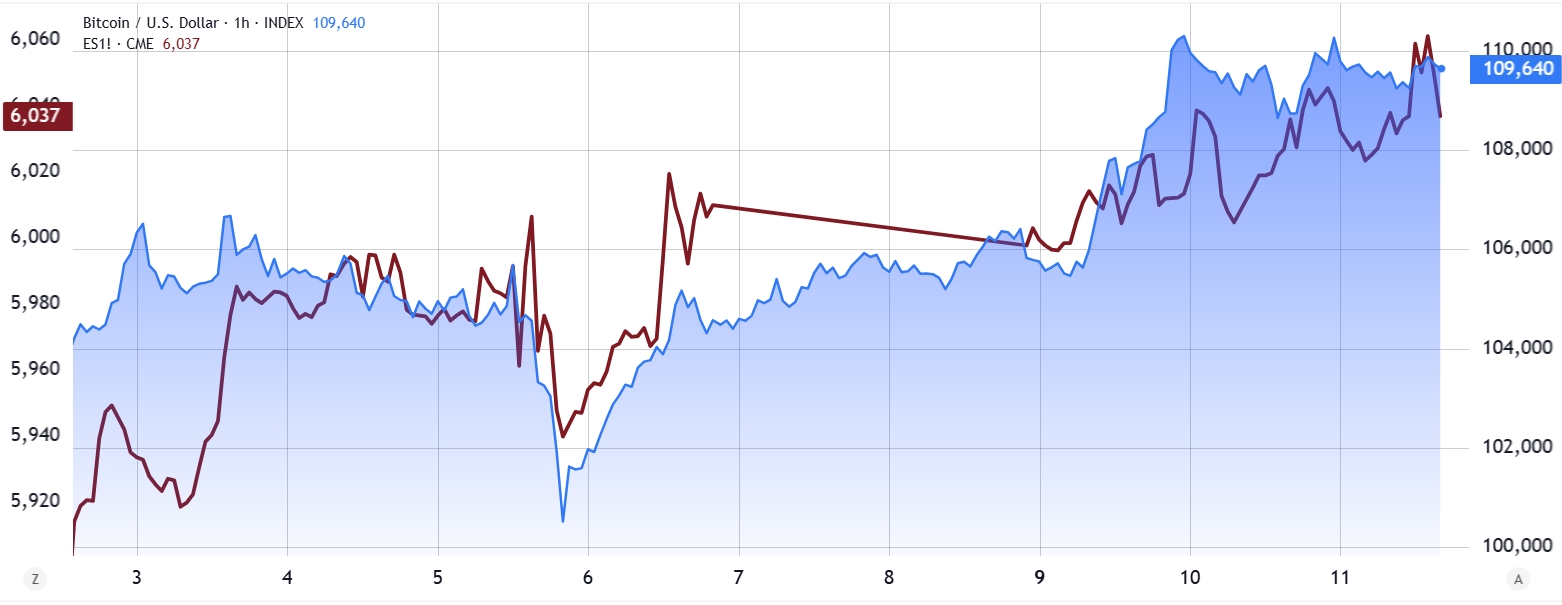
The cryptocurrency market responded positively to Wednesday’s Consumer Price Index (CPI) report and reduced prospects of an escalating trade war between the US and China. Demand for alternative hedge instruments typically weakens in such scenarios, yet Bitcoin BTC $108,589 neared $109,000, while Ether ETH $2,772 posted a 3% gain, trading above $2,800.
While it’s too early to call it a trend, the crypto market appeared to slightly diverge from traditional assets. The S&P 500 index gave back part of its earlier gains, which had initially been driven by US President Donald Trump’s announcement of a new trade agreement with China.
According to the deal, both nations will roll tariffs back to levels seen in February 2025, easing tensions and removing retaliatory taxes. However, the stock market’s performance suggests that investors were underwhelmed, even though the move significantly reduced the risk of economic fallout.
Bitcoin, Ether benefit from potential liquidity injection
The 2.4% annual inflation rate reported by the US Consumer Price Index offered some relief, especially in the context of rising price concerns driven by the ongoing global trade war. Usually, these developments would boost confidence in stocks and strengthen the US dollar, but investors are still uneasy about the growing US government debt.
The US Dollar Index (DXY) fell to its lowest point in seven weeks, indicating that investors are retreating from the dollar. This drop typically points to declining confidence in the Federal Reserve’s capacity to manage economic risks and heightened concern over the country’s fiscal trajectory. In response, market participants are reallocating toward other major fiat currencies.
On Tuesday, JPMorgan Chase CEO Jamie Dimon reportedly highlighted the risks posed by private credit, an area that could become problematic during an economic downturn. According to CNBC, Dimon believes the US remains vulnerable to a recession, particularly as employment “will come down a little bit” and upward inflationary pressure persists.
RSM chief economist Joe Brusuelas told Yahoo Finance that “we were not really seeing much of the pass through, if some at all, from the tariffs.” In short, the lack of robust economic growth remains a primary concern for investors. The longer the US Federal Reserve maintains current interest rates, the more likely a recession becomes.
According to the CME FedWatch tool, futures-based probabilities for the year-end Fed Funds target rate have shifted notably over the past month. Markets now imply a 73% chance that rates will be at 3.75% or higher by December, up from a 42.5% chance one month ago.
Higher interest rates exert a dual negative effect on the economy as they raise the cost of issuing and refinancing debt, whether for individuals, companies or the government. Additionally, interest rates that exceed expected inflation tend to weigh on risk-on assets as fixed-income yields get more attractive.
#Share Your Thoughts on Popular Assets in June#Check In to Win a 20g Gold Bar#Claim1,200 USDT in the Monthly Creation Challenge
5Share
All Comments0LatestHot