Coinbase And Ethena Launch High Yield USDC Vault Powered By Morpho

bitcoinistPublished on 2026-06-13Last updated on 2026-06-13

Abstract

Coinbase has launched a new High Yield USDC Vault in collaboration with Ethena Labs and powered by Morpho, curated by Steakhouse Financial. This marks the first live product from the Coinbase-Ethena partnership, offering Coinbase users access to enhanced yields through a simplified interface. Unlike Coinbase's more conservative vaults, this product accepts a broader collateral mix, including synthetic assets like Ethena's USDe, which allows for higher potential returns but introduces greater risks related to collateral behavior and market dynamics. The annual percentage yields (APYs) are dynamic and not guaranteed. The launch underscores a trend of centralized exchanges packaging complex DeFi strategies into user-friendly products, expanding access while highlighting the need for clear risk disclosure. The vault is currently available to eligible users in the U.S. (excluding New York) and select international markets.

Coinbase has expanded its onchain lending offering with the launch of a Steakhouse Financial High Yield USDC Vault connected to Ethena and Morpho, according to an official Ethena Labs post on X.

Ethena described the product as the first live integration in its collaboration with Coinbase. The vault is powered by USDe on Morpho and curated by Steakhouse Financial, bringing a more complex DeFi yield structure into a Coinbase-accessible product.

The basic user flow is simple from the outside: users deposit USDC, and a smart contract wallet connects to Morpho to allocate funds across lending markets. Under the hood, however, this is a more risk-sensitive product than a plain stablecoin rewards account because the collateral mix can include Ethena-backed assets such as USDe and USDtb.

Why The Collateral Mix Matters

The key difference is risk profile. Coinbase’s existing lower-risk vault options are built around more conservative collateral standards. The new High Yield Vault accepts a broader mix of assets, including synthetic stablecoin-linked collateral.

That can support higher lending yields when market demand is strong, but it also introduces risks around collateral behavior, market liquidity and the stability of the underlying DeFi positions. APYs in these systems are dynamic, so any yield number should be treated as variable rather than guaranteed.

The launch is also notable because Coinbase Ventures has disclosed an investment in ENA, Ethena’s governance token. That does not make the vault inherently unsafe or attractive, but it does make the relationship between Coinbase, Ethena and the broader DeFi yield market worth watching.

DeFi Yield Moves Further Into Mainstream Apps

The larger story is that DeFi lending infrastructure continues to move closer to mainstream crypto users. Morpho, Steakhouse Financial and Ethena are not being presented as separate destinations users must manually navigate; instead, their mechanics are being bundled into a product inside a major exchange ecosystem.

Access is still limited. The capture notes indicate the vault is available to eligible US users excluding New York, as well as select international markets. That means availability and suitability will vary by jurisdiction and user profile.

For readers, the takeaway is not simply that Coinbase has added another yield product. It is that centralized platforms are increasingly packaging DeFi-native strategies into simplified interfaces. That could broaden access, but it also makes clear risk disclosure more important, especially when synthetic stablecoin collateral is involved.

That difference should be clear for readers who may only see the phrase “high yield” and assume the product behaves like a standard stablecoin account. DeFi lending vaults depend on smart contracts, collateral rules and market utilization, so the return profile can change as conditions shift. The convenience of accessing the vault through a familiar platform does not remove the underlying protocol risk.

The product also highlights how Base is becoming a distribution layer for more advanced DeFi strategies. Instead of users manually bridging funds, choosing lending markets and managing collateral risk themselves, Coinbase is packaging that activity into a more guided interface. That may bring DeFi closer to mainstream users, but it also raises the bar for transparent risk explanations.

Source: Ethena Labs on X at Ethena Labs on X

Trending Cryptos

Related Questions

QWhat is the main announcement in the article regarding Coinbase and Ethena?

ACoinbase has launched a new High Yield USDC Vault in collaboration with Ethena and powered by USDe on the Morpho protocol, expanding its onchain lending offerings.

QHow does the risk profile of the new High Yield Vault compare to Coinbase's existing vault options?

AThe new High Yield Vault has a higher risk profile. Unlike more conservative existing options, it accepts a broader mix of collateral, including synthetic stablecoin-linked assets like USDe and USDtb, introducing risks around collateral behavior and market liquidity.

QWhat role do Morpho and Steakhouse Financial play in this new product?

AMorpho provides the underlying lending infrastructure where the funds are allocated. Steakhouse Financial curates the product, bringing a complex DeFi yield structure into a Coinbase-accessible vault.

QWhy is the relationship between Coinbase and Ethena particularly noteworthy beyond this product launch?

AIt is noteworthy because Coinbase Ventures has disclosed an investment in ENA, Ethena's governance token. This highlights the deepening ties between the centralized exchange and the DeFi protocol, making their collaboration and the broader DeFi yield market worth watching.

QWhat is the broader trend highlighted by the launch of this vault?

AThe launch signifies that centralized platforms like Coinbase are increasingly packaging complex, DeFi-native yield strategies into simplified interfaces for mainstream users, moving DeFi lending infrastructure closer to a wider audience, though this raises the importance of clear risk disclosure.

Related Reads

TechFlow Intelligence Bureau: Anthropic IPO Odds Exceed 80%, Iran Closes Strait of Hormuz Again, Triggering Oil Price Volatility

**Market Digest** **AI & Tech:** Anthropic is widely expected to announce an IPO before November 2026, raising questions about balancing its trillion-dollar valuation ambitions with its core "AI safety" mission. Brands are increasingly adopting AI-generated virtual influencers for marketing. Cloudflare introduced temporary accounts for AI agents to ease automation workflows. **Infrastructure & Hardware:** Google's IPv6 traffic surpassed 50%, marking a major internet milestone. Goldman Sachs warned that massive projected AI capital expenditure ($5.3T) is approaching credit saturation limits, potentially curbing the "AI arms race." **Space & Robotics:** SpaceX's IPO saw a historic $370M retail buying frenzy in three days. Hyundai Motor Group plans to acquire full ownership of Boston Dynamics. Elon Musk speculated about future "septillion-dollar" investments in antimatter for interstellar travel. **Energy & Geopolitics:** Iran's military announced another closure of the strategic Strait of Hormuz, accusing Israel of violating a ceasefire, causing oil market volatility. However, ship-tracking data indicated some traffic continued. Concurrently, Iran resumed crude loadings at Kharg Island, potentially releasing up to 20 million barrels to the market. **Finance & Macro:** A European CLO (collateralized loan obligation) experienced its first post-2008-crisis-era equity tranche default, raising alarms in credit markets. Nomura warned that new Federal Reserve Chair Wash's perceived hawkish debut speech could signal a significant policy shift. **The Undercurrent:** Seemingly disparate events—the Strait of Hormuz tension, the European CLO default, and warnings on AI spending—point to a tightening of global liquidity and rising marginal costs across energy, credit, and tech investment. Meanwhile, capital continues chasing grand narratives like space exploration and advanced AI, highlighting a divergence where old-world leverage frays as new-world stories grow more ambitious.

marsbit35m ago

TechFlow Intelligence Bureau: Anthropic IPO Odds Exceed 80%, Iran Closes Strait of Hormuz Again, Triggering Oil Price Volatility

marsbit35m ago

The Hunter Becomes the Hunted: The Most Profitable MEV Bot Gets Hacked

A well-known and highly profitable Ethereum MEV Bot, Jaredfromsubway.eth, suffered a sophisticated on-chain attack this Saturday, losing over $7.5 million. Analysis by Blockaid and others reveals this was not a conventional phishing or smart contract exploit, but a targeted "counter-MEV honeypot attack." The attacker meticulously laid a trap over several weeks, deploying 66 fake token contracts and liquidity pools disguised as major assets like WETH and USDC. These pools created the illusion of arbitrage opportunities. The MEV Bot's automated system detected these signals, executed trades, and in the process, granted approval permissions to attacker-controlled contracts. These approvals were not revoked, creating a persistent vulnerability. The attacker then exploited this in a single transaction, draining the bot's ETH, USDC, and USDT holdings. Jaredfromsubway.eth is notorious as one of Ethereum's most active and profitable MEV Bots, primarily known for executing "sandwich attacks" to profit from transaction slippage. Estimates suggest it has earned tens of millions in MEV revenue. The incident highlights escalating crypto security threats, demonstrating that even top-tier automated "predators" are vulnerable to novel, logic-based attacks designed to exploit their own operational rules. Following the hack, an unverified X account impersonating Jaredfromsubway.eth emerged, falsely offering a bounty for the return of funds, prompting developer warnings for users to stay vigilant.

marsbit1h ago

The Hunter Becomes the Hunted: The Most Profitable MEV Bot Gets Hacked

marsbit1h ago

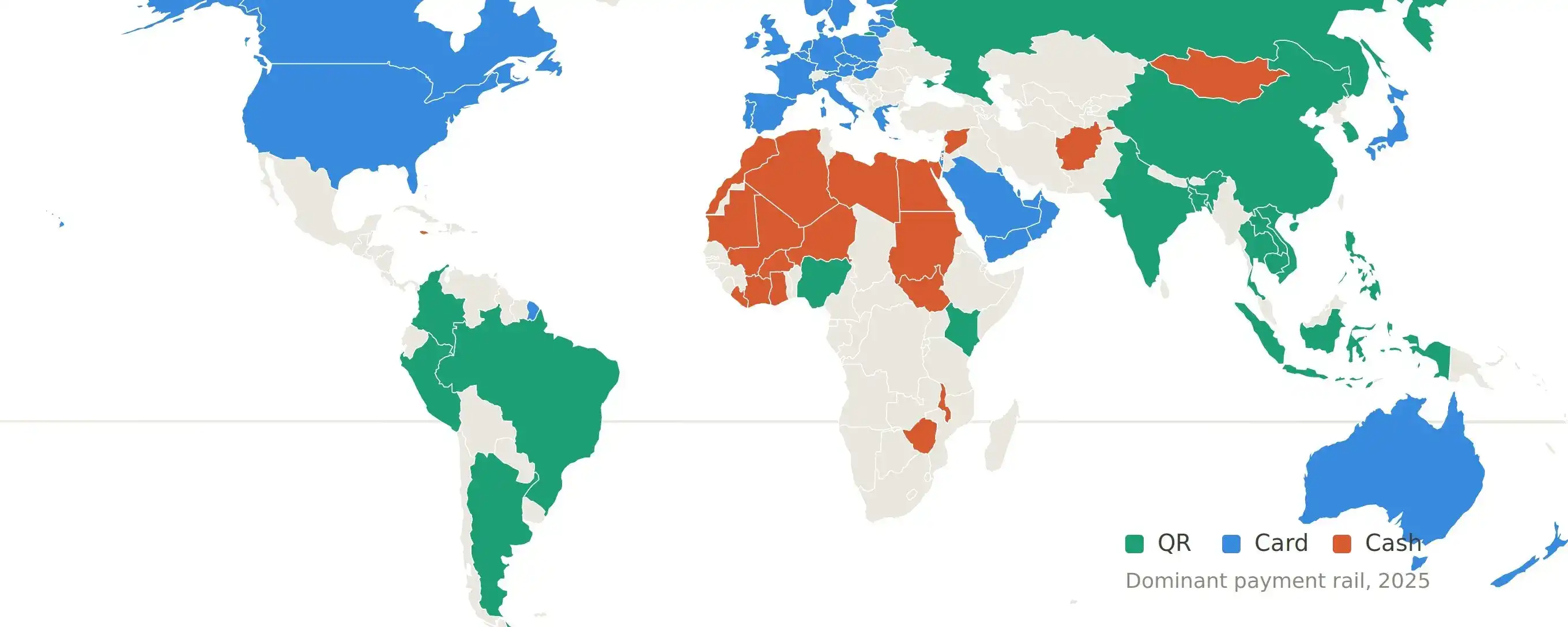
The Reality of Payments in Latin America Is Not What You Think

The payment landscape in Latin America is undergoing a fundamental shift, driven by on-the-ground realities that challenge common perceptions. Based on over 500 hours of field research across the region, key insights emerge. Firstly, QR code payments, like Brazil's Pix, are becoming the dominant payment method in most emerging markets, overtaking cards. However, these domestic instant payment systems lack international interoperability, creating a significant gap for cross-border users. Secondly, the narrative around crypto cards is often misunderstood; their primary volume comes from high-net-worth professionals using them for salary conversions (e.g., USDT to local currency via Pix), not retail micro-payments. Competition in payments is shifting from customer acquisition to controlling the settlement layer, leading fintechs to acquire banking licenses for efficiency. Thirdly, treating "Latin America" as a single market is a mistake. Countries like Argentina, Brazil, and Mexico have distinct economic realities, user segments, and regulatory approaches. Brazil alone has at least five distinct user segments with different financial flows. Overlooked markets like Guatemala, Honduras, and El Salvador (the "forgotten five") offer high remittance volumes with lower competitive density. Finally, regulation in Latin America is often ahead of the US, with clearer frameworks for digital assets and a pragmatic approach from regulators focused on safety rather than obstruction. The margin on stablecoin forex is rapidly compressing toward zero, meaning future winners will be those building value-added services on top of the infrastructure, not just the cheapest exchange.

marsbit2h ago

The Reality of Payments in Latin America Is Not What You Think

marsbit2h ago

Trading

Spot
Futures

Hot Articles

How to Buy MORPHO

Welcome to HTX.com! We've made purchasing MORPHO (MORPHO) simple and convenient. Follow our step-by-step guide to embark on your crypto journey.Step 1: Create Your HTX AccountUse your email or phone number to sign up for a free account on HTX. Experience a hassle-free registration journey and unlock all features.Get My AccountStep 2: Go to Buy Crypto and Choose Your Payment MethodCredit/Debit Card: Use your Visa or Mastercard to buy MORPHO (MORPHO) instantly.Balance: Use funds from your HTX account balance to trade seamlessly.Third Parties: We've added popular payment methods such as Google Pay and Apple Pay to enhance convenience.P2P: Trade directly with other users on HTX.Over-the-Counter (OTC): We offer tailor-made services and competitive exchange rates for traders.Step 3: Store Your MORPHO (MORPHO)After purchasing your MORPHO (MORPHO), store it in your HTX account. Alternatively, you can send it elsewhere via blockchain transfer or use it to trade other cryptocurrencies.Step 4: Trade MORPHO (MORPHO)Easily trade MORPHO (MORPHO) on HTX's spot market. Simply access your account, select your trading pair, execute your trades, and monitor in real-time. We offer a user-friendly experience for both beginners and seasoned traders.

2.8k Total ViewsPublished 2025.10.17Updated 2026.06.02

How to Buy MORPHO

Discussions

Welcome to the HTX Community. Here, you can stay informed about the latest platform developments and gain access to professional market insights. Users' opinions on the price of MORPHO (MORPHO) are presented below.

活动图片