Crypto Primary Market Investment and Financing Forward-Looking Weekly Report | Stablecoin Regulation Nears Implementation, ETF Funds Continue to Withdraw, Capital Begins Betting on Payment and Cash Flow

marsbitPublished on 2026-06-11Last updated on 2026-06-11

Abstract

Crypto Market Weekly Report (Jun 1-7, 2026): Capital Shifts Focus to Payments & Cash Flow Market data indicates a significant divergence: while traditional institutional funds continue exiting via BTC and ETH ETFs (recording net outflows of $1.72B and $168M this week, respectively), stablecoin supply continues growing. This suggests capital is shifting from speculative asset allocation toward defensive positioning within on-chain liquidity, awaiting new, concrete opportunities. This trend is reflected in venture capital focus. Weekly fundraising fell 27% to $302M, with investments concentrating on infrastructure with tangible revenue potential: 1. **Stablecoin Infrastructure (28% of funding):** Projects like M0 Protocol ($35M raise) are gaining attention as regulatory clarity (e.g., the GENIUS Act) nears, shifting the focus from legitimacy to building payment and settlement networks. 2. **AI Agent Infrastructure (26%):** Investments are moving from conceptual AI Agents towards the execution and economic layers required for a functional "Agent economy." Key raises include OpenRouter ($40M) and Halliday ($20M). 3. **Real World Assets (RWA) (18%):** The search for on-chain yield and cash flow drives continued interest in RWA platforms like Ondo Finance. Security threats are evolving from smart contract exploits toward key management failures, permission control issues, and regulatory execution risks (e.g., court-ordered asset freezes). **Key Takeaways:** The investment th...

Report Period: June 1, 2026 – June 7, 2026

I. Core Conclusions for the Week (Executive Summary)

A notable phenomenon emerged in the crypto market over the past week:

Risk capital is withdrawing, but on-chain capital is not leaving.

From a traditional institutional perspective, BTC ETFs saw large-scale net outflows for the fourth consecutive week, with weekly outflows of approximately $1.72 billion; ETH ETFs saw net outflows of about $168 million over the same period. The cumulative outflow over four weeks reached $5.4 billion and $880 million respectively, setting the strongest consecutive outflow record in nearly a year.

However, on the other hand, the stablecoin market did not contract synchronously.

With the U.S. GENIUS Act entering a critical phase and UK regulators beginning discussions on adjustments to stablecoin regulatory details, the global stablecoin regulatory framework is accelerating.

This indicates a new capital migration logic is emerging in the market:

Capital is shifting from "risk asset allocation" to "payment and yield infrastructure allocation."

Meanwhile, primary market financing remains concentrated in three areas:

  • Stablecoin Infrastructure
  • AI Agent Infrastructure
  • RWA Yield Layer

Compared to chasing public chains and narratives in the past, capital is now paying more attention to:

Revenue, payment capabilities, and genuine cash flow.

II. What Happened in the Past Week?

2.1 Overview of Core Market Data

MetricThis Week (6.1-6.7)Last Week (5.25-5.31)Change WoWNumber of Valid Financing Projects2631-16.10%Total Financing Volume$302 million$412 million-26.70%Largest Single Financing$40 million$85 million-52.90%BTC ETF Net Flow-$1.72 billion-$1.44 billionOutflow expanded by 19.4%ETH ETF Net Flow-$168 million-$257 millionOutflow narrowed by 34.6%DeFi TVL$77.8 billion$80.1 billion-2.90%Stablecoin Total Market Cap$325.4 billion$321.6 billion+0.012

Market Interpretation

The biggest change this week was not the decline in financing but the change in capital structure.

BTC ETFs saw net outflows for the fourth consecutive week, with weekly outflows reaching $1.72 billion, becoming one of the largest weekly capital withdrawals in 2026.

At the same time, the total stablecoin market cap continues to expand.

This phenomenon typically indicates the market is entering a defensive phase: investors are reducing risk exposure but still retaining on-chain liquidity, waiting for new definitive opportunities to emerge.

2.2 Key Financing Events of the Week

Halliday

Sector: AI Agent Infrastructure

Financing Amount: $20 million

Round: Series A

Lead Investor: a16z Crypto

Investment Thesis:

As AI Agents gradually enter the commercial validation stage, the market is beginning to focus on Agent execution layer infrastructure. Halliday aims to become the underlying network for future Agents to automatically execute on-chain operations.

OpenRouter

Sector: AI Infrastructure

Financing Amount: $40 million

Round: Series A

Lead Investor: a16z

Investment Thesis:

The Agent era will generate massive demand for model calls, and the model routing layer may become a new infrastructure entry point.

M0 Protocol

Sector: Stablecoin Infrastructure

Financing Amount: $35 million

Lead Investor: Bain Capital Crypto

Participating Investor: Pantera Capital

Investment Thesis:

With the regulatory framework gradually becoming clearer, stablecoin issuance and settlement networks are beginning to attract institutional attention.

Gradient Network

Sector: Decentralized AI Network

Financing Amount: $10 million

Lead Investor: Pantera Capital

Investment Thesis:

Decentralized computing power and inference networks are becoming important infrastructure for the AI Agent ecosystem.

2.3 Top 3 Sectors Drawing Capital Attention This Week

#1: Stablecoin Infrastructure (Approx. 28% of funding)

Representative Projects:

  • M0 Protocol
  • Ethena
  • Agora

Core Data:

MetricDataStablecoin Total Market Cap$325.4 billionWeek-on-Week Growth+0.012Yield-bearing Stablecoin ShareApprox. 10%Regulatory ProgressGENIUS Act at Critical Stage

Capital Logic:

Stablecoins are no longer just trading tools.

The future competition will focus on payment, clearing, and cross-border settlement networks.

#2: AI Agent Infrastructure (Approx. 26% of funding)

Representative Projects:

  • Halliday
  • OpenRouter
  • Spectral

Core Data:

MetricDataNumber of Financing Projects This Week7Total Financing AmountApprox. $79 millionProportion in Total Financing26%

Capital Logic:

The market has shifted from the Agent concept to the Agent economy.

Future Agents will need:

Identity, payment, credit, and collaboration networks.

#3: RWA (Approx. 18% of funding)

Representative Projects:

  • Ondo Finance
  • Plume Network
  • Centrifuge

Core Data:

MetricDataTotal RWA SizeOver $14 billionOndo TVLOver $1.4 billionProjects within Plume EcosystemOver 200

Capital Logic:

Institutions are starting to look for on-chain cash flow assets.

RWA is moving from the narrative stage to the scaling competition stage.

2.4 Key Security Incidents and Protocol Risks of the Week

Gravity Bridge Security Incident

Loss Scale:

Approx. $5.4 million

Cause:

Validator node signing key leak

Risk Level:

★★★★★

DxSale Permission Control Incident

Loss Scale:

Approx. $7.3 million

Cause:

Admin permissions maliciously controlled

Risk Level:

★★★★☆

On-Chain Judicial Freeze Case (Zama cUSDC)

Freeze Scale:

Approx. $12.6 million

Cause:

Court order triggered asset freeze

Risk Level:

★★★★★

Risk Observation

This week's security incidents show a noticeable shift.

The focus of attacks is shifting from smart contract vulnerabilities to:

  • Key Management
  • Permission Control
  • Regulatory Execution Risk

For future financing projects, security capabilities are becoming a significant plus factor.

III. Forward-Looking Trends in On-Chain Investment & Financing

3.1 Stablecoin Payment Networks May Become the Primary Theme for Q3

After the GENIUS Act enters a critical stage, the market is beginning to reassess the value of the stablecoin sector.

The past market debate was:

Are stablecoins legal?

The future market focus is:

Who controls the payment network?

Projects currently worth close attention include:

  • M0 Protocol
  • Ethena
  • Agora

Key Observation Points for the Next 4 Weeks:

  • Subsequent progress of the GENIUS Act
  • Changes in USDC and USDT market share
  • Growth in stablecoin payment scenarios

3.2 Compliant Derivatives Infrastructure Enters Value Reassessment Phase

Despite the overall market adjustment this week, the on-chain derivatives market remains active.

Notably, Hyperliquid continues to maintain a high-revenue state.

Core Data:

MetricDataOpen InterestOver $8 billionAverage Daily Revenue$1.8m – $2.2mAnnualized RevenueOver $700 million

A new consensus is forming in the market:

Revenue-generating protocols hold more long-term value than narrative-driven protocols.

3.3 AI Agents Begin Entering Commercial Validation Stage

Over the past year, capital invested in the Agent concept.

In the coming year, capital will invest in Agent revenue.

Projects to Focus On:

  • Halliday
  • Spectral
  • Virtuals

Critical to Observe in the Next 4 Weeks:

Whether real payment and transaction behaviors begin to occur between Agents.

If a closed loop forms, the Agent sector may enter a new valuation phase.

3.4 Key TGE and Launch Events in the Next 1–4 Weeks

First-Tier Projects to Watch:

  • GRVT
  • Initia
  • MegaETH

Second-Tier Projects to Watch:

  • Monad Ecosystem Projects
  • AI Agent Ecosystem Projects
  • RWA Ecosystem Projects

The next month is expected to focus mainly on ecosystem incentives and testnet opportunities.

IV. Data-Driven Investment Research Analysis

Continuous ETF Outflows, But Stablecoin Growth – What Does It Mean?

Looking solely at ETF data, the market appears to have entered a clear risk contraction phase.

BTC ETF weekly outflow of $1.72 billion marks one of the largest weekly capital withdrawals this year. ETH ETFs also show continuous outflows.

Yet, simultaneously, the total stablecoin market cap is still expanding.

This indicates capital is not truly leaving the crypto market but is waiting for new definitive opportunities.

Historically, this phenomenon often precedes the formation of a new primary trend.

Currently, the direction most likely to absorb this capital is stablecoin infrastructure and payment networks.

Why Are VCs Starting to Reduce Investment Frequency?

This week's total financing volume decreased by approximately 27% compared to last week.

This does not mean capital is withdrawing.

More accurately:

Institutions are waiting for three key variables to materialize:

  • GENIUS Act
  • Fed's June FOMC Meeting
  • Progress on U.S. Crypto Regulation Bills

Before regulatory and macro environments become clear, VCs prefer to raise their investment standards.

Future financing will increasingly prioritize:

  • Revenue
  • User Growth
  • Commercial Closed Loop

Over mere narratives.

Why Has Hyperliquid Gained Capital Recognition Against the Trend?

In recent years, the market has been accustomed to using TVL to measure protocol value.

Starting in 2026, the market is paying more attention to revenue.

Hyperliquid's success proves:

Protocols that genuinely generate cash flow can obtain a valuation system independent of market sentiment.

This could become a significant change for the entire primary market moving forward.

V. Watchlist for the Next 30 Days

GENIUS Act: Key Progress in June, Importance: ★★★★★

FOMC Meeting: June 18, Importance: ★★★★★

CLARITY Act Progress: Late June, Importance: ★★★★

Potential GRVT TGE: Early July, Importance: ★★★★

Initia Ecosystem Release: June – July, Importance: ★★★★

Conclusion

The past market competed for narratives; today's market competes for cash flow.

From stablecoin payment networks to on-chain derivatives infrastructure, to the AI Agent economy, capital is seeking protocols that can continuously create value.

For the next quarter, the three most important primary themes remain:

Stablecoin Infrastructure, AI Agent Infrastructure, Compliant Derivatives.

The key factor determining whether a project can secure financing is also shifting from "story" to "revenue."


Trending Cryptos

Related Questions

QAccording to the report, what is the most significant shift observed in the crypto market over the past week?

ARisk capital is withdrawing, but on-chain funds are not leaving. Specifically, BTC and ETH ETFs have seen consecutive large net outflows (totaling $5.4B and $880M over four weeks), while the total stablecoin market cap continues to expand, indicating a shift of funds from 'risk asset allocation' to 'payment and yield infrastructure allocation'.

QWhat are the top three sectors attracting the most capital in the primary market, as per the article?

AThe top three sectors are: 1) Stablecoin Infrastructure (approximately 28% of financing volume), 2) AI Agent Infrastructure (approximately 26% of financing volume), and 3) RWA (Real World Assets) Yield Layer (approximately 18% of financing volume).

QWhat key change is noted in the nature of security incidents this week?

AThe focus of attacks is shifting from smart contract vulnerabilities to risks related to key management, permission controls, and regulatory execution risks, as exemplified by the Gravity Bridge and DxSale incidents.

QWhat does the report suggest is becoming a more critical factor for projects seeking financing, moving beyond narrative?

ACapital is increasingly focusing on a project's revenue, payment capabilities, real cash flow, user growth, and business model closure, rather than just its story or narrative.

QBased on the report, what are the three main investment theses or trends to watch in the coming quarter?

AThe three main trends are: 1) Stablecoin Infrastructure and payment networks, 2) AI Agent Infrastructure and its economy, and 3) Compliant Derivatives infrastructure.

Related Reads

TechFlow Intelligence Bureau: Anthropic IPO Odds Exceed 80%, Iran Closes Strait of Hormuz Again, Triggering Oil Price Volatility

**Market Digest** **AI & Tech:** Anthropic is widely expected to announce an IPO before November 2026, raising questions about balancing its trillion-dollar valuation ambitions with its core "AI safety" mission. Brands are increasingly adopting AI-generated virtual influencers for marketing. Cloudflare introduced temporary accounts for AI agents to ease automation workflows. **Infrastructure & Hardware:** Google's IPv6 traffic surpassed 50%, marking a major internet milestone. Goldman Sachs warned that massive projected AI capital expenditure ($5.3T) is approaching credit saturation limits, potentially curbing the "AI arms race." **Space & Robotics:** SpaceX's IPO saw a historic $370M retail buying frenzy in three days. Hyundai Motor Group plans to acquire full ownership of Boston Dynamics. Elon Musk speculated about future "septillion-dollar" investments in antimatter for interstellar travel. **Energy & Geopolitics:** Iran's military announced another closure of the strategic Strait of Hormuz, accusing Israel of violating a ceasefire, causing oil market volatility. However, ship-tracking data indicated some traffic continued. Concurrently, Iran resumed crude loadings at Kharg Island, potentially releasing up to 20 million barrels to the market. **Finance & Macro:** A European CLO (collateralized loan obligation) experienced its first post-2008-crisis-era equity tranche default, raising alarms in credit markets. Nomura warned that new Federal Reserve Chair Wash's perceived hawkish debut speech could signal a significant policy shift. **The Undercurrent:** Seemingly disparate events—the Strait of Hormuz tension, the European CLO default, and warnings on AI spending—point to a tightening of global liquidity and rising marginal costs across energy, credit, and tech investment. Meanwhile, capital continues chasing grand narratives like space exploration and advanced AI, highlighting a divergence where old-world leverage frays as new-world stories grow more ambitious.

marsbit35m ago

TechFlow Intelligence Bureau: Anthropic IPO Odds Exceed 80%, Iran Closes Strait of Hormuz Again, Triggering Oil Price Volatility

marsbit35m ago

The Hunter Becomes the Hunted: The Most Profitable MEV Bot Gets Hacked

A well-known and highly profitable Ethereum MEV Bot, Jaredfromsubway.eth, suffered a sophisticated on-chain attack this Saturday, losing over $7.5 million. Analysis by Blockaid and others reveals this was not a conventional phishing or smart contract exploit, but a targeted "counter-MEV honeypot attack." The attacker meticulously laid a trap over several weeks, deploying 66 fake token contracts and liquidity pools disguised as major assets like WETH and USDC. These pools created the illusion of arbitrage opportunities. The MEV Bot's automated system detected these signals, executed trades, and in the process, granted approval permissions to attacker-controlled contracts. These approvals were not revoked, creating a persistent vulnerability. The attacker then exploited this in a single transaction, draining the bot's ETH, USDC, and USDT holdings. Jaredfromsubway.eth is notorious as one of Ethereum's most active and profitable MEV Bots, primarily known for executing "sandwich attacks" to profit from transaction slippage. Estimates suggest it has earned tens of millions in MEV revenue. The incident highlights escalating crypto security threats, demonstrating that even top-tier automated "predators" are vulnerable to novel, logic-based attacks designed to exploit their own operational rules. Following the hack, an unverified X account impersonating Jaredfromsubway.eth emerged, falsely offering a bounty for the return of funds, prompting developer warnings for users to stay vigilant.

marsbit1h ago

The Hunter Becomes the Hunted: The Most Profitable MEV Bot Gets Hacked

marsbit1h ago

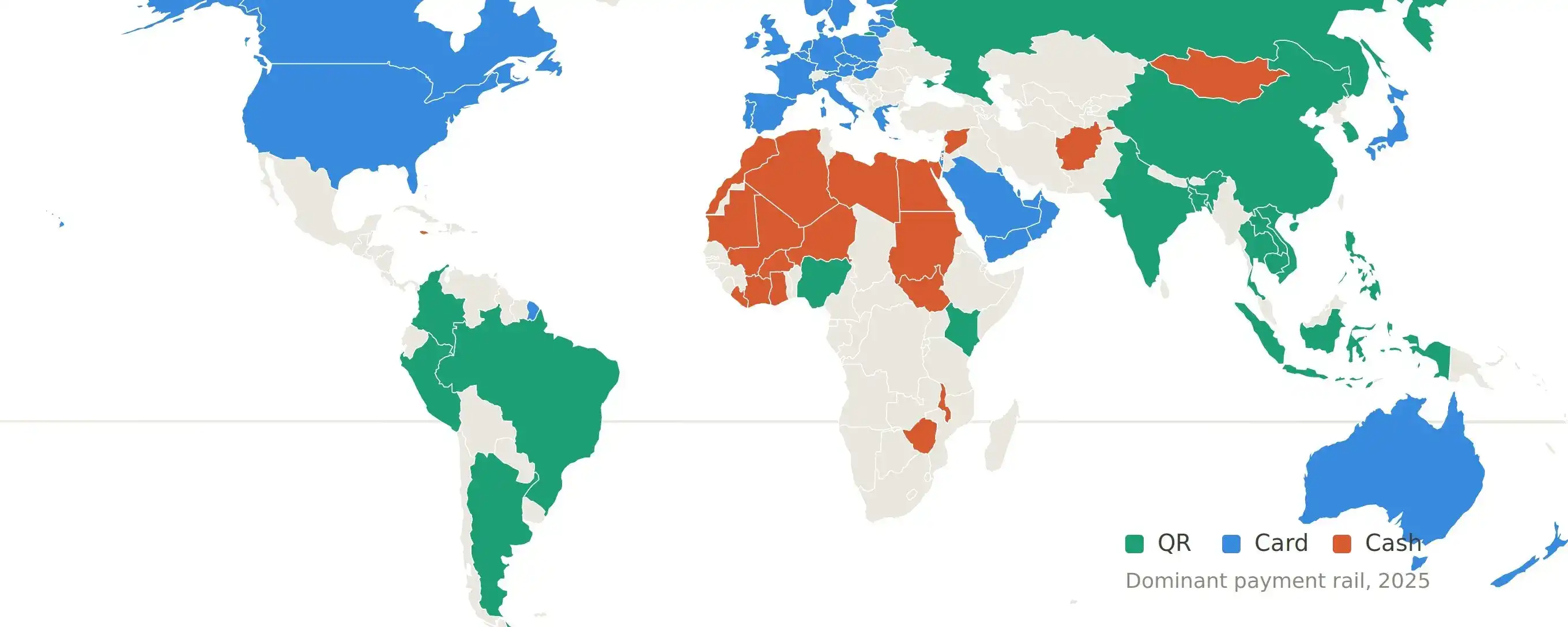
The Reality of Payments in Latin America Is Not What You Think

The payment landscape in Latin America is undergoing a fundamental shift, driven by on-the-ground realities that challenge common perceptions. Based on over 500 hours of field research across the region, key insights emerge. Firstly, QR code payments, like Brazil's Pix, are becoming the dominant payment method in most emerging markets, overtaking cards. However, these domestic instant payment systems lack international interoperability, creating a significant gap for cross-border users. Secondly, the narrative around crypto cards is often misunderstood; their primary volume comes from high-net-worth professionals using them for salary conversions (e.g., USDT to local currency via Pix), not retail micro-payments. Competition in payments is shifting from customer acquisition to controlling the settlement layer, leading fintechs to acquire banking licenses for efficiency. Thirdly, treating "Latin America" as a single market is a mistake. Countries like Argentina, Brazil, and Mexico have distinct economic realities, user segments, and regulatory approaches. Brazil alone has at least five distinct user segments with different financial flows. Overlooked markets like Guatemala, Honduras, and El Salvador (the "forgotten five") offer high remittance volumes with lower competitive density. Finally, regulation in Latin America is often ahead of the US, with clearer frameworks for digital assets and a pragmatic approach from regulators focused on safety rather than obstruction. The margin on stablecoin forex is rapidly compressing toward zero, meaning future winners will be those building value-added services on top of the infrastructure, not just the cheapest exchange.

marsbit2h ago

The Reality of Payments in Latin America Is Not What You Think

marsbit2h ago

Trading

Spot
Futures

Hot Articles

How to Buy FLOW

Welcome to HTX.com! We've made purchasing Flow (FLOW) simple and convenient. Follow our step-by-step guide to embark on your crypto journey.Step 1: Create Your HTX AccountUse your email or phone number to sign up for a free account on HTX. Experience a hassle-free registration journey and unlock all features.Get My AccountStep 2: Go to Buy Crypto and Choose Your Payment MethodCredit/Debit Card: Use your Visa or Mastercard to buy Flow (FLOW) instantly.Balance: Use funds from your HTX account balance to trade seamlessly.Third Parties: We've added popular payment methods such as Google Pay and Apple Pay to enhance convenience.P2P: Trade directly with other users on HTX.Over-the-Counter (OTC): We offer tailor-made services and competitive exchange rates for traders.Step 3: Store Your Flow (FLOW)After purchasing your Flow (FLOW), store it in your HTX account. Alternatively, you can send it elsewhere via blockchain transfer or use it to trade other cryptocurrencies.Step 4: Trade Flow (FLOW)Easily trade Flow (FLOW) on HTX's spot market. Simply access your account, select your trading pair, execute your trades, and monitor in real-time. We offer a user-friendly experience for both beginners and seasoned traders.

3.3k Total ViewsPublished 2024.03.29Updated 2026.06.02

How to Buy FLOW

Discussions

Welcome to the HTX Community. Here, you can stay informed about the latest platform developments and gain access to professional market insights. Users' opinions on the price of FLOW (FLOW) are presented below.

活动图片