$500 Billion, 20-Year Lease: OpenAI in Talks for 10GW Ohio Data Center, Nvidia Set to Act as Credit 'Backstop'

marsbitPublished on 2026-06-10Last updated on 2026-06-10

Abstract

OpenAI is in advanced negotiations with SB Energy, a SoftBank subsidiary, to lease a massive 10-gigawatt AI data center campus planned for a former uranium enrichment site in Pike County, Ohio. The proposed 20-year lease could involve total rental payments amounting to tens of billions of dollars, with the first 800-megawatt phase slated for 2028. A key structural innovation reported is that Nvidia is in discussions to act as a credit guarantor for OpenAI's lease payments and SB Energy's project financing. This marks a significant expansion of a financing model where major tech firms back AI startups' infrastructure commitments, following similar reported arrangements between Google and Anthropic. The project is part of a larger U.S.-Japan investment framework and involves SB Energy building 9.2 GW of gas-fired power generation. The total cost for the required IT hardware, primarily Nvidia chips, is estimated at around $350 billion, for which OpenAI is seeking separate financing. This deal represents a shift in OpenAI's strategy towards large-scale bilateral agreements for its own compute infrastructure, moving away from earlier joint venture plans like the shelved "Stargate" project. This massive infrastructure commitment coincides with OpenAI's confidential IPO filing. Analysts expect its long-term cloud and compute obligations, totaling over $665 billion, to be a major focus for SEC scrutiny and investor due diligence. SB Energy has also announced its own IPO plans, cre...

Author: Ada, Shenchao TechFlow

OpenAI's capital structure for computing infrastructure is being rewritten.

According to a June 10 report from The Information, OpenAI is in deep negotiations with SB Energy, a subsidiary of SoftBank Group, for a major lease. The subject is a planned AI data center campus on federal land in Pike County, southern Ohio, with a total planned capacity of 10 gigawatts. This campus was previously disclosed by the U.S. Department of Energy (DOE) and the Department of Commerce (DOC) in a "public-private partnership" format, to be built on the site of the former Portsmouth uranium enrichment plant, which produced weapons-grade uranium during the Cold War and shut down in 2001.

Under the terms disclosed by The Information, OpenAI will sign a 20-year lease with SB Energy, during which OpenAI will control the use of the equipment within the campus and will be obligated to pay rent after the project becomes operational. The cumulative rent over the lease period is expected to reach tens of billions of dollars. The first phase, with 800 megawatts of capacity, is expected to be operational by 2028.

Nvidia Steps In as Credit Guarantor, Structural Financing Model Begins to Spread

The core, and previously undisclosed, design of the deal lies in Nvidia's role. According to The Information, Nvidia is in discussions to use its own balance sheet to provide credit guarantees for OpenAI's lease payments and future project financing for SB Energy. This means Nvidia would, for the first time, act as a "financial guarantor" for an infrastructure project of this scale. Its previous collaborations with OpenAI have primarily involved equity investments and sale-leaseback financing structures.

This model is not an isolated case. According to a Bloomberg exclusive report on June 9, Google is essentially providing a backstop arrangement for Anthropic's TPU leasing obligations, which amount to approximately $35 billion, covering five data centers located in New York, Texas, Louisiana, and Indiana. That deal is supported by structured debt issued by a special purpose vehicle (SPV) led by Apollo and Blackstone, with Broadcom providing additional residual value guarantees on the senior tranche. SemiAnalysis describes this structure as a "hyperscaler-backed model," suggesting it is addressing the duration mismatch issue inherent in data centers, where "lease terms exceed 15 years while the payback period is about 8 years."

Nvidia's entry signals that this structure is spreading from cloud providers to the chip supplier side.

$500 Billion Campus Relies on U.S. DOE Land and Japan-U.S. Investment Agreement

The lessor, SB Energy, is an energy company established by SoftBank in 2019, with SoftBank holding a controlling stake. Ares Management and OpenAI are also shareholders. In January of this year, OpenAI and SoftBank Group each injected $500 million (totaling $1 billion) into SB Energy. Concurrently, OpenAI awarded SB Energy the contract to build the 1.2-gigawatt "Stargate" project in Milam County, Texas.

The project's governmental background is particularly crucial. According to a U.S. Department of Commerce disclosure in February, this SB Energy investment stems from the framework of the "Trade Agreement with Japan" reached during the Trump administration. Japan committed to investing $550 billion in the U.S., which includes SB Energy's $33 billion power plant project at the Portsmouth campus. In early May this year, Energy Secretary Chris Wright, Commerce Secretary Howard Lutnick (Note: This seems to be an error in the original text; likely meant a different official), and Interior Secretary Doug Burgum attended the project announcement ceremony in Piketon alongside representatives from SoftBank.

Under the plan, SB Energy will self-fund the construction of 9.2 gigawatts of natural gas power generation units (assets owned by the U.S. government, operated by SB Energy) and partner with AEP Ohio to invest $4.2 billion in grid upgrades. Upon completion, the campus's total 10-gigawatt capacity would be roughly equivalent to the output of 4.5 Hoover Dams, potentially making it the world's largest single data center campus.

$350 Billion Chip Shortfall to Fill, OpenAI Uses 'Piecemeal' Approach to Patch Infrastructure

Having just the campus facilities is far from sufficient. According to industry standards, chips and servers and other IT equipment account for about 70% of the total cost of an AI data center. For this project alone, OpenAI would need to raise approximately $350 billion to purchase Nvidia chips. The Information reports that OpenAI is already discussing how to finance this chip procurement separately.

This move reflects a shift in OpenAI's infrastructure strategy. Earlier this year, the $500 billion "Stargate" joint venture initiative launched by OpenAI, Oracle, and SoftBank was confirmed by the industry to have been effectively shelved mid-year. The FT reported that OpenAI has "effectively abandoned the joint venture model" and is turning to large-scale bilateral deals to advance its own computing power deployment. This 20-year lease with SB Energy is the largest single product of this new approach.

$665 Billion in Cloud Lease Obligations to Become Focus of IPO Prospectus Scrutiny

This Monday (June 8), OpenAI confirmed it had confidentially submitted its IPO prospectus (Form S-1) to the SEC. According to disclosures by CNBC and Reuters, the underwriting syndicate includes Goldman Sachs, Morgan Stanley, and JPMorgan Chase, with a target valuation potentially exceeding $1 trillion, aiming for a listing as early as September. Media outlets like Bloomberg, citing internal documents, predict OpenAI will still record a loss of approximately $14 billion in 2026 and may not achieve profitability before 2029.

Against this backdrop, the at least $665 billion in cloud leasing commitments OpenAI has signed over the past year with Microsoft (incremental $250 billion), Oracle ($300 billion over 5 years), and AWS ($100 billion total over 8 years, including an original $3.8 billion) will become a core focus for SEC review and institutional investor due diligence. OpenAI's CFO, Sarah Friar, admitted internally in April that if revenue growth falls short of expectations, the company might not be able to fulfill its future computing power contracts.

Meanwhile, SB Energy itself announced its plans for a U.S. IPO in May of this year. The underwriting syndicate includes JPMorgan Chase, Goldman Sachs, Morgan Stanley, Citigroup, and Mizuho, with a valuation potentially exceeding $50 billion, aiming for a listing as early as September. This creates a situation where OpenAI, SB Energy, and their upstream partner Nvidia will be "exposing each other's risk exposures in their respective prospectuses," adding another layer to the "circular financing" narrative.


Trending Cryptos

Related Questions

QWhat is the scale and key financial arrangement of the AI data center campus that OpenAI is reportedly negotiating in Pike County, Ohio?

AOpenAI is negotiating a 20-year lease with SB Energy for a planned 10-gigawatt AI data center campus on federal land in Pike County, Ohio. The total rent over the lease term is projected to reach hundreds of billions of dollars, with the first phase of 800 megawatts expected to be operational by 2028.

QWhat unprecedented financial role is NVIDIA reportedly playing in the Ohio data center deal involving OpenAI and SB Energy?

ANVIDIA is reportedly in discussions to act as a 'credit guarantor' for the deal, using its balance sheet to backstop OpenAI's lease payments and future project financing for SB Energy. This marks a first for NVIDIA in providing such financial guarantees for a large-scale infrastructure project of this nature.

QWhat broader industry financing pattern does the OpenAI-SB Energy deal, with NVIDIA's involvement, represent according to the article?

AThe article suggests the deal represents the spread of a 'hyperscaler-backed' structured financing model from cloud providers to chip suppliers. This model, also seen in deals like Google backing Anthropic's obligations, addresses the 'duration mismatch' between long-term leases (15+ years) and the shorter return-on-investment period (around 8 years) for data centers.

QHow does the article describe the shift in OpenAI's infrastructure strategy, and what is a key example?

AThe article states OpenAI has shifted from a joint venture model (like the stalled $500 billion 'Stargate' project) to a strategy of advancing its own computing power through bilateral, large-scale deals. The 20-year lease with SB Energy for the Ohio campus is cited as the largest product of this new approach.

QWhat are the significant financial commitments and associated risks for OpenAI as it prepares for its IPO?

AOpenAI faces at least $665 billion in cloud leasing commitments from deals with Microsoft, Oracle, and AWS. These long-term obligations are expected to be a major focus of SEC review and investor due diligence for its IPO, especially given internal projections of continued significant losses until at least 2029.

Related Reads

The Hunter Becomes the Hunted: The Most Profitable MEV Bot Gets Hacked

A well-known and highly profitable Ethereum MEV Bot, Jaredfromsubway.eth, suffered a sophisticated on-chain attack this Saturday, losing over $7.5 million. Analysis by Blockaid and others reveals this was not a conventional phishing or smart contract exploit, but a targeted "counter-MEV honeypot attack." The attacker meticulously laid a trap over several weeks, deploying 66 fake token contracts and liquidity pools disguised as major assets like WETH and USDC. These pools created the illusion of arbitrage opportunities. The MEV Bot's automated system detected these signals, executed trades, and in the process, granted approval permissions to attacker-controlled contracts. These approvals were not revoked, creating a persistent vulnerability. The attacker then exploited this in a single transaction, draining the bot's ETH, USDC, and USDT holdings. Jaredfromsubway.eth is notorious as one of Ethereum's most active and profitable MEV Bots, primarily known for executing "sandwich attacks" to profit from transaction slippage. Estimates suggest it has earned tens of millions in MEV revenue. The incident highlights escalating crypto security threats, demonstrating that even top-tier automated "predators" are vulnerable to novel, logic-based attacks designed to exploit their own operational rules. Following the hack, an unverified X account impersonating Jaredfromsubway.eth emerged, falsely offering a bounty for the return of funds, prompting developer warnings for users to stay vigilant.

marsbit28m ago

The Hunter Becomes the Hunted: The Most Profitable MEV Bot Gets Hacked

marsbit28m ago

The Reality of Payments in Latin America Is Not What You Think

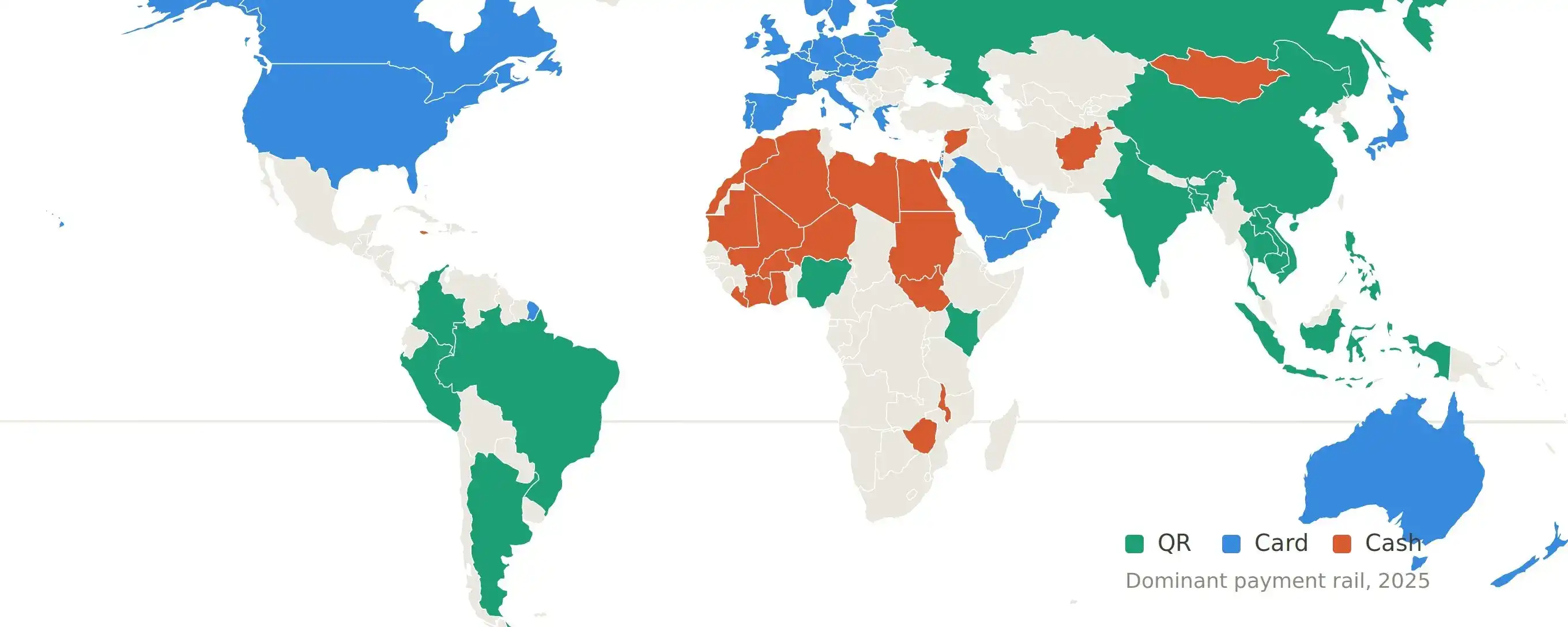
The payment landscape in Latin America is undergoing a fundamental shift, driven by on-the-ground realities that challenge common perceptions. Based on over 500 hours of field research across the region, key insights emerge. Firstly, QR code payments, like Brazil's Pix, are becoming the dominant payment method in most emerging markets, overtaking cards. However, these domestic instant payment systems lack international interoperability, creating a significant gap for cross-border users. Secondly, the narrative around crypto cards is often misunderstood; their primary volume comes from high-net-worth professionals using them for salary conversions (e.g., USDT to local currency via Pix), not retail micro-payments. Competition in payments is shifting from customer acquisition to controlling the settlement layer, leading fintechs to acquire banking licenses for efficiency. Thirdly, treating "Latin America" as a single market is a mistake. Countries like Argentina, Brazil, and Mexico have distinct economic realities, user segments, and regulatory approaches. Brazil alone has at least five distinct user segments with different financial flows. Overlooked markets like Guatemala, Honduras, and El Salvador (the "forgotten five") offer high remittance volumes with lower competitive density. Finally, regulation in Latin America is often ahead of the US, with clearer frameworks for digital assets and a pragmatic approach from regulators focused on safety rather than obstruction. The margin on stablecoin forex is rapidly compressing toward zero, meaning future winners will be those building value-added services on top of the infrastructure, not just the cheapest exchange.

marsbit44m ago

The Reality of Payments in Latin America Is Not What You Think

marsbit44m ago

Making Music in a Bear Market: The Survival Experiment of a Bitcoin Band

"Orange Pill Jam: A Bitcoin Band's Survival in the Bear Market" Orange Pill Jam is a musical group exploring themes of financial sovereignty and privacy, born from the Bitcoin community. Formed after singer Mermaid performed her song "Dollar Apocalypse" at a 2022 conference, the band creates music intended for both Bitcoin enthusiasts and general audiences. Their creative process involves Mermaid writing lyrics and melodies, which producer/multi-instrumentalist Michi then shapes with a precise, rhythm-focused approach, often demanding numerous retakes to achieve his unique standard of timing. Their songs, like "Cypherpunks' Manifesto" and "Fire of Freedom," tackle concepts of digital privacy, the pitfalls of "free" services, and personal sovereignty, influenced by experiences in places like El Salvador. Despite operating in a crypto bear market with a Copyleft model (offering music for free sharing/remixing and accepting optional Bitcoin donations), they face practical challenges. Their growth is slow on platforms like YouTube and Spotify, which aren't optimized for their niche content. The band also navigates the rise of AI-generated music. While acknowledging AI's efficiency for certain tasks, they believe human creativity occupies a unique space that algorithms cannot replicate—the ability to create new genres and capture intangible rhythmic feeling. For Orange Pill Jam, the core argument for both Bitcoin in a downturn and human artistry in the AI age lies in this irreplaceable, intentional, and imperfectly human creative process. Their project persists as an anti-algorithm experiment, valuing the unquantifiable impact of music over scalable metrics.

marsbit50m ago

Making Music in a Bear Market: The Survival Experiment of a Bitcoin Band

marsbit50m ago

Trading

Spot
Futures

Hot Articles

Discussions

Welcome to the HTX Community. Here, you can stay informed about the latest platform developments and gain access to professional market insights. Users' opinions on the price of ADA (ADA) are presented below.

活动图片