Polymarket Faces Ban In Indonesia Amid Growing Global Crackdown

bitcoinistPublished on 2026-05-26Last updated on 2026-05-26

Abstract

Indonesia has blocked access to the prediction market platform Polymarket, joining a growing global regulatory crackdown. The ban was enacted after a widely shared bet on the premature end of President Prabowo Subianto's term drew attention. Authorities declared that platforms facilitating real-money wagers on events, even using crypto or blockchain, constitute illegal gambling. The government is also targeting social media accounts promoting such services and warning the public against participation. This move aligns with actions taken by other jurisdictions. Several countries, including Taiwan, Thailand, China, India, Singapore, Colombia, and Argentina, have previously restricted or blocked Polymarket, often citing its unlicensed gambling operations. In March, Brazil's central bank banned prediction markets like Polymarket over regulatory non-compliance. In the United States, the sector faces scrutiny from lawmakers. A formal investigation was recently launched into Polymarket and Kalshi regarding suspicious trades and compliance measures, coinciding with legal setbacks for the companies in Nevada and Washington.

Amid the global crackdown on online gambling and prediction markets, Indonesia has joined the list of jurisdictions imposing restrictions on Polymarket and similar platforms after a bet on the President’s term drew online attention.

Indonesia Blocks Access To Polymarket

Indonesia recently blocked access to the prediction market platform Polymarket after a widely shared bet on the premature end of Prabowo Subianto’s presidency gained traction on social media last week.

In an official statement, the Ministry of Communication and Digital Affairs announced the ban, affirming that the measure aims to protect the public, particularly the younger generation and users of the digital space.

Director General of Digital Space Supervision Alexander Sabar affirmed that platforms facilitating real-money wagers on event outcomes are considered gambling, even when framed as “prediction markets” and using blockchain technology or crypto assets.

“The government will not tolerate any form of online gambling in Indonesia. Activities like Polymarket involve monetary betting and speculation on events with uncertain outcomes, which violates applicable Indonesian laws,” Alex emphasized.

Therefore, authorities will block access to other prediction market services suspected of “facilitating online gambling practices.” In addition, the government is tracking down social media accounts affiliated with or promoting Polymarket to ensure the ban is enforced across other platforms.

The Ministry also urged the public not to access or engage in digital betting-based speculation activities, including those using crypto, as these activities could violate Indonesian laws and cause financial losses for users.

Global Regulatory Pressure Mounts

Indonesian authorities noted that their decision to restrict access to Polymarket aligns with other global legal frameworks. As the announcement stated, several other jurisdictions have also implemented measures against Polymarket and other prediction market platforms, arguing that they resemble online gambling practices.

Over the past two years, Taiwan, Thailand, China, and India have imposed restrictions on Polymarket under their respective local laws, while Singapore, Colombia, and India have officially blocked the platform.

In March, Argentinian authorities ordered a nationwide blockade of Polymarket after it predicted inflation data. As reported by Bitcoinist, a Buenos Aires court directed internet service providers, Google, and Apple to block access to the platform, arguing that it operated as an unlicensed online gambling platform.

Meanwhile, Brazil’s central bank announced a ban on prediction markets and betting platforms in March, including Polymarket and Kalshi. The authorities affirmed that the platforms failed to comply with local regulations on derivatives trading and raised concerns about investor protections and market integrity.

Prediction markets have also faced scrutiny in the US, with policymakers and State-level authorities putting pressure on the sector. Last week, House of Representatives member James Comer launched a formal investigation into Polymarket and Kalshi following a series of suspicious trades linked to classified US military operations and key geopolitical events.

The lawmaker announced that he had sent a letter to the CEOs of both companies seeking information on how their platforms detect and prevent insider trading. He also asked for details on how they verify user identities and enforce bans on users from restricted jurisdictions. On the same day, the two prediction market giants lost their bids to halt the gambling-related enforcement actions against them in Nevada and Washington.
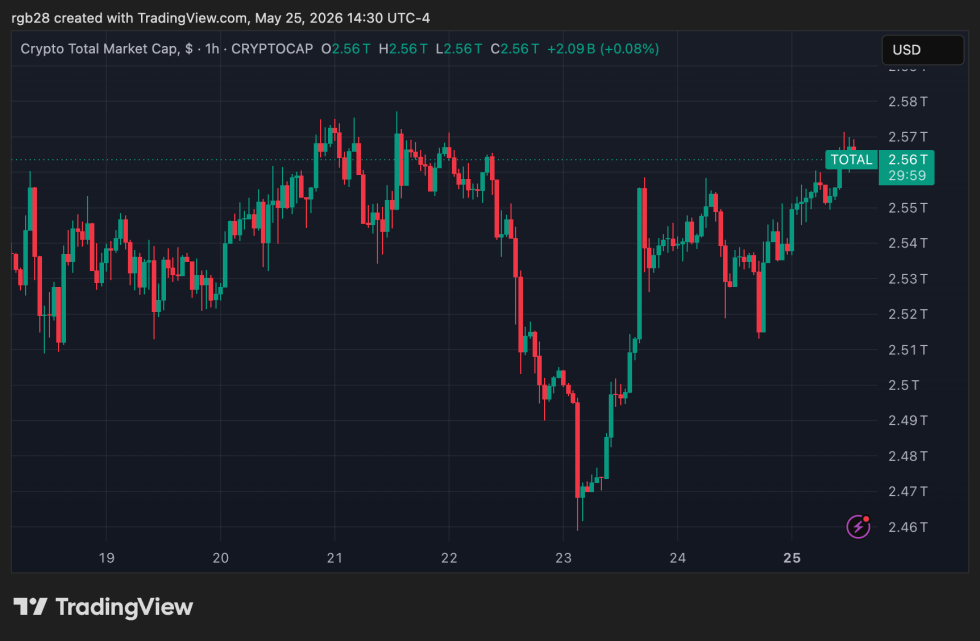
The total crypto market capitalization is at $2.56 trillion in the one-week chart. Source: TOTAL on TradingView


Trending Cryptos

Related Questions

QWhat was the specific event or bet on Polymarket that directly triggered Indonesia's decision to ban the platform?

AThe direct trigger was a widely shared bet on the platform predicting the premature end of Prabowo Subianto's presidency, which gained significant traction on social media.

QAccording to Indonesia's Director General of Digital Space Supervision, Alexander Sabar, why are prediction markets like Polymarket considered gambling under Indonesian law?

AHe stated that any platforms facilitating real-money wagers on event outcomes are considered gambling, regardless of whether they are framed as 'prediction markets' or use blockchain technology or crypto assets, as they involve monetary betting on uncertain outcomes.

QBesides Indonesia, which other countries are mentioned in the article as having officially blocked access to Polymarket?

AThe article mentions Singapore, Colombia, India, and Argentina as countries that have officially blocked access to Polymarket.

QWhat was the reason given by Brazilian authorities for their ban on prediction market platforms like Polymarket and Kalshi in March?

ABrazilian authorities stated that the platforms failed to comply with local regulations on derivatives trading and raised concerns about investor protections and market integrity.

QWhat action did U.S. House Representative James Comer take regarding Polymarket and Kalshi, and what specific information did he request?

AHe launched a formal investigation and sent letters to the CEOs of both companies. He requested information on how their platforms detect and prevent insider trading, verify user identities, and enforce bans on users from restricted jurisdictions.

Related Reads

TechFlow Intelligence Bureau: Anthropic IPO Odds Exceed 80%, Iran Closes Strait of Hormuz Again, Triggering Oil Price Volatility

**Market Digest** **AI & Tech:** Anthropic is widely expected to announce an IPO before November 2026, raising questions about balancing its trillion-dollar valuation ambitions with its core "AI safety" mission. Brands are increasingly adopting AI-generated virtual influencers for marketing. Cloudflare introduced temporary accounts for AI agents to ease automation workflows. **Infrastructure & Hardware:** Google's IPv6 traffic surpassed 50%, marking a major internet milestone. Goldman Sachs warned that massive projected AI capital expenditure ($5.3T) is approaching credit saturation limits, potentially curbing the "AI arms race." **Space & Robotics:** SpaceX's IPO saw a historic $370M retail buying frenzy in three days. Hyundai Motor Group plans to acquire full ownership of Boston Dynamics. Elon Musk speculated about future "septillion-dollar" investments in antimatter for interstellar travel. **Energy & Geopolitics:** Iran's military announced another closure of the strategic Strait of Hormuz, accusing Israel of violating a ceasefire, causing oil market volatility. However, ship-tracking data indicated some traffic continued. Concurrently, Iran resumed crude loadings at Kharg Island, potentially releasing up to 20 million barrels to the market. **Finance & Macro:** A European CLO (collateralized loan obligation) experienced its first post-2008-crisis-era equity tranche default, raising alarms in credit markets. Nomura warned that new Federal Reserve Chair Wash's perceived hawkish debut speech could signal a significant policy shift. **The Undercurrent:** Seemingly disparate events—the Strait of Hormuz tension, the European CLO default, and warnings on AI spending—point to a tightening of global liquidity and rising marginal costs across energy, credit, and tech investment. Meanwhile, capital continues chasing grand narratives like space exploration and advanced AI, highlighting a divergence where old-world leverage frays as new-world stories grow more ambitious.

marsbit34m ago

TechFlow Intelligence Bureau: Anthropic IPO Odds Exceed 80%, Iran Closes Strait of Hormuz Again, Triggering Oil Price Volatility

marsbit34m ago

The Hunter Becomes the Hunted: The Most Profitable MEV Bot Gets Hacked

A well-known and highly profitable Ethereum MEV Bot, Jaredfromsubway.eth, suffered a sophisticated on-chain attack this Saturday, losing over $7.5 million. Analysis by Blockaid and others reveals this was not a conventional phishing or smart contract exploit, but a targeted "counter-MEV honeypot attack." The attacker meticulously laid a trap over several weeks, deploying 66 fake token contracts and liquidity pools disguised as major assets like WETH and USDC. These pools created the illusion of arbitrage opportunities. The MEV Bot's automated system detected these signals, executed trades, and in the process, granted approval permissions to attacker-controlled contracts. These approvals were not revoked, creating a persistent vulnerability. The attacker then exploited this in a single transaction, draining the bot's ETH, USDC, and USDT holdings. Jaredfromsubway.eth is notorious as one of Ethereum's most active and profitable MEV Bots, primarily known for executing "sandwich attacks" to profit from transaction slippage. Estimates suggest it has earned tens of millions in MEV revenue. The incident highlights escalating crypto security threats, demonstrating that even top-tier automated "predators" are vulnerable to novel, logic-based attacks designed to exploit their own operational rules. Following the hack, an unverified X account impersonating Jaredfromsubway.eth emerged, falsely offering a bounty for the return of funds, prompting developer warnings for users to stay vigilant.

marsbit1h ago

The Hunter Becomes the Hunted: The Most Profitable MEV Bot Gets Hacked

marsbit1h ago

The Reality of Payments in Latin America Is Not What You Think

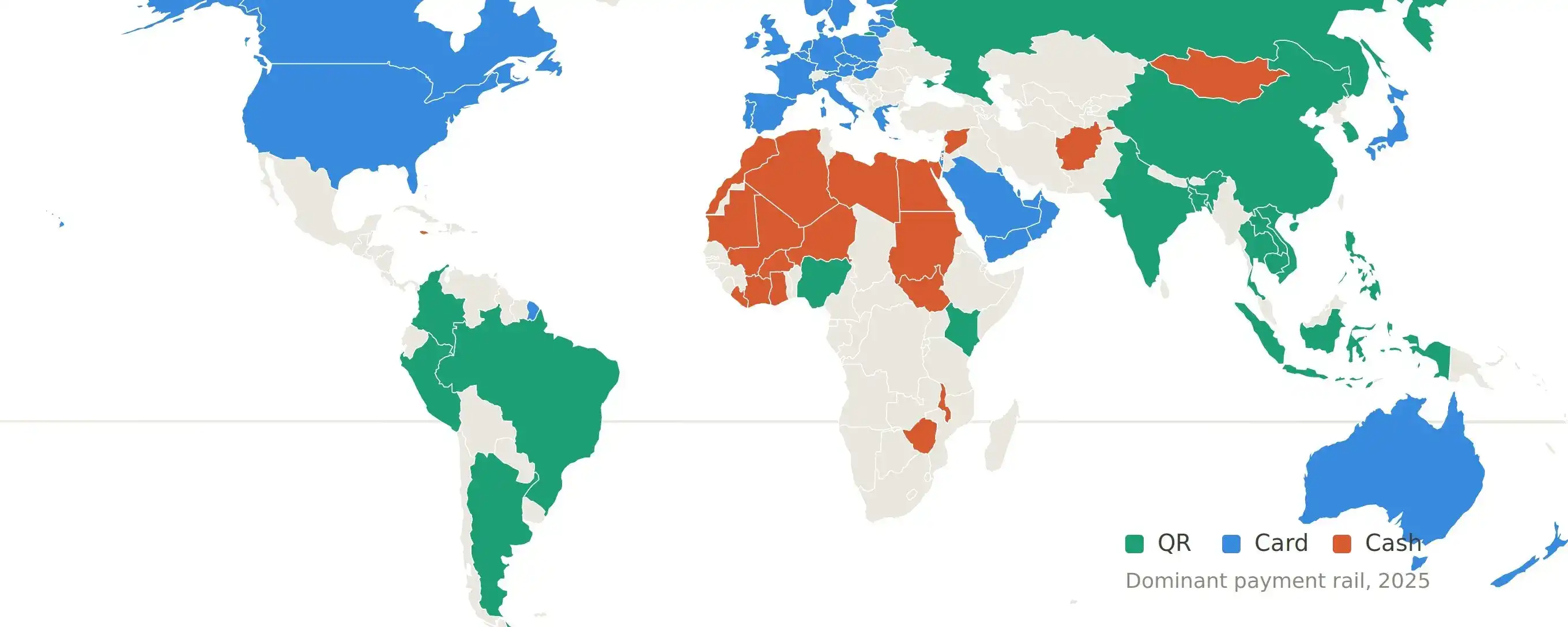
The payment landscape in Latin America is undergoing a fundamental shift, driven by on-the-ground realities that challenge common perceptions. Based on over 500 hours of field research across the region, key insights emerge. Firstly, QR code payments, like Brazil's Pix, are becoming the dominant payment method in most emerging markets, overtaking cards. However, these domestic instant payment systems lack international interoperability, creating a significant gap for cross-border users. Secondly, the narrative around crypto cards is often misunderstood; their primary volume comes from high-net-worth professionals using them for salary conversions (e.g., USDT to local currency via Pix), not retail micro-payments. Competition in payments is shifting from customer acquisition to controlling the settlement layer, leading fintechs to acquire banking licenses for efficiency. Thirdly, treating "Latin America" as a single market is a mistake. Countries like Argentina, Brazil, and Mexico have distinct economic realities, user segments, and regulatory approaches. Brazil alone has at least five distinct user segments with different financial flows. Overlooked markets like Guatemala, Honduras, and El Salvador (the "forgotten five") offer high remittance volumes with lower competitive density. Finally, regulation in Latin America is often ahead of the US, with clearer frameworks for digital assets and a pragmatic approach from regulators focused on safety rather than obstruction. The margin on stablecoin forex is rapidly compressing toward zero, meaning future winners will be those building value-added services on top of the infrastructure, not just the cheapest exchange.

marsbit2h ago

The Reality of Payments in Latin America Is Not What You Think

marsbit2h ago

Trading

Spot
Futures

Hot Articles

How to Buy BAN

Welcome to HTX.com! We've made purchasing Comedian (BAN) simple and convenient. Follow our step-by-step guide to embark on your crypto journey.Step 1: Create Your HTX AccountUse your email or phone number to sign up for a free account on HTX. Experience a hassle-free registration journey and unlock all features.Get My AccountStep 2: Go to Buy Crypto and Choose Your Payment MethodCredit/Debit Card: Use your Visa or Mastercard to buy Comedian (BAN) instantly.Balance: Use funds from your HTX account balance to trade seamlessly.Third Parties: We've added popular payment methods such as Google Pay and Apple Pay to enhance convenience.P2P: Trade directly with other users on HTX.Over-the-Counter (OTC): We offer tailor-made services and competitive exchange rates for traders.Step 3: Store Your Comedian (BAN)After purchasing your Comedian (BAN), store it in your HTX account. Alternatively, you can send it elsewhere via blockchain transfer or use it to trade other cryptocurrencies.Step 4: Trade Comedian (BAN)Easily trade Comedian (BAN) on HTX's spot market. Simply access your account, select your trading pair, execute your trades, and monitor in real-time. We offer a user-friendly experience for both beginners and seasoned traders.

4.4k Total ViewsPublished 2024.10.27Updated 2026.06.02

How to Buy BAN

Discussions

Welcome to the HTX Community. Here, you can stay informed about the latest platform developments and gain access to professional market insights. Users' opinions on the price of BAN (BAN) are presented below.

活动图片