Trump Halts AI Executive Order, Regulatory Efforts Succumb to Competitive Anxiety

marsbitPublished on 2026-05-22Last updated on 2026-05-22

Abstract

In a last-minute reversal, former President Donald Trump halted the signing of a long-anticipated executive order on artificial intelligence. The order had sought to establish a voluntary, pre-release safety testing framework for advanced AI models developed by leading companies like OpenAI, Google, Anthropic, and xAI. Under the proposed plan, companies would have shared their most powerful models with the U.S. government 90 days before public release for national security and cybersecurity risk assessments. Trump refused to approve the order, stating he did not want anything to "slow down our leadership," emphasizing America's lead over China in AI and the technology's role in job creation. This decision highlights the core tension in U.S. AI policy: balancing the management of systemic risks posed by frontier models—such as exposing financial system vulnerabilities—against fears that any regulation could stifle innovation and undermine competitive advantage. The move came despite significant public support for AI safety testing and followed internal administration debates. Some officials, alarmed by the capabilities of models like Anthropic's Mythos in uncovering critical security flaws, had advocated for stronger oversight. However, the industry and many within Trump's circle opposed even this voluntary framework, arguing it would hamper American innovation. The incident underscores how AI policy is increasingly intersecting with national security, economic strategy, and...

Editor's Note: The Trump administration originally attempted to establish a pre-release safety testing mechanism for frontier AI models, but just hours before its signing, this executive order was abruptly halted.

According to the original plan, leading AI companies like OpenAI, Google, Anthropic, and xAI would voluntarily share their models with the U.S. government 90 days before public release for national security and cybersecurity risk assessments. Trump ultimately refused to approve it, stating that he "did not want anything to hinder American leadership in the field of AI."

Behind this last-minute shift lies a core contradiction facing U.S. AI policy: while the capabilities of frontier models are beginning to touch on public risks such as cybersecurity, financial system vulnerabilities, employment shocks, and data center expansion, in the context where U.S.-China AI competition is seen as a national strategy, any regulatory arrangement may be interpreted by the industry as slowing innovation and weakening U.S. competitiveness.

More subtly, this executive order was originally not a mandatory approval system, but rather a "collaborative, voluntary" model assessment framework. In other words, the White House was not attempting to directly control model releases but sought to add a government safety testing phase before models were made publicly available. Yet even this relatively moderate proposal has been temporarily shelved amid the tug-of-war between safety governance and technological leadership.

AI is transitioning from a purely technological industry issue into the intersecting domains of national security, macroeconomics, and political governance. The focal point of debate in U.S. AI policy is also shifting from "whether to support AI development" to "how to manage the systemic risks potentially posed by frontier models without sacrificing the lead."

Below is the original text:
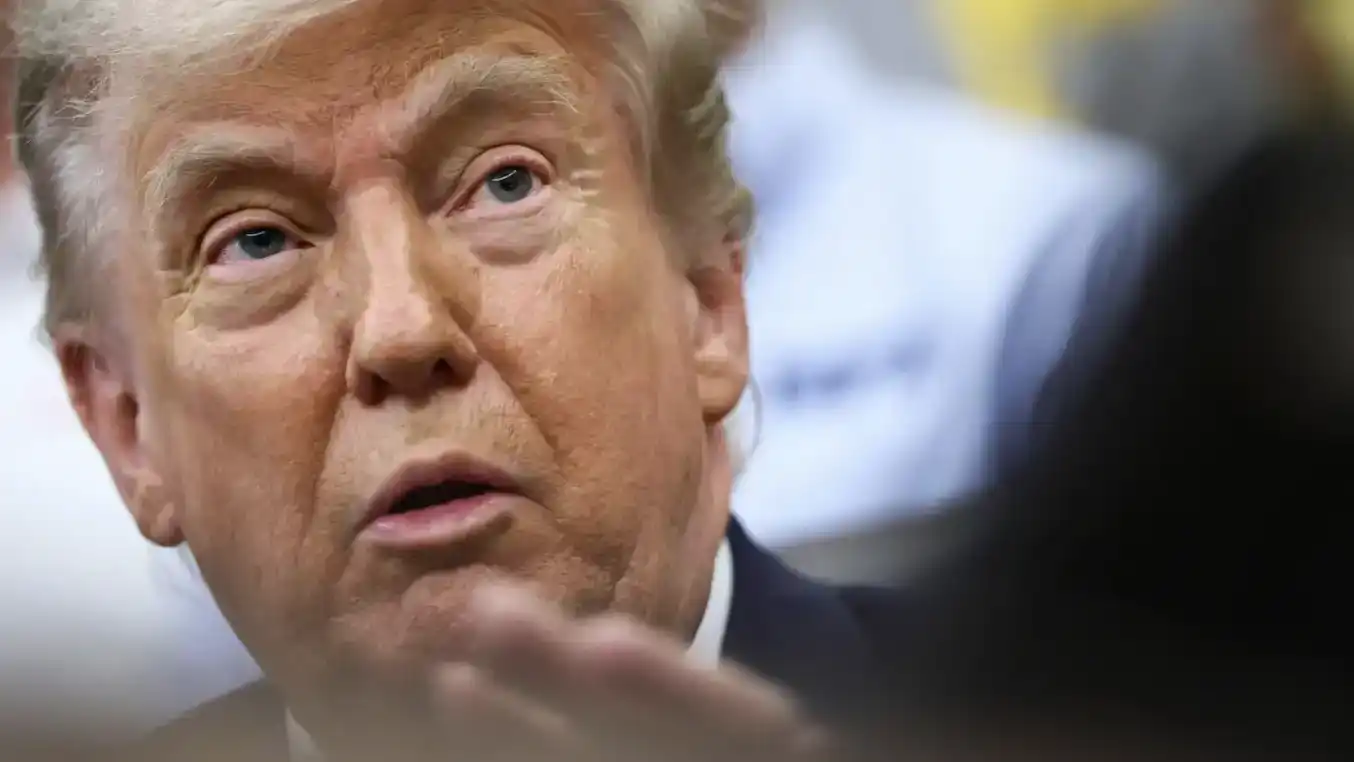
The White House unexpectedly delayed the signing of a long-anticipated executive order on artificial intelligence. Previously, Donald Trump had indicated that he "did not like" parts of the plan, especially the arrangement whereby the U.S. government proposed to conduct national security and cyber risk reviews of AI models.

The executive order was originally scheduled to be signed on Thursday afternoon. Under the plan, leading AI companies like OpenAI, Google, and Anthropic would have voluntarily committed to submitting their models for government review.

Trump's sudden reversal occurred after weeks of internal government debate over the boundaries of regulatory scrutiny.

Speaking about the executive order, Trump said: "I don't like certain aspects of it. We're ahead of China, and we're ahead of everyone, and I don't want anything to hold back our lead." He also stated that artificial intelligence "is also bringing in a lot of jobs."

Before the signing ceremony was abruptly postponed, several tech company CEOs had been scheduled to travel to Washington to attend the event with Trump.
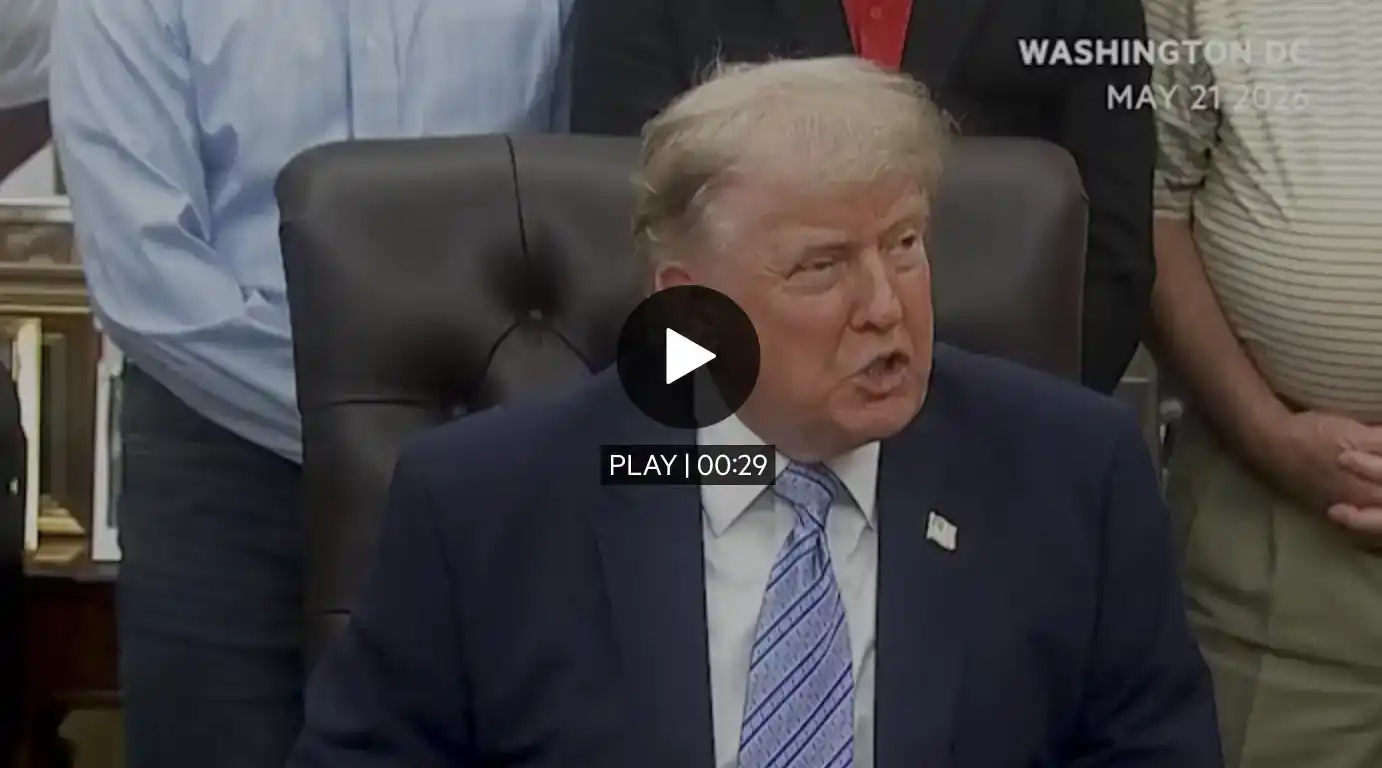
The delayed signing comes as multiple polls continue to show that American voters are concerned about the impact of artificial intelligence, with many supporting stricter regulation and safety guardrails for this emerging technology.

Public concerns are rising about the safety implications of releasing powerful AI models; simultaneously, the impact of AI on jobs and controversies surrounding large-scale data center construction have complicated the White House's political calculus. Not long ago, this administration's attitude towards the AI industry was still notably positive.

Some of Trump's allies had called for bringing leading AI models under U.S. government control; however, other MAGA camp figures warned that any measures restricting AI growth could hinder the U.S. economy.

A poll conducted this month for the Institute for Family Studies showed that 82% of Americans support the White House conducting safety testing on advanced AI models.

The development of this executive order stemmed from key White House officials having early access to Anthropic's latest Mythos model, which included Treasury Secretary Scott Bessent. The model possesses advanced capabilities for identifying cybersecurity vulnerabilities. Informed officials said they were alarmed by issues exposed by the model, such as vulnerabilities in the banking system.

So far, Anthropic has only granted limited access to the Mythos model to a select group of trusted institutions, including tech companies and some banks, allowing them to discover and fix cybersecurity issues before hackers gain access to the model.

Trump's National Economic Council Director, Kevin Hassett, had at one point proposed that frontier AI models undergo a process similar to drug approval, only being officially released after "being proven safe, just like the FDA approves drugs."

His remarks faced strong opposition from AI founders and investors, including some with close ties to the Trump administration, who argued that such a system would weaken America's innovative capabilities.

The executive order fell far short of such an approval system, instead moving towards establishing a "collaborative, voluntary model benchmark assessment framework." On Thursday morning, before the scheduled signing ceremony, White House officials had already briefed reporters on the contents of the order.

Under the proposed agreement, leading AI companies including OpenAI and xAI would voluntarily share their models with the government 90 days before public release. In other words, this mechanism would ultimately still largely rely on the willingness of AI company leaders to cooperate.


Trending Cryptos

Related Questions

QWhat was the original purpose of the AI executive order reportedly halted by the Trump administration?

AThe original purpose of the AI executive order was to establish a voluntary pre-release safety testing mechanism. Leading AI companies like OpenAI, Google, Anthropic, and xAI were expected to voluntarily share their advanced models with the U.S. government for national security and cybersecurity risk assessment 90 days before public release.

QAccording to the article, what was the primary reason Donald Trump gave for stopping the AI executive order?

ADonald Trump's primary reason for stopping the AI executive order was a desire to maintain U.S. leadership in AI. He stated, "We lead China, we lead everyone, and I don't want anything getting in the way of us leading," expressing concern that the proposed safety review could hinder American competitiveness.

QWhat key internal contradiction in U.S. AI policy is highlighted by the article's analysis of this event?

AThe article highlights the core contradiction between managing the public risks of frontier AI models (like cybersecurity threats, financial system vulnerabilities, and employment impacts) and the desire to avoid any regulatory measures that could slow innovation and weaken the U.S.'s competitive position, especially against China, in this strategically vital field.

QHow did the proposed executive order differ from a more stringent FDA-style approval process that was reportedly discussed internally?

AThe proposed executive order was far less stringent than an FDA-style approval process. It established a "collaborative, voluntary model benchmarking framework" where companies would voluntarily share models for review. This contrasted with the stricter concept of requiring models to be 'proven safe' before release, which was strongly opposed by the AI industry.

QWhat specific incident involving an AI model is mentioned as a catalyst for the development of the proposed safety review framework?

AThe development of the safety review framework was partly catalyzed when key White House officials, including Treasury Secretary Scott Bessent, were given early access to Anthropic's new 'Mythos' model. Its ability to identify serious vulnerabilities in systems like the banking sector reportedly alarmed the officials.

Related Reads

The Hunter Becomes the Hunted: The Most Profitable MEV Bot Gets Hacked

A well-known and highly profitable Ethereum MEV Bot, Jaredfromsubway.eth, suffered a sophisticated on-chain attack this Saturday, losing over $7.5 million. Analysis by Blockaid and others reveals this was not a conventional phishing or smart contract exploit, but a targeted "counter-MEV honeypot attack." The attacker meticulously laid a trap over several weeks, deploying 66 fake token contracts and liquidity pools disguised as major assets like WETH and USDC. These pools created the illusion of arbitrage opportunities. The MEV Bot's automated system detected these signals, executed trades, and in the process, granted approval permissions to attacker-controlled contracts. These approvals were not revoked, creating a persistent vulnerability. The attacker then exploited this in a single transaction, draining the bot's ETH, USDC, and USDT holdings. Jaredfromsubway.eth is notorious as one of Ethereum's most active and profitable MEV Bots, primarily known for executing "sandwich attacks" to profit from transaction slippage. Estimates suggest it has earned tens of millions in MEV revenue. The incident highlights escalating crypto security threats, demonstrating that even top-tier automated "predators" are vulnerable to novel, logic-based attacks designed to exploit their own operational rules. Following the hack, an unverified X account impersonating Jaredfromsubway.eth emerged, falsely offering a bounty for the return of funds, prompting developer warnings for users to stay vigilant.

marsbit28m ago

The Hunter Becomes the Hunted: The Most Profitable MEV Bot Gets Hacked

marsbit28m ago

The Reality of Payments in Latin America Is Not What You Think

The payment landscape in Latin America is undergoing a fundamental shift, driven by on-the-ground realities that challenge common perceptions. Based on over 500 hours of field research across the region, key insights emerge. Firstly, QR code payments, like Brazil's Pix, are becoming the dominant payment method in most emerging markets, overtaking cards. However, these domestic instant payment systems lack international interoperability, creating a significant gap for cross-border users. Secondly, the narrative around crypto cards is often misunderstood; their primary volume comes from high-net-worth professionals using them for salary conversions (e.g., USDT to local currency via Pix), not retail micro-payments. Competition in payments is shifting from customer acquisition to controlling the settlement layer, leading fintechs to acquire banking licenses for efficiency. Thirdly, treating "Latin America" as a single market is a mistake. Countries like Argentina, Brazil, and Mexico have distinct economic realities, user segments, and regulatory approaches. Brazil alone has at least five distinct user segments with different financial flows. Overlooked markets like Guatemala, Honduras, and El Salvador (the "forgotten five") offer high remittance volumes with lower competitive density. Finally, regulation in Latin America is often ahead of the US, with clearer frameworks for digital assets and a pragmatic approach from regulators focused on safety rather than obstruction. The margin on stablecoin forex is rapidly compressing toward zero, meaning future winners will be those building value-added services on top of the infrastructure, not just the cheapest exchange.

marsbit43m ago

The Reality of Payments in Latin America Is Not What You Think

marsbit43m ago

Making Music in a Bear Market: The Survival Experiment of a Bitcoin Band

"Orange Pill Jam: A Bitcoin Band's Survival in the Bear Market" Orange Pill Jam is a musical group exploring themes of financial sovereignty and privacy, born from the Bitcoin community. Formed after singer Mermaid performed her song "Dollar Apocalypse" at a 2022 conference, the band creates music intended for both Bitcoin enthusiasts and general audiences. Their creative process involves Mermaid writing lyrics and melodies, which producer/multi-instrumentalist Michi then shapes with a precise, rhythm-focused approach, often demanding numerous retakes to achieve his unique standard of timing. Their songs, like "Cypherpunks' Manifesto" and "Fire of Freedom," tackle concepts of digital privacy, the pitfalls of "free" services, and personal sovereignty, influenced by experiences in places like El Salvador. Despite operating in a crypto bear market with a Copyleft model (offering music for free sharing/remixing and accepting optional Bitcoin donations), they face practical challenges. Their growth is slow on platforms like YouTube and Spotify, which aren't optimized for their niche content. The band also navigates the rise of AI-generated music. While acknowledging AI's efficiency for certain tasks, they believe human creativity occupies a unique space that algorithms cannot replicate—the ability to create new genres and capture intangible rhythmic feeling. For Orange Pill Jam, the core argument for both Bitcoin in a downturn and human artistry in the AI age lies in this irreplaceable, intentional, and imperfectly human creative process. Their project persists as an anti-algorithm experiment, valuing the unquantifiable impact of music over scalable metrics.

marsbit49m ago

Making Music in a Bear Market: The Survival Experiment of a Bitcoin Band

marsbit49m ago

Trading

Spot
Futures

Hot Articles

What is an order book?

An order book is one of the first things you see on the HTX trading interface.

989 Total ViewsPublished 2022.12.01Updated 2024.01.25

What is an order book?

How to Buy ORDER

Welcome to HTX.com! We've made purchasing Orderly (ORDER) simple and convenient. Follow our step-by-step guide to embark on your crypto journey.Step 1: Create Your HTX AccountUse your email or phone number to sign up for a free account on HTX. Experience a hassle-free registration journey and unlock all features.Get My AccountStep 2: Go to Buy Crypto and Choose Your Payment MethodCredit/Debit Card: Use your Visa or Mastercard to buy Orderly (ORDER) instantly.Balance: Use funds from your HTX account balance to trade seamlessly.Third Parties: We've added popular payment methods such as Google Pay and Apple Pay to enhance convenience.P2P: Trade directly with other users on HTX.Over-the-Counter (OTC): We offer tailor-made services and competitive exchange rates for traders.Step 3: Store Your Orderly (ORDER)After purchasing your Orderly (ORDER), store it in your HTX account. Alternatively, you can send it elsewhere via blockchain transfer or use it to trade other cryptocurrencies.Step 4: Trade Orderly (ORDER)Easily trade Orderly (ORDER) on HTX's spot market. Simply access your account, select your trading pair, execute your trades, and monitor in real-time. We offer a user-friendly experience for both beginners and seasoned traders.

3.7k Total ViewsPublished 2024.08.25Updated 2026.06.02

How to Buy ORDER

Discussions

Welcome to the HTX Community. Here, you can stay informed about the latest platform developments and gain access to professional market insights. Users' opinions on the price of ORDER (ORDER) are presented below.

活动图片