Investing $5 Billion: Cerebras Uses a 'Redemption Bond' to Enter Sam Altman's Hall of Gods

marsbitPublished on 2026-05-14Last updated on 2026-05-14

Abstract

Cerebras Systems, the chipmaker known for its massive wafer-scale WSE-3 processor, is making a dramatic IPO push with a $48 billion valuation. This move follows a crucial deal with OpenAI, where Cerebras will provide 750 megawatts of computing power over three years. In exchange, OpenAI receives warrants for a 10% stake in Cerebras, valued at around $5 billion. This agreement, termed a "computing ransom note," secures Cerebras a place within Sam Altman's influential network while sacrificing a significant portion of its potential profits from the deal. The partnership has supercharged Cerebras's market prospects, granting it a premium valuation and positioning it as a core OpenAI partner. The article frames this as part of "Altman Economics," where OpenAI leverages its model sovereignty to extract concessions from hardware suppliers, reshaping the AI hardware landscape into a hierarchy of sovereigns and vassals.

On Wall Street's monitors, the flames of the digital oracle burn ever brighter.

This week, the chip industry's 'maverick', Cerebras Systems, charged towards an IPO with a valuation of $48 billion

This is the largest listing of 2026, a commercial ritual imbued with both sanctity and brutality.
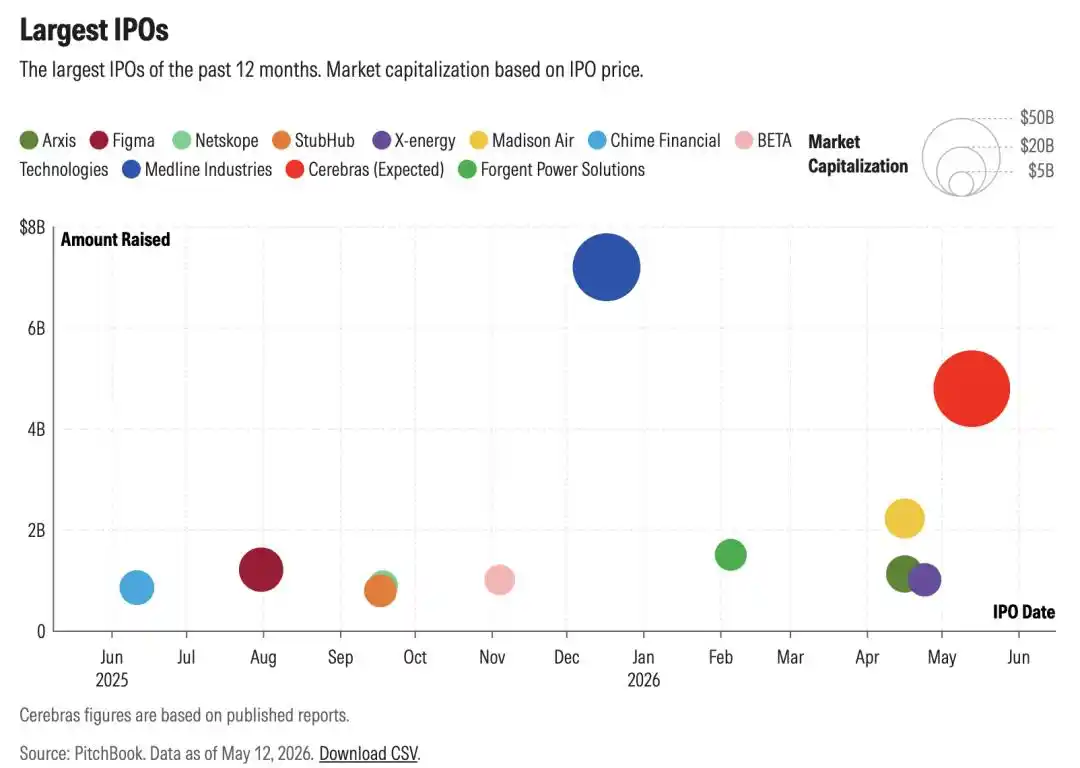
To squeeze into Sam Altman's 'Hall of Gods', Cerebras personally cut away 10% of its own 'flesh and blood'—stock warrants worth approximately $5 billion.

This is no longer a simple IPO. It is a tribute from underlying hardware to model sovereignty, paid in the twilight of an era.

And standing behind all this prosperity is the man known as the 'new lord of Silicon Valley'.

The Return of Brutalist Aesthetics

It Forged a 'Silicon-based Leviathan'

If Nvidia proudly calls its B200 chip an exquisite postage stamp, then Cerebras's flagship product, WSE-3, is a massive dinner plate.
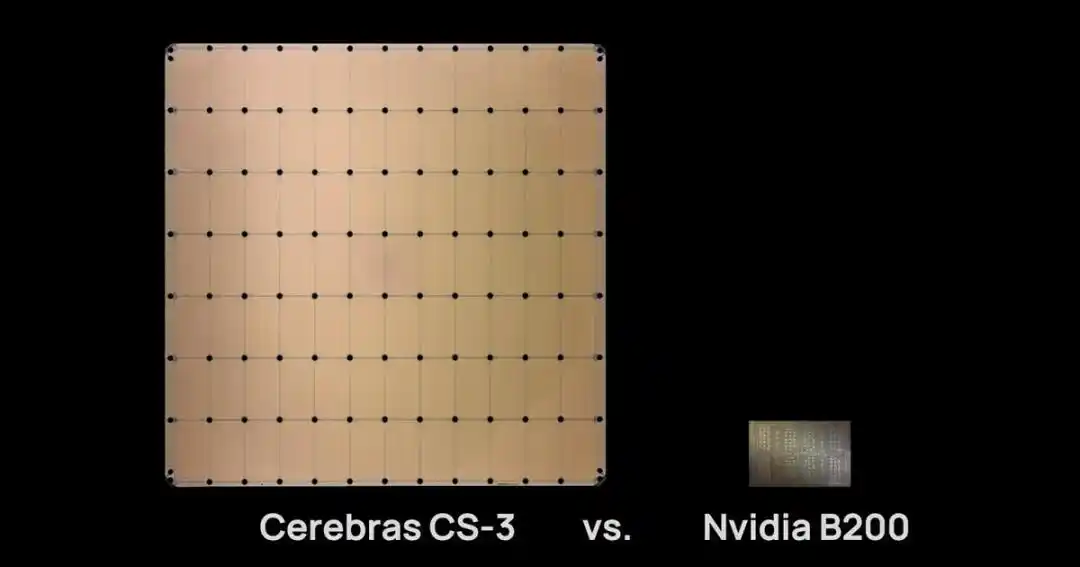
For the past three decades, the semiconductor industry's creed has been 'miniaturization'—dancing on a pinhead, stacking transistors at the nanoscale.

But Cerebras took a counterintuitive path: Since memory bandwidth is the Achilles' heel of AI inference, why not just make the entire wafer into a single chip.

This 'silicon-based leviathan' is nearly half a square foot in size, featuring over 4 trillion transistors (19 times that of Nvidia's B200), 900,000 AI-optimized cores, and 125 petaflops of AI compute—making its total computing power 28 times that of the B200.

Its design is fundamentally about 'trading space for time': etching cores directly onto a single 12-inch wafer, flattening the 'memory wall' where data shuttles between the chip and external storage.

This brutalist aesthetic shows terrifying dominance in the 'Age of Inference':

When running top-tier models from OpenAI, Cognition, Meta, etc., it can achieve a throughput speed of up to 3000 tokens per second, outpacing traditional GPUs by 70 times.
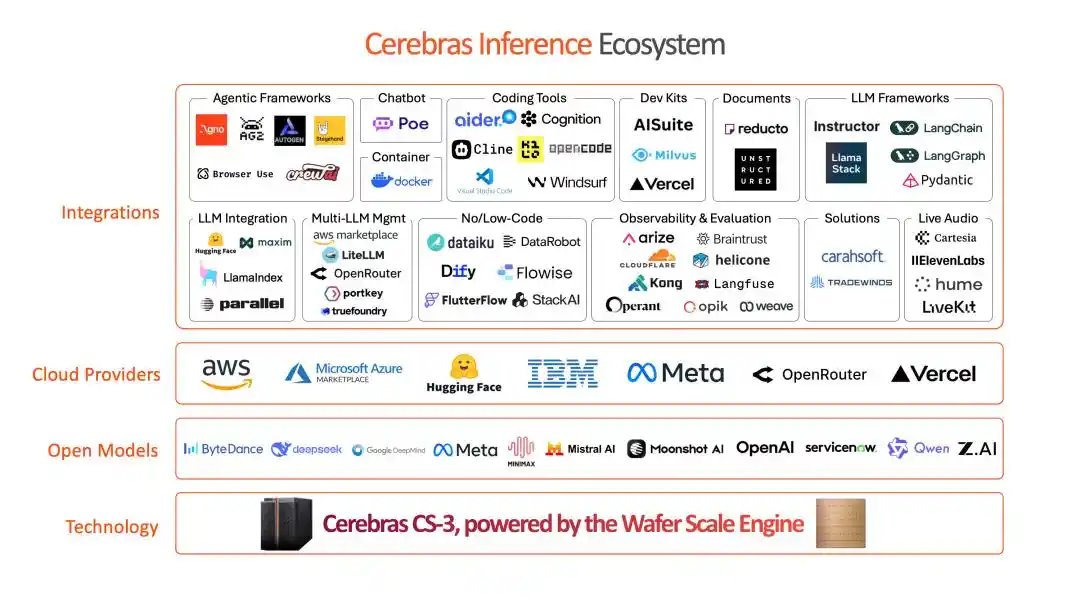
However, in 2026, the hardest technology, if it can't be converted into the fastest Tokens, is just expensive sand.

Eighteen months ago, Cerebras was a forlorn geek.

In 2025, its revenue was only $510 million, almost entirely from a single customer, the UAE's G42. It operated at a loss of $145.9 million, forcing the postponement of its IPO plans.
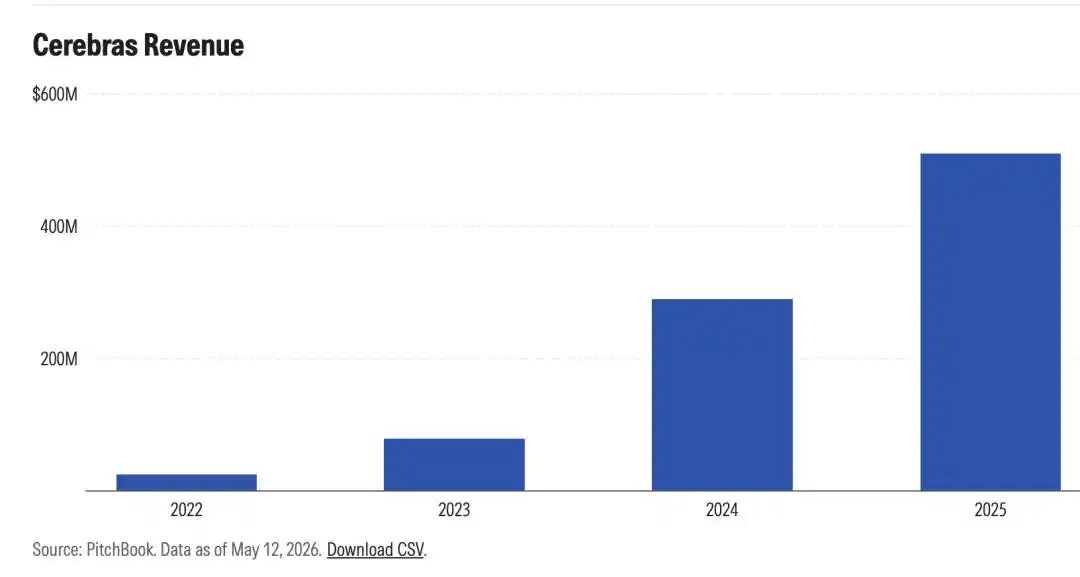
Despite possessing performance surpassing Nvidia's, its fate hung on the checkbook of a single client, like an orphan at constant risk of drowning.

Until it knocked on the door leading to Sam Altman's inner circle.

The $5 Billion 'Redemption Bond'

The Golden Ticket to the Future

In the world of AI, Moore's Law is giving way to the 'Law of the Circle'.

In exchange for survival and explosive growth, Cerebras signed an agreement that left outsiders dumbfounded: providing OpenAI with 750 megawatts of computing capacity over the next three years.

Calculated at current market prices (750 MW is roughly worth $9 billion annually), this deal could bring about $27 billion in revenue and $10 billion in gross profit.

For a company still in the red last year, this was a lifeline.

More tellingly, these 750 megawatts constitute just one-fortieth of the total computing power OpenAI believes it will need by 2030. This leftover order is enough to catapult Cerebras from a 'marginal player' to a market focal point.

But there is no free lunch, only expensive endorsements.

In exchange, Cerebras must gradually grant stock warrants to OpenAI. Upon exercise, OpenAI would hold 10% of Cerebras's shares—worth about $5 billion at the offering price midpoint of $155.

This means Cerebras generously offered up half the potential future profits from this mega-deal as a 'tribute' directly to OpenAI.

This is not an equal exchange. This is the AI era's 'computing power redemption bond'.

OpenAI is the 'lord' holding the power to allocate traffic and demand, while Cerebras is a heavily armored knight providing advanced tools of production—to enter the lord's domain, the knight must pay homage and share half his spoils.
Once branded as OpenAI's core blood ally, Cerebras's price-to-sales (P/S) ratio instantly skyrocketed to 15 times, a level even Nvidia must respectfully acknowledge.

'Altmanomics'

He Is Cashing Out the Hardware Giants

Cerebras is not the only computing power enterprise bowing to Sam Altman.

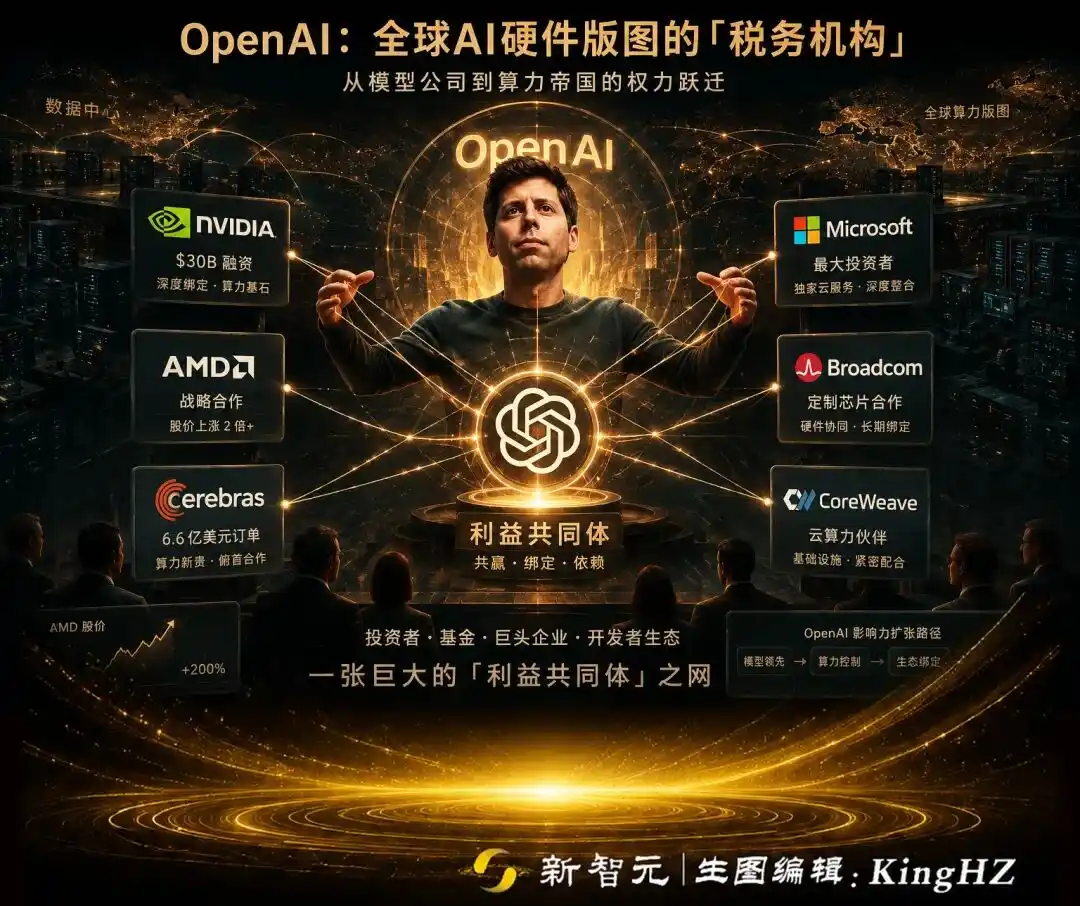
Last October, AMD's stock doubled after reaching a similar agreement with OpenAI; earlier, Nvidia was rumored to have deepened its ties with OpenAI through a $30 billion financing round.

A clear map of power is emerging: OpenAI is evolving from a software company into a global 'tax authority' over the AI hardware landscape.

Sam Altman's true ambition is not merely to acquire data centers for training and running its models, but to quietly expand the group of companies and investors who have a 'vested interest in OpenAI's success.'

He is weaving a vast web of an 'interest community'.
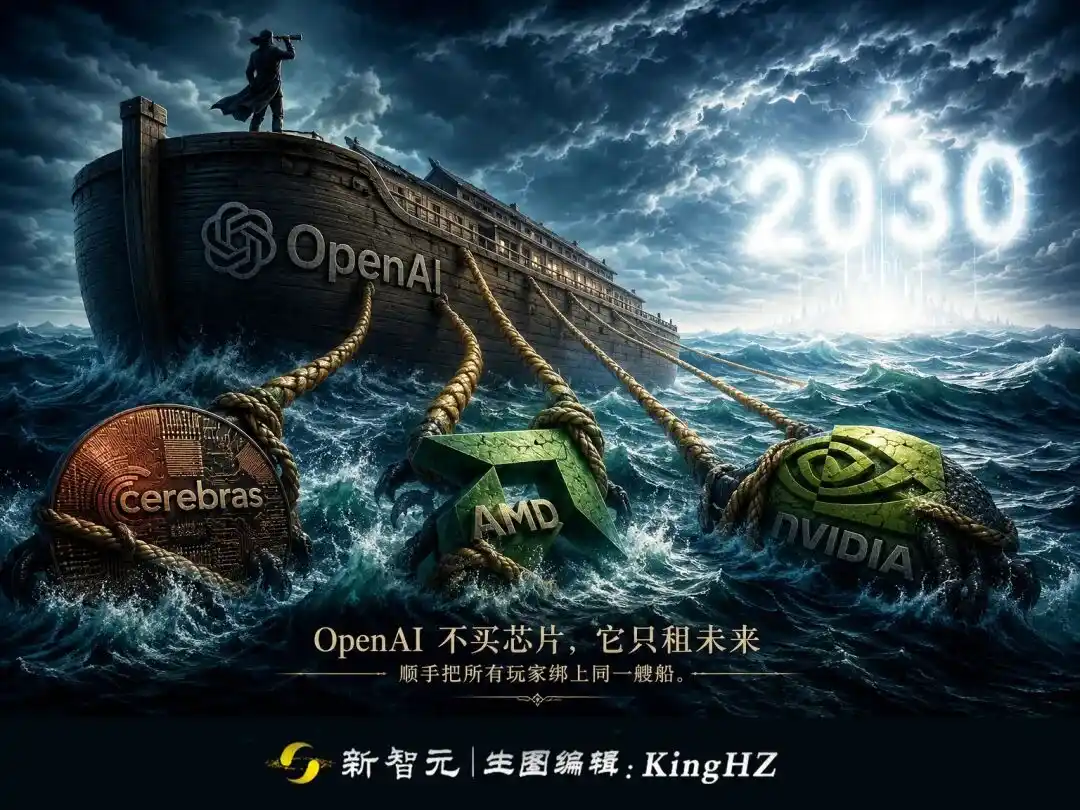
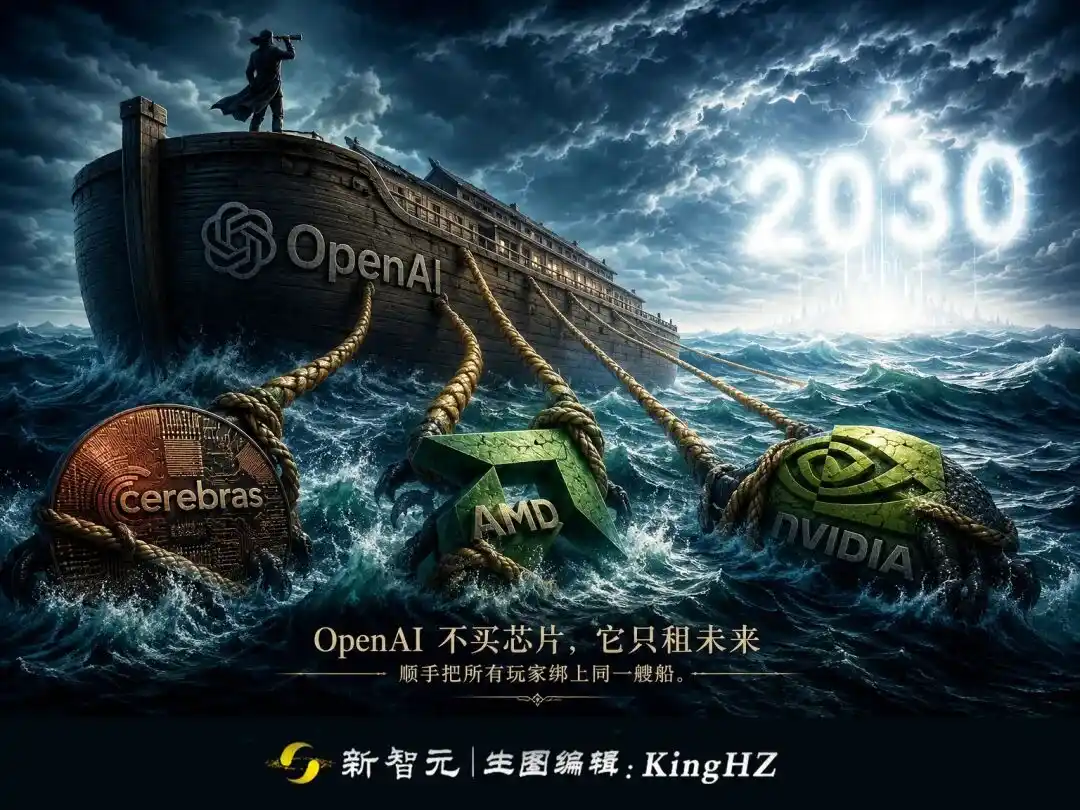
OpenAI doesn't buy chips; it only rents the future—and in the process, binds all players to the same ship.

For hardware vendors: Even with profits halved, obtaining the 'OpenAI certification' and a 15x P/S valuation is a worthwhile deal.

For Sam Altman: He not only secures the computational foundation for the next decade but also becomes a shareholder in all potential competitors.
This is the essence of 'Altmanomics': In the second half of the AI race, whoever defines the demand for models holds the 'power to tax' the underlying supply chain.

Can $48 Billion Buy a Seat at the Power Table?

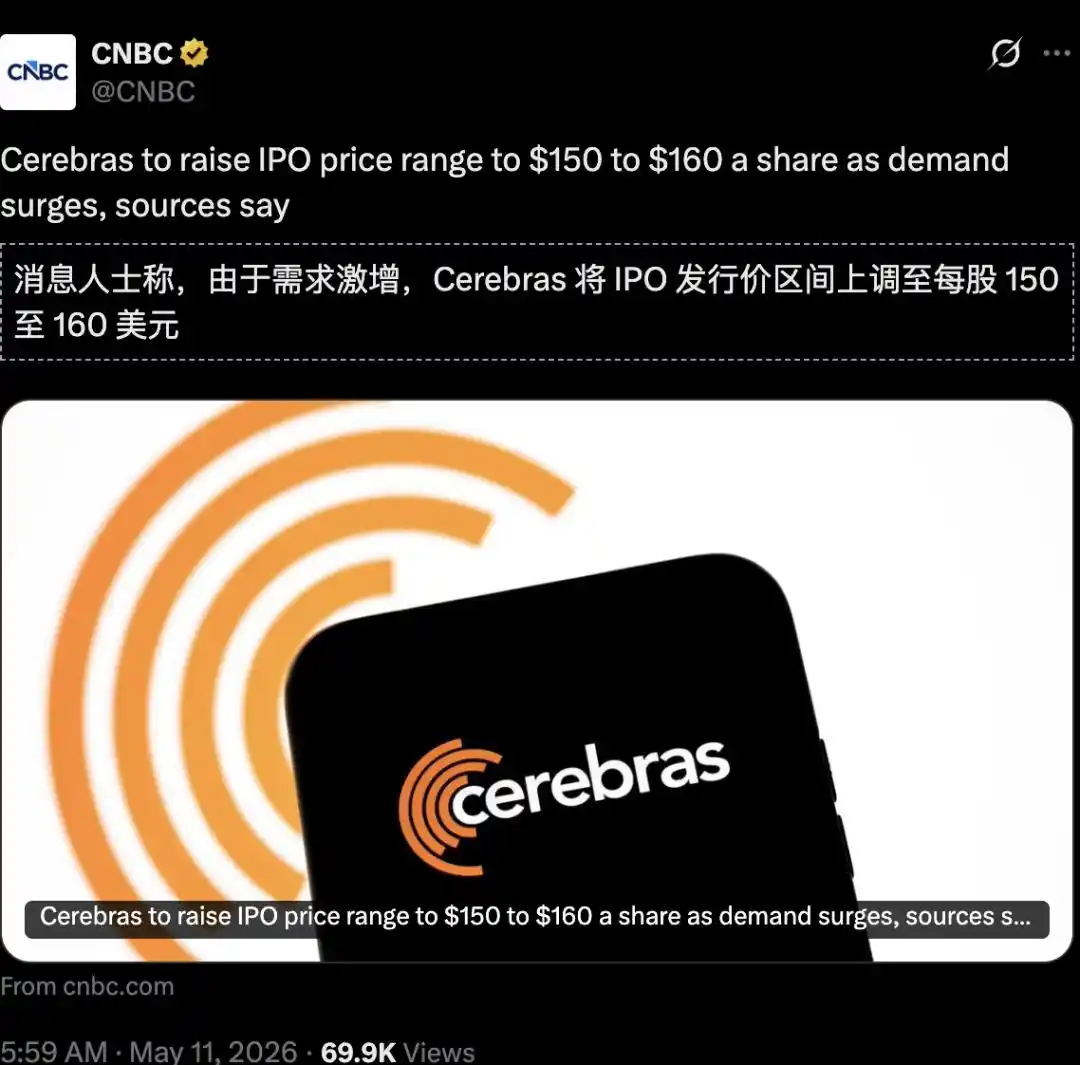
This Thursday, Cerebras's IPO received 20 times oversubscription. The pricing range was raised to $150-$160 per share, implying a valuation of $48 billion, coinciding with semiconductor stocks rising 53% cumulatively from their March lows.
The capital market's frenzy is almost blind. They no longer care whether Cerebras lost $140 million last year or if its P/S ratio has already surpassed Nvidia's.

They are buying a kind of 'certainty'.

In the uncertain landscape of 2026, what identity tag is more certain than being a 'Core Partner of OpenAI'?

This is precisely the most intriguing aspect of this IPO. Cerebras's high valuation is essentially a market premium for the 'Altman endorsement'.

Conclusion: Sovereignty or Vassalage?

This 2026 listing marks the semiconductor industry's entry into a brutal era of stratification.

Future chip companies have only two paths:

Either, like Nvidia, rely on first-mover advantage to build their own ecological empire and become the rule-maker; or, like Cerebras, offer up half their soul in a high-stakes gamble for a ticket into the core circle.

If you cannot become a god, then become the most expensive offering.

This is not just a technological battle; it's a battle for sovereignty.

In every megawatt of electricity flows the 'tribute' from chipmakers to Silicon Valley's new overlord.

References:

https://x.com/FT/status/2054141078710768006

https://www.ft.com/content/3f77f8ad-16b8-4f97-ae55-0bd2e31122fa?syn-25a6b1a6=1

https://www.theinformation.com/newsletters/ai-agenda/startup-helping-openai-optimize-ai-cerebras-chips

https://www.morningstar.com/stocks/why-ai-chip-designer-cerebras-is-2026s-hottest-ipo-yet

This article is from the WeChat public account "Xin Zhi Yuan," author: Xin Zhi Yuan, editor: KingHZ


Trending Cryptos

Related Questions

QWhat is the core technology and design philosophy behind Cerebras Systems' WSE-3 chip, and how does it differ from traditional chip designs?

ACerebras Systems' WSE-3 chip employs a radical design philosophy that contrasts with the traditional industry focus on miniaturization. Instead of shrinking components, it uses an entire 12-inch silicon wafer to create a single, massive chip. This 'brute-force' approach, described as 'trading space for time,' is aimed at eliminating the 'memory wall' bottleneck by providing immense on-chip memory bandwidth. It contains over 4 trillion transistors (19x more than NVIDIA's B200), 900,000 AI-optimized cores, and delivers 125 petaflops of AI computing power. Its key difference is its monolithic wafer-scale design versus the traditional multi-chiplet or discrete GPU designs, prioritizing high-speed data access for AI inference.

QWhat was the crucial strategic deal Cerebras made with OpenAI to enable its 2026 IPO, and what were the key terms?

AThe crucial deal was a multi-year agreement where Cerebras committed to supply 750 megawatts of computing capacity to OpenAI. In exchange for this massive, revenue-guaranteeing contract—valued at approximately $27 billion in revenue and $10 billion in gross profit over three years—Cerebras granted OpenAI warrants. Upon exercise, these warrants would give OpenAI a 10% equity stake in Cerebras, valued at around $5 billion based on the IPO's mid-range share price. This deal, framed as a 'ransom note' or 'tribute,' provided Cerebras with the financial credibility and market validation needed for a successful high-valuation IPO.

QHow does the article characterize the evolving power dynamic in the AI industry, particularly regarding OpenAI's role?

AThe article characterizes the power dynamic as a shift where OpenAI is evolving from a software company into a dominant 'tax authority' or 'feudal lord' over the global AI hardware landscape. By securing large, long-term compute capacity deals from hardware makers like Cerebras, AMD, and NVIDIA—often in exchange for equity or favorable terms—OpenAI is locking in its future compute foundation. More importantly, it is weaving a vast 'community of interest,' binding these suppliers to its success. This grants OpenAI 'taxation rights' over the hardware supply chain, as it defines model demand and controls access to the most lucrative market segments.

QWhat does the term 'Altmanomics' (Altman Economics) refer to in the context of this article?

AIn this article, 'Altmanomics' refers to the strategic and economic model pioneered by OpenAI's Sam Altman. Its essence is that in the later stages of the AI race, the entity that defines the demand for AI models gains the power to 'tax' the underlying hardware supply chain. Instead of merely purchasing chips, OpenAI 'rents the future' by making long-term capacity deals that often include equity stakes. This strategy allows OpenAI to secure its computational base at favorable rates while simultaneously making shareholders and partners out of potential hardware competitors, thereby consolidating its ecosystem power and ensuring alignment of interests.

QAccording to the article's conclusion, what two paths are available for semiconductor companies in the new AI era, as exemplified by NVIDIA and Cerebras?

AThe article concludes that semiconductor companies now face two distinct paths: 1) Become a rule-maker like NVIDIA, which uses first-mover advantage and ecosystem strength to establish its own empire and dictate distribution rules. 2) Become a vassal or 'high-value offering' like Cerebras, which trades a significant portion of its potential sovereignty and profits (through equity and deals) to a dominant AI platform (OpenAI) in exchange for a guaranteed, high-value ticket into the core industry circle. The choice is between maintaining sovereign control or becoming a strategically important, yet subordinate, partner to the new 'lords' of silicon.

Related Reads

GPT-5.6 Countdown: Abandon the Illusion of a Single API, Computational Iteration Can't Outpace a Single Page of Compliance

In mid-June, three seemingly independent industry events—the compliance-driven throttling of Fable 5, the open-sourcing of GLM-5.2, and the leaked release timeline for GPT-5.6—are pushing the global AI industry toward a watershed moment. These shifts signal a fundamental restructuring of the industry's underlying logic. First, **"usability" has substantially overtaken "advanced capabilities"** as the primary weight, pushing the global large language model (LLM) supply chain into a "dual-track" phase of controlled closed-source and local open-source coexistence. Second, **the competitive moats of closed-source giants are shifting**. Their technical focus is moving from "language intelligence" toward "spatial intelligence (world models)"—a domain heavily reliant on computing power. Third, faced with常态化 transnational compliance risks, **a "model-agnostic" decoupled design has become a survival necessity for application-layer developers to maintain business continuity.** The article details how Anthropic's Fable 5, despite its advanced engineering feats, was restricted for non-U.S. citizens within 72 hours of launch, highlighting how geopolitical compliance can instantly limit even the most advanced models. In response, the open-source camp, exemplified by Zhipu AI's MIT-licensed GLM-5.2, is gaining market share by offering stable performance improvements and significant cost advantages (up to 70% savings for enterprises), while achieving full adaptation with domestic semiconductor platforms. Meanwhile, closed-source leaders like OpenAI are pivoting. The anticipated GPT-5.6 reportedly shifts focus from language to spatial intelligence and world models, aiming to rebuild a generational gap in areas like 3D understanding, simulation, and industrial design that demand immense compute. The core conclusion is that the LLM supply chain's logic has changed. Enterprises must now evaluate infrastructure based on a composite of technical performance and policy compliance. For developers, complete reliance on a single closed-source API poses unacceptable risk. Implementing a truly model-agnostic architecture—enabling swift switches to compliant, locally deployable open-source alternatives—is no longer just good practice but a fundamental baseline for business continuity.

marsbit2h ago

GPT-5.6 Countdown: Abandon the Illusion of a Single API, Computational Iteration Can't Outpace a Single Page of Compliance

marsbit2h ago

Is the 'Token Subsidy War' Among AI Giants Almost Over?

The article discusses the ongoing "token subsidy war" among AI giants like OpenAI and Anthropic, questioning whether it's nearing its end. It reveals that current AI subscription prices are heavily subsidized, with some plans offering tokens at up to 70 times the actual cost to attract and retain heavy users, especially developers and enterprises. This strategy mirrors past internet-era subsidy battles, but with a key difference: AI tokens lack "lock-in" effects. Unlike ride-hailing or food delivery apps, users can easily switch between AI providers as APIs become standardized, making it difficult for companies to raise prices post-subsidy. The piece highlights a structural asymmetry in the competition. Giants like Google, with massive advertising revenue, can afford to subsidize tokens indefinitely, akin to using "tokens as a weapon." In contrast, venture-backed companies like OpenAI and Anthropic face pressure to become profitable, especially as they approach IPO. The article cites Google Ventures founder Bill Maris, who suggests Google could slash token prices by 80%, putting immense pressure on competitors. Two potential endgames are presented: the "internet service" model (subsidize, monopolize, then raise prices) and the "utility" model (tokens become a standardized, low-margin commodity like electricity). Given the low switching costs, the latter seems more likely. The competition may not have a single winner but could instead accelerate AI's evolution into a foundational, infrastructure-level technology, akin to a public utility. For now, users continue to benefit from heavily subsidized token costs.

marsbit2h ago

Is the 'Token Subsidy War' Among AI Giants Almost Over?

marsbit2h ago

Beyond the Stadium: The Profitable Games Surrounding the World Cup

"Beyond the Pitch: The Profit Game Around the World Cup" The FIFA World Cup transcends being a sporting spectacle, evolving into a massive global arena for speculation and profit-seeking. The 2026 tournament has amplified this dynamic, creating a multi-layered ecosystem of financial opportunism alongside the football. **Prediction markets** have surged into the mainstream. Platforms like Polymarket and Kalshi saw trading volumes for World Cup contracts soar, attracting new users with their financial trading model and high-profile, chain-based wealth stories that overshadow traditional sports betting in terms of growth and narrative. However, **traditional sportsbooks** remain the dominant force, leveraging established user habits, legal markets, and comprehensive product offerings to handle the vast majority of speculative wagers, with projections suggesting record-breaking betting volumes. Capital markets also react. **"Concept stocks"** in countries like South Korea and Japan experience volatile price swings based on team performance and anticipated fan spending on items like chicken, beer, and viewing parties, effectively becoming a stock market reflecting fan sentiment. The **ticket resale market** has become a sophisticated arena for arbitrage. Prices fluctuate wildly based on team draws and star power, with sellers sometimes listing tickets they don't yet own in a practice akin to short-selling, while FIFA's own "Right to Buy" tokens add another layer of speculative trading. **Collectibles and merchandise** offer another avenue. Panini sticker albums, with their inherent scarcity and nostalgic value, can become high-value collectibles. Limited-edition or locally themed jerseys command significant premiums on secondary markets, and even counterfeit vendors profit from fans' desire for affordable match-day identity. The **cryptocurrency** space has seen a frenzy of speculative, unauthorized World Cup-themed meme coins on chains like Solana. These tokens, often exploiting team names and player imagery, experience extreme pump-and-dump cycles, creating stories of massive gains for a few early entrants and steep losses for many others. Finally, an entire industry thrives on **providing information and tools** to other speculators. Developers create platforms like SeatSidekick to track ticket inventory and prices, while paid Telegram groups and subscriptions sell betting tips and predictions, monetizing the widespread desire for an informational edge. In essence, the World Cup has become a compressed, global laboratory for speculation. While the games determine champions on the field, a parallel, complex network of financial transactions—spanning prediction contracts, bets, stocks, tickets, collectibles, crypto, and information services—settles its own scores in the global market.

marsbit3h ago

Beyond the Stadium: The Profitable Games Surrounding the World Cup

marsbit3h ago

Trading

Spot
Futures

Hot Articles

How to Buy GODS

Welcome to HTX.com! We've made purchasing Gods Unchained (GODS) simple and convenient. Follow our step-by-step guide to embark on your crypto journey.Step 1: Create Your HTX AccountUse your email or phone number to sign up for a free account on HTX. Experience a hassle-free registration journey and unlock all features.Get My AccountStep 2: Go to Buy Crypto and Choose Your Payment MethodCredit/Debit Card: Use your Visa or Mastercard to buy Gods Unchained (GODS) instantly.Balance: Use funds from your HTX account balance to trade seamlessly.Third Parties: We've added popular payment methods such as Google Pay and Apple Pay to enhance convenience.P2P: Trade directly with other users on HTX.Over-the-Counter (OTC): We offer tailor-made services and competitive exchange rates for traders.Step 3: Store Your Gods Unchained (GODS)After purchasing your Gods Unchained (GODS), store it in your HTX account. Alternatively, you can send it elsewhere via blockchain transfer or use it to trade other cryptocurrencies.Step 4: Trade Gods Unchained (GODS)Easily trade Gods Unchained (GODS) on HTX's spot market. Simply access your account, select your trading pair, execute your trades, and monitor in real-time. We offer a user-friendly experience for both beginners and seasoned traders.

4.1k Total ViewsPublished 2024.03.29Updated 2026.06.02

How to Buy GODS

Discussions

Welcome to the HTX Community. Here, you can stay informed about the latest platform developments and gain access to professional market insights. Users' opinions on the price of GODS (GODS) are presented below.

活动图片