Off to a Strong Start! USDD TVL Surpasses $1 Billion Mark, Embarking on a Powerful Journey in 2026

marsbitPublished on 2026-01-16Last updated on 2026-01-16

Abstract

USDD, a decentralized stablecoin, has achieved a significant milestone at the beginning of 2026 by surpassing $1 billion in Total Value Locked (TVL). This growth reflects strong market confidence in its decentralized mechanism, value stability, and sustainable model. Key drivers include its innovative yield-generating mechanism, multi-chain ecosystem, and robust risk management. USDD functions as an "interest-bearing USDT" through its Smart Allocator system, which dynamically allocates reserve funds to vetted on-chain projects, generating over $8.34 million in actual returns. The introduction of sUSDD allows users to easily earn passive yield with auto-compounding features. USDD has expanded across major blockchains like TRON, Ethereum, and BNB Chain. A collaboration with Binance Wallet’s Yield+ campaign attracted over 3,000 users in its first week, boosting sUSDD TVL by 867% to $295 million. The stablecoin uses an over-collateralized debt model with strict minimum collateral ratios, ensuring transparency and 1:1 redeemability with major stablecoins. In 2026, USDD aims to shift from incentive-driven growth to real-use-case adoption, focusing on deeper integration with DeFi protocols, exchanges, and payment tools. Its decentralized, non-freezable, and yield-bearing features position it as a compelling alternative to centralized stablecoins. Breaking the $1 billion TVL mark is just the beginning of its upward trajectory.

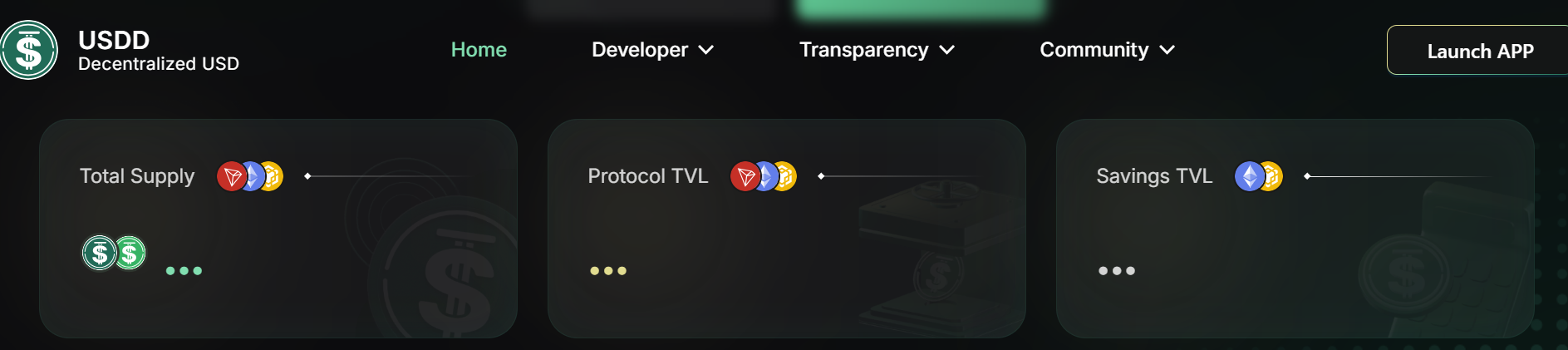
At the beginning of 2026, the decentralized stablecoin USDD has achieved a significant milestone—its Total Value Locked (TVL) has officially surpassed the $1 billion mark! This accomplishment not only marks a new phase in the development of the USDD ecosystem but also demonstrates the market's high recognition of its decentralized mechanism, stable value support, and sustainable development model.
At a time when the DeFi industry is still undergoing structural differentiation and continuous reshuffling, USDD's "strong start" carries significant symbolic meaning. It not only validates USDD's long-term value logic but also injects new growth confidence into the decentralized stablecoin sector, setting a positive tone for the industry's development in 2026.

The Underlying Logic of Counter-Trend Growth: Synergistic Efforts in Mechanism, Ecosystem, and Risk Management

USDD's achievement of this milestone growth is primarily attributed to its three core advantages: an innovative sustainable yield mechanism, a robust multi-chain ecosystem layout, and an exceptional risk management system.

In terms of the yield mechanism, USDD has been positioned as an "interest-bearing version of USDT" since its inception. Through the Smart Allocator yield distribution mechanism, the protocol dynamically allocates a portion of reserve funds to rigorously vetted high-quality on-chain projects, generating diversified returns such as interest, protocol incentives, and platform rewards. According to disclosures, this mechanism has already generated over $8.34 million in actual returns.

Building on this, USDD introduced the interest-bearing token sUSDD, allowing users to seamlessly convert USDD to sUSDD with one click, enabling passive yield generation and automatic compounding without complex operations. This design significantly lowers the barrier to entry for users and extends USDD's utility from a mere value-pegging tool to a capital efficiency tool with yield attributes, enhancing its appeal within the DeFi ecosystem.

In terms of ecosystem layout, USDD has completed the critical transition from a single chain to a multi-chain framework, demonstrating strong user adoption and capital retention during its expansion. For example, during the recent Yield+ campaign launched in collaboration with Binance Wallet, the first week attracted over 3,000 participants, with sUSDD's TVL surging by over 867% in a short period, exceeding $295 million and becoming the fastest-growing stablecoin product during the same period.

Currently, USDD is natively deployed on mainstream public chains such as TRON, Ethereum, and BNB Chain, gradually building a cross-chain synergistic stablecoin infrastructure.

In terms of risk management, USDD adopts an over-collateralized debt position model with strict minimum collateral ratio requirements, ensuring that every USDD is backed by sufficient and transparent assets. Additionally, its stable peg module allows users to exchange USDD for mainstream stablecoins at a 1:1 ratio with zero slippage, providing dual guarantees for liquidity and price stability. It is this series of mechanism designs that enable USDD to maintain its price peg even during market volatility, continuously earning user trust.

Growth Driven by Real-World Adoption: Multi-Chain Ecosystem and Real-World Use Case Deployment in 2026

Looking ahead to 2026, USDD's development roadmap is becoming clearer and more long-term oriented. The team has explicitly stated its intention to gradually shift the ecosystem from "incentive-driven" to "real-use-driven." This means that USDD will increasingly focus on building application scenarios based on genuine demand, gradually reducing reliance on short-term subsidies and external incentives, and instead creating distributable value through endogenous mechanisms like the Smart Allocator.

Simultaneously, USDD plans to further deepen cooperation with on-chain exchanges and core DeFi protocols, exploring a dual-drive model that synergizes on-chain and off-chain activities. On one hand, it aims to expand the native use of USDD in scenarios such as trading, lending, and yield strategies; on the other hand, it seeks to enhance user reach and capital retention through wallets, payment systems, and aggregation tools, forming a positive feedback loop between the protocol, partners, and users.

Facing increasingly fierce competition in the stablecoin market, USDD has also established a clear differentiated positioning. Compared to centralized stablecoins, which offer ample liquidity but pose risks such as freezing and opaque yields, USDD provides a more attractive alternative through its decentralized architecture, anti-freezing characteristics, and mechanisms that reward holders. As the industry demands higher levels of transparency and sustainability, USDD's advantages are expected to become even more pronounced.

Surpassing $1 billion in TVL is just the beginning. In the opening phase of 2026, USDD has already charted a clear and steady upward trajectory, making its future growth potential and industry influence increasingly promising.


Trending Cryptos

Related Questions

QWhat major milestone did USDD achieve at the beginning of 2026?

AUSDD's Total Value Locked (TVL) surpassed the $1 billion mark.

QWhat are the three core advantages that contributed to USDD's growth?

AThe three core advantages are its innovative sustainable yield mechanism, robust multi-chain ecosystem layout, and excellent risk management system.

QWhat is the purpose of the sUSDD token introduced by USDD?

AThe sUSDD token allows users to convert USDD to sUSDD to participate in passive yield generation and automatic compounding with low entry barriers.

QWhich major blockchains has USDD been natively deployed on?

AUSDD has been natively deployed on TRON, Ethereum, and BNB Chain.

QHow does USDD ensure price stability and liquidity for its users?

AUSDD uses an over-collateralized debt model with strict minimum collateral requirements and a stable peg module that allows 1:1, no-slippage swaps between USDD and major stablecoins.

Related Reads

The Hunter Becomes the Hunted: The Most Profitable MEV Bot Gets Hacked

A well-known and highly profitable Ethereum MEV Bot, Jaredfromsubway.eth, suffered a sophisticated on-chain attack this Saturday, losing over $7.5 million. Analysis by Blockaid and others reveals this was not a conventional phishing or smart contract exploit, but a targeted "counter-MEV honeypot attack." The attacker meticulously laid a trap over several weeks, deploying 66 fake token contracts and liquidity pools disguised as major assets like WETH and USDC. These pools created the illusion of arbitrage opportunities. The MEV Bot's automated system detected these signals, executed trades, and in the process, granted approval permissions to attacker-controlled contracts. These approvals were not revoked, creating a persistent vulnerability. The attacker then exploited this in a single transaction, draining the bot's ETH, USDC, and USDT holdings. Jaredfromsubway.eth is notorious as one of Ethereum's most active and profitable MEV Bots, primarily known for executing "sandwich attacks" to profit from transaction slippage. Estimates suggest it has earned tens of millions in MEV revenue. The incident highlights escalating crypto security threats, demonstrating that even top-tier automated "predators" are vulnerable to novel, logic-based attacks designed to exploit their own operational rules. Following the hack, an unverified X account impersonating Jaredfromsubway.eth emerged, falsely offering a bounty for the return of funds, prompting developer warnings for users to stay vigilant.

marsbit28m ago

The Hunter Becomes the Hunted: The Most Profitable MEV Bot Gets Hacked

marsbit28m ago

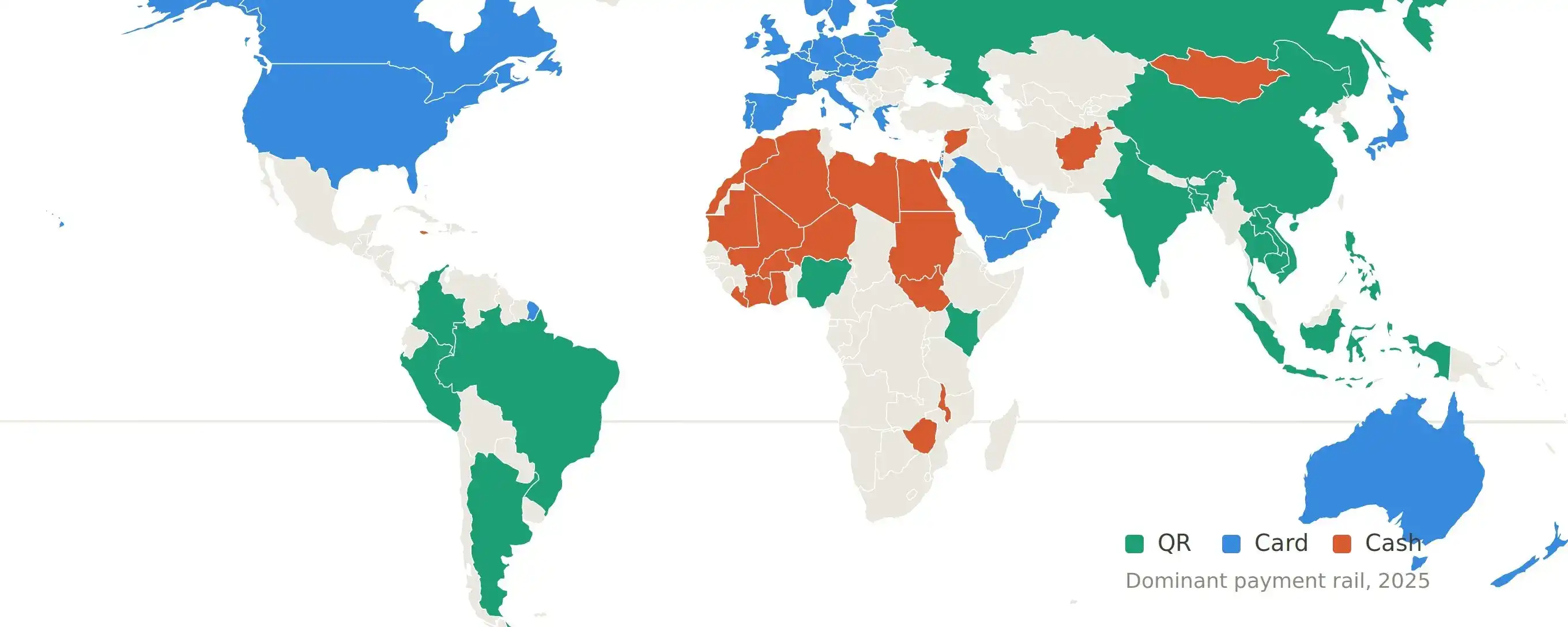
The Reality of Payments in Latin America Is Not What You Think

The payment landscape in Latin America is undergoing a fundamental shift, driven by on-the-ground realities that challenge common perceptions. Based on over 500 hours of field research across the region, key insights emerge. Firstly, QR code payments, like Brazil's Pix, are becoming the dominant payment method in most emerging markets, overtaking cards. However, these domestic instant payment systems lack international interoperability, creating a significant gap for cross-border users. Secondly, the narrative around crypto cards is often misunderstood; their primary volume comes from high-net-worth professionals using them for salary conversions (e.g., USDT to local currency via Pix), not retail micro-payments. Competition in payments is shifting from customer acquisition to controlling the settlement layer, leading fintechs to acquire banking licenses for efficiency. Thirdly, treating "Latin America" as a single market is a mistake. Countries like Argentina, Brazil, and Mexico have distinct economic realities, user segments, and regulatory approaches. Brazil alone has at least five distinct user segments with different financial flows. Overlooked markets like Guatemala, Honduras, and El Salvador (the "forgotten five") offer high remittance volumes with lower competitive density. Finally, regulation in Latin America is often ahead of the US, with clearer frameworks for digital assets and a pragmatic approach from regulators focused on safety rather than obstruction. The margin on stablecoin forex is rapidly compressing toward zero, meaning future winners will be those building value-added services on top of the infrastructure, not just the cheapest exchange.

marsbit43m ago

The Reality of Payments in Latin America Is Not What You Think

marsbit43m ago

Making Music in a Bear Market: The Survival Experiment of a Bitcoin Band

"Orange Pill Jam: A Bitcoin Band's Survival in the Bear Market" Orange Pill Jam is a musical group exploring themes of financial sovereignty and privacy, born from the Bitcoin community. Formed after singer Mermaid performed her song "Dollar Apocalypse" at a 2022 conference, the band creates music intended for both Bitcoin enthusiasts and general audiences. Their creative process involves Mermaid writing lyrics and melodies, which producer/multi-instrumentalist Michi then shapes with a precise, rhythm-focused approach, often demanding numerous retakes to achieve his unique standard of timing. Their songs, like "Cypherpunks' Manifesto" and "Fire of Freedom," tackle concepts of digital privacy, the pitfalls of "free" services, and personal sovereignty, influenced by experiences in places like El Salvador. Despite operating in a crypto bear market with a Copyleft model (offering music for free sharing/remixing and accepting optional Bitcoin donations), they face practical challenges. Their growth is slow on platforms like YouTube and Spotify, which aren't optimized for their niche content. The band also navigates the rise of AI-generated music. While acknowledging AI's efficiency for certain tasks, they believe human creativity occupies a unique space that algorithms cannot replicate—the ability to create new genres and capture intangible rhythmic feeling. For Orange Pill Jam, the core argument for both Bitcoin in a downturn and human artistry in the AI age lies in this irreplaceable, intentional, and imperfectly human creative process. Their project persists as an anti-algorithm experiment, valuing the unquantifiable impact of music over scalable metrics.

marsbit49m ago

Making Music in a Bear Market: The Survival Experiment of a Bitcoin Band

marsbit49m ago

Trading

Spot
Futures

Hot Articles

HTX Learn: Learn USDD to Share 1000 USDT​

To enhance your understanding of USDD, we are rolling out various rewarding events. Join them now and bring home generous rewards through learning and trading.

27.9k Total ViewsPublished 2026.05.25Updated 2026.05.25

HTX Learn: Learn USDD to Share 1000 USDT​

Discussions

Welcome to the HTX Community. Here, you can stay informed about the latest platform developments and gain access to professional market insights. Users' opinions on the price of USDD (USDD) are presented below.

活动图片