Brevis Token Launch Imminent: Community Incentives Account for 32.2%, Airdrop Registration to Go Live Soon

Odaily星球日报Published on 2025-12-25Last updated on 2025-12-25

Abstract

Brevis is set to launch its token BREV with a total supply of 1 billion. The token distribution includes 37% for ecosystem development, 32.2% for community incentives (including airdrops), 20% for the team, and 10.8% for investors. Ecosystem and community tokens will unlock linearly over 24 months post-TGE, with 14.5% and 10.5% circulating at TGE, respectively. Team and investor tokens are locked for the first year. Brevis, a zk-based off-chain computation engine backed by Vitalik Buterin and a $7.5 million seed round, aims to enhance smart contract efficiency. It has been added to Coinbase's listing roadmap. The project is currently in Phase 1 of its community program, allowing users to earn points through invites and daily check-ins. An airdrop registration portal is即将上线.

Original | Odaily Planet Daily (@OdailyChina)

Author | Asher (@Asher_ 0210)
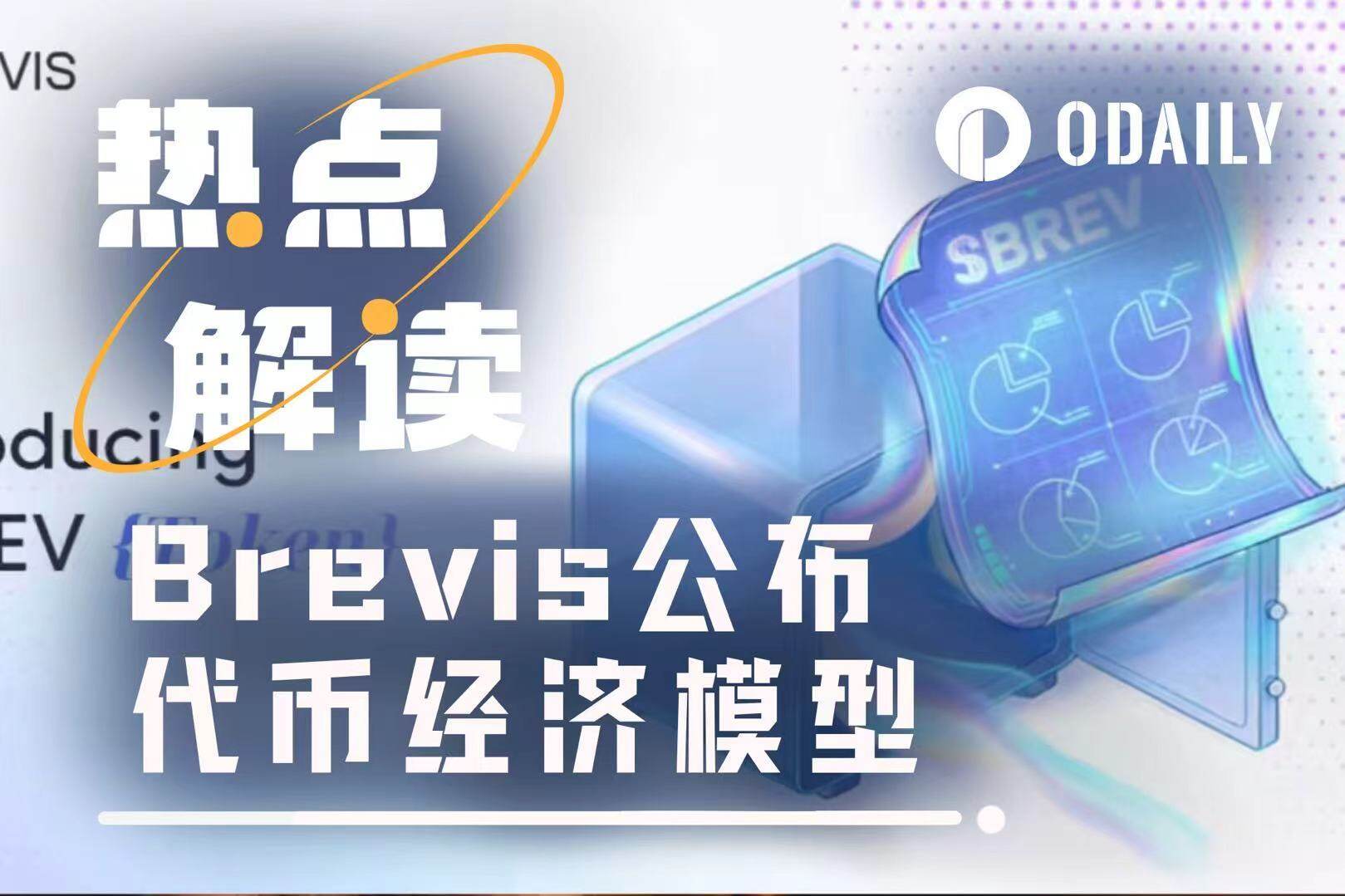
Yesterday, Brevis, which has garnered favor from Vitalik, posted on platform X to announce its token economic model. The total supply of the BREV token is 1 billion, with the specific allocation as follows:

  • Ecosystem Development: 37% of the total token supply, i.e., 370 million tokens, allocated for ecosystem development, R&D, strategic partnerships, initial market building, and long-term protocol expansion;
  • Community Incentives: 32.2% of the total token supply, i.e., 322 million tokens, allocated for rewards to validators, stakers, and community contributors, including initial airdrops to eligible contributors and community members across different categories;
  • Team: 20% of the total token supply, i.e., 200 million tokens, allocated to Brevis's current and future core developers and contributors;
  • Investors: 10.8% of the total token supply, i.e., 108 million tokens, allocated to Brevis's seed round investors.

Among these, the allocations for Ecosystem Development and Community Incentives will be unlocked linearly over 24 months post-TGE, with 14.50% and 10.50% of the tokens circulating at TGE, respectively. The allocations for the Team and Investors will be fully locked for the first year post-TGE, with no initial unlock, followed by a linear unlock over 24 months.

Furthermore, the Brevis team indicated that the airdrop registration portal will be launched soon. Combined with the announcement by Coinbase Markets on platform X on December 20th, which stated that Brevis (BREV) has been added to the listing roadmap, it suggests that Brevis is approaching its TGE.
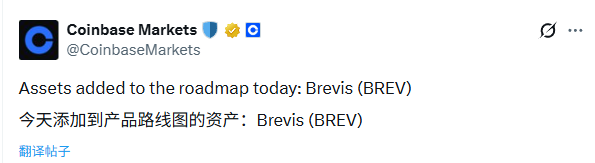
Coinbase adds Brevis (BREV) to its listing roadmap

Brevis: The "Smart Engine" Championing the Concept of an "Infinite Compute Layer"

Brevis is an off-chain compute engine built on zero-knowledge proofs, positioning itself as the "infinite compute layer for Web3 and everything." Simply put, Brevis enables smart contracts to become "smarter," shifting from passive execution to active computation, thereby saving computational costs and improving efficiency. This facilitates user interaction with protocols, asset deposition, and enhances protocol adoption rates. Brevis has garnered significant community discussion largely due to receiving Vitalik's "endorsement."
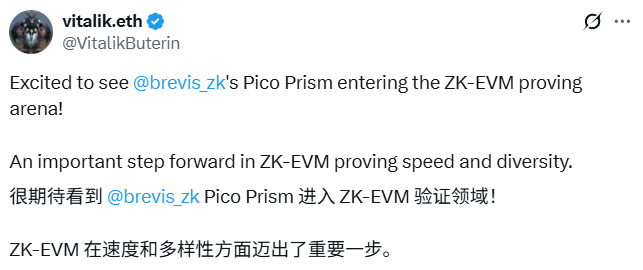
Brevis receives Vitalik's "endorsement"

Brevis completed a $7.5 million seed funding round last November, led by Polychain and Yzi Labs (For more related content, please read: Unveiling Brevis: Favored by Vitalik, $7.5M Funding, How Does This Off-Chain Compute Engine Unlock a New Ethereum Paradigm?).

Phase 1 Tasks Are Still Ongoing

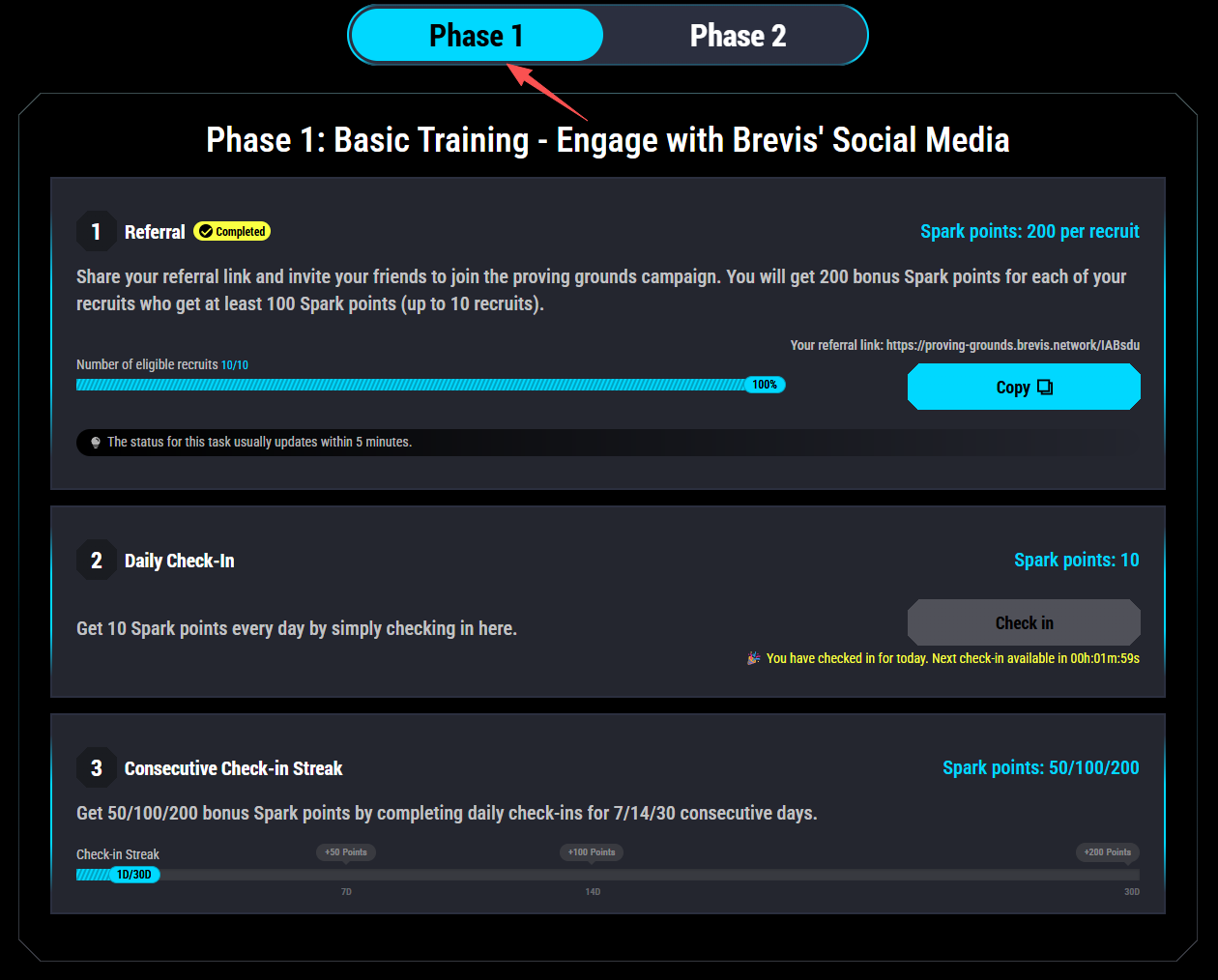
Currently, all 11 tasks of Brevis's Phase 2 have ended, but the Phase 1 tasks are still ongoing, and the snapshot time has not been announced yet. It's worth "farming for free" to seize the last opportunity to earn points.

STEP 1. Go to the interaction website (Link: https://proving-grounds.brevis.network/) and connect your wallet.
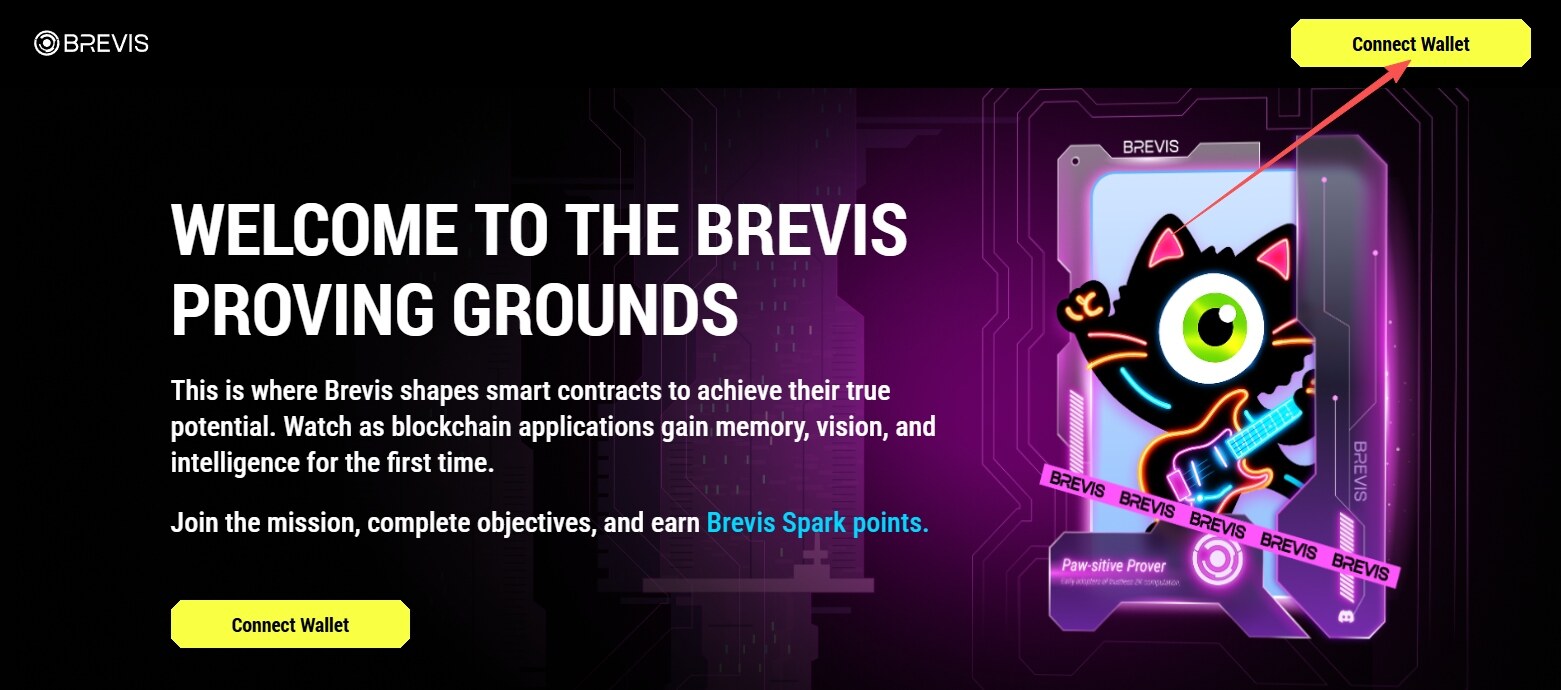
STEP 2. First, bind your personal account, then follow the official X account and join the official Discord. Entering an invitation code will grant you 50 points (Invitation code can be: IABsdu).

STEP 3. Click on "Phase 1". Tasks that still allow you to earn points include referral tasks and daily check-in tasks.
Trending Cryptos

Related Questions

QWhat is the total supply of BREV tokens and what percentage is allocated to community incentives?

AThe total supply of BREV tokens is 1 billion. Community incentives account for 32.2% of the total supply, which is 322 million tokens.

QHow are the tokens allocated for ecosystem development and community incentives unlocked after TGE?

ATokens for ecosystem development and community incentives are linearly unlocked over 24 months after TGE. At TGE, 14.50% of the ecosystem development tokens and 10.50% of the community incentive tokens are immediately unlocked.

QWhat is Brevis and why has it gained significant attention in the community?

ABrevis is an off-chain computation engine built on zero-knowledge proofs, positioning itself as the 'infinite computation layer for Web3 and everything.' It has gained significant community attention because it received endorsement from Vitalik Buterin.

QWhat recent exchange listing development was announced for Brevis (BREV)?

ACoinbase Markets announced that Brevis (BREV) has been added to its listing roadmap, indicating an upcoming Token Generation Event (TGE).

QAre there any ongoing tasks for users to earn points from Brevis, and what is one way to get bonus points?

AYes, Phase 1 tasks are still ongoing. Users can earn points through invitation and daily check-in tasks. One way to get a bonus of 50 points is by using an invitation code (e.g., IABsdu) when signing up.

Related Reads

Beyond the Model Lies the Harness: Deepseek Enters the Arena, Why Has the Main Battlefield of China's AI Competition Shifted?

In mid-to-late May 2026, Deepseek internally established a new Harness team focused on code agent products, internally benchmarked against Anthropic's Claude Code. This move, marked by the formula "Model + Harness = Agent" in their job postings, signals a major shift in China's AI competition: the main battlefield is transitioning from developing large models to building toolchains and achieving workplace integration. Deepseek's direct involvement in Harness development aims to secure control over interface design and training data feedback loops, moving beyond open-sourcing powerful models. Harness, the runtime infrastructure for AI agents, handles everything beyond model reasoning—task orchestration, tool calling, context management, safety checks, and error recovery. It is crucial because agent products are not just outputs of model capability but also training grounds for it. Real-world task failures recorded by Harness can feed back into model training, creating a flywheel effect. Engineering Harness is more critical than optimizing prompts, as poor context management or error handling can drastically reduce agent success rates in multi-step, real-world scenarios. This shift is not isolated. Other major Chinese tech companies are also pursuing differentiated toolchain strategies. Tencent leverages its enterprise ecosystem (WeChat Work, Tencent Cloud) to build connectors for organizational-level AI collaboration and complex task delivery. Alibaba focuses on lowering automation barriers on the web with a front-end, browser-based GUI Agent framework, PageAgent. This diversification shows the industry recognizes that success lies not in a perfect general agent, but in vertically focused solutions built with robust engineering. The trend is validated by overseas success, such as Poland's Viktor, an AI coworker on Slack achieving $20M ARR by autonomously executing complex, multi-step tasks. This proves a shift in enterprise willingness to pay—from "AI-assisted generation" to "AI-autonomous execution." As Harness matures to provide safety guards and reliability, AI transitions from a human-supervised intern to an independent outsourcer. The competition now faces key engineering challenges: preventing "token explosion" through intelligent context compression, and building "thick frameworks" with features like sandbox isolation and checkpoint recovery for enterprise-grade stability. Geopolitical restrictions on tools like Claude Code further create a significant market vacuum for domestic solutions like Deepseek's Harness. For enterprises and developers, the focus must shift from comparing model benchmarks to evaluating a vendor's engineering capabilities, error recovery mechanisms, context management, and ecosystem compatibility when choosing AI products and platforms.

marsbit38m ago

Beyond the Model Lies the Harness: Deepseek Enters the Arena, Why Has the Main Battlefield of China's AI Competition Shifted?

marsbit38m ago

Soaring Export Data for Memory Chips, Market Is Redefining the Valuation Anchor for Memory Stocks

Korean storage export data for the first 20 days of June shows substantial year-on-year increases in both value and price-per-kilogram for categories like DRAM, NAND, and SSDs. This signals a potential shift beyond simple demand recovery, indicating rising prices and a product mix shift towards higher-value items, possibly influenced by AI infrastructure needs. A key point is that the surge in price-per-kilogram is not simply a uniform chip price hike. It reflects a combination of actual price increases and, more importantly, an export structure increasingly dominated by high-value-density products like HBM (High-Bandwidth Memory) and advanced DRAM, which are critical for AI servers. This suggests AI-driven demand may be spilling over from just HBM into broader memory markets. SK Hynix stands to benefit directly due to its leading HBM position. For Samsung and Micron, the implication is potential for greater margin elasticity if the tightness in high-end memory spreads to enterprise SSD and NAND prices. However, the storage sector remains cyclical. Risks include supply expansion, inventory changes, and potential slowdowns in broader AI capital expenditure. Ultimately, while the strong export data supports upward revisions for storage company earnings and fuels discussion of an "AI infrastructure bottleneck premium," a definitive valuation shift from a cyclical to a structural story depends on upcoming quarterly reports. Investors need confirmation from SK Hynix, Samsung, and Micron that improvements in average selling prices, product mix, and, crucially,毛利率 are sustained over multiple quarters.

marsbit2h ago

Soaring Export Data for Memory Chips, Market Is Redefining the Valuation Anchor for Memory Stocks

marsbit2h ago

Trading

Spot
Futures

Hot Articles

Discussions

Welcome to the HTX Community. Here, you can stay informed about the latest platform developments and gain access to professional market insights. Users' opinions on the price of SOON (SOON) are presented below.

活动图片