Ethereum staking sees heavy withdrawal waves — But long-term growth remains firm

ambcryptoPublished on 2025-12-23Last updated on 2025-12-23

Abstract

Ethereum staking is experiencing significant weekly withdrawal spikes from major entities like Lido, Binance, and Frax Finance, with peaks reaching 800,000 to 1.5 million ETH. However, these withdrawals represent operational rotations—such as validator rebalancing and client migrations—rather than a loss of confidence. The total staked ETH continues to grow steadily, surpassing 33 million, supported by new validators and the rise of restaking services like ether.fi and Renzo. This shift indicates a move toward multi-layer yield structures and restaking ecosystems, underscoring sustained long-term growth and a structurally bullish trend for Ethereum’s staking economy.

Ethereum staking is experiencing sharp weekly withdrawal spikes across major entities. However, the broader trend still indicates sustained long-term growth.

New on-chain data from Dune Analytics reveals that, despite large batches of full withdrawals from platforms such as Lido, Binance, and Frax Finance, among others, the total amount of ETH staked continues to climb steadily.

Withdrawal waves intensify across major staking providers

The latest “ETH Full Withdrawals” chart shows that several entities initiated sizable withdrawal batches over recent weeks.

Large exits from Lido, Binance, HTX, Rocket Pool, Frax, and Coinbase contributed to weekly totals reaching between 800,000 and 1.5 million ETH withdrawn at peak periods.

While these spikes may appear alarming at first glance, the breakdown suggests a rotation rather than a broad market exit.

Historically, these waves occur when entities rebalance validator infrastructure, migrate client setups, or handle customer redemptions.

Several corporate custodians and LST providers periodically cycle their validators for operational reasons, which shows up as full withdrawals rather than a drop in commitment to staking.

Total Ethereum staked still trending upward

Despite the withdrawal surges, the long-term “ETH Staked by Entity” chart shows that Ethereum’s total staked supply continues its multi-year climb.

The network now sits above 33 million ETH staked, supported by a diverse set of participants, with Lido still leading 24.26% of the staked ETH.

The consistent upward slope signals that new validators are entering the system at a pace that offsets periodic withdrawals.

More importantly, several newer restaking-aligned services such as ether.fi, Renzo, and P2P.org have grown sharply this year, suggesting a redistribution of staked ETH across alternative reward models rather than a decline in confidence.

A rotation, not a retreat

One clear pattern in the data is a shift away from older single-provider liquid staking services and toward multi-layer yield structures tied to restaking, LRTs, and modular staking ecosystems.

These movements explain the periodic full withdrawals, particularly when examining entities that have recently expanded their offerings or integrated with restaking frameworks.

This helps position the current withdrawal activity as part of Ethereum’s evolving validator economy.

The broader impact on ETH’s economic landscape

Despite the visual size of the withdrawals, the underlying staked supply trend still leans structurally bullish:

  • The number of active staking entities continues to increase.
  • Total staked ETH remains near historical highs.
  • New validators consistently replace exiting ones.
  • Restaking-aligned protocols are absorbing fresh inflows.

This indicates that validator demand remains healthy even during periods of market uncertainty or price drawdowns.

For Ethereum’s security model, this sustained staking participation is a positive sign. For price action, the charts suggest that the staking base remains stable and long-term oriented, even as withdrawal waves create short-term volatility.


Final Thoughts

  • Withdrawal spikes reflect ecosystem rotation, not weakening confidence in Ethereum staking.
  • The total staked ETH continues to rise, reinforcing the network’s long-term security and validator demand.


Trending Cryptos

Related Questions

QWhat does the on-chain data from Dune Analytics reveal about Ethereum staking despite large withdrawals?

AThe on-chain data from Dune Analytics reveals that despite large batches of full withdrawals from major platforms, the total amount of ETH staked continues to climb steadily.

QWhich major staking providers contributed to the recent weekly withdrawal spikes of 800,000 to 1.5 million ETH?

ALarge exits from Lido, Binance, HTX, Rocket Pool, Frax, and Coinbase contributed to these weekly withdrawal spikes.

QWhat is the primary reason for these periodic full withdrawal waves according to the article?

AThe primary reason is a rotation within the ecosystem, where entities rebalance validator infrastructure, migrate client setups, handle customer redemptions, or shift towards newer restaking and multi-layer yield structures, rather than a broad market exit.

QWhat percentage of the total staked ETH does Lido currently control?

ALido still leads with 24.26% of the staked ETH.

QWhat broader trend does the article highlight for the total amount of Ethereum staked?

AThe broader trend is that the total amount of ETH staked continues its multi-year upward climb, now sitting above 33 million ETH, with new validators entering at a pace that offsets periodic withdrawals.

Related Reads

The Hunter Becomes the Hunted: The Most Profitable MEV Bot Gets Hacked

A well-known and highly profitable Ethereum MEV Bot, Jaredfromsubway.eth, suffered a sophisticated on-chain attack this Saturday, losing over $7.5 million. Analysis by Blockaid and others reveals this was not a conventional phishing or smart contract exploit, but a targeted "counter-MEV honeypot attack." The attacker meticulously laid a trap over several weeks, deploying 66 fake token contracts and liquidity pools disguised as major assets like WETH and USDC. These pools created the illusion of arbitrage opportunities. The MEV Bot's automated system detected these signals, executed trades, and in the process, granted approval permissions to attacker-controlled contracts. These approvals were not revoked, creating a persistent vulnerability. The attacker then exploited this in a single transaction, draining the bot's ETH, USDC, and USDT holdings. Jaredfromsubway.eth is notorious as one of Ethereum's most active and profitable MEV Bots, primarily known for executing "sandwich attacks" to profit from transaction slippage. Estimates suggest it has earned tens of millions in MEV revenue. The incident highlights escalating crypto security threats, demonstrating that even top-tier automated "predators" are vulnerable to novel, logic-based attacks designed to exploit their own operational rules. Following the hack, an unverified X account impersonating Jaredfromsubway.eth emerged, falsely offering a bounty for the return of funds, prompting developer warnings for users to stay vigilant.

marsbit31m ago

The Hunter Becomes the Hunted: The Most Profitable MEV Bot Gets Hacked

marsbit31m ago

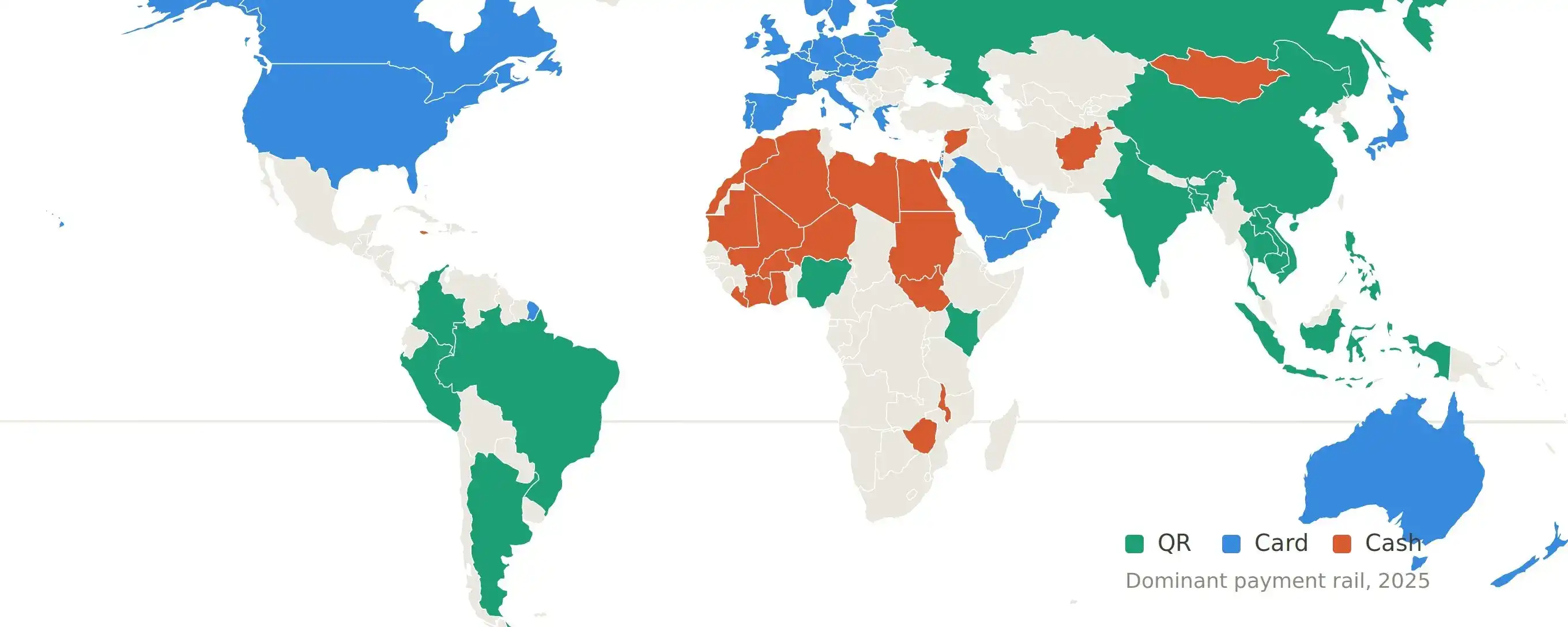
The Reality of Payments in Latin America Is Not What You Think

The payment landscape in Latin America is undergoing a fundamental shift, driven by on-the-ground realities that challenge common perceptions. Based on over 500 hours of field research across the region, key insights emerge. Firstly, QR code payments, like Brazil's Pix, are becoming the dominant payment method in most emerging markets, overtaking cards. However, these domestic instant payment systems lack international interoperability, creating a significant gap for cross-border users. Secondly, the narrative around crypto cards is often misunderstood; their primary volume comes from high-net-worth professionals using them for salary conversions (e.g., USDT to local currency via Pix), not retail micro-payments. Competition in payments is shifting from customer acquisition to controlling the settlement layer, leading fintechs to acquire banking licenses for efficiency. Thirdly, treating "Latin America" as a single market is a mistake. Countries like Argentina, Brazil, and Mexico have distinct economic realities, user segments, and regulatory approaches. Brazil alone has at least five distinct user segments with different financial flows. Overlooked markets like Guatemala, Honduras, and El Salvador (the "forgotten five") offer high remittance volumes with lower competitive density. Finally, regulation in Latin America is often ahead of the US, with clearer frameworks for digital assets and a pragmatic approach from regulators focused on safety rather than obstruction. The margin on stablecoin forex is rapidly compressing toward zero, meaning future winners will be those building value-added services on top of the infrastructure, not just the cheapest exchange.

marsbit46m ago

The Reality of Payments in Latin America Is Not What You Think

marsbit46m ago

Making Music in a Bear Market: The Survival Experiment of a Bitcoin Band

"Orange Pill Jam: A Bitcoin Band's Survival in the Bear Market" Orange Pill Jam is a musical group exploring themes of financial sovereignty and privacy, born from the Bitcoin community. Formed after singer Mermaid performed her song "Dollar Apocalypse" at a 2022 conference, the band creates music intended for both Bitcoin enthusiasts and general audiences. Their creative process involves Mermaid writing lyrics and melodies, which producer/multi-instrumentalist Michi then shapes with a precise, rhythm-focused approach, often demanding numerous retakes to achieve his unique standard of timing. Their songs, like "Cypherpunks' Manifesto" and "Fire of Freedom," tackle concepts of digital privacy, the pitfalls of "free" services, and personal sovereignty, influenced by experiences in places like El Salvador. Despite operating in a crypto bear market with a Copyleft model (offering music for free sharing/remixing and accepting optional Bitcoin donations), they face practical challenges. Their growth is slow on platforms like YouTube and Spotify, which aren't optimized for their niche content. The band also navigates the rise of AI-generated music. While acknowledging AI's efficiency for certain tasks, they believe human creativity occupies a unique space that algorithms cannot replicate—the ability to create new genres and capture intangible rhythmic feeling. For Orange Pill Jam, the core argument for both Bitcoin in a downturn and human artistry in the AI age lies in this irreplaceable, intentional, and imperfectly human creative process. Their project persists as an anti-algorithm experiment, valuing the unquantifiable impact of music over scalable metrics.

marsbit52m ago

Making Music in a Bear Market: The Survival Experiment of a Bitcoin Band

marsbit52m ago

Trading

Spot
Futures

Hot Articles

How to Buy WAVES

Welcome to HTX.com! We've made purchasing Waves (WAVES) simple and convenient. Follow our step-by-step guide to embark on your crypto journey.Step 1: Create Your HTX AccountUse your email or phone number to sign up for a free account on HTX. Experience a hassle-free registration journey and unlock all features.Get My AccountStep 2: Go to Buy Crypto and Choose Your Payment MethodCredit/Debit Card: Use your Visa or Mastercard to buy Waves (WAVES) instantly.Balance: Use funds from your HTX account balance to trade seamlessly.Third Parties: We've added popular payment methods such as Google Pay and Apple Pay to enhance convenience.P2P: Trade directly with other users on HTX.Over-the-Counter (OTC): We offer tailor-made services and competitive exchange rates for traders.Step 3: Store Your Waves (WAVES)After purchasing your Waves (WAVES), store it in your HTX account. Alternatively, you can send it elsewhere via blockchain transfer or use it to trade other cryptocurrencies.Step 4: Trade Waves (WAVES)Easily trade Waves (WAVES) on HTX's spot market. Simply access your account, select your trading pair, execute your trades, and monitor in real-time. We offer a user-friendly experience for both beginners and seasoned traders.

4.1k Total ViewsPublished 2024.03.29Updated 2026.06.02

How to Buy WAVES

Discussions

Welcome to the HTX Community. Here, you can stay informed about the latest platform developments and gain access to professional market insights. Users' opinions on the price of WAVES (WAVES) are presented below.

活动图片