CME's Cryptocurrency Portal

marsbitPublished on 2025-12-23Last updated on 2025-12-23

Abstract

CME's Cryptocurrency Portal: CFTC's recent approval for CFTC-registered exchanges to list spot cryptocurrency products could pave the way for major platforms like CME to enter the market. This move may attract significant institutional capital from traditional markets into crypto, leveraging CME’s established trust, regulatory compliance, and infrastructure. CME already handles substantial crypto derivatives volume, with record daily contracts and growing year-over-year activity. Integrating spot trading could streamline hedging, reduce operational friction, and offer a regulated alternative to offshore platforms. It may also redefine "spot" for large traders who prioritize custody, settlement, and stability over mere price exposure. Additionally, shifting leveraged trading to regulated venues like CME could enhance transparency and consumer protection, reducing risks seen in events like the recent $19B liquidation crash. While initial adoption may be conservative, this step could gradually build trust and open crypto to broader, safer institutional participation.

Article Author: Prathik Desai

Article Translation: Block unicorn

I always find it amusing when people bet on cryptocurrencies based on a tweet on X and move their money around. I've been there too. I remember five years ago, I put most of my month's savings into Dogecoin because, well, Elon Musk mentioned it on Twitter. Back then, I didn't even know what cryptocurrency was.

But some money doesn't enter the cryptocurrency space with just a tweet, a podcast, or a conference keynote. It takes more. Perhaps a memo from a federal regulatory agency, a risk assessment, and a trusted platform would help.

The latest statement from the U.S. Commodity Futures Trading Commission (CFTC), which permits the trading of spot cryptocurrency products on CFTC-registered exchanges, is exactly that.

The CFTC's tacit approval may prompt the Chicago Mercantile Exchange (CME), the most formal derivatives trading market in the U.S., to list cryptocurrencies. If that happens, it would open the doors of the cryptocurrency market, attracting a massive influx of funds from traditional markets into the cryptocurrency space.

In today's in-depth analysis, I will explain how this move could bring cryptocurrencies into the same building where the U.S. stores its most trusted assets, and why this matters.

Let's get started.

Long before today's seamless financial markets emerged, people were reluctant to trade financial products. The issue wasn't a lack of buyers and sellers; there were plenty of both. The problem was a lack of trust, with everyone worrying, "What if the other party can't pay?"

Today, you no longer need to worry about that. This is thanks to the often-underrated invention of the modern stock exchange. It builds trust by standardizing contracts, enforcing disclosures, and regulating behavior. These mature markets incorporate all of this into "clearing" and "margin" mechanisms, preventing settlement risk from hindering traders' enthusiasm every day.

Despite all the talk about "trustless" systems, trust is hard to build in the cryptocurrency market. The latest announcement from the CFTC might just bridge that gap.

Acting CFTC Chairman Caroline Pham stated, "...listing spot cryptocurrency products will, for the first time, begin trading on a CFTC-registered futures exchange in the U.S." Pham expects this move to provide "more choices for the American public and make it easier for them to access safe, regulated U.S. markets."

This update redraws the boundaries of where the cryptocurrency focus might shift, as regulators work to integrate digital assets into the mainstream of the world's largest economy.

Just look at the data from the Chicago Mercantile Exchange (CME), and you'll understand how significant this could be for the spot cryptocurrency market.

On November 21, the CME set a new single-day record for cryptocurrency futures and options trading volume, reaching 794,903 contracts, surpassing the previous record of 728,475 contracts set on August 22 this year.

The market also reported how much trading activity has already shifted to its regulated framework this year. Its year-to-date (YTD) average daily trading volume is 270,900 contracts, with a notional value of approximately $12 billion, up 132% year-over-year. Meanwhile, the YTD average open interest is 299,700 contracts, with a notional value of $26.6 billion, up 82% year-over-year.

Even in a conservative scenario, if the CME converts just 5% of its notional trading volume into spot trading, that would amount to $600 million per day. If it reaches 15%, that number could approach $2 billion per day.

But what are the advantages of having both spot cryptocurrencies and derivatives under the same roof at the CME?

First, it shortens the distance between traders' positions and their hedges. Currently, many traders keep their cryptocurrency exposure in one place and their hedging positions in another. They might trade cryptocurrency futures on the CME because it's regulated and cleared, but their spot exposure might come from ETFs, prime brokers, or cryptocurrency exchanges. Jumping between different trading venues doesn't necessarily increase monetary costs, but it does create non-monetary friction. For example, it requires dealing with more counterparties, bearing more operational costs, and facing more risk points.

If a regulated market hosts both the spot and derivatives markets, hedging will be more convenient, and rolling over positions will be more efficient. Both parts of a trader's bet can be incorporated into the same compliance system, with margin, reporting, and monitoring already included.

Crypto-native platforms that operate both spot and derivatives—Coinbase (with Deribit), Kraken, and Robinhood—already benefit from this "one-stop-shop" service.

The second advantage is that it changes how large traders define "spot."

As a retail trader, when you buy spot on a cryptocurrency exchange, you think about the price of the asset. When a fund buys spot, they consider custody, settlement, reporting, and stability when the market is under stress.

Derivatives exchanges like the CME have already built systems that enhance market confidence. The clearinghouse, margin system, and monitoring provided by the CME can offer large fund companies a regulated safe harbor to safely deploy funds into the relatively volatile cryptocurrency market during uncertain times.

Hundreds of billions of dollars could flow in from large fund companies. U.S. spot Bitcoin ETF issuers alone hold over $112 billion in assets. Since their inception in January 2024, these issuers have accumulated over $57 billion in inflows.

An ecosystem combining spot and derivatives could encourage some investors to shift from "holding through funds" to "trading on the market." For fund companies, this can bring cost advantages and better control.

ETFs charge fees, and their purpose is to hold the underlying assets. Although they trade like stocks, during trading hours, they still rely on the infrastructure of the stock market. For fund companies that need to manage risk and exploit market inefficiencies, they prefer platforms that offer round-the-clock hedging, strict basis execution, frequent rebalancing, or market-making capabilities.

The third advantage is operational.

The CFTC explained this move as a response to "recent offshore exchange events," arguing that the American public deserves access to markets with consumer protections and market integrity guarantees. The key hidden behind this is leveraged trading. Pham explicitly pointed out that Congress had initiated reforms after the financial crisis and stated that Congress had intended retail commodity leveraged trading to occur on futures exchanges, but the rules had remained unclear for years.

Leveraged trading is the breeding ground for the worst events in the cryptocurrency space. Not looking back too far, the worst liquidation event in cryptocurrency history on October 10 wiped out $19 billion. If leveraged trading can be moved to platforms centered on monitoring, margin discipline, and clearing, it could at least improve transparency. You would no longer face opaque offshore清算, but instead have公开透明的保证金, known counterparties, and rules that aren't arbitrarily changed.

This update has even prompted cryptocurrency platforms to promise fair treatment for retail and large traders.

Soon, the U.S.-regulated derivatives exchange Bitnomial claimed it would provide "equal and fair treatment" to retail and institutional orders, with no preferential routing.

Taking all factors into account, the CFTC's move seems promising because it could make spot cryptocurrency trading easy and trustworthy, something previously only accessible to large capital flow trading.

The CFTC's statement won't turn the CME into a full-fledged spot cryptocurrency exchange tomorrow. Even if the market moves in this direction, the initial version might be conservative by design, with fewer trading pairs, strictly defined leverage terms, and trading channels going through intermediaries already in the CME ecosystem.

This is because trust has always been built slowly and gradually. Even historically, trust was established by putting safeguards in place first, not through a random tweet on X.

This concludes today's in-depth analysis. See you in the next article.

Trending Cryptos

Related Questions

QWhat is the CFTC's latest announcement regarding cryptocurrency trading, and why is it significant?

AThe CFTC's latest announcement allows CFTC-registered exchanges to trade spot cryptocurrency products. This is significant because it could enable major derivatives markets like the CME to list cryptocurrencies, potentially attracting substantial institutional capital from traditional markets into the crypto space under a regulated and trusted framework.

QHow might the Chicago Mercantile Exchange (CME) benefit from offering both spot and derivatives cryptocurrency trading?

ACME could benefit by reducing friction for traders who currently hold crypto in one place and hedge in another. A combined ecosystem allows for easier hedging, more efficient rollovers, and operational advantages like consolidated compliance, margin, reporting, and monitoring within a single regulated platform.

QWhat impact could the CFTC's move have on large fund companies and institutional investors?

AIt could attract hundreds of billions of dollars from large fund companies. Institutions value regulated platforms for custody, settlement, reporting, and stability. A trusted venue like CME might shift some investors from holding via ETFs to direct market trading, offering cost advantages and better control for risk management.

QWhy does the author mention leverage trading in the context of the CFTC's announcement?

ALeverage trading has been a source of major crypto market failures, such as the $19 billion liquidation event on October 10. Moving leverage trading to regulated platforms with transparency, margin discipline, and clearinghouses could improve market integrity and protect consumers, as intended by post-financial crisis reforms.

QWhat historical example does the author use to contrast with the CFTC's approach to building trust in crypto markets?

AThe author contrasts the CFTC's gradual, regulated approach with the impulsive, tweet-driven investments like when they invested in Dogecoin based on an Elon Musk tweet five years ago, highlighting that trust is built slowly through safeguards, not through social media hype.

Related Reads

The Hunter Becomes the Hunted: The Most Profitable MEV Bot Gets Hacked

A well-known and highly profitable Ethereum MEV Bot, Jaredfromsubway.eth, suffered a sophisticated on-chain attack this Saturday, losing over $7.5 million. Analysis by Blockaid and others reveals this was not a conventional phishing or smart contract exploit, but a targeted "counter-MEV honeypot attack." The attacker meticulously laid a trap over several weeks, deploying 66 fake token contracts and liquidity pools disguised as major assets like WETH and USDC. These pools created the illusion of arbitrage opportunities. The MEV Bot's automated system detected these signals, executed trades, and in the process, granted approval permissions to attacker-controlled contracts. These approvals were not revoked, creating a persistent vulnerability. The attacker then exploited this in a single transaction, draining the bot's ETH, USDC, and USDT holdings. Jaredfromsubway.eth is notorious as one of Ethereum's most active and profitable MEV Bots, primarily known for executing "sandwich attacks" to profit from transaction slippage. Estimates suggest it has earned tens of millions in MEV revenue. The incident highlights escalating crypto security threats, demonstrating that even top-tier automated "predators" are vulnerable to novel, logic-based attacks designed to exploit their own operational rules. Following the hack, an unverified X account impersonating Jaredfromsubway.eth emerged, falsely offering a bounty for the return of funds, prompting developer warnings for users to stay vigilant.

marsbit30m ago

The Hunter Becomes the Hunted: The Most Profitable MEV Bot Gets Hacked

marsbit30m ago

The Reality of Payments in Latin America Is Not What You Think

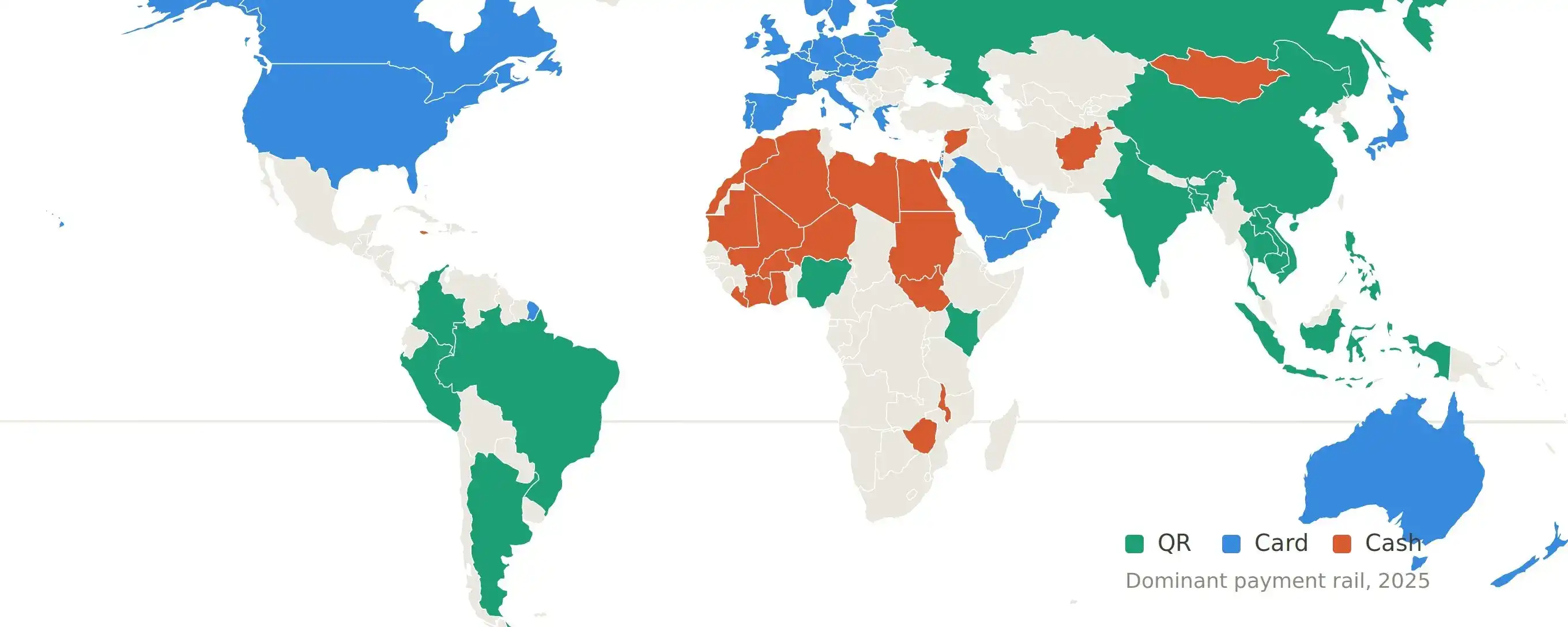
The payment landscape in Latin America is undergoing a fundamental shift, driven by on-the-ground realities that challenge common perceptions. Based on over 500 hours of field research across the region, key insights emerge. Firstly, QR code payments, like Brazil's Pix, are becoming the dominant payment method in most emerging markets, overtaking cards. However, these domestic instant payment systems lack international interoperability, creating a significant gap for cross-border users. Secondly, the narrative around crypto cards is often misunderstood; their primary volume comes from high-net-worth professionals using them for salary conversions (e.g., USDT to local currency via Pix), not retail micro-payments. Competition in payments is shifting from customer acquisition to controlling the settlement layer, leading fintechs to acquire banking licenses for efficiency. Thirdly, treating "Latin America" as a single market is a mistake. Countries like Argentina, Brazil, and Mexico have distinct economic realities, user segments, and regulatory approaches. Brazil alone has at least five distinct user segments with different financial flows. Overlooked markets like Guatemala, Honduras, and El Salvador (the "forgotten five") offer high remittance volumes with lower competitive density. Finally, regulation in Latin America is often ahead of the US, with clearer frameworks for digital assets and a pragmatic approach from regulators focused on safety rather than obstruction. The margin on stablecoin forex is rapidly compressing toward zero, meaning future winners will be those building value-added services on top of the infrastructure, not just the cheapest exchange.

marsbit45m ago

The Reality of Payments in Latin America Is Not What You Think

marsbit45m ago

Making Music in a Bear Market: The Survival Experiment of a Bitcoin Band

"Orange Pill Jam: A Bitcoin Band's Survival in the Bear Market" Orange Pill Jam is a musical group exploring themes of financial sovereignty and privacy, born from the Bitcoin community. Formed after singer Mermaid performed her song "Dollar Apocalypse" at a 2022 conference, the band creates music intended for both Bitcoin enthusiasts and general audiences. Their creative process involves Mermaid writing lyrics and melodies, which producer/multi-instrumentalist Michi then shapes with a precise, rhythm-focused approach, often demanding numerous retakes to achieve his unique standard of timing. Their songs, like "Cypherpunks' Manifesto" and "Fire of Freedom," tackle concepts of digital privacy, the pitfalls of "free" services, and personal sovereignty, influenced by experiences in places like El Salvador. Despite operating in a crypto bear market with a Copyleft model (offering music for free sharing/remixing and accepting optional Bitcoin donations), they face practical challenges. Their growth is slow on platforms like YouTube and Spotify, which aren't optimized for their niche content. The band also navigates the rise of AI-generated music. While acknowledging AI's efficiency for certain tasks, they believe human creativity occupies a unique space that algorithms cannot replicate—the ability to create new genres and capture intangible rhythmic feeling. For Orange Pill Jam, the core argument for both Bitcoin in a downturn and human artistry in the AI age lies in this irreplaceable, intentional, and imperfectly human creative process. Their project persists as an anti-algorithm experiment, valuing the unquantifiable impact of music over scalable metrics.

marsbit52m ago

Making Music in a Bear Market: The Survival Experiment of a Bitcoin Band

marsbit52m ago

Trading

Spot
Futures

Hot Articles

Discussions

Welcome to the HTX Community. Here, you can stay informed about the latest platform developments and gain access to professional market insights. Users' opinions on the price of S (S) are presented below.

活动图片