Wall Street Storms Ripple In Explosive $500 Million Deal

bitcoinistPublished on 2025-12-09Last updated on 2025-12-09

Abstract

Ripple secured a $500 million investment from major Wall Street firms, including Citadel Securities and Fortress Investment Group, lifting its valuation to approximately $40 billion. A key feature of the deal is the significant downside protection for investors, including a put option allowing them to sell shares back to Ripple after 3-4 years for a guaranteed 10% annualized return unless the company goes public. In return, Ripple can only force a buyback by paying about 25% annually. Investors also received liquidation preference. The deal is largely viewed as a concentrated bet on XRP, with an estimated 90% of Ripple's net asset value tied to the cryptocurrency. This structure is now become a new reference point for assessing crypto credit risk, pressuring Ripple to pursue an IPO or find new liquidity before the put windows open.

Ripple has become the most aggressively structured bet in blue-chip crypto after a group of major Wall Street firms wired about $500 million into the company in November, lifting its valuation to roughly $40 billion and making it one of the highest-valued private players in the sector. Bloomberg reported that Ripple’s share sale brought in some of the biggest names of Wall Street but only after investors secured a suite of downside protections.

Wall Street Goes All-In On Ripple

The investor line-up reads like a who’s who of modern market structure: Citadel Securities, Fortress Investment Group, Marshall Wace, Brevan Howard–linked vehicles, Galaxy Digital and Pantera Capital all participated, treating the round at least as much as a structured credit trade as a venture bet.

According to multiple accounts of the deal, several funds underwrote Ripple essentially as a concentrated exposure to XRP itself. Bloomberg’s reporting states that multiple investors concluded at least 90% of Ripple’s net asset value was tied to XRP, with the company controlling about $124 billion of the token at market prices in July.

That XRP cushion has already been tested. XRP is down roughly 40% from its mid-July peak and about 15–16% since late October, yet even after that drawdown, estimates in deal coverage still put the company’s XRP treasury in the tens of billions of dollars, with a large portion locked in escrow and released gradually over time.

The protection that Wall Street insisted on has become the defining feature of the deal. Investors secured the right to sell their shares back to Ripple after three or four years at a guaranteed 10% annualized return, unless the company has gone public by then.

Ripple, conversely, can force a buyback in those same windows only by delivering about 25% annually. On top of that, the funds negotiated a liquidation preference, giving them priority over legacy shareholders in a sale or insolvency.

The numbers involved are non-trivial. FinTech Weekly estimates that if the put option were exercised in full at the four-year mark, Ripple’s cash outlay would approach $700 million–$730 million, irrespective of operating performance or token prices at the time. Those obligations sit alongside an already heavy capital agenda: Ripple has agreed to buy prime-brokerage platform Hidden Road for roughly $1.3 billion and corporate-treasury specialist GTreasury for about $1 billion, while also confirming it has repurchased more than 25% of its outstanding shares.

Banks and trading desks are now treating the November round as a new reference point for crypto credit risk. FinTech Weekly reports that “those terms are now shaping how banks, funds, and trading desks assess Ripple’s balance sheet, exit risk, and future liquidity,” with the three- and four-year exit windows being modeled explicitly alongside XRP price scenarios and rate curves.

Ripple’s management maintains there is “no plan, no timeline” for an IPO, but the structure of the deal effectively date-stamps its private capital: either the company lists or finds new liquidity on favorable terms before the put windows open, or it must fund a secured, fixed-return exit for some of the most sophisticated players on Wall Street.

At press time, XRP traded at $2.0498.
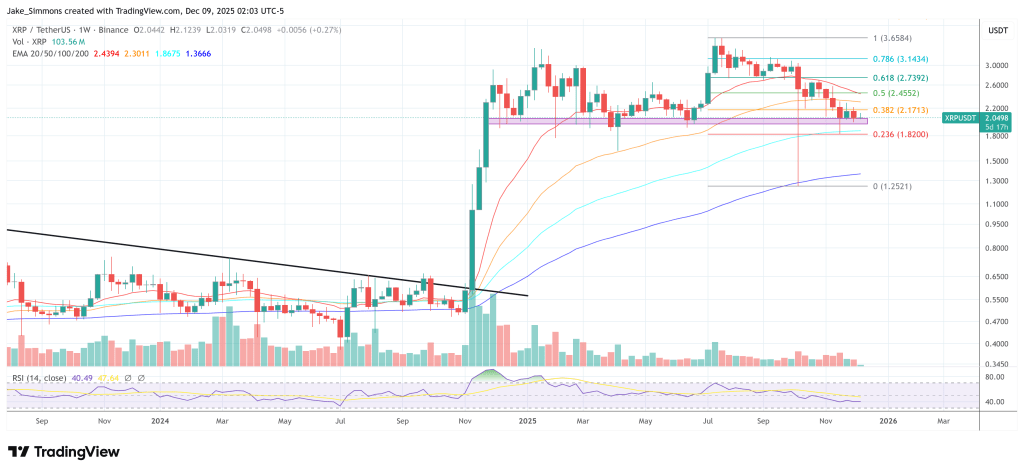
XRP holds above key support, 1-week chart | Source: XRPUSDT on TradingView.com

Trending Cryptos

Related Reads

The Hunter Becomes the Hunted: The Most Profitable MEV Bot Gets Hacked

A well-known and highly profitable Ethereum MEV Bot, Jaredfromsubway.eth, suffered a sophisticated on-chain attack this Saturday, losing over $7.5 million. Analysis by Blockaid and others reveals this was not a conventional phishing or smart contract exploit, but a targeted "counter-MEV honeypot attack." The attacker meticulously laid a trap over several weeks, deploying 66 fake token contracts and liquidity pools disguised as major assets like WETH and USDC. These pools created the illusion of arbitrage opportunities. The MEV Bot's automated system detected these signals, executed trades, and in the process, granted approval permissions to attacker-controlled contracts. These approvals were not revoked, creating a persistent vulnerability. The attacker then exploited this in a single transaction, draining the bot's ETH, USDC, and USDT holdings. Jaredfromsubway.eth is notorious as one of Ethereum's most active and profitable MEV Bots, primarily known for executing "sandwich attacks" to profit from transaction slippage. Estimates suggest it has earned tens of millions in MEV revenue. The incident highlights escalating crypto security threats, demonstrating that even top-tier automated "predators" are vulnerable to novel, logic-based attacks designed to exploit their own operational rules. Following the hack, an unverified X account impersonating Jaredfromsubway.eth emerged, falsely offering a bounty for the return of funds, prompting developer warnings for users to stay vigilant.

marsbit29m ago

The Hunter Becomes the Hunted: The Most Profitable MEV Bot Gets Hacked

marsbit29m ago

The Reality of Payments in Latin America Is Not What You Think

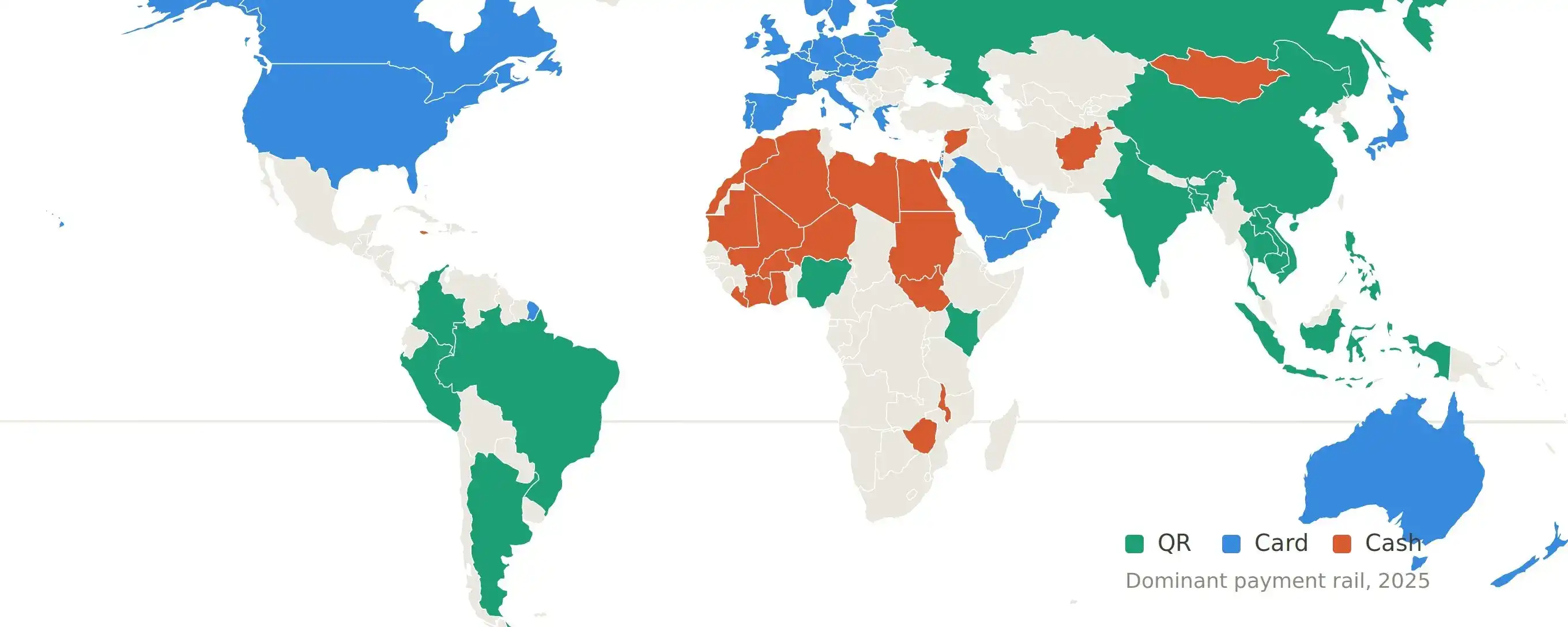
The payment landscape in Latin America is undergoing a fundamental shift, driven by on-the-ground realities that challenge common perceptions. Based on over 500 hours of field research across the region, key insights emerge. Firstly, QR code payments, like Brazil's Pix, are becoming the dominant payment method in most emerging markets, overtaking cards. However, these domestic instant payment systems lack international interoperability, creating a significant gap for cross-border users. Secondly, the narrative around crypto cards is often misunderstood; their primary volume comes from high-net-worth professionals using them for salary conversions (e.g., USDT to local currency via Pix), not retail micro-payments. Competition in payments is shifting from customer acquisition to controlling the settlement layer, leading fintechs to acquire banking licenses for efficiency. Thirdly, treating "Latin America" as a single market is a mistake. Countries like Argentina, Brazil, and Mexico have distinct economic realities, user segments, and regulatory approaches. Brazil alone has at least five distinct user segments with different financial flows. Overlooked markets like Guatemala, Honduras, and El Salvador (the "forgotten five") offer high remittance volumes with lower competitive density. Finally, regulation in Latin America is often ahead of the US, with clearer frameworks for digital assets and a pragmatic approach from regulators focused on safety rather than obstruction. The margin on stablecoin forex is rapidly compressing toward zero, meaning future winners will be those building value-added services on top of the infrastructure, not just the cheapest exchange.

marsbit44m ago

The Reality of Payments in Latin America Is Not What You Think

marsbit44m ago

Making Music in a Bear Market: The Survival Experiment of a Bitcoin Band

"Orange Pill Jam: A Bitcoin Band's Survival in the Bear Market" Orange Pill Jam is a musical group exploring themes of financial sovereignty and privacy, born from the Bitcoin community. Formed after singer Mermaid performed her song "Dollar Apocalypse" at a 2022 conference, the band creates music intended for both Bitcoin enthusiasts and general audiences. Their creative process involves Mermaid writing lyrics and melodies, which producer/multi-instrumentalist Michi then shapes with a precise, rhythm-focused approach, often demanding numerous retakes to achieve his unique standard of timing. Their songs, like "Cypherpunks' Manifesto" and "Fire of Freedom," tackle concepts of digital privacy, the pitfalls of "free" services, and personal sovereignty, influenced by experiences in places like El Salvador. Despite operating in a crypto bear market with a Copyleft model (offering music for free sharing/remixing and accepting optional Bitcoin donations), they face practical challenges. Their growth is slow on platforms like YouTube and Spotify, which aren't optimized for their niche content. The band also navigates the rise of AI-generated music. While acknowledging AI's efficiency for certain tasks, they believe human creativity occupies a unique space that algorithms cannot replicate—the ability to create new genres and capture intangible rhythmic feeling. For Orange Pill Jam, the core argument for both Bitcoin in a downturn and human artistry in the AI age lies in this irreplaceable, intentional, and imperfectly human creative process. Their project persists as an anti-algorithm experiment, valuing the unquantifiable impact of music over scalable metrics.

marsbit50m ago

Making Music in a Bear Market: The Survival Experiment of a Bitcoin Band

marsbit50m ago

Trading

Spot
Futures

Hot Articles

What is VRJAM(BLUE)

VRJAM(BLUE): Revolutionizing Live Experiences in the Virtual World Introduction to VRJAM(BLUE), $vrjam(blue) In an age where virtual experiences are becoming increasingly prevalent, VRJAM(BLUE), represented by the token $vrjam(blue), emerges as a pioneering project within the cryptocurrency space. Launched in 2022, VRJAM(BLUE) seeks to transform how live events are conducted in the digital realm by utilizing the power of blockchain technology and the Hedera Hashgraph platform. As a unique blend of immersive social gaming and interactive virtual events, VRJAM(BLUE) strives to create a comprehensive, engaging experience that resonates with users worldwide. What is VRJAM(BLUE), $vrjam(blue)? At its core, VRJAM(BLUE) is a live experience platform harnessing blockchain to facilitate immersive interactions during virtual events. It stands out as a futuristic solution that allows users to engage with one another in real time, bridging the gap between the physical and digital worlds. The platform leverages advanced technologies, including AI-powered virtual humans, which introduce customizable digital representations of users. These entities serve as avatars that enhance the social dynamics of virtual gatherings. Coupling these virtual beings with the use of non-fungible tokens (NFTs) introduces a layer of security and authenticity, ensuring that unique digital assets can be traded and valued properly within the platform's ecosystem. Moreover, VRJAM(BLUE) integrates a native cryptocurrency, the VRJAM Coin, which acts as the medium of exchange within its virtual world. This digital currency facilitates transactions for services, content, and assets while enabling users to participate seamlessly in live events and interactive experiences. Creator of VRJAM(BLUE), $vrjam(blue) The specific identity of the creator of VRJAM(BLUE) remains undisclosed, though the project is under the leadership of CEO Sam Speaight. His vision for the platform aims at leveraging innovative technology and strategic partnerships to expand the reach and impact of VRJAM(BLUE) in the rapidly evolving web3 ecosystem. Investors of VRJAM(BLUE), $vrjam(blue) VRJAM(BLUE) has garnered considerable interest from various investors and funding rounds, successfully raising a total of $5.34 million throughout 12 funding events. These various initiatives, including Initial DEX Offerings (IDO) and token launches, have provided the necessary capital to propel the project forward. However, specific details regarding the individual investors or organizations backing VRJAM(BLUE) have not been disclosed. How Does VRJAM(BLUE), $vrjam(blue) Work? The innovative approach of VRJAM(BLUE) revolves around multiple cutting-edge technologies, notably artificial intelligence, virtual reality, and blockchain. AI-Powered Virtual Humans A distinguishing feature of VRJAM(BLUE) is its integration of AI-powered virtual humans. These customizable characters respond dynamically to user interactions, enriching the overall experience of virtual events. This personalization allows users to create unique identities and facilitating more meaningful connections within the community. NFT Technology By incorporating NFT technology into its framework, VRJAM(BLUE) provides users with enhanced security and ownership of digital assets. Users can purchase, sell, or trade NFTs that represent virtual tickets, memorabilia, or other digital creations linked to live events, ensuring that ownership is verifiable and protected. Native Cryptocurrency The VRJAM Coin serves as the platform's native currency, allowing users to transact seamlessly within the virtual environment. This cryptocurrency not only supports traditional user activities but also bolsters a larger economic ecosystem tailored to the needs of VRJAM’s community. DeFi Solutions The project also embraces decentralized finance (DeFi) by incorporating trustless protocols. These solutions aim to stabilize token prices and enhance liquidity, allowing users to engage in financial transactions without intermediary restrictions. Timeline of VRJAM(BLUE), $vrjam(blue) To fully understand the evolution of VRJAM(BLUE), it's essential to take a closer look at its timeline: 2022: Launch of VRJAM(BLUE) – The platform made its debut, ushering in a new era for virtual event experiences. November 30, 2022: Completion of the Token Generation Event (TGE) – This marked a significant milestone, as the platform's native cryptocurrency became available for investor engagement. Post-TGE: Following the TGE, the distribution of tokens initiated, featuring a 20% immediate release, followed by a linear vesting phase of the remaining 80% over a period of six months. Key Features and Partnerships The success of VRJAM(BLUE) can also be attributed to its strategic partnerships and innovative features. Partnerships In its quest to bring life to the metaverse, VRJAM(BLUE) has formed alliances with prominent entities in the industry. Notably, its collaboration with Polygon aims to enhance the efficiency and reach of live events. Additional partnerships with organizations such as Agora and Enjin further bolster content distribution and the utilization of NFT technology. These collaborations are enhancing VRJAM(BLUE)'s capabilities and expanding its influence in the web3 ecosystem. Token Liquidity Protocol Operating on the Hedera Hashgraph, VRJAM(BLUE) employs a token liquidity protocol that aggregates liquidity across various trading platforms. This initiative is designed to unify token pricing, thus enhancing user confidence in the VRJAM Coin and promoting stability within the ecosystem. Web3 Economy With the overarching aim of fostering a sustainable web3 economy, VRJAM(BLUE) is diligently working on its DeFi product suite. By providing users with tools for financial engagement, such as yield farming or staking, the project is paving the way for broader participation in its virtual economy. Conclusion VRJAM(BLUE), with its token $vrjam(blue), stands at the forefront of the revolution in virtual experiences and live interactions within the digital space. By intertwining advanced technologies such as AI, virtual reality, and blockchain, the project has developed a platform that not only facilitates immersive experiences but also builds a vibrant, interactive community. As the landscape of the crypto and web3 industries continues to evolve, VRJAM(BLUE) aims to play a critical role in shaping the future of virtual events and experiences. With its commitment to innovation and community engagement, VRJAM(BLUE) is well-positioned to pave a prosperous path for digital interactions in the years to come.

620 Total ViewsPublished 2024.12.03Updated 2024.12.03

What is VRJAM(BLUE)

How to Buy BLUE

Welcome to HTX.com! We've made purchasing Bluefin (BLUE) simple and convenient. Follow our step-by-step guide to embark on your crypto journey.Step 1: Create Your HTX AccountUse your email or phone number to sign up for a free account on HTX. Experience a hassle-free registration journey and unlock all features.Get My AccountStep 2: Go to Buy Crypto and Choose Your Payment MethodCredit/Debit Card: Use your Visa or Mastercard to buy Bluefin (BLUE) instantly.Balance: Use funds from your HTX account balance to trade seamlessly.Third Parties: We've added popular payment methods such as Google Pay and Apple Pay to enhance convenience.P2P: Trade directly with other users on HTX.Over-the-Counter (OTC): We offer tailor-made services and competitive exchange rates for traders.Step 3: Store Your Bluefin (BLUE)After purchasing your Bluefin (BLUE), store it in your HTX account. Alternatively, you can send it elsewhere via blockchain transfer or use it to trade other cryptocurrencies.Step 4: Trade Bluefin (BLUE)Easily trade Bluefin (BLUE) on HTX's spot market. Simply access your account, select your trading pair, execute your trades, and monitor in real-time. We offer a user-friendly experience for both beginners and seasoned traders.

4.1k Total ViewsPublished 2024.12.11Updated 2026.06.02

How to Buy BLUE

Discussions

Welcome to the HTX Community. Here, you can stay informed about the latest platform developments and gain access to professional market insights. Users' opinions on the price of BLUE (BLUE) are presented below.

活动图片