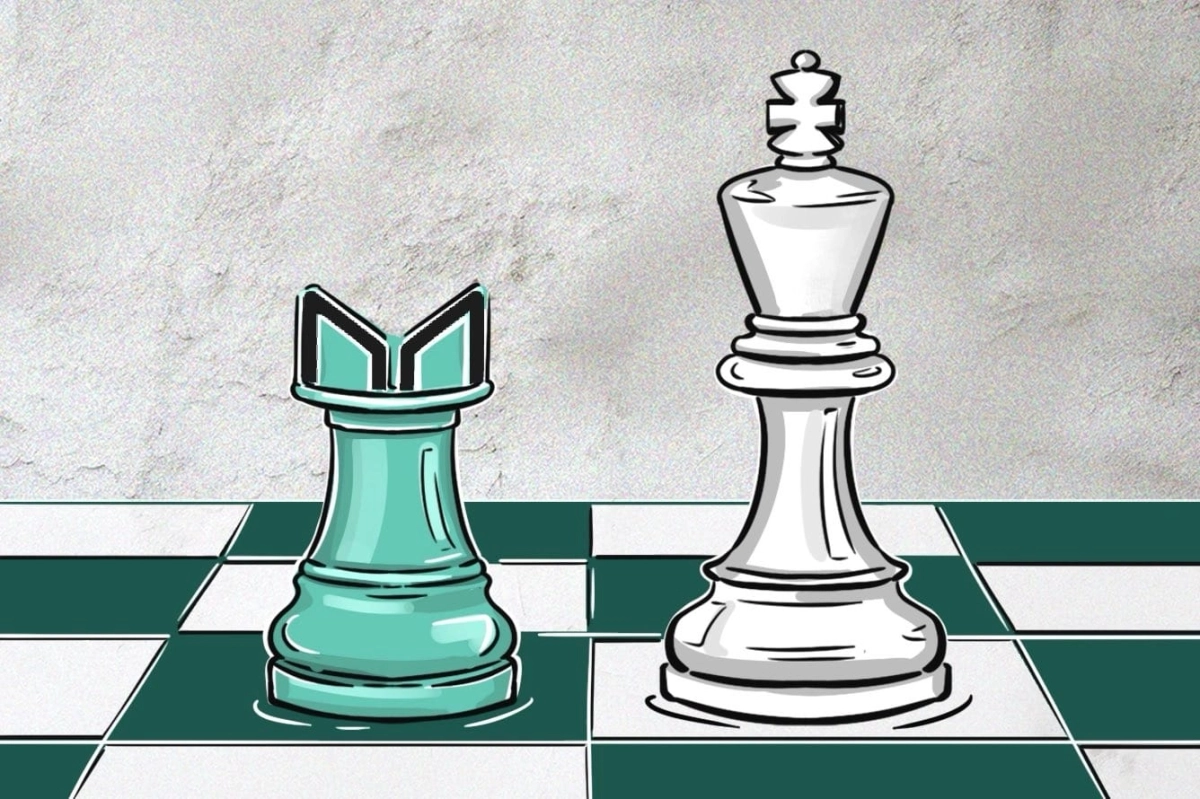
MakerDAO Prepares for Launch with New Tokens, SubDAOs, and $31.2M Token Sale

cryptodailyPublished on 2024-05-07Last updated on 2024-05-09

MakerDAO Prepares for Launch with New Tokens, SubDAOs, and $31.2M Token Sale

MakerDAO co-founder Rune Christensen announced the Endgame Plan in a May 2022 forum post, with a comprehensive DeFi overhaul that they hope will prioritize long-term growth. After nearly two years of development focused on building its foundation, Endgame is finally approaching launch, with a "Launch Season" set for this summer.

"During the Launch Season, all of Endgame's major features will be released in rapid succession. This phase is planned to start by the summer of 2024," Maker reported on X earlier this year.

The Endgame update was planned around a five-step launch process, with a roadmap posted on Maker's forum in May last year. It focuses on the launch of a new, secure blockchain called NewChain, which Maker claims will ensure the system's stability and decentralization by providing a safety net against extreme governance attacks. This should allow Maker to rapidly expand the DAI stablecoin supply—targeting over $100 billion in 3 years—while maintaining a healthy and engaged community.

Last September, Maker discussed incorporating Solana's technology into NewChain for its efficiency and robust support ecosystem. The integration would not signify a departure from Ethereum, as Maker would continue to leverage Ethereum and other Layer-2s for user-facing functionalities, ensuring continuity and stability across its operations. This dual-chain approach would allow Maker to harness Solana's strengths for backend processes while keeping the user experience anchored in the familiar Ethereum ecosystem.

That said, no final decision has been made. "NewChain will be built several years out in the future as a fork of a suitable best-in-class blockchain codebase. Which codebase to use will be decided after a long period of research to ensure that the best possible architecture is chosen," Christensen said on March 12.

According to Spot On Chain data, Endgame's first phase coincides with the sale of $31.20 million of its governance token MKR over the past two months. Such sales often precede price declines, suggesting that the DAO is freeing up resources for the upcoming token launches.

On May 3, Maker announced two new tokens, nicknamed NewStable and NewGovToken, to join DAI and MKR.

NewStable is an enhancement to the existing MakerDAO ecosystem. The token will offer improved stability features that could attract a wider user base, including those less familiar with cryptocurrencies. NewStable is not a direct successor to DAI but an upgraded stablecoin aimed at broader adoption for everyday transactions and financial applications.

NewGovToken will reshape the governance structure within MakerDAO. It is designed to increase community involvement by providing more opportunities for token holders to participate in decision-making processes. This approach seeks to further decentralize governance, making it more democratic and potentially leading to more sustainable and community-aligned decisions.

Additionally, DAI holders will apparently be given the flexibility of upgrading to NewStable and reverting to DAI at any point. The hope is to ensure users retain control over their holdings while allowing them to experience the benefits of the upgraded token.

The conversion process for MKR holders has promised to be straightforward, with each token equating to 24,000 NewGovTokens. NewStable holders (besides USA residents and VPN users) may start farming immediately after launch to earn a share of the 600 million NewGovToken tokens distributed annually.

Maker is the backbone of its ecosystem and focuses on the stability of its DAI stablecoin on Ethereum. The DAO recently shared on X that the second phase of Endgame will introduce self-governing entities, called SubDAOs, to which many peripheral strategies vital for DAI's growth will be delegated.

"SubDAOs unlock the potential for even greater agility, experimentation, and long-term success by fostering a dynamic, multi-layered ecosystem."

SubDAOs are specialized, self-governing teams that will act as the arms and legs of the MakerDAO ecosystem. They operate with a high degree of autonomy, allowing for:

• Faster experimentation: SubDAOs can explore emerging ideas and technologies without slowing down the core…

— Maker (@MakerDAO) May 7, 2024

SubDAOs, like SparkDAO, are specialized teams within the MakerDAO ecosystem designed to function autonomously. They enhance the system's efficiency by allowing Maker to quickly test new ideas without disrupting the main governance workflow and focus on specific risks, improving mitigation strategies. Additionally, SubDAOs handle complex decision-making within their domains, freeing up the core MakerDAO team to address broader strategic concerns. This structure streamlines operations and bolsters responsiveness across the ecosystem. Maker reported that SparkDAO recently surpassed $3 billion in supplied assets and over $2 billion in total value locked just one year after its launch.

The March 2020 market crisis dubbed "Black Thursday" revealed weaknesses in the Maker's governance and operational resilience, as a rapid drop in Ethereum's price led to excessive liquidations, compounded by network congestion and oracle failures. These issues underscored the vulnerability of DAO systems to extreme market conditions and showed the need for more robust governance mechanisms.

In a September 2022 comment on Discord, Christensen described Maker's status quo as "untenable" due to internal political and structural issues. "MKR is near valueless because of the compounding multidimensional risk," he added. Community members' disagreements had led to voter apathy and ineffective decision-making, compromising the DAO's ability to respond to crises and adapt effectively to new regulations or market conditions​.

Disclaimer: This article is provided for informational purposes only. It is not offered or intended to be used as legal, tax, investment, financial, or other advice.

Read on Observers Investment Disclaimer

Trending Cryptos

Related Reads

GPT-5.6 Countdown: Abandon the Illusion of a Single API, Computational Iteration Can't Outpace a Single Page of Compliance

In mid-June, three seemingly independent industry events—the compliance-driven throttling of Fable 5, the open-sourcing of GLM-5.2, and the leaked release timeline for GPT-5.6—are pushing the global AI industry toward a watershed moment. These shifts signal a fundamental restructuring of the industry's underlying logic. First, **"usability" has substantially overtaken "advanced capabilities"** as the primary weight, pushing the global large language model (LLM) supply chain into a "dual-track" phase of controlled closed-source and local open-source coexistence. Second, **the competitive moats of closed-source giants are shifting**. Their technical focus is moving from "language intelligence" toward "spatial intelligence (world models)"—a domain heavily reliant on computing power. Third, faced with常态化 transnational compliance risks, **a "model-agnostic" decoupled design has become a survival necessity for application-layer developers to maintain business continuity.** The article details how Anthropic's Fable 5, despite its advanced engineering feats, was restricted for non-U.S. citizens within 72 hours of launch, highlighting how geopolitical compliance can instantly limit even the most advanced models. In response, the open-source camp, exemplified by Zhipu AI's MIT-licensed GLM-5.2, is gaining market share by offering stable performance improvements and significant cost advantages (up to 70% savings for enterprises), while achieving full adaptation with domestic semiconductor platforms. Meanwhile, closed-source leaders like OpenAI are pivoting. The anticipated GPT-5.6 reportedly shifts focus from language to spatial intelligence and world models, aiming to rebuild a generational gap in areas like 3D understanding, simulation, and industrial design that demand immense compute. The core conclusion is that the LLM supply chain's logic has changed. Enterprises must now evaluate infrastructure based on a composite of technical performance and policy compliance. For developers, complete reliance on a single closed-source API poses unacceptable risk. Implementing a truly model-agnostic architecture—enabling swift switches to compliant, locally deployable open-source alternatives—is no longer just good practice but a fundamental baseline for business continuity.

marsbit2h ago

GPT-5.6 Countdown: Abandon the Illusion of a Single API, Computational Iteration Can't Outpace a Single Page of Compliance

marsbit2h ago

Is the 'Token Subsidy War' Among AI Giants Almost Over?

The article discusses the ongoing "token subsidy war" among AI giants like OpenAI and Anthropic, questioning whether it's nearing its end. It reveals that current AI subscription prices are heavily subsidized, with some plans offering tokens at up to 70 times the actual cost to attract and retain heavy users, especially developers and enterprises. This strategy mirrors past internet-era subsidy battles, but with a key difference: AI tokens lack "lock-in" effects. Unlike ride-hailing or food delivery apps, users can easily switch between AI providers as APIs become standardized, making it difficult for companies to raise prices post-subsidy. The piece highlights a structural asymmetry in the competition. Giants like Google, with massive advertising revenue, can afford to subsidize tokens indefinitely, akin to using "tokens as a weapon." In contrast, venture-backed companies like OpenAI and Anthropic face pressure to become profitable, especially as they approach IPO. The article cites Google Ventures founder Bill Maris, who suggests Google could slash token prices by 80%, putting immense pressure on competitors. Two potential endgames are presented: the "internet service" model (subsidize, monopolize, then raise prices) and the "utility" model (tokens become a standardized, low-margin commodity like electricity). Given the low switching costs, the latter seems more likely. The competition may not have a single winner but could instead accelerate AI's evolution into a foundational, infrastructure-level technology, akin to a public utility. For now, users continue to benefit from heavily subsidized token costs.

marsbit2h ago

Is the 'Token Subsidy War' Among AI Giants Almost Over?

marsbit2h ago

Beyond the Stadium: The Profitable Games Surrounding the World Cup

"Beyond the Pitch: The Profit Game Around the World Cup" The FIFA World Cup transcends being a sporting spectacle, evolving into a massive global arena for speculation and profit-seeking. The 2026 tournament has amplified this dynamic, creating a multi-layered ecosystem of financial opportunism alongside the football. **Prediction markets** have surged into the mainstream. Platforms like Polymarket and Kalshi saw trading volumes for World Cup contracts soar, attracting new users with their financial trading model and high-profile, chain-based wealth stories that overshadow traditional sports betting in terms of growth and narrative. However, **traditional sportsbooks** remain the dominant force, leveraging established user habits, legal markets, and comprehensive product offerings to handle the vast majority of speculative wagers, with projections suggesting record-breaking betting volumes. Capital markets also react. **"Concept stocks"** in countries like South Korea and Japan experience volatile price swings based on team performance and anticipated fan spending on items like chicken, beer, and viewing parties, effectively becoming a stock market reflecting fan sentiment. The **ticket resale market** has become a sophisticated arena for arbitrage. Prices fluctuate wildly based on team draws and star power, with sellers sometimes listing tickets they don't yet own in a practice akin to short-selling, while FIFA's own "Right to Buy" tokens add another layer of speculative trading. **Collectibles and merchandise** offer another avenue. Panini sticker albums, with their inherent scarcity and nostalgic value, can become high-value collectibles. Limited-edition or locally themed jerseys command significant premiums on secondary markets, and even counterfeit vendors profit from fans' desire for affordable match-day identity. The **cryptocurrency** space has seen a frenzy of speculative, unauthorized World Cup-themed meme coins on chains like Solana. These tokens, often exploiting team names and player imagery, experience extreme pump-and-dump cycles, creating stories of massive gains for a few early entrants and steep losses for many others. Finally, an entire industry thrives on **providing information and tools** to other speculators. Developers create platforms like SeatSidekick to track ticket inventory and prices, while paid Telegram groups and subscriptions sell betting tips and predictions, monetizing the widespread desire for an informational edge. In essence, the World Cup has become a compressed, global laboratory for speculation. While the games determine champions on the field, a parallel, complex network of financial transactions—spanning prediction contracts, bets, stocks, tickets, collectibles, crypto, and information services—settles its own scores in the global market.

marsbit3h ago

Beyond the Stadium: The Profitable Games Surrounding the World Cup

marsbit3h ago

Trading

Spot
Futures

Hot Articles

How to Buy RUNE

Welcome to HTX.com! We've made purchasing THORChain (RUNE) simple and convenient. Follow our step-by-step guide to embark on your crypto journey.Step 1: Create Your HTX AccountUse your email or phone number to sign up for a free account on HTX. Experience a hassle-free registration journey and unlock all features.Get My AccountStep 2: Go to Buy Crypto and Choose Your Payment MethodCredit/Debit Card: Use your Visa or Mastercard to buy THORChain (RUNE) instantly.Balance: Use funds from your HTX account balance to trade seamlessly.Third Parties: We've added popular payment methods such as Google Pay and Apple Pay to enhance convenience.P2P: Trade directly with other users on HTX.Over-the-Counter (OTC): We offer tailor-made services and competitive exchange rates for traders.Step 3: Store Your THORChain (RUNE)After purchasing your THORChain (RUNE), store it in your HTX account. Alternatively, you can send it elsewhere via blockchain transfer or use it to trade other cryptocurrencies.Step 4: Trade THORChain (RUNE)Easily trade THORChain (RUNE) on HTX's spot market. Simply access your account, select your trading pair, execute your trades, and monitor in real-time. We offer a user-friendly experience for both beginners and seasoned traders.

2.5k Total ViewsPublished 2024.03.29Updated 2026.06.02

How to Buy RUNE

Discussions

Welcome to the HTX Community. Here, you can stay informed about the latest platform developments and gain access to professional market insights. Users' opinions on the price of RUNE (RUNE) are presented below.

活动图片