SignalPlus波动率专栏(20231103):市场回落,IV大跌

Odaily星球日报Опубликовано 2023-11-03Обновлено 2023-11-03

Введение

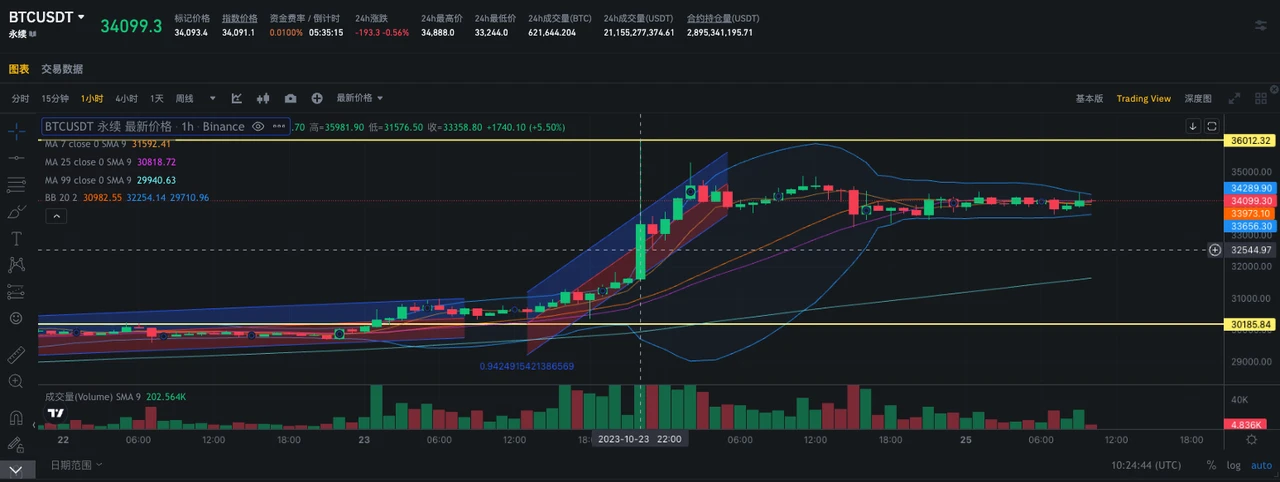
数字货币方面却呈现出较为消极的态势,价格出现大幅回落,BTC再度跌至34500附近,回吐了昨日几乎所有涨幅。

SignalPlus波动率专栏(20231103):市场回落,IV大跌

SignalPlus波动率专栏(20231103):市场回落,IV大跌

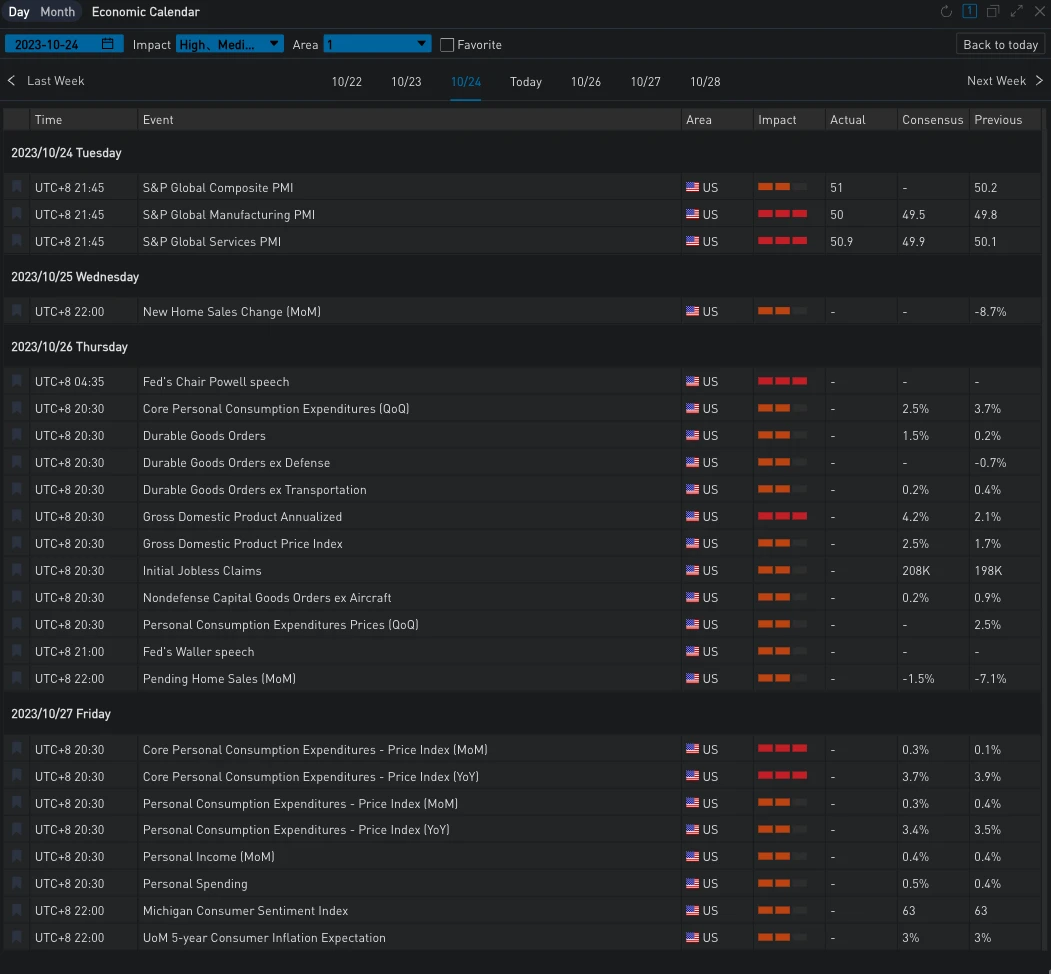
昨日(2 Nov)在市场对 FOMC 会议进行鸽派解读之后,十年期美债持续下行,创近三周新低,收于 4.66% ,两年期美债连日下破 5% ,收于 4.99% 。英国央行也连续第二次在会议上宣布暂停加息,全球债券市场收益率下跌,股市得到提振,欧洲股市连续第四天上涨,美三大股指也高开高走,道指/纳斯达克/标普分别收涨 1.7% /1.78% /1.89% 。

SignalPlus波动率专栏(20231103):市场回落,IV大跌

Source: SignalPlus, Economic Calendar

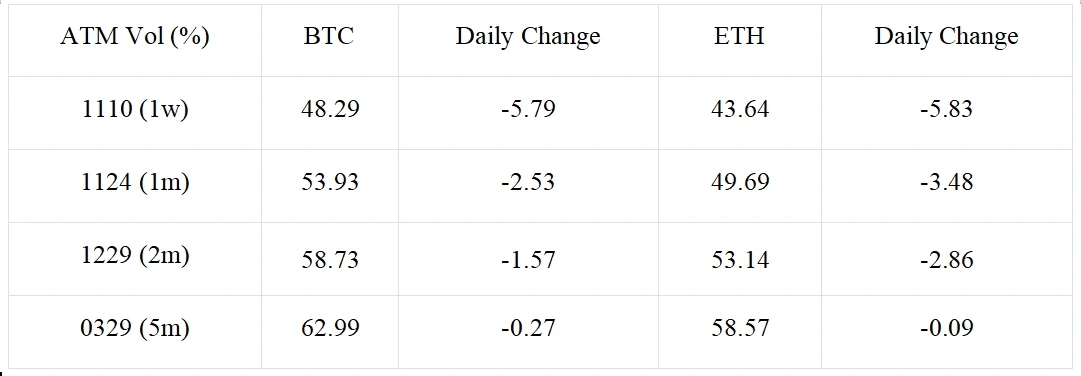
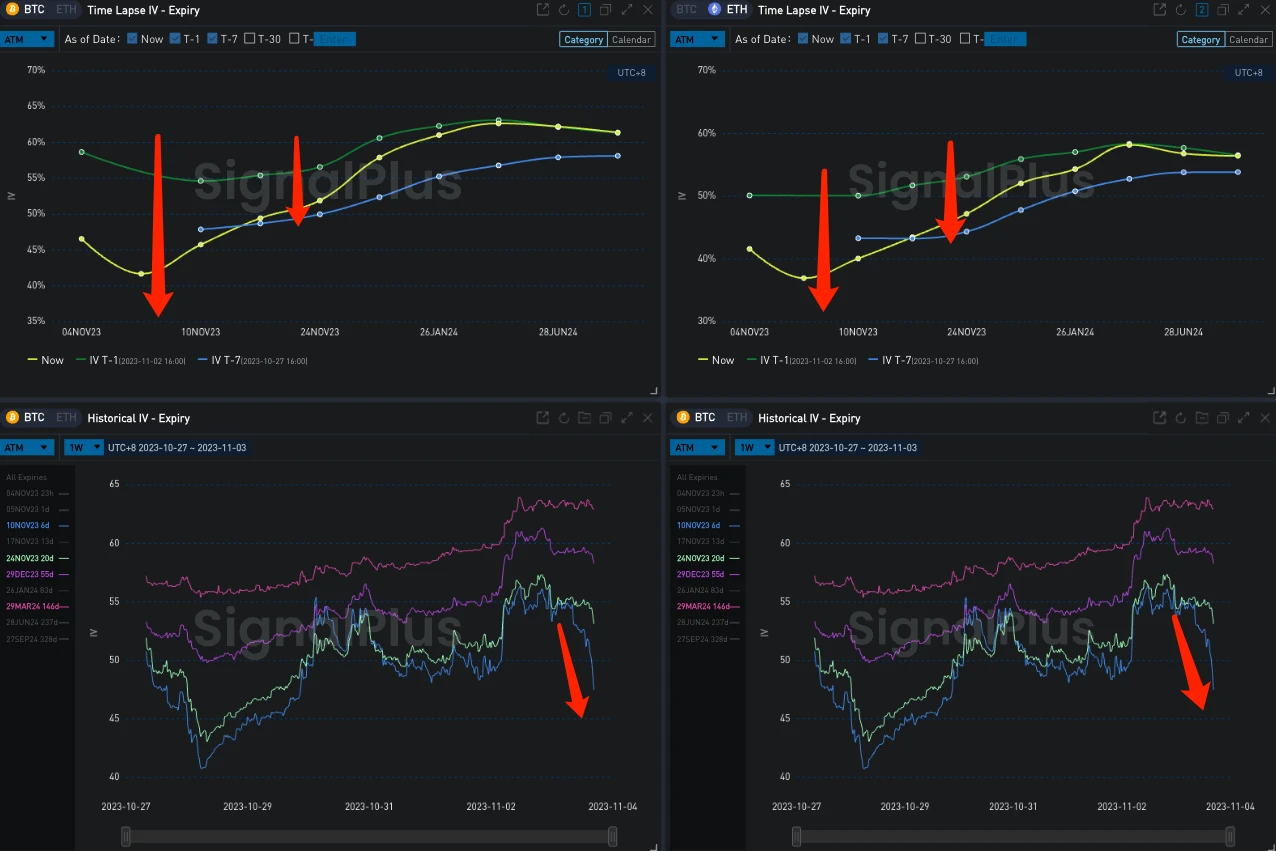
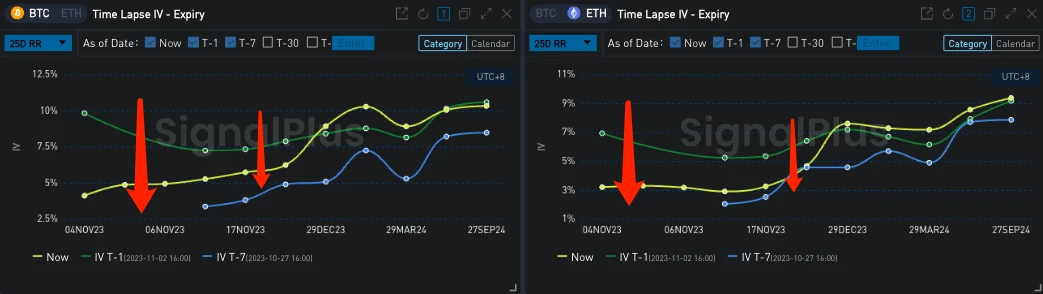
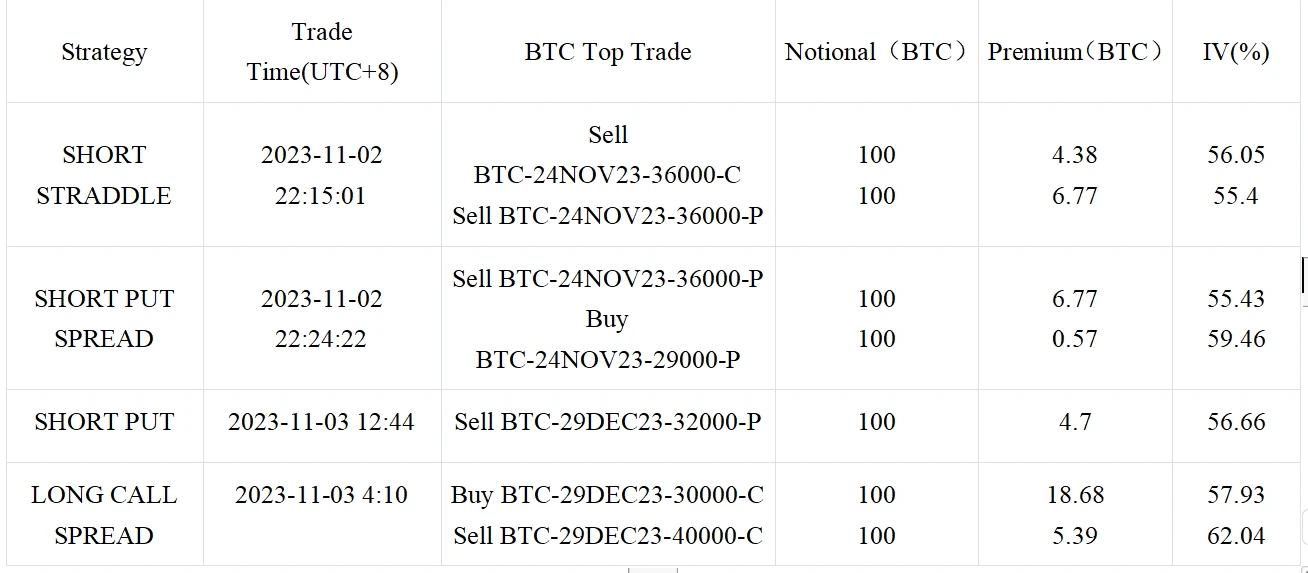
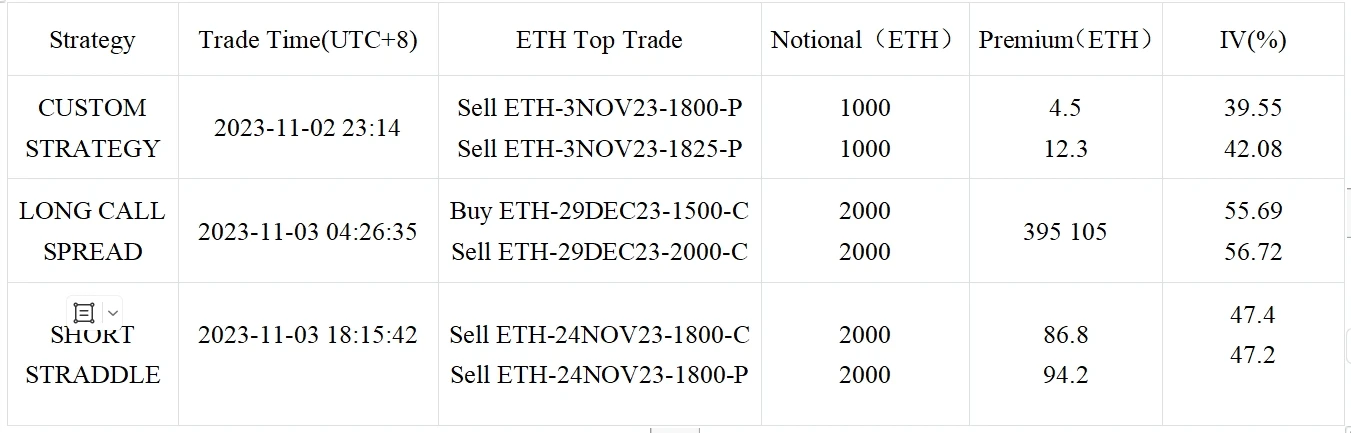
尽管无风险利率的降低推动了全球股市的走高,数字货币方面却呈现出较为消极的态势,价格出现大幅回落,BTC 再度跌至 34500 附近,回吐了昨日几乎所有涨幅。与此同时,这波价格回落也给期权市场破了一盆冷水,致使近期隐含波动率出现大幅下调,下探回到 50% Vol 附近,曲线由平走陡,大宗交易上也涌现出以 Short 24 Nov Straddle 为代表的看跌波动率策略;从 IV 曲面的斜率上看,近期 Skew 同样也随着价格出现明显下滑,目前 BTC/ETH 中前端 25 dRR 大约处在 5% /3% 左右。大宗交易方面乏善可陈,只有几笔 100 btc 大小的策略成交,市场整体交易量较前日有所下降且主要成交集中在散户/小额交易上。

SignalPlus波动率专栏(20231103):市场回落,IV大跌

Source: Binance & TradingView

SignalPlus波动率专栏(20231103):市场回落,IV大跌

Source: Deribit (截至 3 NOV 16: 00 UTC+ 8)

SignalPlus波动率专栏(20231103):市场回落,IV大跌

Source: SignalPlus

SignalPlus波动率专栏(20231103):市场回落,IV大跌

Source: SignalPlus

SignalPlus波动率专栏(20231103):市场回落,IV大跌

Source: Deribit Block Trade

SignalPlus波动率专栏(20231103):市场回落,IV大跌

Source: Deribit Block Trade

SignalPlus波动率专栏(20231103):市场回落,IV大跌

您可在 ChatGPT 4.0 的 Plugin Store 搜索 SignalPlus ,获取实时加密资讯。如果想即时收到我们的更新,欢迎关注我们的推特账号@SignalPlus_Web3 ,或者加入我们的微信群(添加小助手微信:xdengalin)、Telegram 群以及 Discord 社群,和更多朋友一起交流互动。

SignalPlus Official Website:https://www.signalplus.com

Похожее

The Value Distribution of Stablecoins

**Summary: The Value Distribution of Stablecoins** The article argues that stablecoins are evolving from mere trading tools into broader channels for dollar access. It divides the stablecoin ecosystem into four layers to analyze how value is distributed: 1. **Issuance Layer:** Mints stablecoins, holds reserve assets, and captures the spread between reserve yield and user costs (e.g., Tether, Circle). This layer currently earns the largest profit margin. 2. **Infrastructure Layer:** Connects stablecoins to the traditional financial system, handling fiat on/off-ramps, banking integration, compliance (KYC/AML), and asset management (e.g., Bridge, BVNK). This is the "unglamorous" but critical work, building the essential bridges between crypto and real-world finance. 3. **Acquiring/Distribution Layer:** Integrates stablecoins into merchant systems, manages payment flows, and provides enterprise financial software (e.g., Stripe, Coinbase). They act as the access point for businesses. 4. **Application Layer:** The end-users and businesses that ultimately use stablecoins for payments, settlements, or as a store of value. They benefit from convenience but have little pricing power. The core thesis is that while the issuance layer currently dominates profits, the often-overlooked **infrastructure layer holds significant long-term potential**. The real challenge and barrier to mass adoption is not the on-chain transfer of stablecoins (which is simple), but the complex "last mile" integration into existing business workflows, banking systems, and regulatory frameworks across different countries. Companies in this layer are currently in a "land grab" phase, investing heavily to build networks, secure bank partnerships, and establish compliance pathways. While their position is currently pressured by the profitable issuers above and distribution platforms below, the article suggests that if stablecoins become a default financial rail for businesses, the infrastructure providers who have done the hard work of integration will ultimately gain strong pricing power and become entrenched, essential players.

marsbit18 мин. назад

The Value Distribution of Stablecoins

marsbit18 мин. назад

The Value Distribution of Stablecoins

The Value Distribution of Stablecoins The article argues that stablecoins are evolving from a mere trading tool into a broad "dollar channel." It analyzes the industry's value chain through four layers: 1. **Issuance Layer (e.g., Tether, Circle):** The top layer that mints stablecoins, holds reserve assets, and captures the thickest interest rate spread. 2. **Infrastructure Layer (e.g., Bridge, BVNK):** Connects stablecoins to the traditional financial system, handling critical but complex "dirty work" like fiat on/off-ramps, banking integration, compliance (KYC/AML), and cross-border settlement. 3. **Acquiring/Distribution Layer (e.g., Stripe, Coinbase):** Embeds stablecoins into merchant systems, manages payment flows, and integrates with enterprise software. 4. **Application Layer:** End-users and businesses that ultimately use stablecoins for payments, settlement, or storing value. The author posits that while the issuance layer currently captures the most profit, the most overlooked and potentially critical layer is infrastructure. The core challenge for stablecoin adoption isn't the on-chain transfer (which is simple), but bridging the gap between blockchain and the real-world financial system. This involves solving practical problems for businesses: fiat conversion, reconciliation, tax handling, and user onboarding. Infrastructure companies are currently in a difficult "land-grab" phase—building networks, securing banking relationships, and achieving compliance country-by-country. They face pressure from both the profitable issuance layer above and distribution platforms below. However, the author suggests this layer is building a crucial moat. Once stablecoins become a default business rail, the infrastructure players who have done the hard work of integration may gain significant, durable value and pricing power.

链捕手22 мин. назад

The Value Distribution of Stablecoins

链捕手22 мин. назад

Why Is Nvidia Borrowing $20 Billion When It's Not Short of Cash?

Nvidia's recent announcement to issue at least $20 billion in senior notes, despite holding a strong cash position with over $48.6 billion in free cash flow last quarter, is not a sign of financial need. Instead, it represents a strategic move to leverage its high credit rating (recently upgraded to AA by S&P) to secure low-cost, long-term debt. This capital will support long-term AI infrastructure investments, data centers, R&D, supply chain prepayments, and strategic investments, while allowing the company to continue aggressive shareholder returns through stock buybacks and dividends. The decision reflects a mature capital management strategy: using debt to finance long-term growth assets is more efficient and less dilutive to shareholders than equity financing. It signals that Nvidia, like other tech giants (Alphabet, Meta, Amazon), is entering a new phase of heavy AI capital expenditure, shifting from a pure growth story to a story about capital allocation, credit strength, and long-term ecosystem positioning. The key question for investors is whether Nvidia can maintain its high cash flow generation and ensure that returns from these AI investments justify the cost of capital over the long term. The bond issuance amplifies its expansion capabilities but also ties its valuation more closely to the broader AI investment cycle's sustainability and profitability.

marsbit57 мин. назад

Why Is Nvidia Borrowing $20 Billion When It's Not Short of Cash?

marsbit57 мин. назад

How to Do Research Well: Deliberately Practice the Real Skills That Matter

No one truly teaches you how to do research. You're often given a desk, a pre-selected problem, and vague instructions to "create something new." Consequently, many people reverse-engineer the job based on visible outputs—papers, posts, announcements—learning only how to *appear* like a researcher rather than how to *become* one. True research capability is built from stacking small, trainable skills, nearly all of which can be developed through deliberate practice. **Pick Your Own Problem:** Most researchers absorb problems from advisors or trends, lacking the underlying reasoning. Choosing a problem you genuinely care about, as John Schulman advises, leads to original work. Develop "taste" like a muscle: predict experiment outcomes, guess paper results from methods, and track which findings remain important over time. **Upgrade Your Inputs:** Relying on shared reading lists (arXiv hot lists, filtered group chats) leads to unoriginal conclusions. Undervalued old literature often holds crucial insights (e.g., MoE, LSTM, backpropagation). Richard Sutton's "The Bitter Lesson" or Claude Shannon's 1952 talk on creative thinking are more predictive than lengthy modern surveys. Breadth matters as much as depth: draw from neuroscience, mechanism design, hardware knowledge, and honest statistics. Read papers directly, especially appendices and limitations sections. **Write Everything Down:** As Paul Graham noted, writing exposes flaws in seemingly mature ideas. Writing is the cheapest defense against self-deception. Following Feynman's principle, Darwin programmatically wrote down facts contradicting his theory to combat memory bias. Maintain a detailed log of hypotheses, setups, predictions, results, and updated understandings. Reviewing past logs fosters essential humility.

marsbit2 ч. назад

How to Do Research Well: Deliberately Practice the Real Skills That Matter

marsbit2 ч. назад

Торговля

Спот
Фьючерсы
活动图片