US-EU Tariff War Wipes Billions — Start of Crypto Winter 2026?

ccn.com發佈於 2026-01-19更新於 2026-01-19

文章摘要

In mid-January 2026, U.S. President Donald Trump announced new tariffs on eight European nations, starting at 10% and potentially rising to 25% by June unless Denmark negotiates the sale of Greenland. This triggered a sharp crypto market sell-off, wiping billions in value. Bitcoin fell from near $97,000 to below $93,000, while altcoins saw deeper losses of 9–20%. Over $871 million in leveraged positions were liquidated. Analysts are divided on whether this marks the start of a prolonged "crypto winter" or is a temporary macro shock. Some point to historical post-halving weakness and fading institutional optimism, suggesting Bitcoin could drop to $67,000–$75,000. Others argue growing institutional adoption and Bitcoin’s "digital gold" role may cushion a deeper downturn. The event highlighted crypto’s sensitivity to geopolitical risk and leveraged market fragility. Recovery remains uncertain as trade tensions and regulatory delays persist.

Key Takeaways

  • U.S.–EU tariff threats tied to Greenland triggered a sharp risk-off move, wiping billions from crypto markets.
  • Bitcoin slid below $93,000 as leveraged positions unraveled and altcoins suffered deeper losses.
  • Analysts remain divided on whether this signals the start of a “crypto winter” or a temporary macro-driven shock.

The crypto market entered 2026 with optimism still lingering from late last year. That confidence didn’t last long.

Over the weekend, a sudden surge in geopolitical tension sent shockwaves through global markets, triggering the first major crypto flash crash of the year.

Billions of dollars were wiped out in a matter of hours as leveraged positions unraveled, with altcoins bearing the brunt of the damage.

At the center of the sell-off was a familiar catalyst: trade-war fears sparked by fresh tariff threats from United States President Donald Trump.

Try Our Recommended Crypto Exchanges
Sponsored
Disclosure
We sometimes use affiliate links in our content, when clicking on those we might receive a commission at no extra cost to you. By using this website you agree to our terms and conditions and privacy policy.
"}' data-trk="68df7fd8872238d510dfbf06" href="https://clicks.pipaffiliates.com/c?c=1104900&l=en&p=1" rel="nofollow" target="_blank">
XM.com<\/h3>"}' data-trk="68df7fd8872238d510dfbf06" href="https://clicks.pipaffiliates.com/c?c=1104900&l=en&p=1" rel="nofollow" target="_blank">

XM.com

promotions
Get 100% Bonus up to $100 on your first Deposit.<\/strong>"}' data-trk="68df7fd8872238d510dfbf06" href="https://clicks.pipaffiliates.com/c?c=1104900&l=en&p=1" rel="nofollow" target="_blank"> Get 100% Bonus up to $100 on your first Deposit.
Coins
28
Claim Offer
"}' data-trk="6899b9831836d97539c51aa6" href="https://www.bitunix.com/" rel="nofollow" target="_blank">
Bitunix<\/h3>"}' data-trk="6899b9831836d97539c51aa6" href="https://www.bitunix.com/" rel="nofollow" target="_blank">

Bitunix

promotions
Receive up to $100,000 worth of exclusive gifts for newcomers upon registration.<\/strong>"}' data-trk="6899b9831836d97539c51aa6" href="https://www.bitunix.com/" rel="nofollow" target="_blank"> Receive up to $100,000 worth of exclusive gifts for newcomers upon registration.
Coins
151
Claim Offer
"}' data-trk="67adf8d4f12aaec7e4808bf5" href="https://bonus.bitget.com/CCN12" rel="nofollow" target="_blank">
Bitget<\/h3>"}' data-trk="67adf8d4f12aaec7e4808bf5" href="https://bonus.bitget.com/CCN12" rel="nofollow" target="_blank">

Bitget

promotions
New user rewards up to 6,200 USDT.<\/strong>"}' data-trk="67adf8d4f12aaec7e4808bf5" href="https://bonus.bitget.com/CCN12" rel="nofollow" target="_blank"> New user rewards up to 6,200 USDT.
Coins
88
Claim Offer
Explore All Offers

Tariff Threats Spark a Market Rout

In mid-January 2026, President Trump announced plans to impose a new round of tariffs on imports from eight European countries — Denmark, Norway, Sweden, France, Germany, the United Kingdom, the Netherlands, and Finland — beginning Feb. 1.

The proposed tariffs would start at 10% and rise to 25% by June 1, unless Denmark agrees to negotiate the potential U.S. purchase of Greenland.

Markets reacted swiftly. Between Jan. 18 and 19, crypto prices fell sharply as traders moved to de-risk.

Bitcoin (BTC) slid from recent highs near $97,000 to below $93,000, briefly erasing billions in market capitalization.

Altcoins fared even worse. Excluding Ethereum, many major tokens posted losses ranging from 9% to more than 20% over 24 hours, pushing several assets to new monthly lows.

The broader crypto market cap dropped toward $3.13 trillion as risk-off sentiment spread.

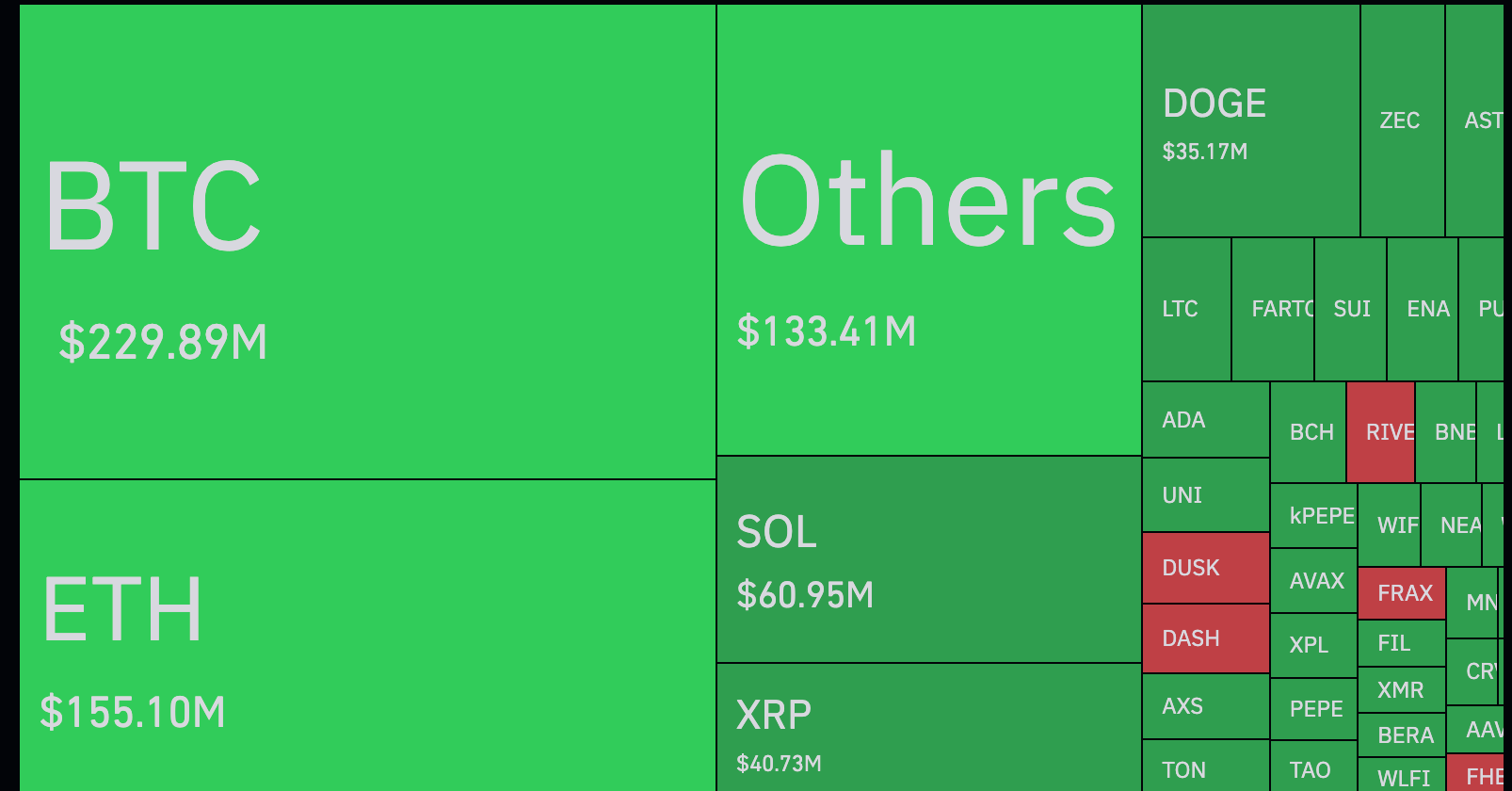
Data from CoinGlass shows more than $871 million in liquidations during the sell-off.

Bitcoin long positions accounted for roughly $229 million, while altcoin traders absorbed the bulk of the damage, with about $641 million wiped out as positions were forcibly closed.

Crypto liquidation heatmap. Source: Coinglass.

Analysts pointed to a mix of macro uncertainty and existing market fragility.

Trade tensions revived fears of a prolonged economic slowdown, while crypto’s tendency to correlate with equities during periods of stress amplified the sell-off.

Ongoing delays in U.S. crypto market structure legislation and cooling institutional inflows added further pressure.

By Monday morning, Bitcoin and Ethereum had clawed back nearly half of their losses. Altcoins, however, struggled to recover.

Temporary Shock or Start of Crypto Winter 2026?

The sharp pullback has revived a question that has hovered over the market since late 2025: Is crypto heading into another prolonged winter?

January has already delivered echoes of last year’s tariff-driven volatility, which culminated in the October crash that wiped trillions from global crypto valuations.

Now, with many assets still below their 2025 highs, renewed trade wars and rising geopolitical tensions have reignited fears of a “crypto winter” in 2026.

Bearish analysts point to familiar warning signs. Post-halving years have historically brought weaker performance, and several tailwinds from 2025.

Making matters worse, Trump-related optimism and expectations of looser financial conditions have begun to fade.

If macro pressure persists, some see Bitcoin revisiting the $67,000–$75,000 range in a slower, more institutionally driven downturn.

Others remain unconvinced that a prolonged winter is imminent.

Supporters of the bullish case argue that the traditional four-year cycle is losing relevance as institutional participation deepens.

They point to Bitcoin’s growing role as a form of “digital gold,” supported by ETF inflows and more resilient on-chain activity than in previous cycles.

For now, the U.S.–EU tariff dispute appears to have acted as a trigger rather than a root cause. ‘

The market’s reaction was sharp, but it was amplified by existing caution and leverage rather than a collapse in fundamentals.

Whether this flash crash marks the start of a longer downturn or simply another episode of macro-driven volatility may become clearer in the weeks ahead — especially as trade negotiations, monetary policy expectations, and regulatory developments continue to unfold.


Top Picks for Bitcoin
  • Best Exchanges for Bitcoin Get A Great Offer When You Join These Exchanges
  • Buy Bitcoin Fast & Easy How To Buy Bitcoin With a Credit Card Now
  • Best Online Casinos for Bitcoin See Our Picks for the Best Crypto Gambling Sites

相關問答

QWhat was the main geopolitical event that caused the crypto market crash in January 2026?

AThe main event was U.S. President Donald Trump's announcement of plans to impose new tariffs, starting at 10% and rising to 25% by June 1, on imports from eight European countries, contingent on Denmark's refusal to negotiate the potential U.S. purchase of Greenland.

QHow much value was liquidated from the crypto market during the sell-off, and which segment suffered the most?

AOver $871 million was liquidated during the sell-off. Altcoin traders absorbed the bulk of the damage, with about $641 million wiped out, while Bitcoin long positions accounted for roughly $229 million.

QWhat was Bitcoin's price movement during the crash, and what level did it briefly fall below?

ABitcoin slid from recent highs near $97,000 to below $93,000, briefly erasing billions in market capitalization.

QAccording to the article, what are the two opposing views among analysts regarding the market's future?

AAnalysts are divided. Some believe the crash could signal the start of a prolonged 'crypto winter,' citing historical post-halving weakness and fading macro tailwinds. Others argue the traditional cycle is less relevant due to deeper institutional participation, viewing Bitcoin as 'digital gold' supported by ETF inflows.

QWhich specific European countries were targeted by the proposed U.S. tariffs mentioned in the article?

AThe eight European countries targeted were Denmark, Norway, Sweden, France, Germany, the United Kingdom, the Netherlands, and Finland.

你可能也喜歡

Zcash上涨1500%,其最大支持者解释原因

据Zcash主要支持者乔希·斯威哈特分析,ZEC价格约1500%的飙升并非偶然,而是2023至2024年间在治理、产品、叙事和组织结构上进行多年重置的成果。 他指出,三年前ZEC价格约30美元,仅不到11%的供应量被屏蔽(shielded),且社区陷于治理争议。如今ZEC价格约600美元,约31%的供应量被屏蔽,用户控制的屏蔽钱包持有价值超30亿美元,且屏蔽交易占比在三月中旬达到86.5%。 **治理重置成为核心**:2024年,Electric Coin Co.宣布不再接受直接资助,打破了原有核心机构长期获得固定区块奖励的格局。网络升级6取消了直接资助,将8%奖励导向社区赠款,12%放入协议控制的锁箱,供ZEC持有者追溯奖励为生态创造价值的贡献者。同时,商标协议的终止消除了ECC和Zcash基金会对协议的潜在否决权,使治理更加去中心化。 **产品重心回归用户与屏蔽使用**:ECC于2024年1月将重点转向用户增长。默认屏蔽的钱包Zodl(原Zashi)于2024年3月推出,带动屏蔽供应量从约11%升至2025年底的约30%。钱包自10月起处理了超6亿美元的ZEC互换,反映了真实用户对隐私和自托管的选择。 **叙事从“隐私币”转向“不可阻挡的私人货币”**:这一新定位使Zcash更易被机构理解,吸引了如Robinhood上线、Multicoin披露持仓、Grayscale提交ETF申请及Foundry推出矿池等进展。 **组织重组与融资**:2026年1月,ECC团队脱离后成立了Zcash开放开发实验室(ZODL),并获得了Paradigm、a16z crypto等机构2500万美元融资,旨在以初创公司的速度和资本推动大规模消费者产品开发。 近期重点包括提升用户体验、可扩展性(目标将区块时间从75秒降至25秒)及后量子安全准备。斯威哈特总结,Zcash将变得更快、更易用、功能更丰富、可扩展性更强并具备后量子安全性。 截至发稿时,ZEC交易价格为570.36美元。

bitcoinist1 小時前

Zcash上涨1500%,其最大支持者解释原因

bitcoinist1 小時前

比特币已实现市值回升至正值区域,市场重获力量

比特币价格在周日小幅反弹后重回8万美元关键点位上方,多个指标开始重新显现强势。其中,比特币已实现市值(Realized Cap)随着市场状况缓慢改善,近期已转为看涨信号。 比特币重新燃起的看涨势头正逐渐体现在多个关键链上指标中,反映出市场动态的转变。比特币已实现市值目前显示出强势,随着市场情绪改善,已回升至正值区域。该指标通过计算已实现利润与已实现亏损的差值得出,反映了比特币市场创造或摧毁的价值。 CryptoQuant平台分析师Darkfost指出,该指标目前正显示复苏信号,这意味着资金正流入比特币。截至周日,比特币已实现市值已转正,增长率约为+0.25%。虽然增幅尚不显著,但这是在今年2月经历超过-2.6%的急剧下跌之后发生的。Darkfost认为,当前阶段代表了资产从“弱手”向“强手”的转移。 与此同时,另一个关键指标比特币净已实现利润/亏损也已转为正值。这一变化表明,以盈利状态转移的代币数量超过了以亏损状态转移的数量,显示出市场信心和投资者情绪正在稳步改善。链上分析账户On-Chain Mind指出,该指标是五个多月以来首次转正。 总体而言,这些链上指标的改善标志着市场正在经历一个修复过程,投资者情绪好转,资金开始回流。然而,这并不等同于直接进入牛市,趋势能否持续仍有待观察。

bitcoinist6 小時前

比特币已实现市值回升至正值区域,市场重获力量

bitcoinist6 小時前

交易

現貨
合約
活动图片